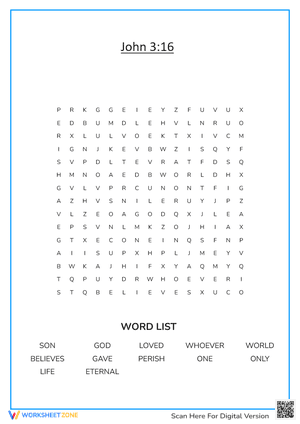
Word search puzzles ask students to scan a grid of letters and identify target words hidden among distractors. That process forces repeated visual contact with vocabulary terms, which supports recognition and recall over time. For a Bible-based classroom, that means students see and re-see words like Genesis, disciple, or covenant multiple times in a single activity, reinforcing spelling and meaning as they go.
Using Bible Word Searches as Morning Work or Early-Finisher Tasks
One of the most practical uses for a Bible word search is as a low-prep warm-up or transition activity. Teachers can hand out a themed puzzle as students settle in, use it as homework tied to a weekly Bible story, or keep a stack on hand for early finishers during small-group rotations. None of these uses require additional grading time, which matters in Sunday school settings where volunteer leaders often have limited prep hours.
Because the format is self-directed, it also works well during quiet, independent stretches of a lesson. Students can complete a puzzle at their own pace while a teacher circulates to support struggling readers, without the activity requiring verbal instructions or teacher-led pacing.
Pairing Word Searches With a Specific Bible Unit
A Bible word search is most effective when tied directly to what students are currently studying. If a class just finished a unit on the Fruits of the Spirit, a word search built around those terms reinforces the exact vocabulary from that lesson. The same applies to units on books of the Bible or key Old and New Testament figures: matching the puzzle content to the current unit keeps the activity connected to instruction rather than functioning as filler.
This pairing also supports review before an assessment or Bible verse recitation. Running a themed word search a day or two before a quiz gives students another low-stakes pass at the vocabulary they will need to recall, without the pressure of a graded task.
Frequently Asked Questions
1. How can teachers use Bible word search puzzles in a classroom or Sunday school lesson?
Teachers can use them as a follow-up to a specific Bible story or unit, as morning work, or as an early-finisher task. Tying the word list to the lesson just taught keeps the activity connected to instruction rather than serving as unrelated busywork.
2. What grade levels are Bible word search puzzles best suited for?
They work across K-12 settings when adjusted for grade band. Early elementary students need shorter word lists and larger grids, while upper elementary and middle school students can handle longer word banks and more advanced vocabulary.
3. Do word search puzzles actually help students learn and retain vocabulary?
Classroom research supports this. One study found scores rising from 73.17 to 83.50 with mastery rates increasing from 70% to 93.3%, while another reported pre-test to post-test gains from 51.00 to 72.60 after students used word search vocabulary games.
4. How can Bible word searches be used for review or assessment after a lesson?
A themed puzzle distributed a day or two before a quiz or recitation gives students a low-stakes review pass. Teachers can also use a completed puzzle informally, noting which words students struggled to find as a signal for what needs reteaching.
5. What are quick ways to differentiate a Bible word search for different student levels?
Adjust grid size and word count while keeping the same Bible theme. Shorter lists and larger grids suit younger or emerging readers, while longer lists and denser grids challenge older or more advanced students without changing the lesson topic.















 Interactive Worksheet Maker
 Quiz Maker
 Word Search Maker
 Crossword Puzzle Maker
 Word Scramble Generator
 Sentence Scramble Generator
 Handwriting Worksheet Generator
 Name Tracing Generator
 Fill In The Blank Generator