
































Ready Biblical Architecture Word Search | Grades 10–12 ELA

Paste this activity's link or code into your existing LMS (Google Classroom, Canvas, Teams, Schoology, Moodle, etc.).
Students can open and work on the activity right away, with no student login required.
You'll still be able to track student progress and results from your teacher account.
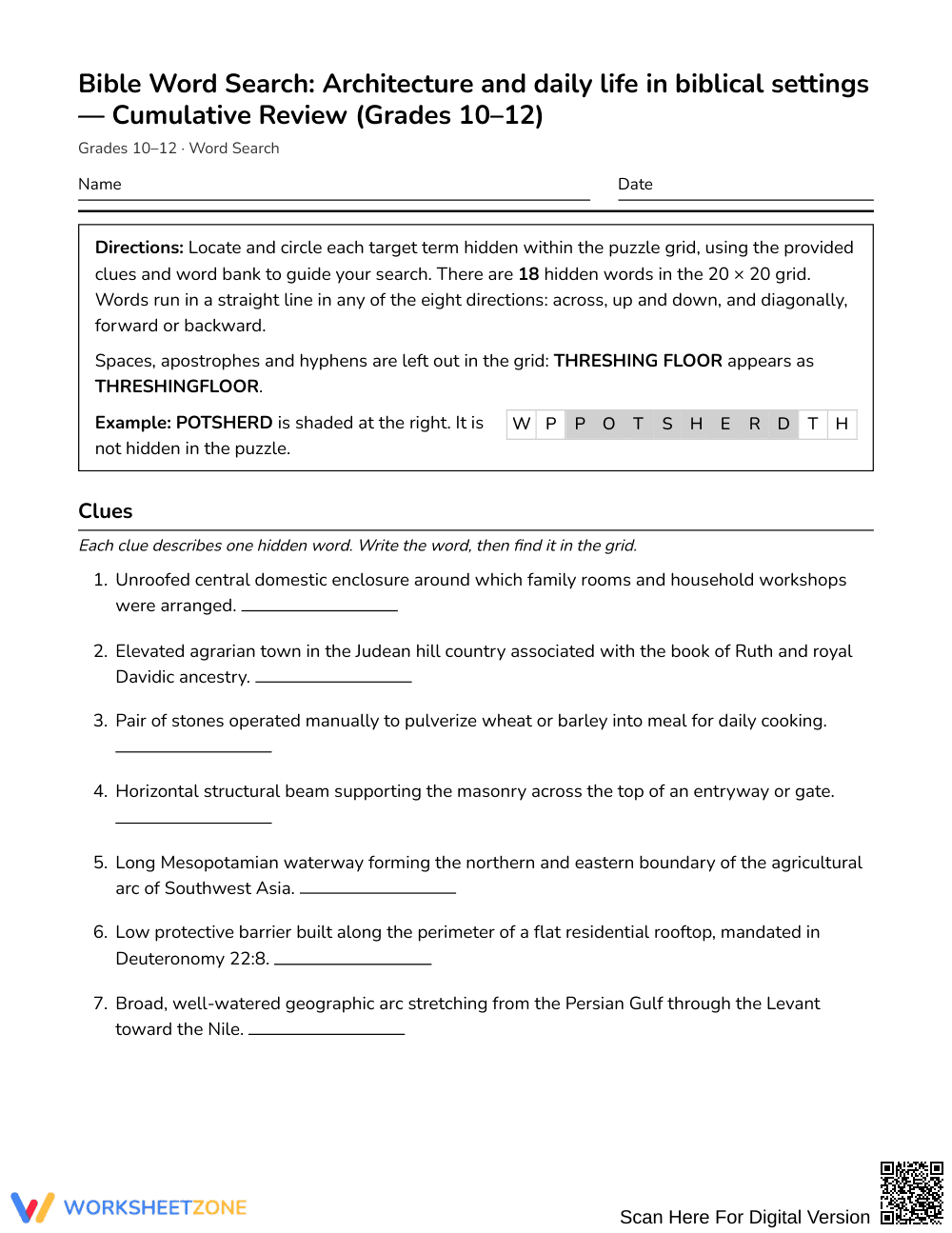
Build high school literary background knowledge and domain vocabulary with this cumulative review puzzle. Students examine definitions of ancient structures, domestic implements, and regional geography, connecting 18 words to historical and literary contexts. This activity reinforces retention through contextual clues and systematic letter-grid visual scanning.
At a Glance
- Grade: Grades 10–12 · Subject: English Language Arts (ELA)
- Standard: Not standards-assessed — vocabulary enrichment
- Skill Focus: Architecture and daily life in biblical settings
- Format: 3 pages · 18 words · Answer key included · PDF
- Best For: Background building and review
- Time: 25–35 minutes
What's Inside
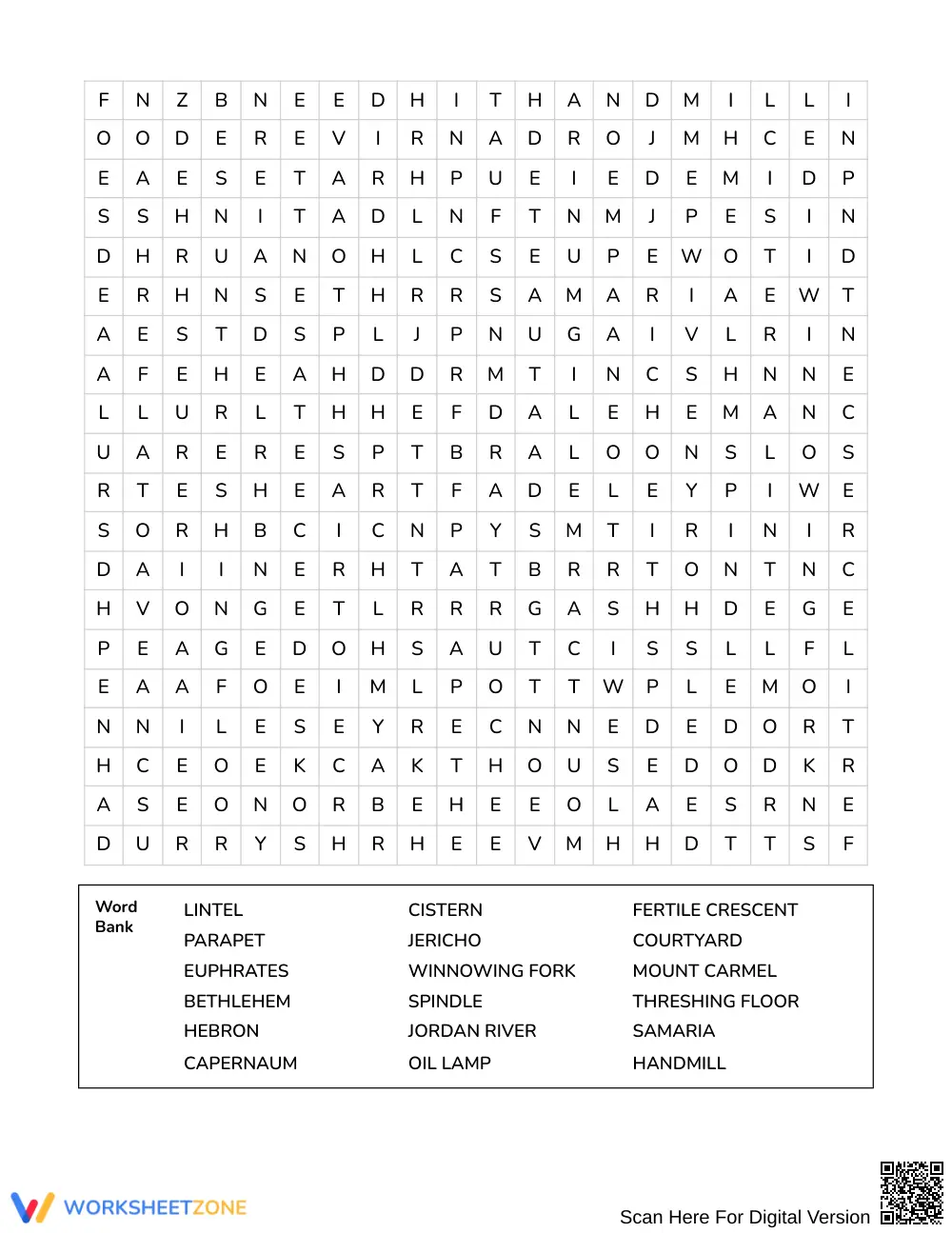
This 3-page printable resource pairs rigorous content with focused vocabulary practice. Students receive a detailed clue sheet featuring academic definitions for architectural elements, domestic tools, and geographic landmarks. A shuffled word bank provides spelling support while learners locate terms across the puzzle. A complete 4-page answer key displays exact grid coordinates and word placements for efficient checking.
Puzzle Mechanics & Structure
The activity is built on a dense 20 x 20 letter grid designed for secondary learners. Hidden terms run across all eight compass directions: North, Northeast, East, Southeast, South, Southwest, West, and Northwest. Students must read historical clues—such as descriptions of plaster-lined cisterns, threshing floors, or parapets—before locating the target vocabulary within the letter array. This structure requires active retrieval rather than passive letter matching.
Standards Alignment
This resource serves as specialized vocabulary enrichment and is not aligned to a specific state or national content standard. It provides valuable interdisciplinary context for world literature units, historical texts, and rhetorical analysis of biblical allusions.
How to Use It
Deploy this word search during an introductory unit on ancient literature or as a cumulative review following a study of biblical allusions. Have students read each clue aloud and highlight key descriptors before locating the hidden terms. As a formative check, observe whether students can explain the domestic function of items like the handmill or winnowing fork without re-reading the definitions. Typical completion time ranges from 25 to 35 minutes.
Who It's For
This activity is designed for Grades 10–12 students studying classical literature, world history, or literary allusions. For students needing support, encourage working in pairs to match clues before scanning the grid. Pair this activity directly with an architectural diagram of an ancient Levantine dwelling or a historical context anchor chart.
Explicit vocabulary instruction rooted in domain-specific context strengthens reading comprehension across complex historical texts. According to Fisher & Frey (2014), intentional exposure to technical terminology through multi-step retrieval tasks enhances long-term retention and conceptual schema development. This word search engages secondary students in identifying 18 specialized terms related to ancient architecture and material culture, including structural elements like lintels, domestic tools like spindles, and key geographic landmarks across the Fertile Crescent. Rather than relying on rote memorization, learners synthesize descriptive definitions that explain how physical structures and daily implements shaped historical life. Providing a complete answer key and structured clues ensures that high school students independently reinforce critical vocabulary, building the interpretive background knowledge necessary for advanced literary analysis and textual synthesis.


