































Essential Hebrew Bible Books Word Search | Grades 8–10 ELA

Paste this activity's link or code into your existing LMS (Google Classroom, Canvas, Teams, Schoology, Moodle, etc.).
Students can open and work on the activity right away, with no student login required.
You'll still be able to track student progress and results from your teacher account.
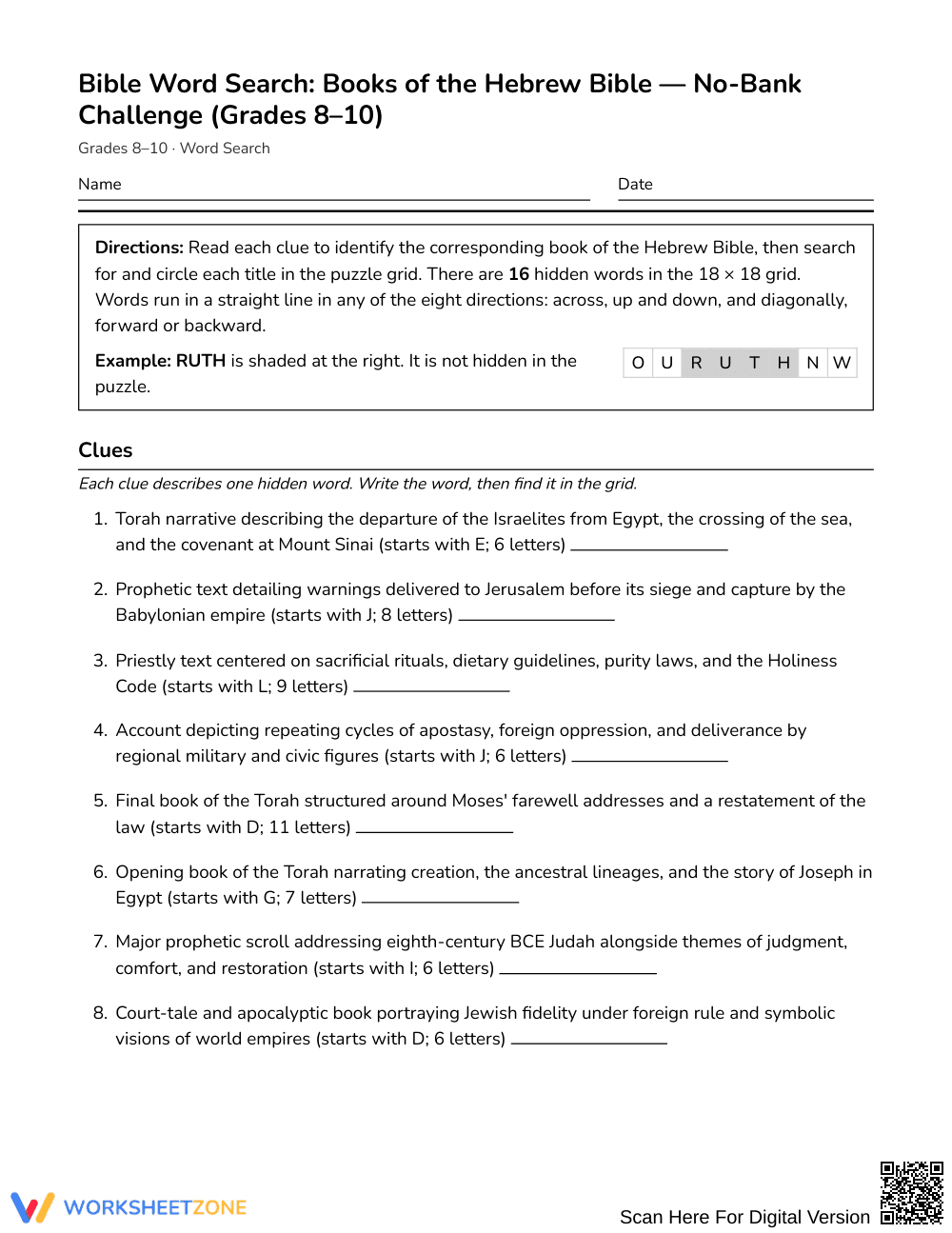
This vocabulary word search reinforces literary and historical terminology by prompting learners to recall and locate 16 major books of the Hebrew Bible. Designed for secondary English Language Arts classrooms studying foundational texts or comparative literature, students read descriptive structural clues to deduce each title before locating it within the puzzle grid.
At a Glance
- Grade: Grades 8–10 · Subject: English Language Arts (ELA)
- Standard: Not standards-assessed — vocabulary enrichment
- Skill Focus: Hebrew Bible book identification and literary vocabulary
- Format: 3 pages · 16 words · Answer key included · PDF
- Best For: Literary context review or sub plans
- Time: 25–35 minutes
What's Inside
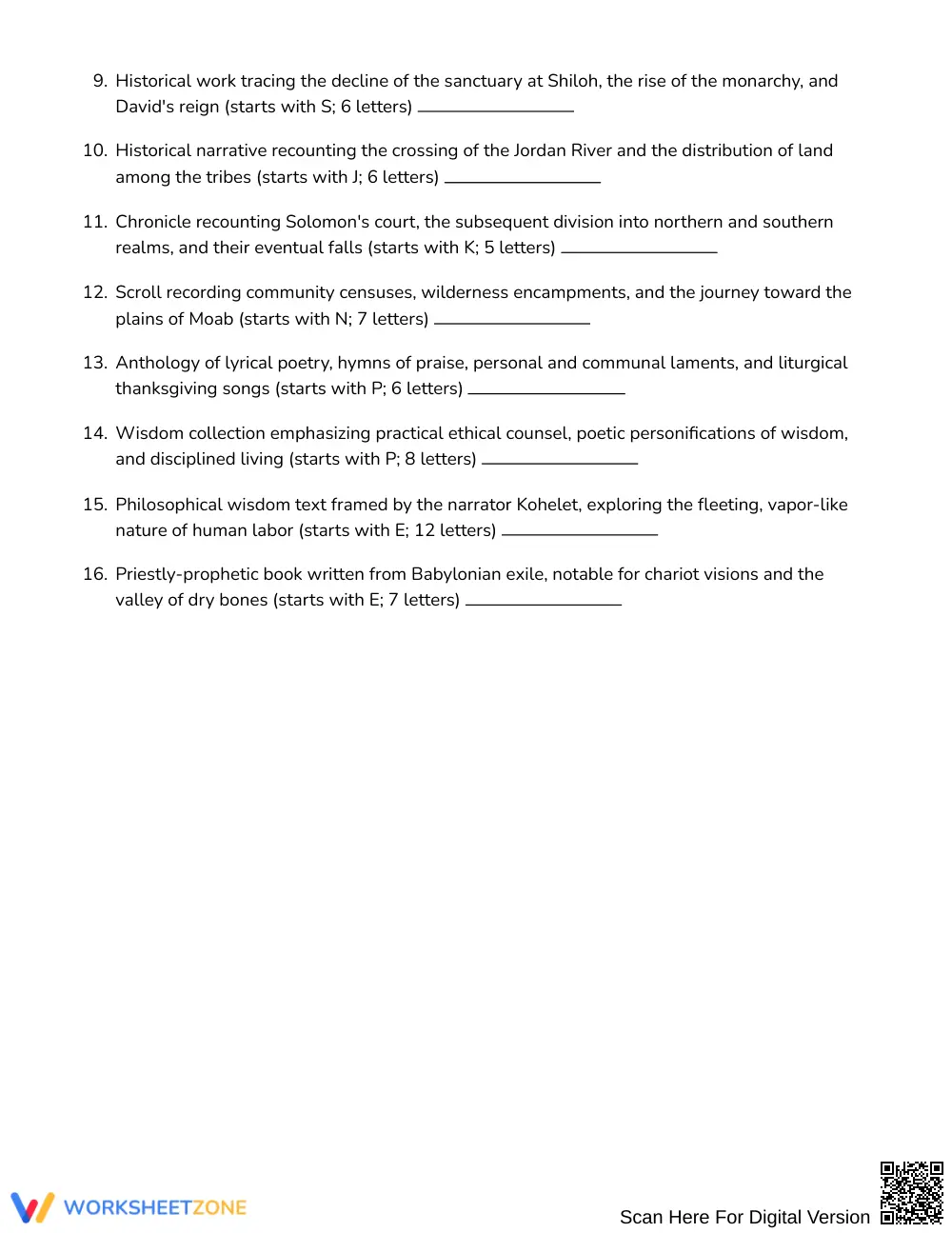
This 3-page printable PDF features an 18 by 18 puzzle matrix paired with 16 descriptive contextual clues. Instead of relying on an alphabetical word bank, students must read analytical summaries of each biblical book—spanning the Torah, historical narratives, prophetic texts, and wisdom literature—to deduce the correct title. A complete 4-page answer key provides clear letter highlights for all hidden terms.
Puzzle Structure and Mechanics
This activity provides a rigorous vocabulary puzzle format built without a traditional word bank. The 18 by 18 letter grid conceals 16 target titles running in all 8 compass directions: north, northeast, east, southeast, south, southwest, west, and northwest. Students must first read content-based clues—such as descriptions of priestly purity laws, monarchical chronicles, or apocalyptic visions—to identify the terms before hunting through overlapping forward, backward, and diagonal letter paths.
Standards Alignment
This resource serves as targeted vocabulary enrichment and cultural literacy support rather than a standards-assessed test preparation task. It connects broadly to secondary reading benchmarks for analyzing foundational religious and philosophical texts as literary works, building domain-specific vocabulary across World Literature and ancient history units.
How to Use It
Implement this word search during an introductory background phase for ancient literature units, or assign it as an independent post-reading enrichment task. During classwork, observe whether students can identify books from the clues alone or need reference charts to deduce the titles before searching. The full activity requires approximately 25 to 35 minutes of focused student work.
Who It's For
This activity is designed for students in Grades 8–10 studying mythology, world religions as literature, or classical allusions in English Language Arts. For students needing support, pair the activity with a table of contents from a study Bible or an anchor chart listing Hebrew Bible divisions.
According to Fisher & Frey (2014), content-area literacy expands when students engage with domain-specific terminology through retrieval routines that require semantic processing rather than passive copying. This word search activity supports secondary vocabulary enrichment by requiring learners in Grades 8–10 to interpret literary, structural, and historical clues before identifying 16 major books of the Hebrew Bible across an 18 by 18 grid. By removing the traditional word bank and requiring students to analyze definitions covering narrative themes, prophetic genres, and poetic forms, the resource promotes active retrieval and cognitive engagement. Solving clues across multiple compass directions reinforces orthographic pattern recognition and contextual retention during literary units examining foundational religious texts. The self-checking design ensures independent student accountability during direct vocabulary instruction, sub plans, or background study in ancient world literature courses.


