The first days back from summer decide more than seating charts. Before new academic content picks up speed, you need a quick read on where students stand — both what they remember and how they're feeling about being back. That's the practical case for pairing assessments and SEL tools for back to school preparation: low-prep checks that surface academic baselines and social-emotional needs in the same short window.
Why the First Two Weeks Set Up the Whole Year
The opening two weeks are when routines harden and relationships form. If you collect baseline information now, you can plan small groups, pace review, and flag students who need a closer look before gaps widen. Wait until October and you're reacting instead of planning.
Back-to-school assessment does two jobs at once. Academic checks tell you what stuck over the summer and what slid. SEL check-ins tell you who walked in anxious, who's already disengaged, and who's ready to lead. Reading both together keeps you from mistaking a regulation problem for a skills problem, or the reverse.
The tools that work in week one share three traits: they're fast, they're print-and-go, and they give you data you can act on the next morning. A 90-second mood meter and a five-question math warm-up both qualify. A 40-minute diagnostic does not — not yet.
What's Inside the Back-to-School Assessment and SEL Collection
Worksheetzone's back-to-school collection is built for that week-one reality. Every tool is zero-prep and print-and-go, so you can pull a class set the night before without building anything from scratch.
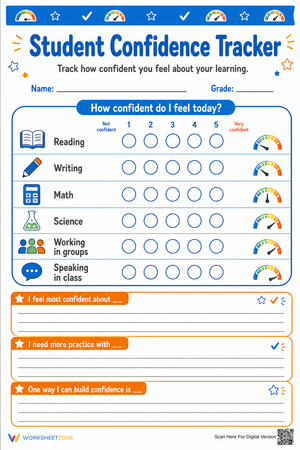
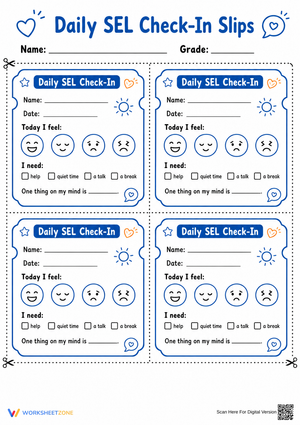
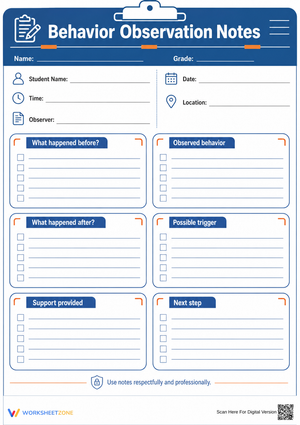
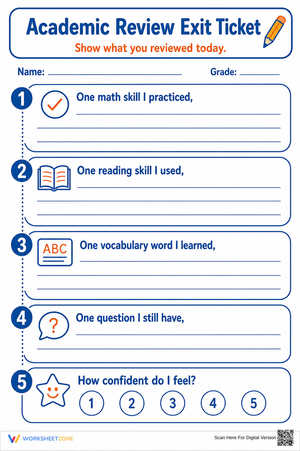
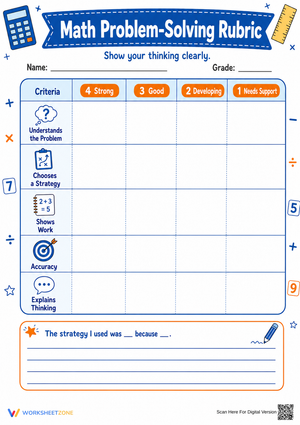
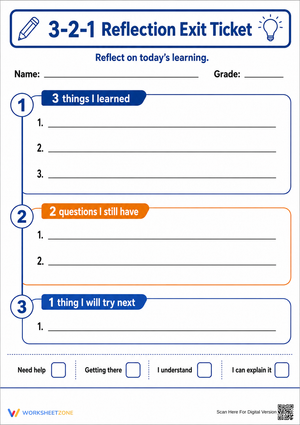
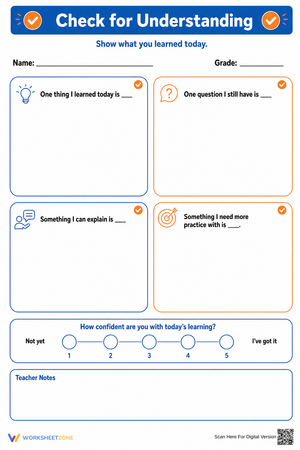
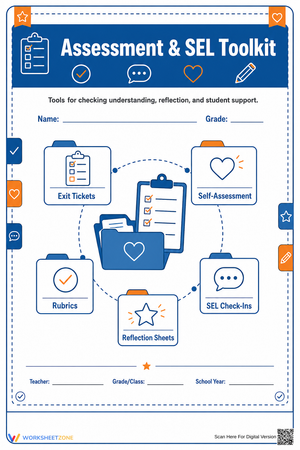
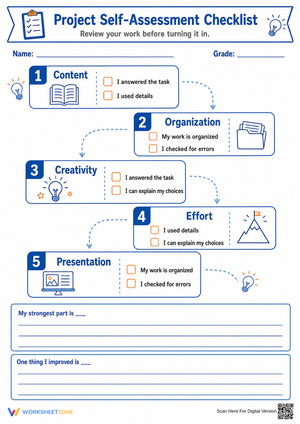
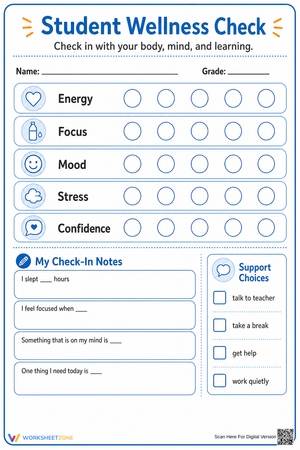
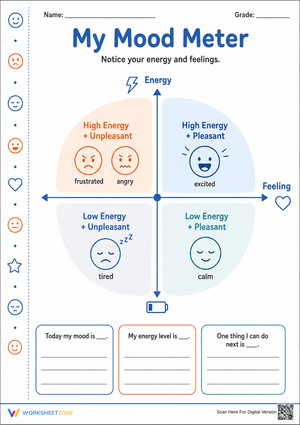
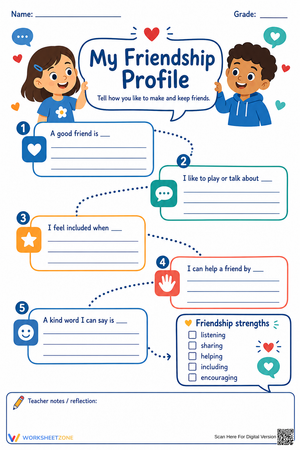
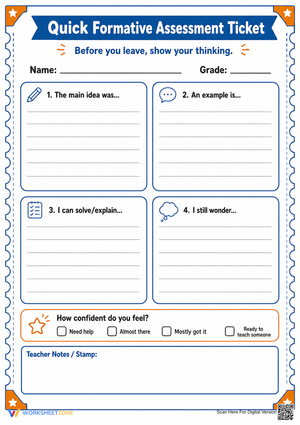
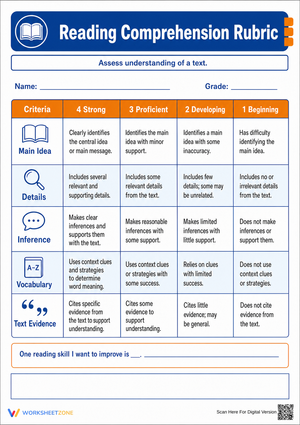
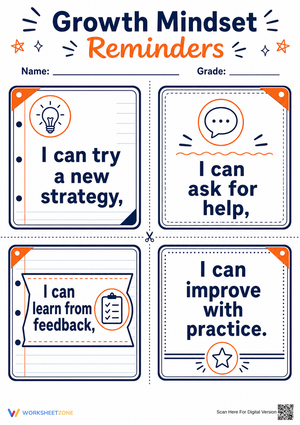
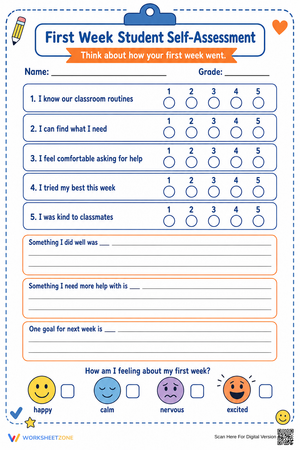
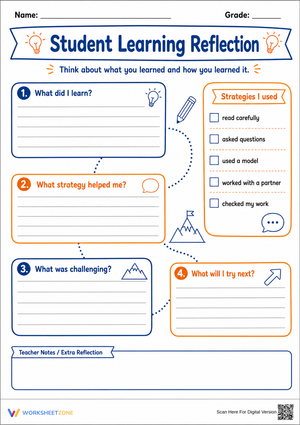
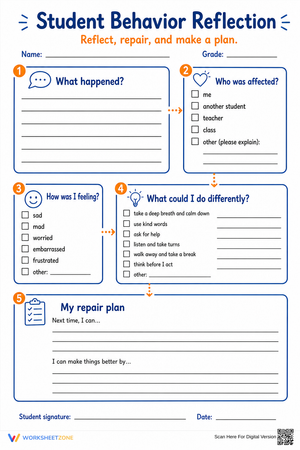
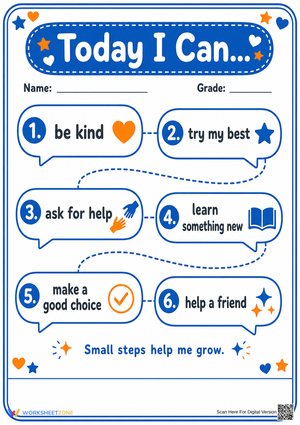
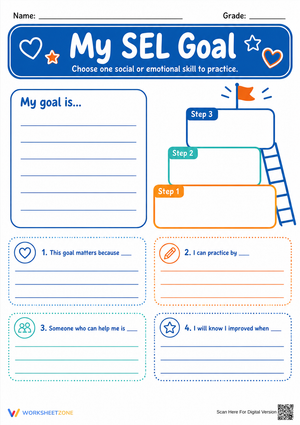
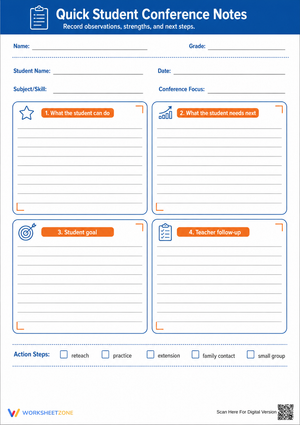
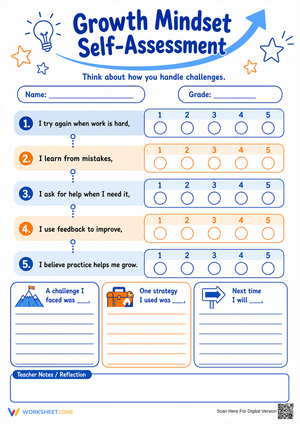
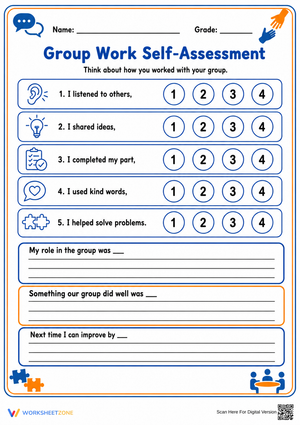
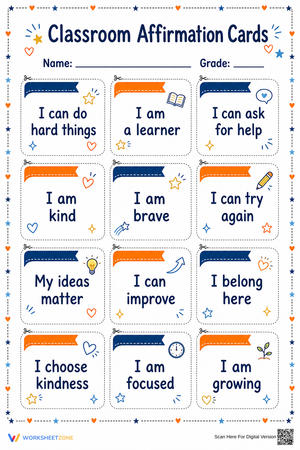
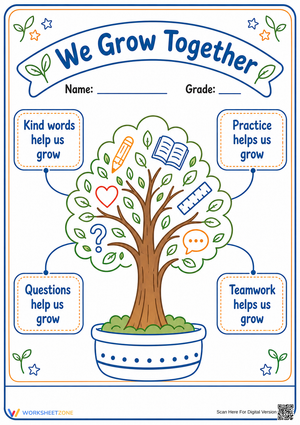
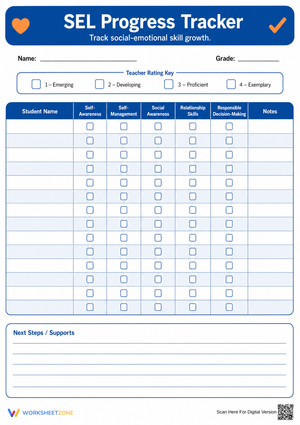
The SEL side includes mood meters, wellness checks, calm-down choice boards, feelings thermometers, goal-setting guides, and behavior reflection sheets. The academic and formative side includes exit tickets, confidence trackers, conference notes, and progress trackers you can reuse all year. Most check-in tools span K-8, with primary formats like feelings thermometers and calm-down boards and upper-elementary or middle formats like confidence trackers and conference notes drawn from the same set.
Here's the part teachers miss: the highest-value back-to-school tool isn't the screener, it's the one you can run every single day without friction. A daily two-minute mood meter builds a longitudinal record across the first month — far more useful for spotting a downward trend in one student than a single deep screen given once in September. In the opening weeks, frequency beats depth.
Match the Tool to the Purpose
Not every check-in is an assessment, and treating them as interchangeable wastes time. Sort your tools by purpose before you print.
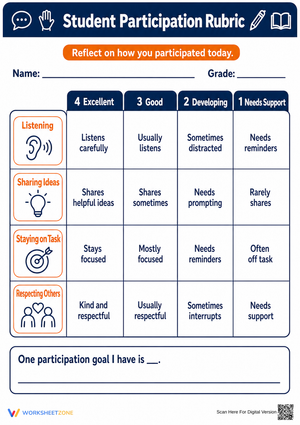
Mood meters and wellness checks are formative SEL pulse-checks — quick, frequent, and low-stakes, a way to see the room rather than score a student. Exit tickets and rubrics are academic formative assessment; they measure a specific skill against a specific target. Standardized SEL screeners sit in a third category: structured, validated instruments that take roughly a minute per student and feed a more formal data process.
According to RAND's 2024 report on social and emotional learning in US schools, 83% of principals said their schools used an SEL curriculum in 2023-2024, up from 76% two years earlier, and 49 states plus DC now hold at least one policy that actively promotes SEL.
Knowing which bucket a tool belongs to tells you how to use the result. A wellness check that trends red for one child is a signal to talk, not a grade. An exit ticket that 60% of the class misses is a signal to reteach tomorrow. Grading feelings, or treating one quiz as a personality read, is the most common first-month mistake.
Classroom Implementation
Here's a sequence that embeds both kinds of data without eating instruction time.
- Days one to three: run a one-page SEL baseline — a mood meter plus a short goal-setting guide — during morning arrival while you take attendance.
- Day two onward: add a daily two-minute mood meter as a bell-ringer. Students mark it, you scan it, you keep the sheets.
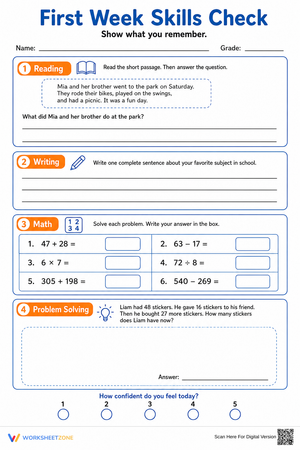
- End of week one: give one short academic warm-up per core subject — five questions, exit-ticket length — for a rough baseline without a formal diagnostic.
- End of week two: pull the stack. Look for SEL trends and for academic patterns the class missed together.
- Ongoing: keep the progress tracker and conference notes in one folder per student so the data stays conference-ready.
The discipline that makes this work is restraint. Pick one SEL tool and one academic tool to run consistently, not six. A daily check you actually sustain for a month beats an elaborate system you abandon by week three. Store everything the same way each day so review takes minutes, not a prep period.
Grade-Band Tips for K-2 and Grades 3-8
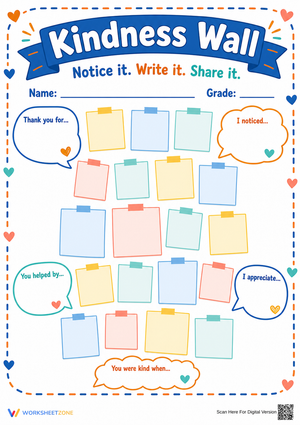
The same goals need different formats across grade bands. For K-2, keep it visual and concrete. Feelings thermometers, color-coded mood meters, and calm-down choice boards let pre-readers and early readers report how they feel without writing. Pair them with a simple kindness wall or calm corner so the room itself reinforces the language you're teaching.
For grades 3-8, shift toward ownership. Confidence trackers, written goal-setting guides, and student-completed conference notes ask older students to name a goal, rate their own readiness, and reflect after a setback — the point where SEL tools start doubling as metacognition practice. Across both bands the academic checks scale the same way: picture-supported exit tickets for the youngest students, short-response and self-rating exit tickets for older ones. Keep the structure identical so students learn the routine once and reuse it all year.
Frequently Asked Questions
1. What SEL assessment tools work best for the first week of school?
Start with fast, visual tools: a mood meter, a short wellness check, and a one-page goal-setting guide. They give you a baseline read on how students are walking in without taking instructional time, and they double as community-builders in the opening days.
2. How often should teachers run SEL check-ins during back-to-school?
Aim for a daily two-minute check-in for the first month. Frequency is what lets you spot a trend — one red day is noise, three red days in a row is a signal. A quick daily pulse beats a single deep screen given once in September.
3. How do mood meters and wellness checks differ from standardized SEL screeners?
Mood meters and wellness checks are low-stakes pulse-checks you read informally. Standardized screeners are structured, validated instruments — often about a minute per student — that feed a formal data process. Use the quick tools daily and reserve screeners for the more formal review.
4. Can print-and-go tools count as formative assessment for conferences or IEP documentation?
Yes, when you keep them. Dated exit tickets, progress trackers, and conference notes stored per student create a record you can bring to parent conferences or IEP meetings as concrete work samples and trend data.
5. How do teachers use exit tickets alongside SEL tools without overwhelming students?
Keep each one short and routine. One SEL check at arrival and one exit ticket at dismissal is plenty in the first weeks. Identical formats each day mean students learn the routine once, so neither tool adds friction.












 Interactive Worksheet Maker
 Quiz Maker
 Word Search Maker
 Crossword Puzzle Maker
 Word Scramble Generator
 Sentence Scramble Generator
 Handwriting Worksheet Generator
 Name Tracing Generator
 Fill In The Blank Generator