


























Views
Downloads

Printable Conducting Electricity Worksheet | Grade 5 Science
Paste this activity's link or code into your existing LMS (Google Classroom, Canvas, Teams, Schoology, Moodle, etc.).
Students can open and work on the activity right away, with no student login required.
You'll still be able to track student progress and results from your teacher account.
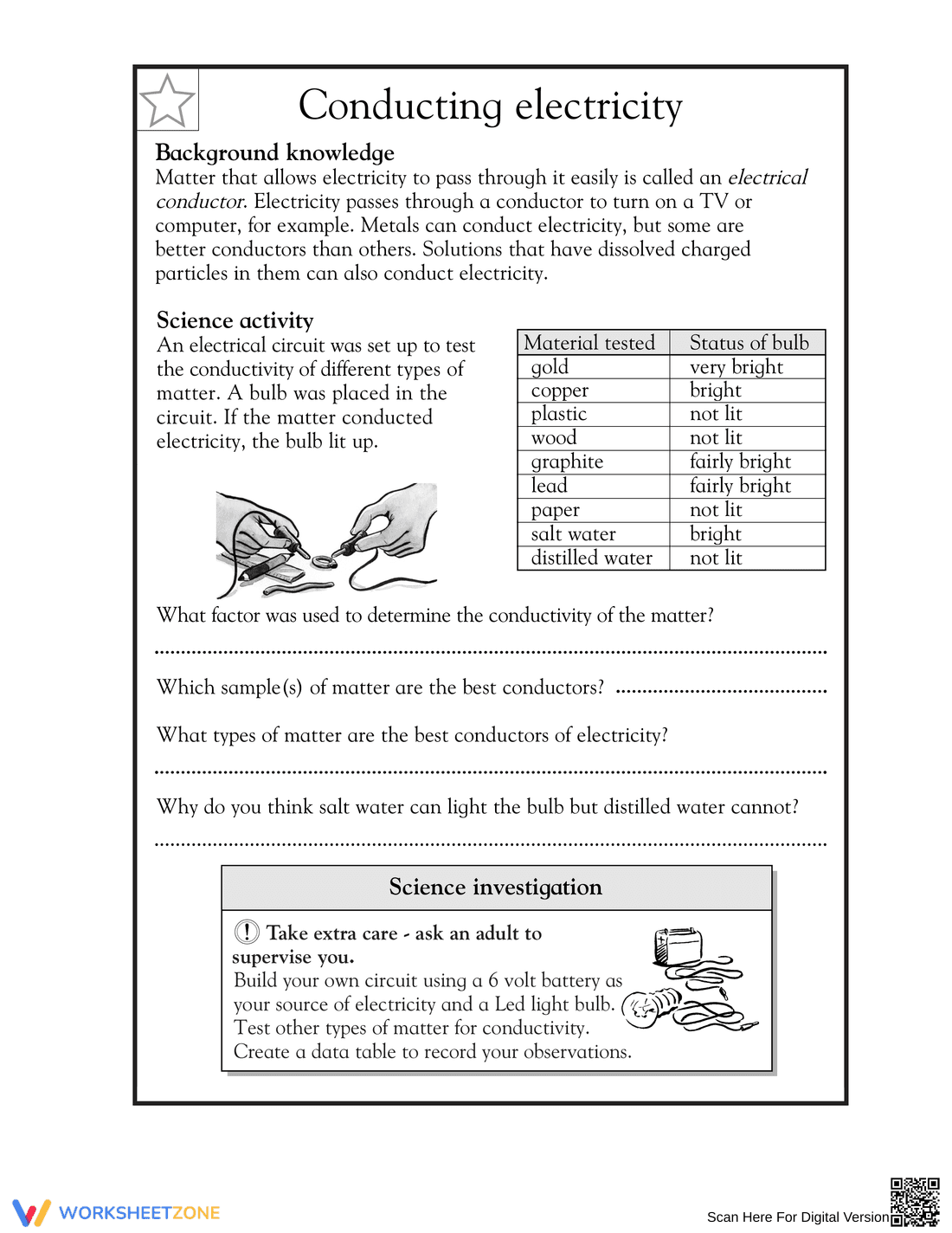
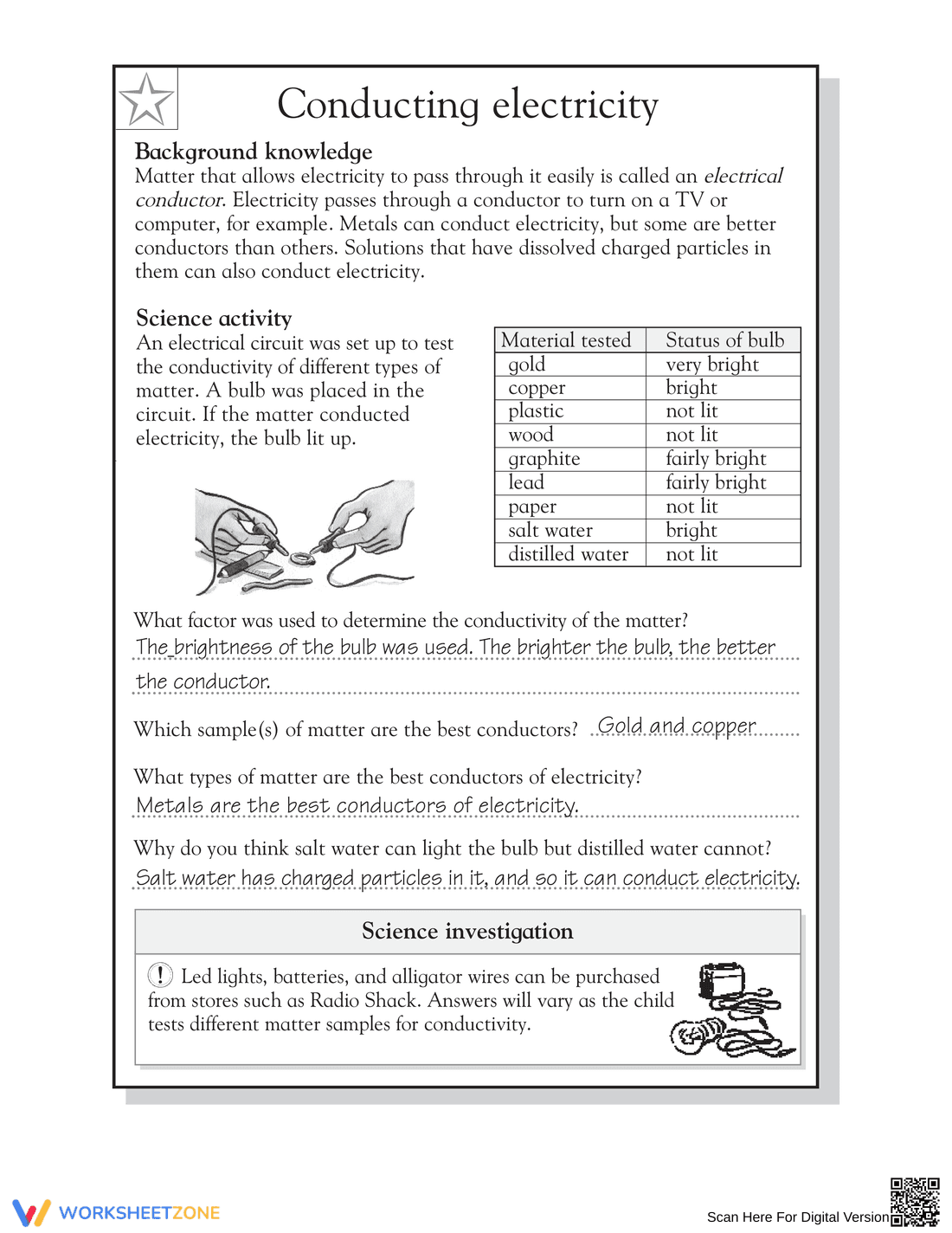
Identify conductors and insulators with this hands-on science worksheet. Students analyze experimental data to determine how different materials affect electrical circuits. By comparing metals like gold and copper to non-metals like plastic and wood, learners develop a concrete understanding of matter properties and conductivity outcomes in real-world applications.
At a Glance
- Grade: 5 · Subject: Science
- Standard:
5-PS1-3— Make observations and measurements to identify materials based on their properties- Skill Focus: Electrical conductivity and insulation
- Format: 1 page · 4 problems · Answer key included · PDF
- Best For: Introduction to physical properties of matter
- Time: 15–20 minutes
This one-page PDF features a comprehensive background knowledge section that defines electrical conductors and explains the role of charged particles. The core activity presents a structured data table from a circuit test, followed by four critical-thinking questions. A completed answer key is provided for immediate feedback, along with a bonus science investigation prompt for hands-on extension.
This resource is designed for a seamless classroom experience. First, print the single-page worksheet for your class (30 seconds). Second, distribute the sheets to students for independent or small-group analysis of the conductivity table (15 minutes). Finally, use the included answer key to review findings or grade submissions (2 minutes). It is a perfect emergency sub plan.
This worksheet is strictly aligned to 5-PS1-3, which requires students to make observations and measurements to identify materials based on their properties. By analyzing how different substances like graphite, salt water, and metals interact with an electrical circuit, students practice identifying materials through specific physical characteristics. Both standard codes can be copied directly into lesson plans, IEP goals, or district curriculum mapping tools.
Use this worksheet as a mid-lesson check after introducing the basic concepts of electricity and circuits. While students work, observe whether they can distinguish between the conductivity of metals and non-metals based on the bulb's brightness. This serves as an excellent formative-assessment tool to see if students understand that dissolved particles in solutions like salt water enable electrical flow.
This activity is tailored for Grade 5 students exploring physical science and matter properties. It is highly effective for visual learners who benefit from data tables and can be paired naturally with a physical circuit-building station or an anchor chart showing the differences between conductors and insulators.
According to the NGSS framework and supporting research from RAND AIRS 2024, providing students with structured data analysis tasks is essential for developing scientific literacy. This worksheet focuses on the 5-PS1-3 standard, specifically identifying materials by their electrical conductivity. Research indicates that connecting theoretical background knowledge to observable experimental evidence—such as the brightness of a bulb in a circuit—significantly improves long-term retention of physical science concepts. By engaging with 4 targeted analysis questions, students move beyond rote memorization to evidence-based reasoning. This approach aligns with best practices in inquiry-based learning, ensuring that Grade 5 learners can accurately classify matter based on physical properties. The inclusion of a hands-on investigation extension further reinforces these outcomes by encouraging students to apply their findings in a practical, supervised environment. This resource provides a robust foundation for future studies in electrical engineering and chemistry.


