


























Views
Downloads

Essential Wood Properties Worksheet | Grade 3 Science
Paste this activity's link or code into your existing LMS (Google Classroom, Canvas, Teams, Schoology, Moodle, etc.).
Students can open and work on the activity right away, with no student login required.
You'll still be able to track student progress and results from your teacher account.
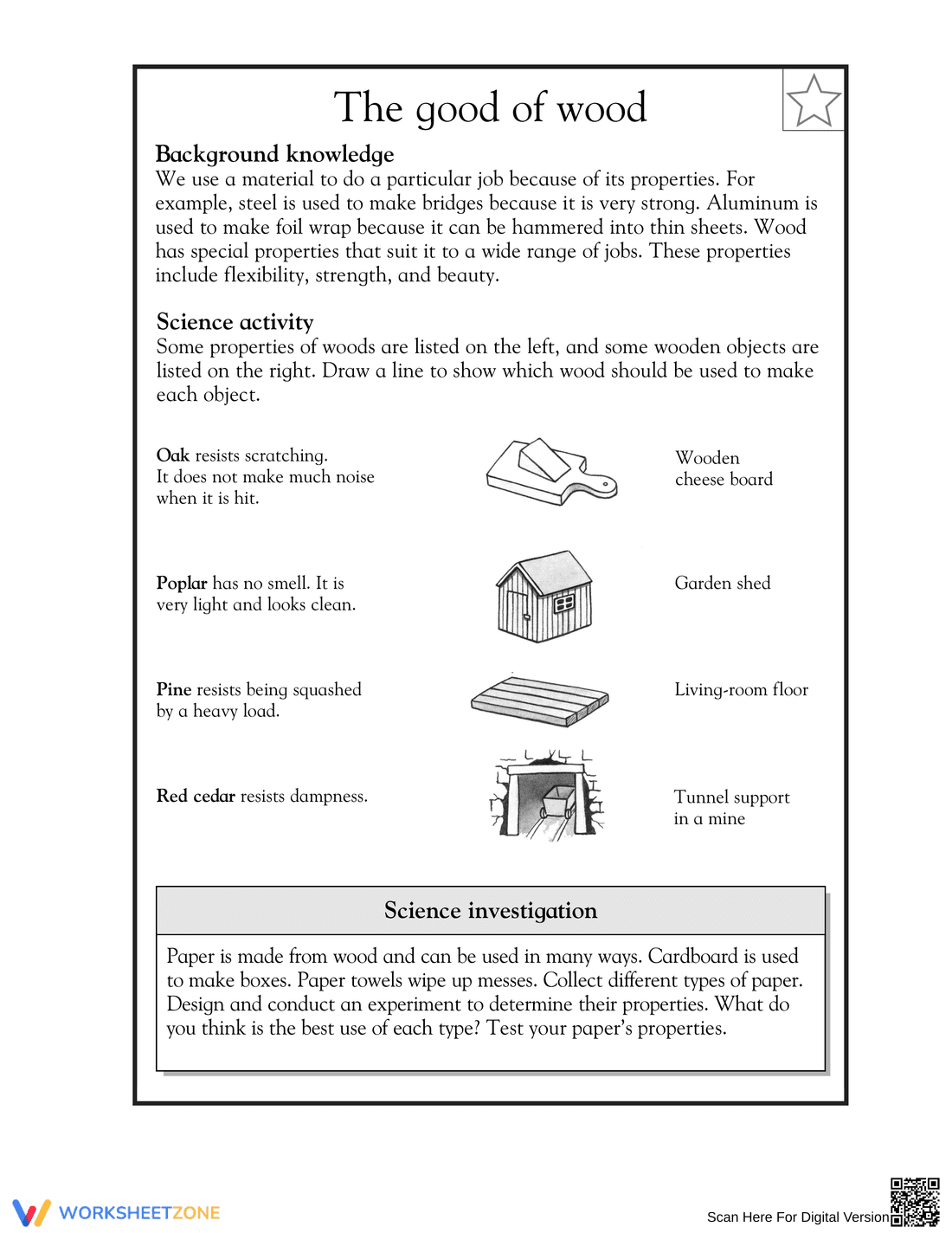
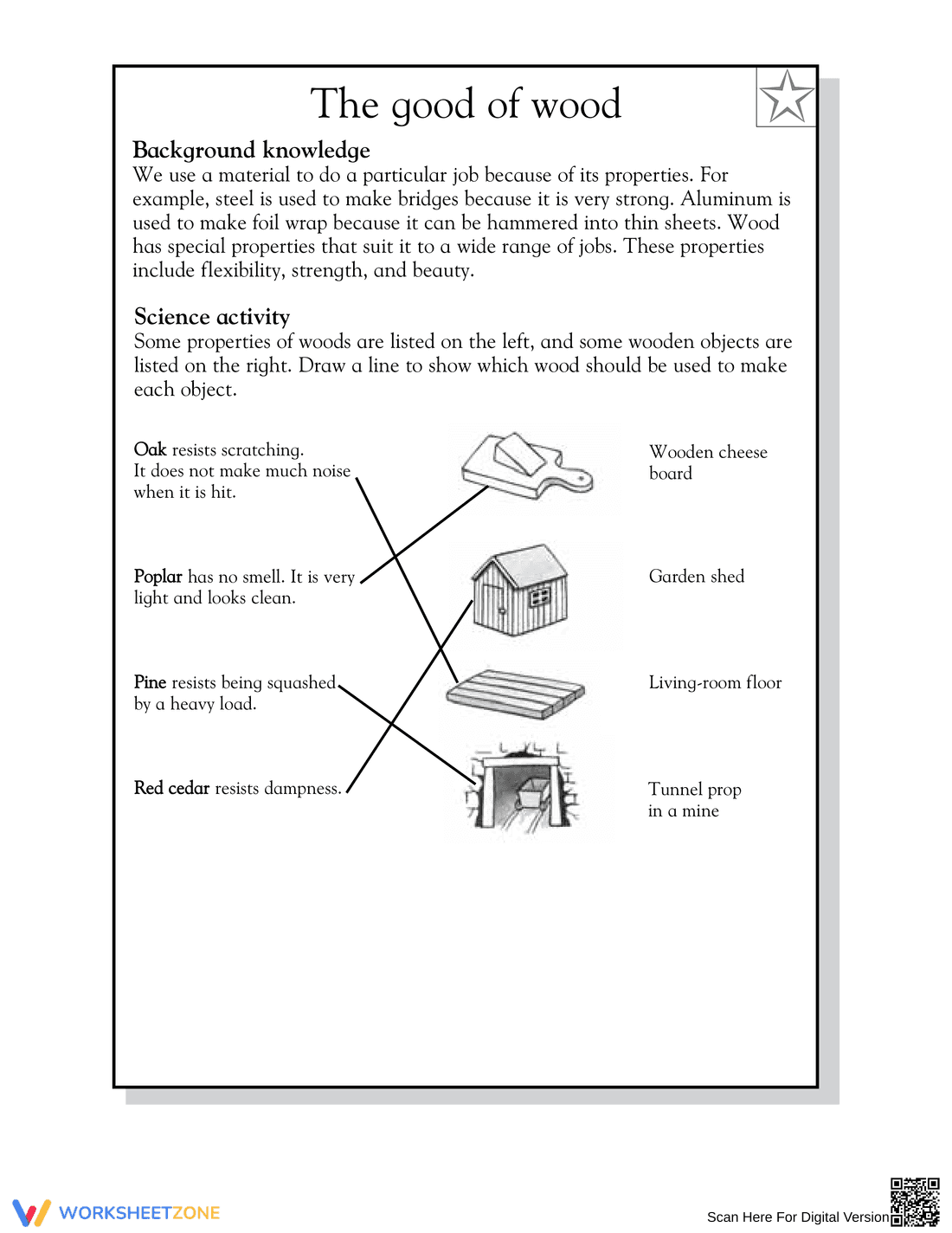
This Grade 3 science worksheet helps students identify the physical properties of different wood types and determine their ideal applications. By matching materials like oak and cedar to specific construction projects, students learn to evaluate how characteristics like durability and weight influence engineering decisions.
At a Glance
- Grade: 3 · Subject: Science
- Standard:
3-5-ETS1-2— Compare multiple solutions based on how well they meet specific criteria- Skill Focus: Material properties and functional application
- Format: 1 page · 5 problems · Answer key included · PDF
- Best For: Classroom science centers or homework
- Time: 15–20 minutes
This single-page resource features a background knowledge section explaining the concept of material properties using steel and aluminum examples. Students match four wood varieties—oak, poplar, pine, and red cedar—to their best uses based on provided clues. An additional investigation prompt encourages hands-on exploration of paper properties.
Zero-Prep Workflow
Teachers can implement this activity in three simple steps. First, print the required copies (1 minute). Next, distribute the sheets and have students read the background text independently (1 minute). Finally, review the matching answers as a whole group to check for understanding (5 minutes). Total preparation time is minimal, making it an ideal sub plan.
Standards Alignment
Aligned to standard `3-5-ETS1-2`, this resource requires students to generate and compare multiple possible solutions to a problem based on how well each is likely to meet the criteria and constraints. Students evaluate properties like "resists scratching" or "resists dampness" to select the optimal material. Both standard codes can be copied directly into lesson plans, IEP goals, or district curriculum mapping tools.
How to Use It
Use this worksheet as a formative assessment after a direct instruction lesson on natural resources or engineering design. While students work, observe if they can articulate why a specific property (like poplar's light weight) is a requirement for the chosen object (the garden shed). Expect completion in under 20 minutes during a science block.
Who It's For
This activity is designed for 3rd-grade students exploring physical science and engineering concepts. The visual cues make it accessible for English Language Learners and students needing scaffolding. It pairs naturally with a hands-on "wood sample" tray or an anchor chart listing common physical properties of natural materials.
The standard `3-5-ETS1-2` focuses on the foundational engineering skill of evaluating material suitability based on specific criteria and constraints. This worksheet translates this abstract concept into concrete practice by requiring students to match wood properties—such as moisture resistance and structural strength—to practical use cases like tunnel supports and flooring. Research from RAND AIRS 2024 emphasizes that connecting physical science concepts to real-world engineering scenarios significantly improves long-term retention of material properties among elementary learners. By engaging with these specific scenarios, students move beyond simple identification toward higher-order evaluative thinking. This resource provides the necessary scaffolding to bridge the gap between observing a property and applying that knowledge to solve a design problem. It is an essential component of any inquiry-based science curriculum that prioritizes the practical application of scientific facts in the built world.


