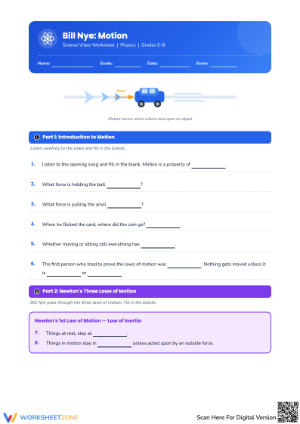
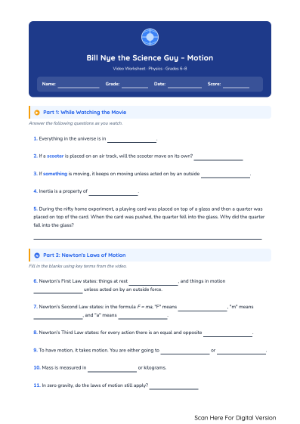
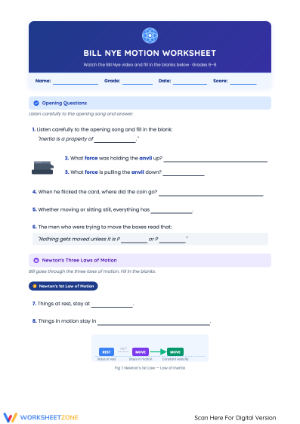
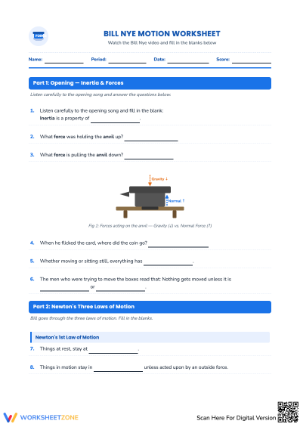
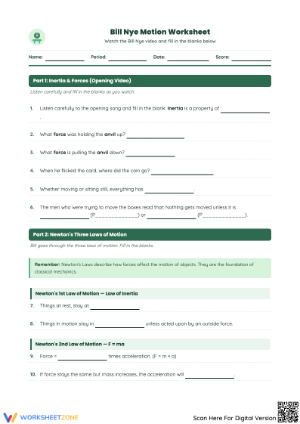
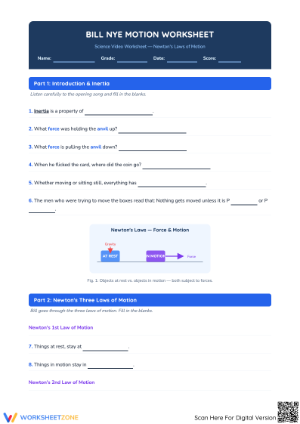
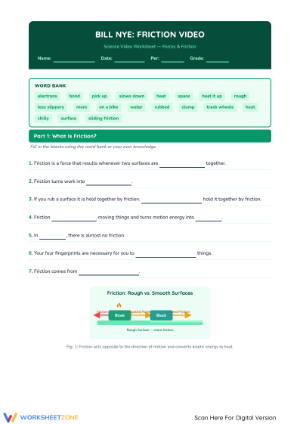
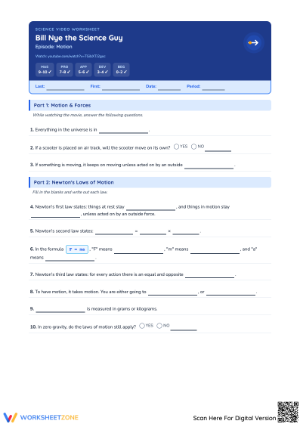
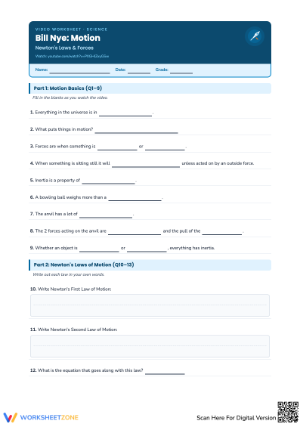
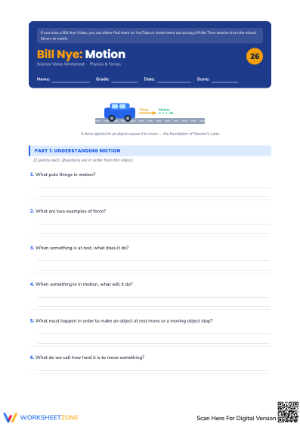
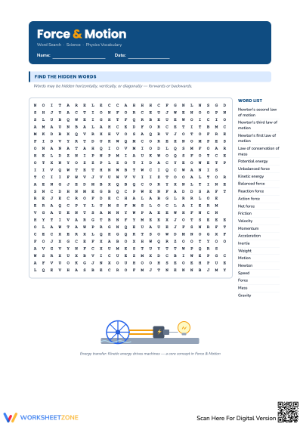
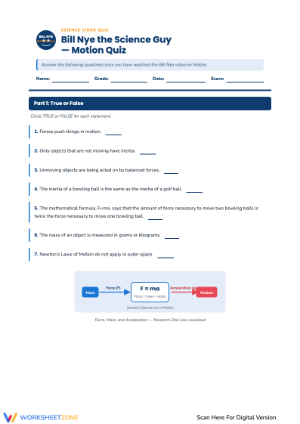
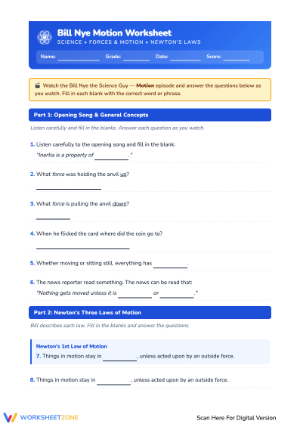
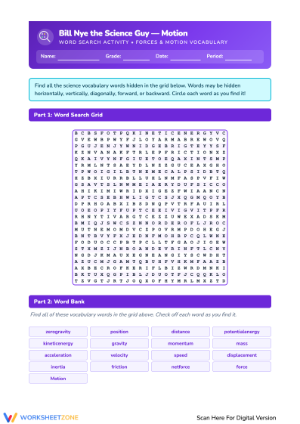
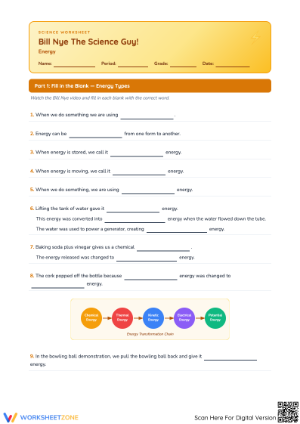
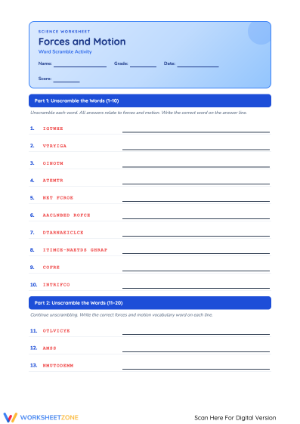
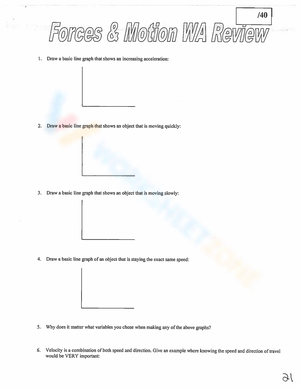
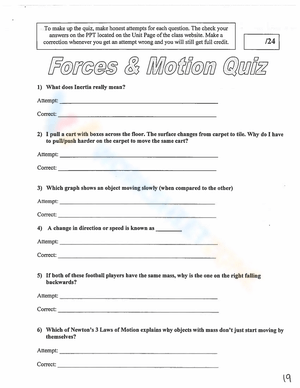
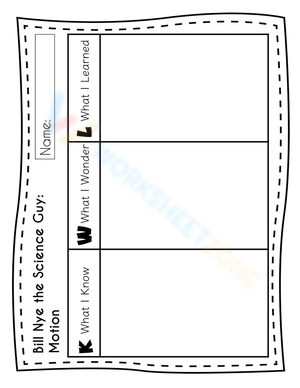
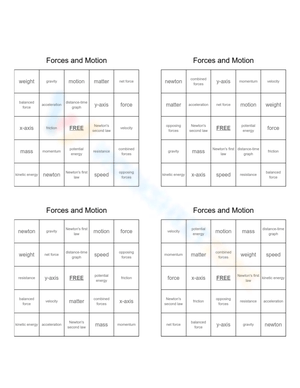
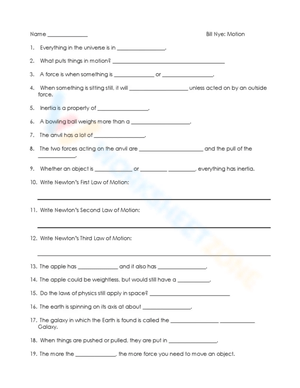
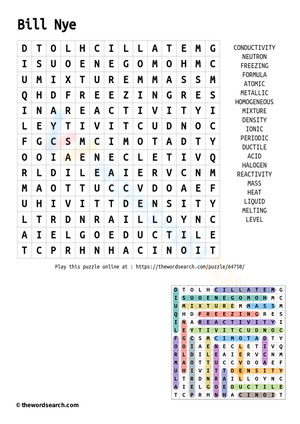
I still remember the afternoon when my middle school science class slumped into their seats, completely uninterested in another lecture about velocity and acceleration. Diagrams on the board were not landing, and my voice felt like background noise. That was the day I rolled the projector forward and decided to try something different with Bill Nye motion worksheets paired with a short clip from one of his classic episodes.
Within minutes, the energy in the room shifted. Students who normally avoided eye contact were leaning forward, scribbling answers, and debating whether a rolling skateboard had more momentum than a soccer ball mid-kick. The printable pages gave structure to the curiosity that the video sparked, turning passive watching into active thinking. Each question on the worksheet asked them to observe, predict, and explain in their own words.
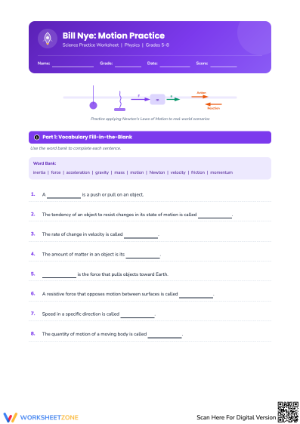
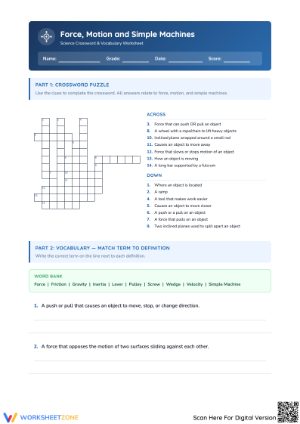
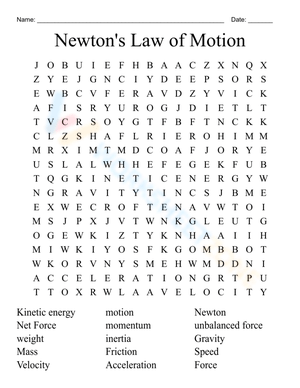
What makes these resources powerful is the way they let students lead their own discovery. Instead of memorizing definitions, learners track examples of motion as they appear on screen, then circle back to apply Newton's ideas in fresh contexts. I added a quick push and pull practice page as a warm-up, and the bridge between everyday experience and physics vocabulary became surprisingly natural for my students.
Parents have shared similar stories with me during conferences. One mother described her son sprawled on the living room rug, pausing the show every few seconds to fill in his Bill Nye motion worksheets and ask questions about why his bike rolls farther on the driveway than the grass. That kind of self-directed exploration is exactly what teachers and parents hope to see, and the printable PDF format makes it easy to bring science home without extra prep.
If you are looking for ways to spark those quiet lightbulb moments, consider pairing video, conversation, and a thoughtful lesson plan with these worksheets. You can also extend the unit using ideas from this collection of middle school science experiments, giving students another hands-on path to understand the same concepts. Worksheetzone makes it simple for teachers, parents, and students to keep building confidence with Bill Nye motion worksheets.
Frequently Asked Questions
Question 1: What grade levels work best with Bill Nye motion worksheets?
These worksheets fit comfortably with upper elementary, middle school, and early high school classrooms. Fourth and fifth graders enjoy the introductory questions about speed and direction, while seventh and eighth graders dig into force, acceleration, and Newton's laws. High school teachers often use the pages as quick review or as a bridge into more advanced physics units, since the structure supports both visual learners and students who benefit from guided notes during the video.
Question 2: How can parents use these worksheets at home?
Parents can print the worksheet, queue up the matching episode, and let children pause the video to record observations. The worksheet acts like a friendly co-pilot, prompting kids to notice examples of motion in everyday life such as bicycles, swings, and falling objects. Following along together also opens space for conversation about predictions and outcomes, turning a single afternoon into a memorable shared learning experience built around real curiosity.
Question 3: Do the worksheets align with standard science curricula?
Yes, most pages map directly to common science standards covering forces, motion, and Newton's three laws. Teachers can slot the activities into existing lesson plans on momentum, friction, gravity, or simple machines without extra rewriting. The questions reinforce vocabulary that appears on classroom assessments, which makes the worksheets useful for both initial instruction and end-of-unit review when students need a focused way to consolidate concepts before testing.
Question 4: What materials work alongside these printables?
Pair the printables with a tablet or projector for the video, pencils, and a notebook for extension questions. Many teachers add small classroom items such as toy cars, marbles, or rulers so students can recreate examples of motion described on the worksheet. A short discussion guide also helps groups compare answers, while a follow-up exit ticket gives the teacher a quick snapshot of which physics ideas need another round of attention.












 Interactive Worksheet Maker
 Quiz Maker
 Word Search Maker
 Crossword Puzzle Maker
 Word Scramble Generator
 Sentence Scramble Generator
 Handwriting Worksheet Generator
 Name Tracing Generator
 Fill In The Blank Generator