


























1 / 7
0
Views
0
Downloads

Save
0 Likes
Share
Explore Atoms and Ions
0 Views
0 Downloads
Paste this activity's link or code into your existing LMS (Google Classroom, Canvas, Teams, Schoology, Moodle, etc.).
Students can open and work on the activity right away, with no student login required.
You'll still be able to track student progress and results from your teacher account.
Information
Description
What It Is:
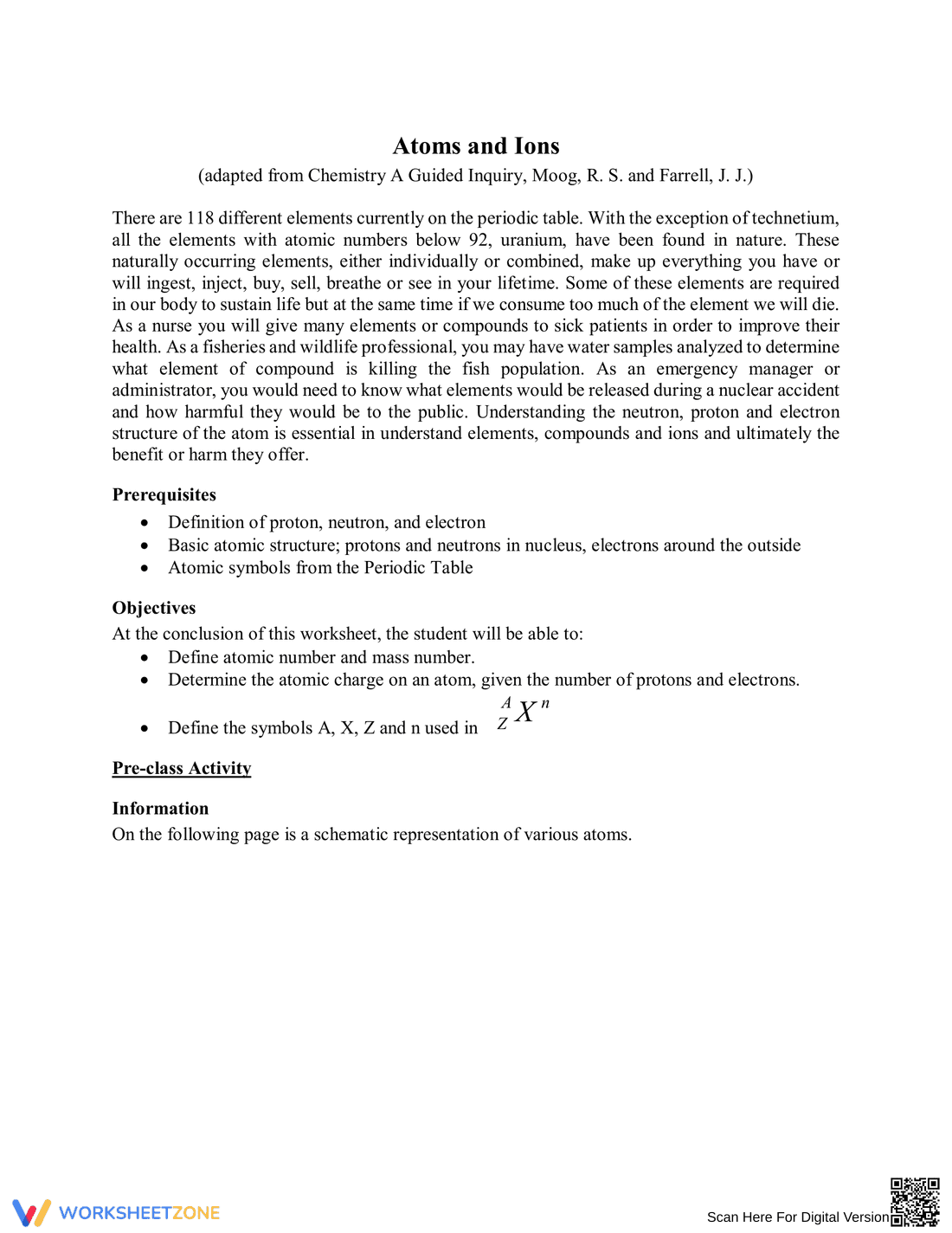
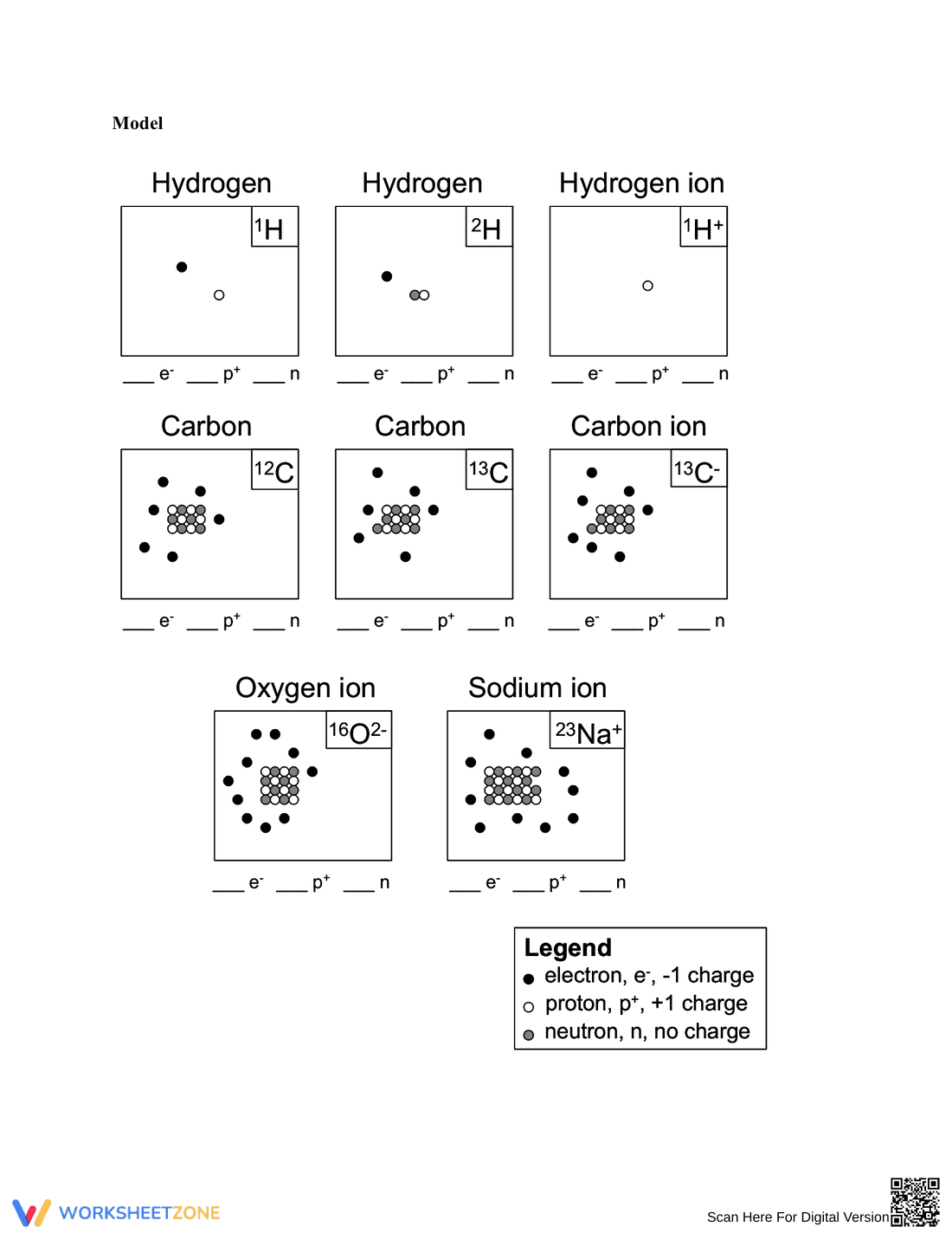
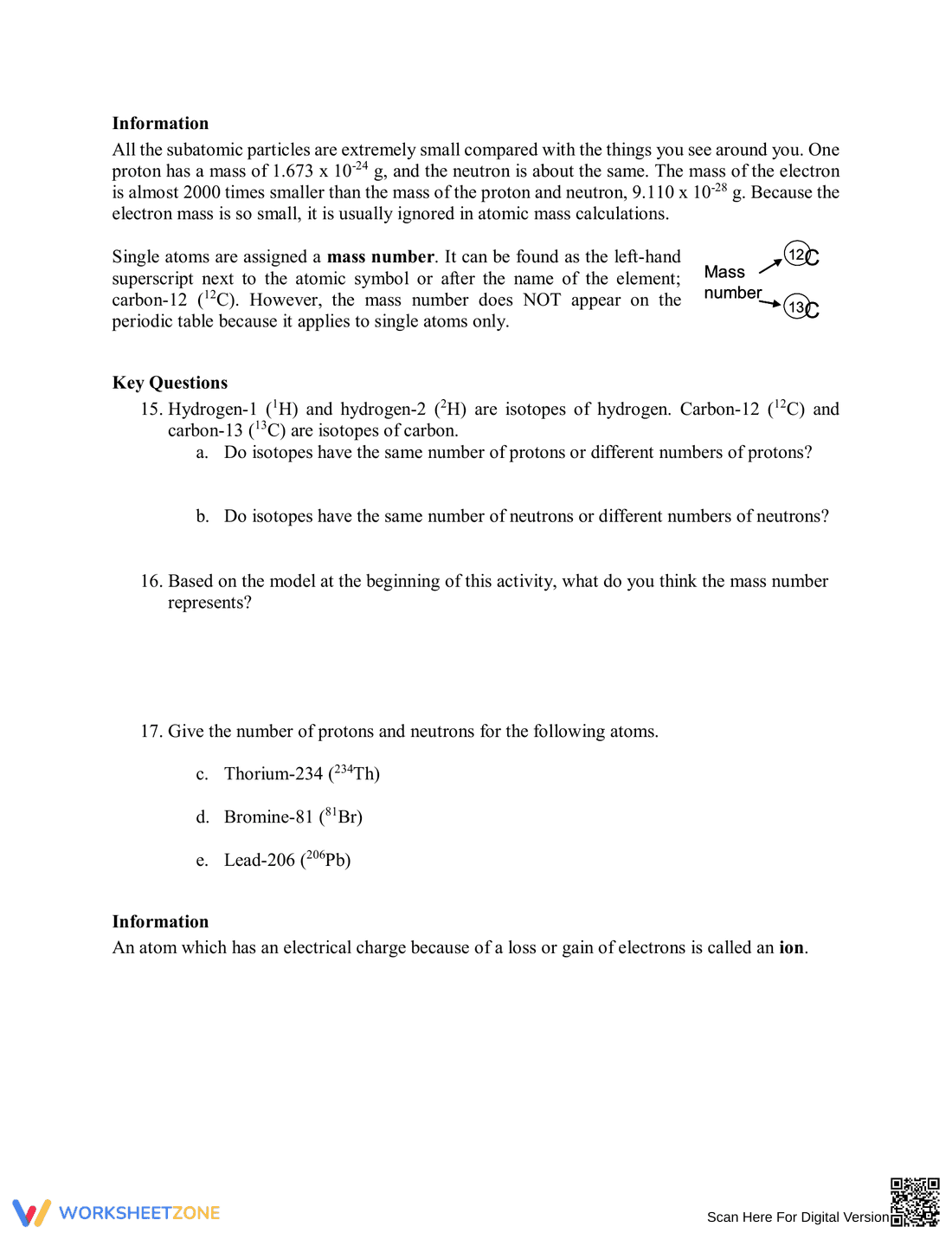
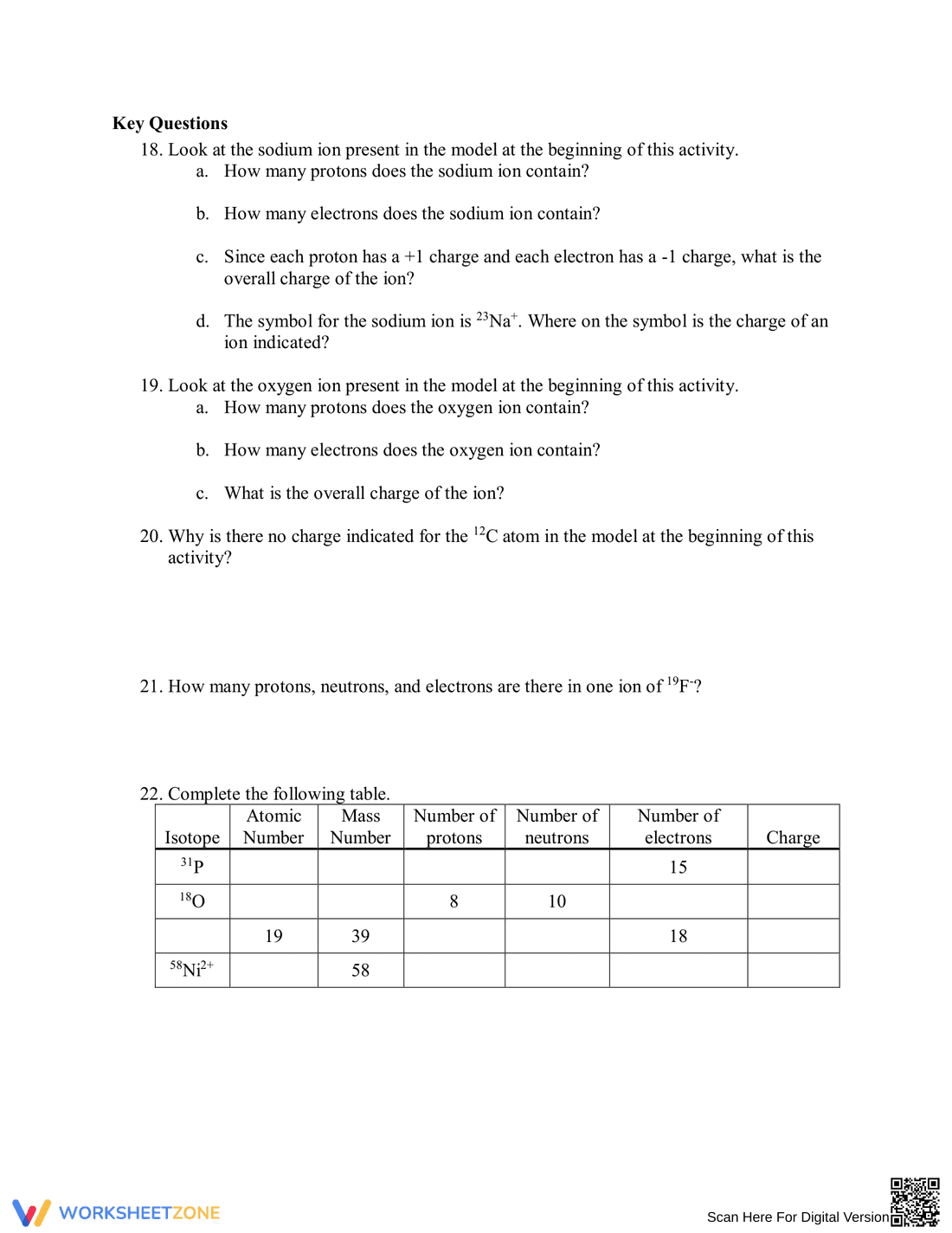
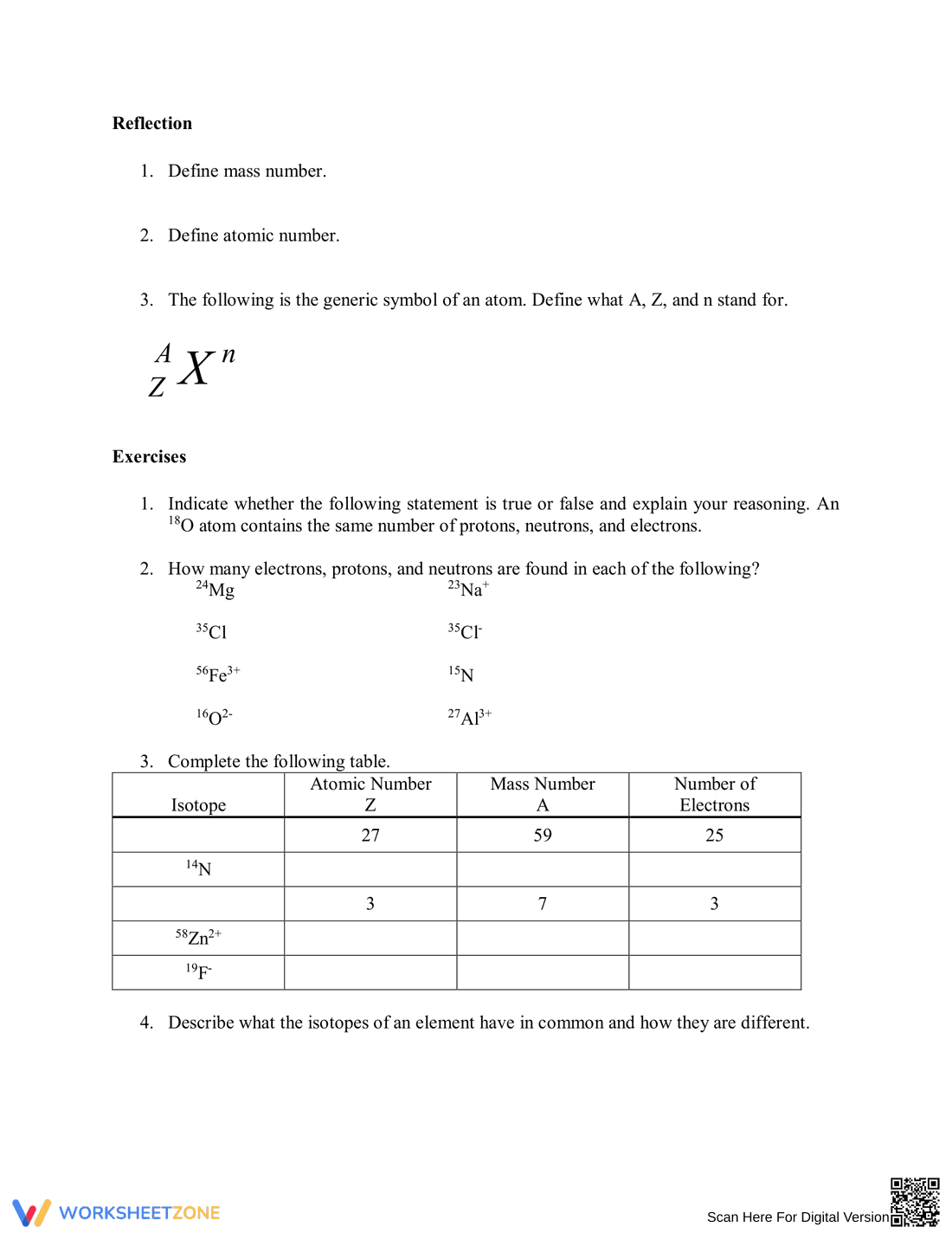
This is an educational worksheet titled 'Atoms and Ions,' adapted from 'Chemistry A Guided Inquiry.' It includes introductory text about elements, their importance, and their relevance in various fields like nursing and environmental science. The worksheet outlines prerequisites like the definition of protons, neutrons, and electrons, basic atomic structure, and atomic symbols from the periodic table. It also lists objectives, including defining atomic number and mass number, determining the atomic charge on an atom given the number of protons and electrons, and defining the symbols A, X, Z, and n used in a specific atomic notation. It mentions a pre-class activity involving a schematic representation of various atoms.
Grade Level Suitability:
This worksheet appears suitable for high school chemistry students (Grades 9-12) or introductory college chemistry courses. The concepts covered, such as atomic structure, atomic number, mass number, and ions, are typically introduced at these levels. The reference to professions like nursing and environmental science suggests a connection to real-world applications, which is often incorporated into high school and early college curricula.
Why Use It:
This worksheet helps students understand the fundamental concepts of atoms and ions. It connects these concepts to real-world applications, demonstrating their relevance in various fields. It provides clear objectives, ensuring students understand what they should learn. The prerequisites section helps students review necessary background knowledge, while the pre-class activity encourages preparation and engagement. It aims to build a strong foundation for understanding elements, compounds, and their interactions.
How to Use It:
Begin by reviewing the prerequisites. Read the introductory text to understand the context and relevance of the topic. Complete the pre-class activity by studying the schematic representation of atoms. Work through the worksheet to achieve the stated objectives, focusing on defining atomic number, mass number, and atomic charge. Pay close attention to the symbols used in atomic notation.
Target Users:
The target users are high school chemistry students, introductory college chemistry students, and anyone studying basic chemistry concepts. It is also useful for students preparing for science-related careers, such as nursing or environmental science, where a basic understanding of atoms and ions is necessary.
This is an educational worksheet titled 'Atoms and Ions,' adapted from 'Chemistry A Guided Inquiry.' It includes introductory text about elements, their importance, and their relevance in various fields like nursing and environmental science. The worksheet outlines prerequisites like the definition of protons, neutrons, and electrons, basic atomic structure, and atomic symbols from the periodic table. It also lists objectives, including defining atomic number and mass number, determining the atomic charge on an atom given the number of protons and electrons, and defining the symbols A, X, Z, and n used in a specific atomic notation. It mentions a pre-class activity involving a schematic representation of various atoms.
Grade Level Suitability:
This worksheet appears suitable for high school chemistry students (Grades 9-12) or introductory college chemistry courses. The concepts covered, such as atomic structure, atomic number, mass number, and ions, are typically introduced at these levels. The reference to professions like nursing and environmental science suggests a connection to real-world applications, which is often incorporated into high school and early college curricula.
Why Use It:
This worksheet helps students understand the fundamental concepts of atoms and ions. It connects these concepts to real-world applications, demonstrating their relevance in various fields. It provides clear objectives, ensuring students understand what they should learn. The prerequisites section helps students review necessary background knowledge, while the pre-class activity encourages preparation and engagement. It aims to build a strong foundation for understanding elements, compounds, and their interactions.
How to Use It:
Begin by reviewing the prerequisites. Read the introductory text to understand the context and relevance of the topic. Complete the pre-class activity by studying the schematic representation of atoms. Work through the worksheet to achieve the stated objectives, focusing on defining atomic number, mass number, and atomic charge. Pay close attention to the symbols used in atomic notation.
Target Users:
The target users are high school chemistry students, introductory college chemistry students, and anyone studying basic chemistry concepts. It is also useful for students preparing for science-related careers, such as nursing or environmental science, where a basic understanding of atoms and ions is necessary.


