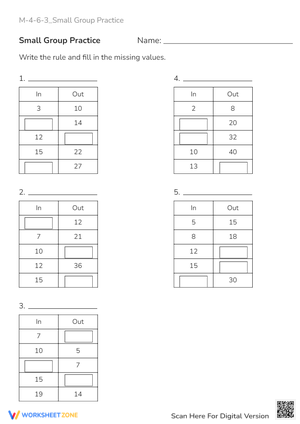
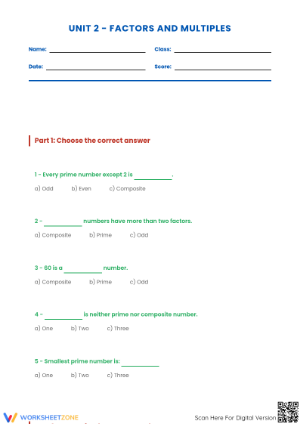
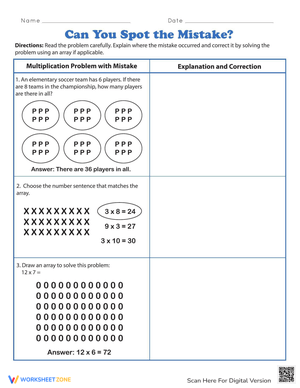
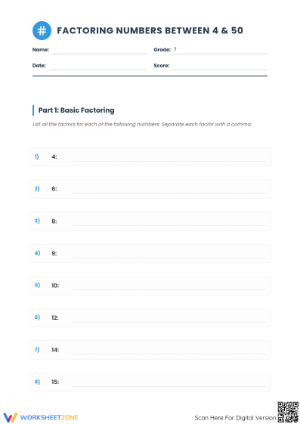
These factors and multiples worksheets give 4th through 6th grade teachers a structured, ready-to-print set covering the full arc of number theory skills — from identifying basic factor pairs to applying GCF and LCM in multi-step word problems. Each worksheet stands alone, so you can pull exactly what fits your lesson without committing to a sequence.
The Specific Skills Targeted
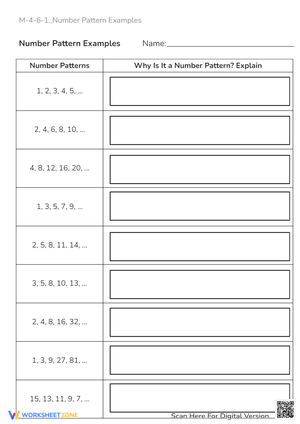
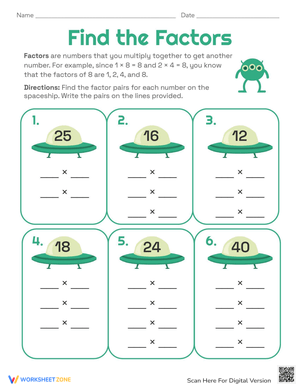
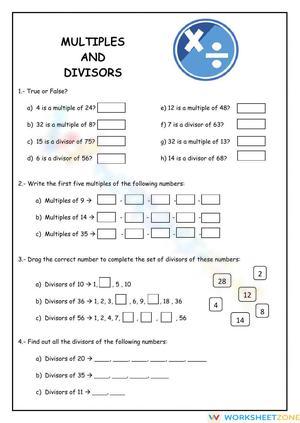
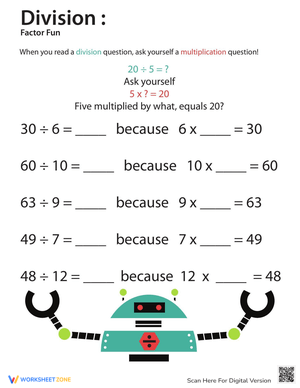
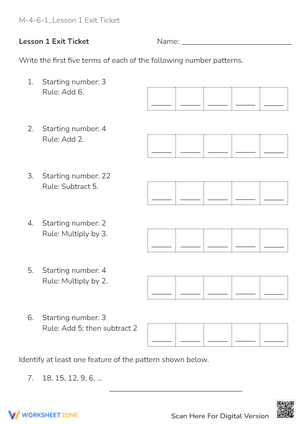
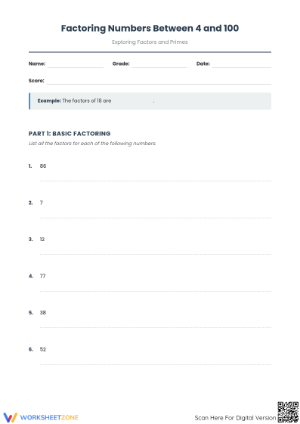
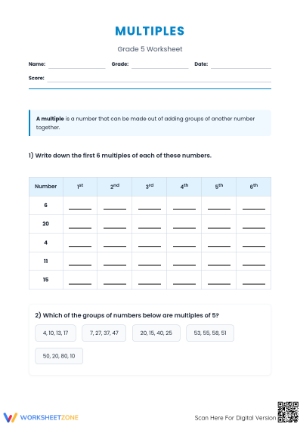
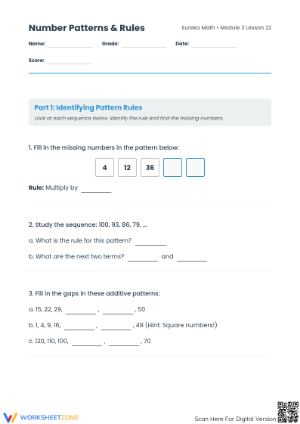
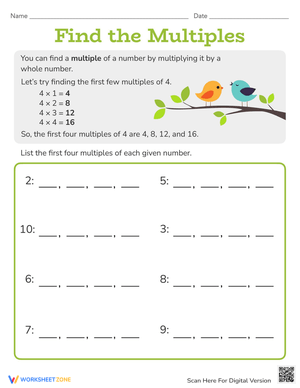
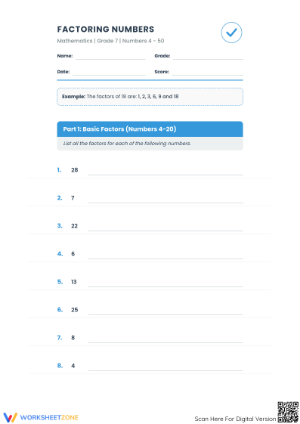
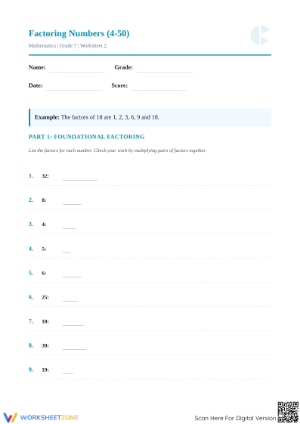
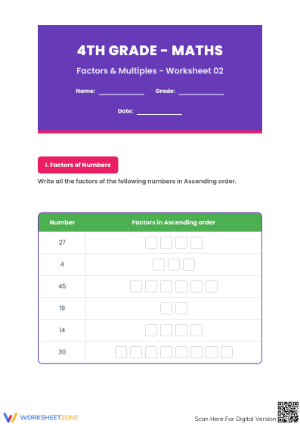
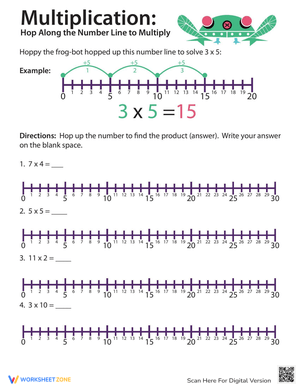
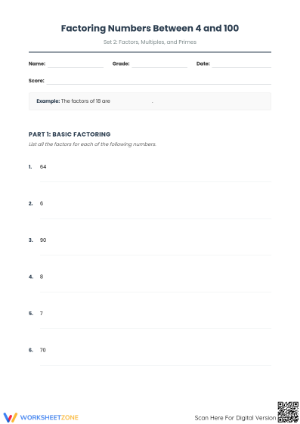
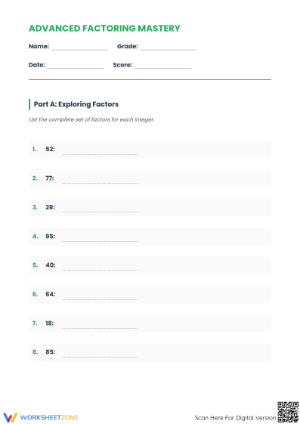
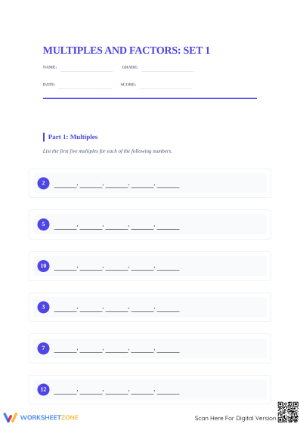
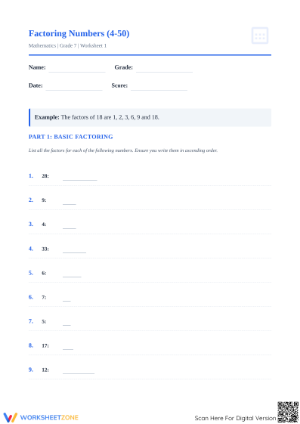
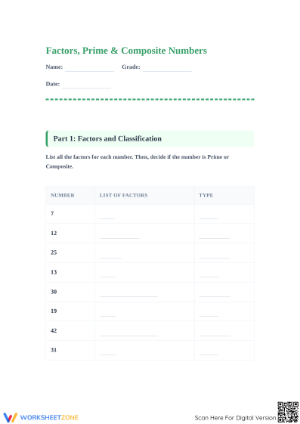
The set opens with foundational work: listing factor pairs for whole numbers up to 100, sorting numbers as prime or composite, and using skip-counting patterns to generate multiples of single-digit numbers. These worksheets belong to the 4th grade entry point into number theory, where the goal is recognition — students are learning to see 36 not just as a product but as a number with a specific set of divisible pairs.
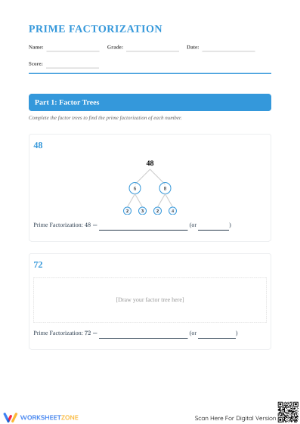
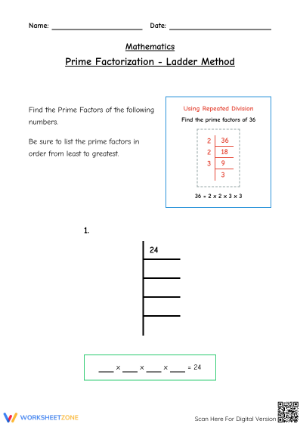
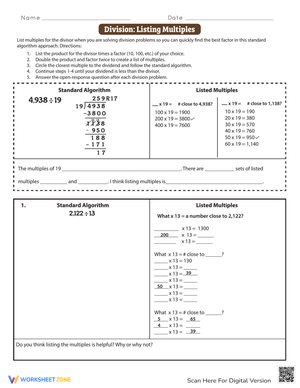
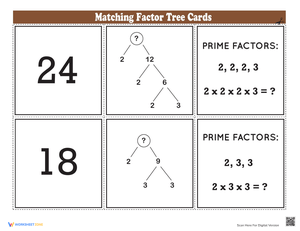
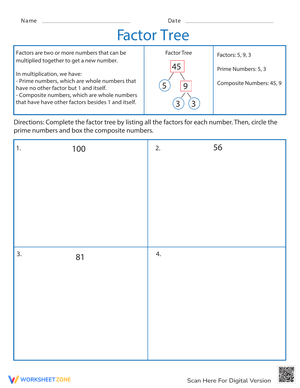
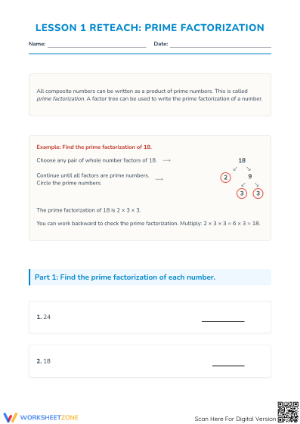
From there, the worksheets move into factor trees and prime factorization, then into GCF and LCM — both the listing method and the prime factorization method. The final worksheets in the set present word problems: equal-grouping scenarios that call for GCF reasoning, and scheduling or cycling problems where students have to find when two recurring events coincide, which demands LCM. Students who reach those problems are doing genuine mathematical reasoning, not just following a procedure.
Standard Alignment
The foundational worksheets — factor pairs, prime vs. composite, basic multiples — align with 4.OA.B.4, which asks students to identify all factor pairs for whole numbers from 1 to 100 and determine whether a given number is a multiple of a one-digit number. This standard sits in the Operations and Algebraic Thinking domain, which means these skills are positioned as preparation for multiplicative reasoning, not isolated number trivia.
The GCF and LCM worksheets align with 6.NS.B.4, which extends the work into the Number System domain and explicitly connects GCF and LCM to fraction operations — adding and subtracting fractions with unlike denominators, and using the distributive property to express sums of numbers with a common factor. Teachers who use these worksheets in late 5th grade as a preview or in 7th grade as a review are working adjacent to the standard's placement, which is worth noting in lesson plan documentation.
What's Happening in Student Work — Errors Worth Anticipating
The most persistent confusion at the 4th grade level is directional: students mix up which concept produces a smaller result and which produces a larger one. A student who correctly lists the multiples of 6 as 6, 12, 18, 24 will, minutes later, write that the factors of 6 are 6, 12, 18, 24 — essentially running the same process twice and calling it something different. This is not a careless mistake; it reflects a genuine conceptual gap about the relationship between multiplication and division that the listing exercises are designed to surface.
At the GCF/LCM level, a different error pattern emerges. Students who find GCF and LCM by listing often swap the answers — writing the LCM where the GCF belongs, and vice versa. They've done the computation correctly; they just don't yet have a reliable internal check for which result fits which question. Pairing a factors worksheet with a multiples worksheet on the same number set (listing all factors of 24 on one sheet, generating multiples of each of those factors on another) builds the intuitive feel for size relationships that makes the GCF/LCM distinction stick.
How to Work These Worksheets Into Your Lesson Plans
The single most effective use of a short factors or multiples worksheet is as a Monday warm-up after morning meeting — five problems, pencils down in eight minutes, then a quick class scan before you introduce the week's lesson. That brief retrieval moment is worth more instructionally than it costs in time, particularly for concepts like these that students tend to learn and then half-forget over a weekend.
Station rotations also work well with this set. One station: identifying prime and composite numbers with a factor-pair worksheet as evidence. Another: factor trees leading to prime factorization. A third: LCM word problems with a blank table students fill in to track two sequences until they converge. Each station takes about twelve minutes; most classes can rotate through all three in a single math block, and the variety prevents the glazed-over quality that comes from forty minutes of the same task type.
For homework, the listing-method GCF and LCM worksheets travel home well because the process is visible — parents can follow what their child did and help catch errors. The prime factorization worksheets are better kept in class until students are confident; a confused kid and a confused parent working together at the kitchen table rarely produces the right outcome.
Frequently Asked Questions
What's the clearest way to explain the difference between a factor and a multiple to a student who keeps mixing them up?
The most reliable anchor is size: factors are always less than or equal to the number itself, multiples are always greater than or equal to it (with the number itself appearing on both lists, which is worth pointing out explicitly). A student who writes that the factors of 8 include 16 and 24 has crossed into multiple territory — redirecting them to the size rule usually resolves the confusion faster than re-explaining the definitions.
Should I teach listing or prime factorization first for GCF and LCM?
Listing first, without question. Prime factorization is more efficient for larger numbers, but students who go straight to factor trees often apply the procedure without understanding what they're finding or why. The listing method makes the logic visible — you can see the shared factors, and you can see why the greatest one matters. Once that's solid, prime factorization becomes a faster tool rather than a mysterious algorithm.
At what point do factors and multiples reappear after the 4th–6th grade window?
GCF shows up immediately when students begin simplifying fractions — identifying that 8/12 reduces to 2/3 requires recognizing that 4 is the GCF of 8 and 12. LCM reappears when adding fractions with unlike denominators. Both surface again in 7th and 8th grade when students work with rational expressions and early algebra. Students with weak factor and multiple fluency in those grades are almost always students who moved through the 4th–6th grade material without enough repetition.













 Interactive Worksheet Maker
 Quiz Maker
 Word Search Maker
 Crossword Puzzle Maker
 Word Scramble Generator
 Sentence Scramble Generator
 Handwriting Worksheet Generator
 Name Tracing Generator
 Fill In The Blank Generator