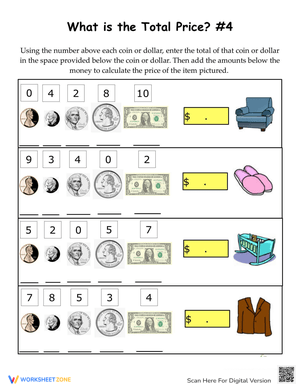
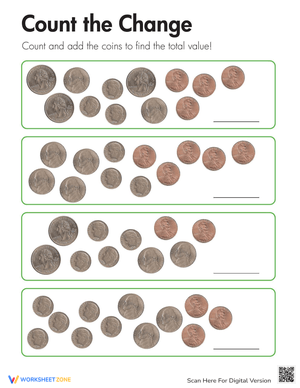
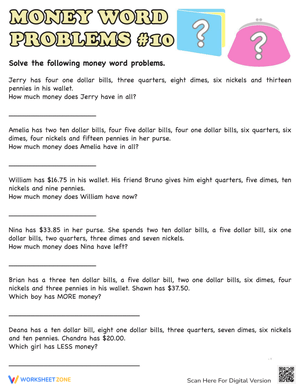
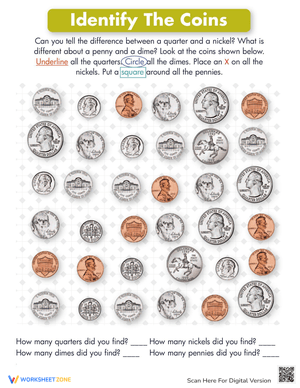
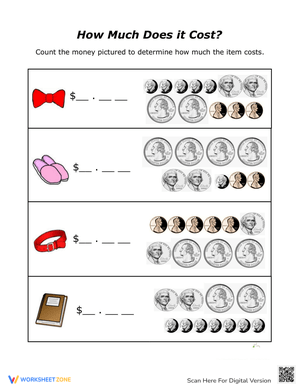
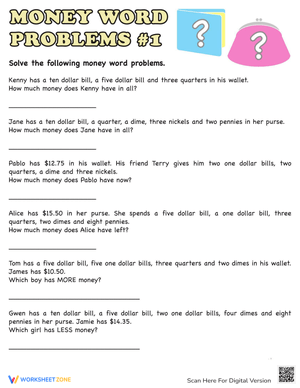
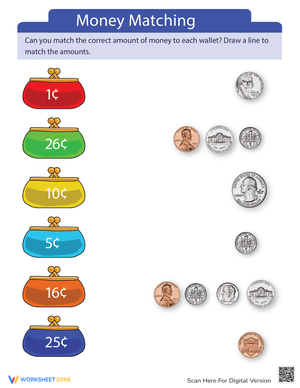
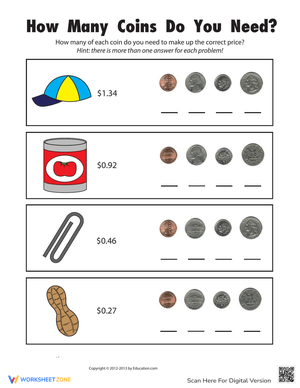
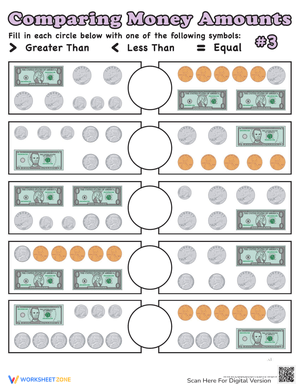
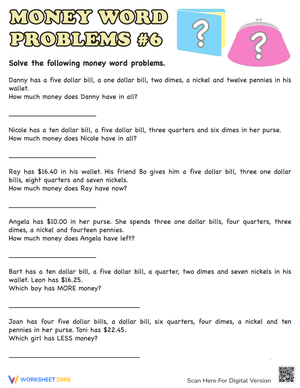
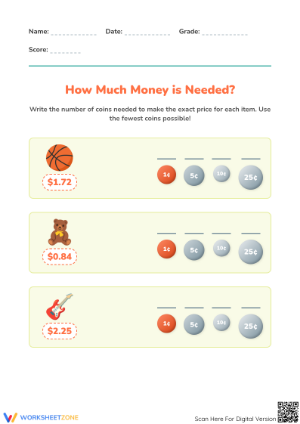
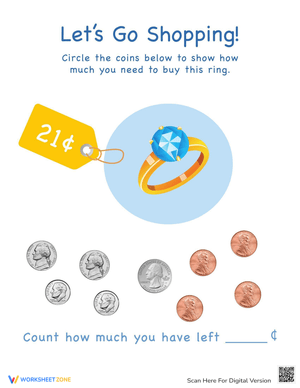
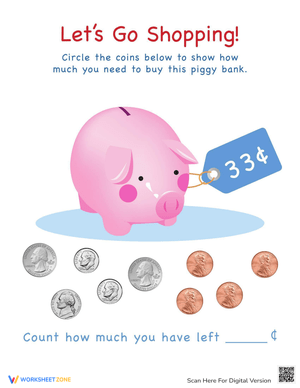
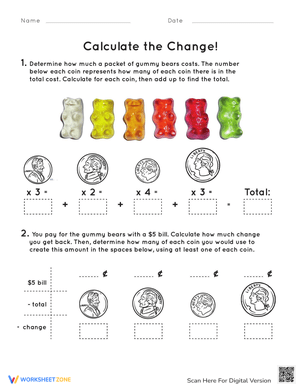
These quarters worksheets give first and second graders structured practice with one of the trickier coins in early money math — not because the quarter is complicated, but because skip counting by 25 doesn't come as naturally as counting by fives or tens, and because the coin itself looks different depending on which year it was minted. Each worksheet targets a specific stage of that learning, from coin identification through mixed-coin word problems.
What's Included In These Quarters Worksheets?
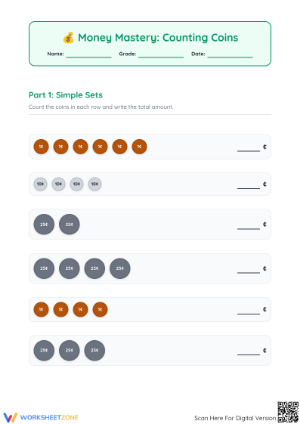
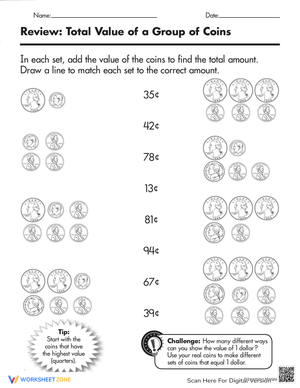
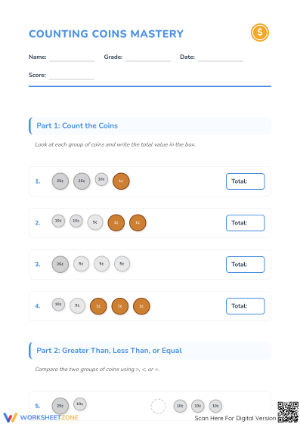
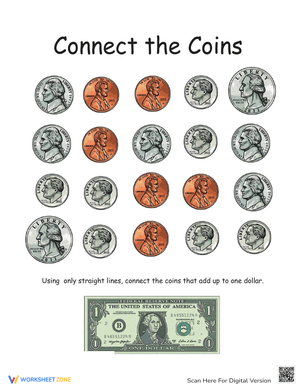
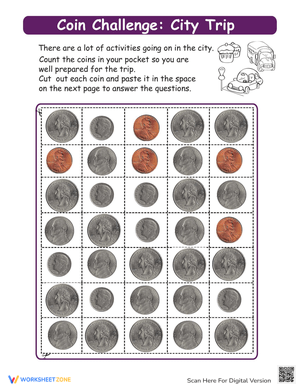
The worksheets move through a deliberate sequence. Early worksheets focus on recognition: students circle quarters among a mixed row of coins, label the obverse and reverse sides, and match coins to their cent values. The recognition work matters more than it might seem — a student who hesitates on identification will lose the thread entirely once counting begins.
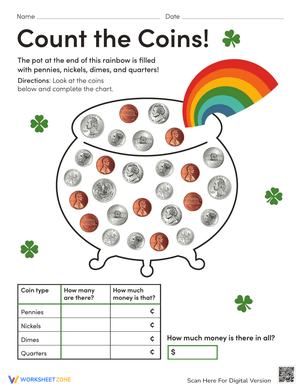
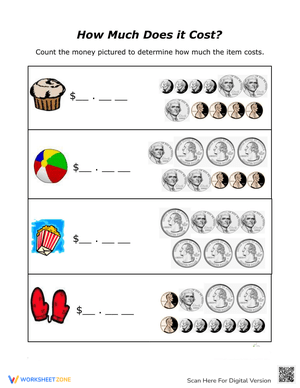
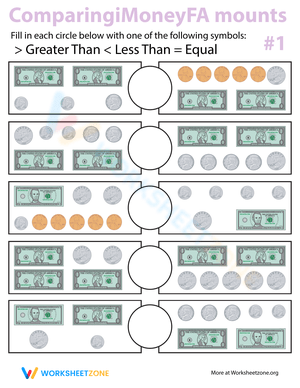
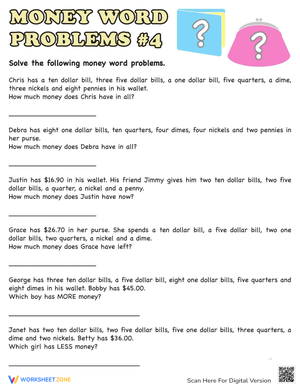
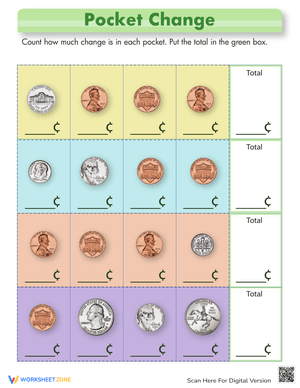
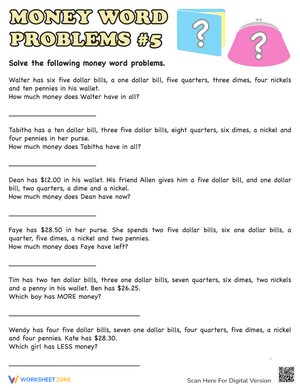
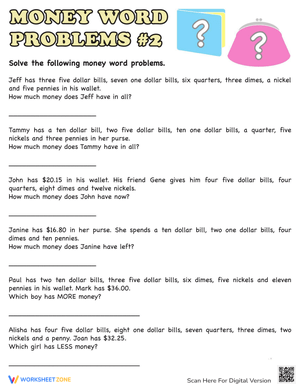
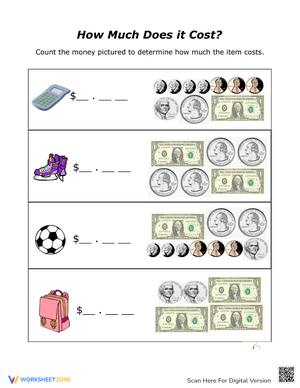
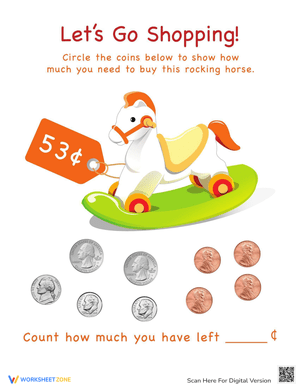
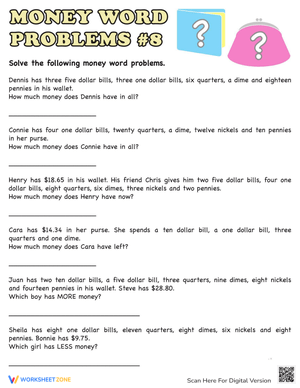
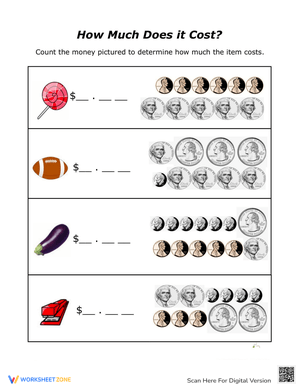
From there, worksheets shift to value and counting. Students skip count by 25s using number lines and hundred charts before graduating to coin images they count independently. Later worksheets introduce mixed collections — quarters alongside dimes, nickels, and pennies — where students write the total value using the cent and dollar symbols. The final tier brings in word problems: determining whether a given amount covers a purchase, or finding how many quarters add up to a dollar.
Standard Alignment
These worksheets align with CCSS 2.MD.C.8, which requires second graders to solve word problems involving dollar bills, quarters, dimes, nickels, and pennies, using the $ and ¢ symbols correctly. The standard is placed in second grade deliberately: it assumes students arrive with some coin familiarity from first grade but are building the skip-counting fluency and symbol conventions needed for more complex problems. The scaffolded structure of this set — recognition first, counting second, word problems third — matches the instructional progression that standard 2.MD.C.8 expects teachers to support.
Frequent Student Errors Worth Watching For
The most consistent error at this level isn't misidentifying the quarter — it's losing count mid-sequence when skip counting by 25. A student who can chant "25, 50, 75, 100" in isolation will often restart from 25 after each new coin rather than continuing the running total. You'll see this on worksheets as a string of 25s written under consecutive coins instead of a cumulative count. It helps to have students write the running total beneath each coin image as they go, making the counting visible rather than mental.
A second error appears in mixed-coin problems: students count the quarters correctly, then switch strategies mid-problem when they hit a dime, losing their place entirely. Color-coding helps — students highlight all quarters first, write that subtotal, then continue with the next denomination. That pre-sorting step reduces the working memory demand enough that most second graders can hold the count.
One identification issue worth flagging: because quarters have featured more than fifty distinct reverse designs across the State Quarters, America the Beautiful, and American Women programs, students who memorize the eagle reverse will reject legitimate quarters in later exercises. The worksheets use multiple reverse designs intentionally, reinforcing that the obverse portrait of George Washington and the ridged edge are the reliable identifiers — not the back.
How to Build These Worksheets Into Your Lesson Plans
The identification worksheets work well as a brief warm-up at the start of a money unit — five minutes of coin sorting alongside actual coins or high-quality play money before any pencil work. The physical coin gives students a reference point that the worksheet image alone doesn't fully provide. Size distinctions between a dime and a quarter are hard to internalize from illustrations; handling both eliminates that confusion quickly.
The skip-counting worksheets are strong candidates for Monday morning warm-ups during a money unit, particularly the first five minutes after announcements when students need a low-stakes entry point. The repetition across multiple sessions does more work than a single longer block — spaced retrieval applies here just as it does with math facts, and a daily three-minute skip-counting exercise will outperform a Friday review of the same material.
The mixed-coin and word-problem worksheets are better placed mid-lesson as guided practice before releasing students to work independently, or used as formative exit tasks. A completed worksheet from those final tiers tells you specifically whether a student's difficulty is in the count itself or in reading and setting up the word problem — two different instructional responses.
Adjusting the Worksheets for a Range of Learners
For students who are still shaky on skip counting by fives and tens, the quarter worksheets move faster than their current skill base supports. Pair those students with a hundred chart they can keep on their desk as a visual anchor, and have them complete only the single-denomination counting worksheets before introducing mixed coins. Trying to rush into mixed-coin problems before the 25-count is automatic just creates confusion layered on top of confusion.
Students who have the quarter count solid can move to the word-problem tier and be pushed further by removing the coin images — presenting the problems as written text only, without visual supports. That shift increases the demand substantially and works well as an extension within the same worksheet set without requiring separate materials. You can also ask those students to write a second version of each word problem with a different total, which surfaces whether they understand the structure or are just computing what's in front of them.
Frequently Asked Questions
When in second grade should I introduce these worksheets?
Most second-grade teachers introduce the quarter after students have worked with pennies, nickels, and dimes — typically mid-year, once skip counting by fives and tens is stable. Quarters work best as the capstone coin in a unit sequence rather than an early introduction, because the 25-count builds directly on that earlier fluency.
My students can identify quarters but fall apart on skip counting by 25. What's happening?
Skip counting by 25 lacks the rhythm students develop with fives and tens through daily calendar routines and earlier fact practice. The sequence 25, 50, 75, 100 doesn't reinforce itself through repeated daily use the way counting by tens does. A short daily chant — literally 20 seconds at the start of math — closes that gap faster than longer weekly review sessions. The worksheets are most effective once that chant feels automatic.
Do the worksheets address the many different quarter designs students might encounter?
Yes. Several worksheets display quarters with different reverse designs alongside the consistent obverse so students learn to anchor identification on Washington's portrait and the coin's ridged edge rather than the back image. This matters practically: a student who learns the eagle reverse will second-guess a state or national park quarter, which is a real identification error that shows up in classroom coin-sorting activities.













 Interactive Worksheet Maker
 Quiz Maker
 Word Search Maker
 Crossword Puzzle Maker
 Word Scramble Generator
 Sentence Scramble Generator
 Handwriting Worksheet Generator
 Name Tracing Generator
 Fill In The Blank Generator