"
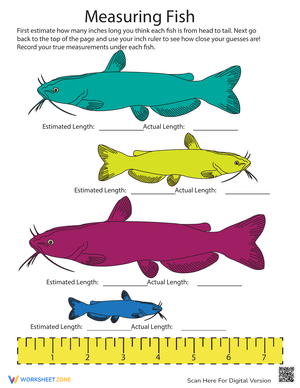
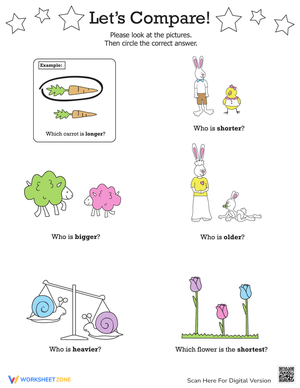
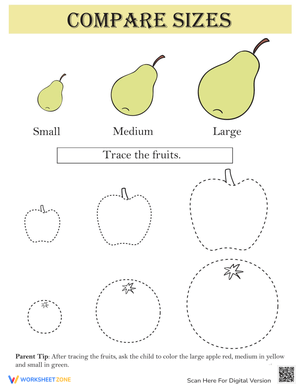
These comparing size worksheets give PreK through 2nd grade teachers a structured way to move students from hands-on object exploration to independent practice with measurement vocabulary and visual reasoning. Each page targets a specific comparison skill — taller vs. shorter, bigger vs. smaller, ordering three objects from smallest to largest — so teachers can match the format to exactly where a class is in the measurement progression.
What Area of Knowledge These Comparing Size Worksheets Cover
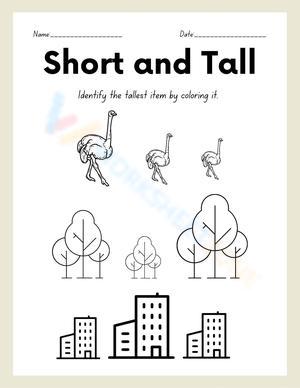
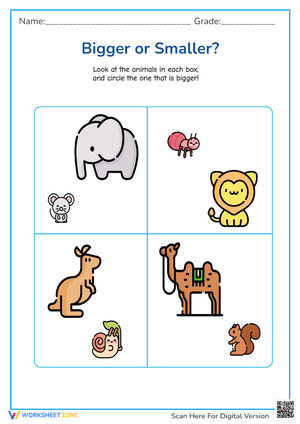
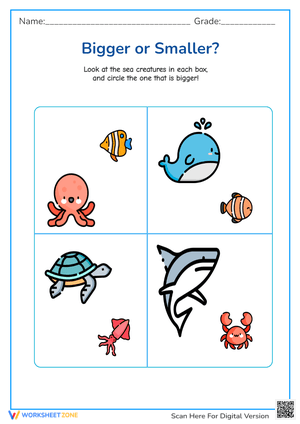
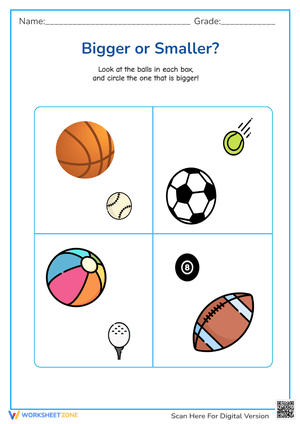
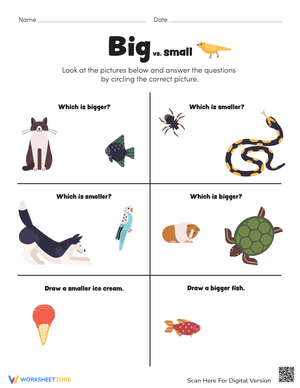
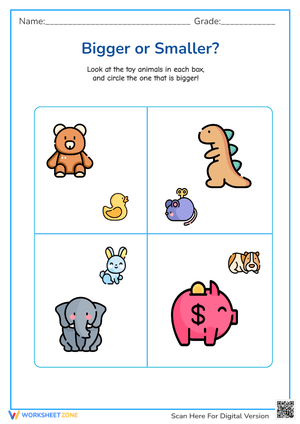
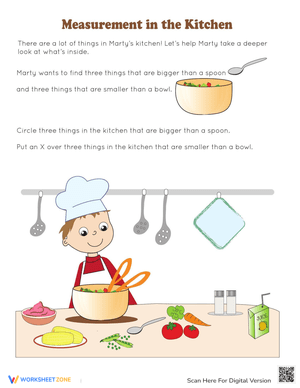
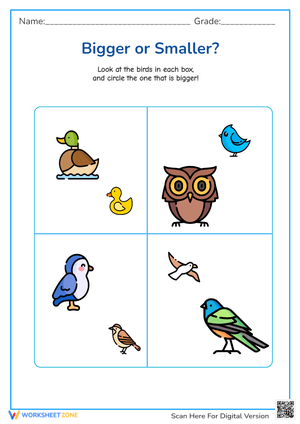
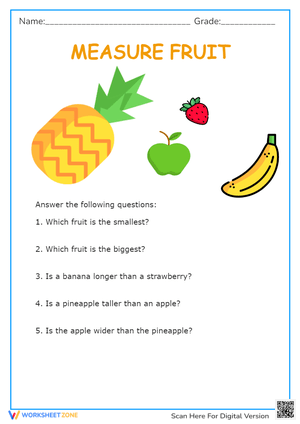
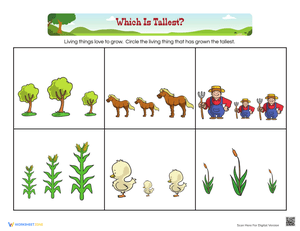
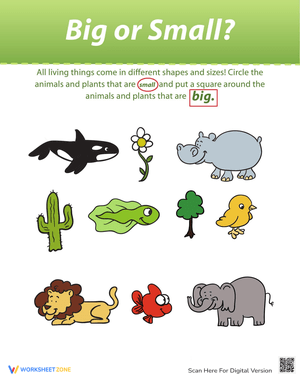
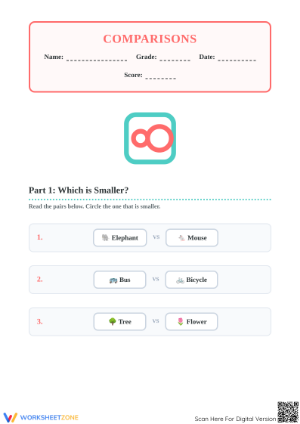
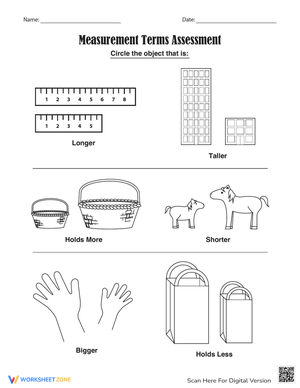
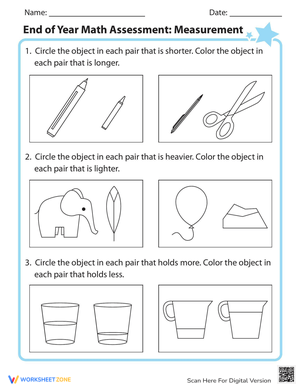
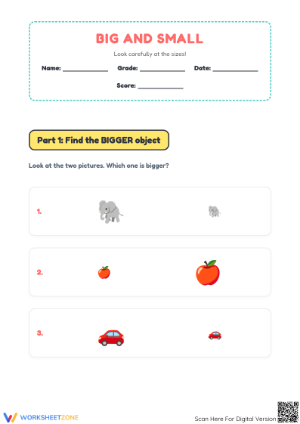
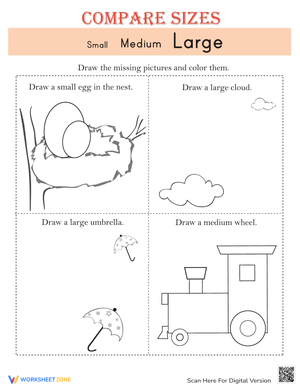
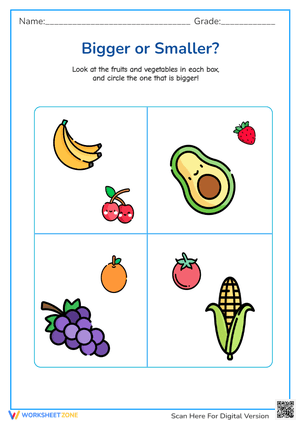
The set covers the core comparison tasks that appear across the PreK–2 span. The simplest pages show two objects side by side and ask students to circle the bigger one, identify the shorter one, or draw a line under the longest item. These work for students who are still learning that size is a describable attribute — that you can look at two trees and say something precise about them beyond ""one is a tree.""
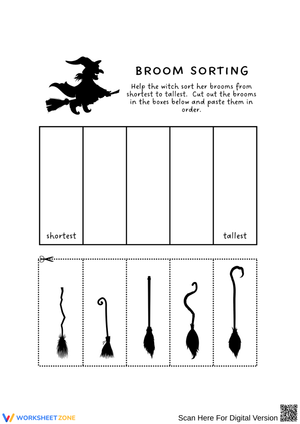
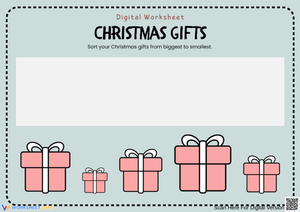
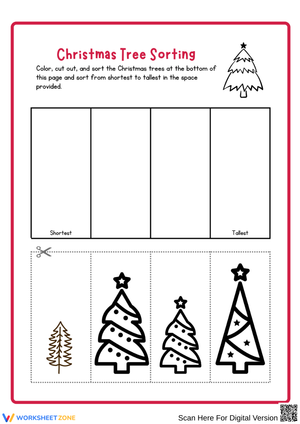
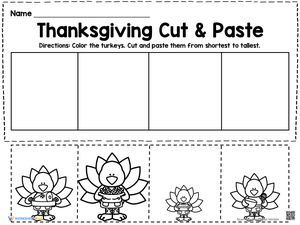
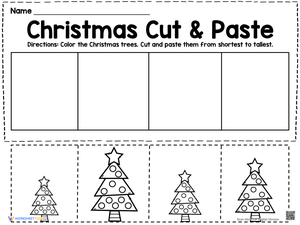
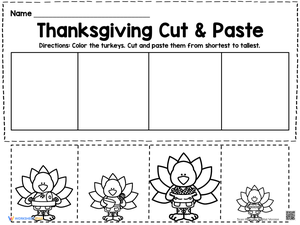
Further into the set, pages shift to ordering tasks: three or four objects arranged out of sequence, with students numbering them from smallest to largest or drawing them in a new order. A separate group of pages isolates a single dimension — height only, or length only — which matters because students who handle ""bigger and smaller"" confidently sometimes struggle the moment the comparison narrows to just one attribute. There are also cut-and-paste sorting pages where students place images into labeled columns, and matching pages where students draw lines between objects of equal size.
Where These Worksheets Fit in the Teaching Sequence
Size comparison sits at the very beginning of the measurement strand for a developmental reason: young children need to understand that objects have measurable attributes before they can make sense of measuring those attributes with units. A kindergartner who hasn't internalized what ""taller"" means will not benefit from a ruler lesson. The worksheets in this set belong in the gap between initial concrete exploration and formal measurement — after students have held two pencils and decided which is longer, and before they pick up a ruler or a set of cubes.
This also explains why the vocabulary load matters as much as it does. Words like taller, shorter, longer, and widest are not decorative — they are the handles students use when reasoning about measurement for the next several years. Worksheets that require students to write or complete a sentence frame (""The ___ is shorter than the ___"") do more measurement work than pages where students only circle.
Patterns You'll Recognize in Student Work
The most reliable error in this skill area is conflating size with visual salience. A student will circle the elephant as ""bigger"" even when the worksheet shows a small elephant next to a large house — because elephants are big in real life. This shows up most often on pages where the relative sizes are realistic rather than exaggerated. It's worth flagging before students start: ""We're looking at how big the picture is, not how big the real thing is."" Without that prompt, a chunk of the class completes the page based on world knowledge rather than visual comparison.
A second pattern appears on ordering tasks. Students who correctly identify which of two objects is smallest will sometimes sequence three objects incorrectly because they anchor to the endpoints — they find the smallest and the largest first, then place the middle item without re-examining it carefully. Asking students to check their work by reading the sequence aloud (""small, medium, big — does that sound right?"") catches this before the page is turned in.
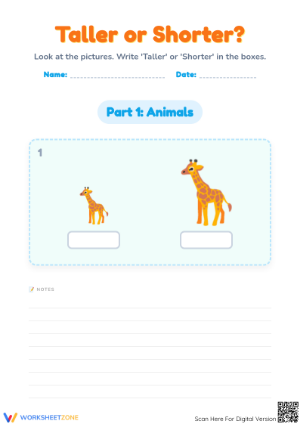
On tall-vs.-short pages specifically, watch for students who rotate the concept: they mark an object as ""tall"" based on how wide it is, not how high. This is more common than it looks, and it signals that the student hasn't yet separated height from general bigness. A brief anchor chart showing a vertical arrow labeled ""tall/short"" and a horizontal arrow labeled ""long/short"" resolves most of these cases quickly.
Standards Alignment
CCSS K.MD.A.1 asks kindergarteners to describe measurable attributes of objects — including length and height — and K.MD.A.2 asks them to directly compare two objects sharing a measurable attribute and use comparative language to describe the difference. These worksheets address both standards directly. The circle-the-taller-object pages are K.MD.A.2 in its simplest form; the ordering pages extend that comparison to three objects and push into the kind of relational reasoning that supports 1st grade measurement work.
For PreK, most state frameworks include size comparison as a pre-measurement benchmark, often framed around describing objects using attribute words. The two-object comparison pages in this set fit cleanly into that expectation without asking PreK students to sequence or use formal vocabulary frames.
Using These Comparing Size in the Classroom
In Kindergarten, these pages work well as the follow-up after a brief manipulative activity — five minutes with connecting cubes or classroom objects, then a worksheet that asks students to do on paper what they just did with their hands. The concrete-to-representational move is fast, and students who handled the objects usually transfer to the page with minimal confusion.
For morning warm-up routines, single-row comparison pages (one comparison per row, four or five rows per page) take about six minutes to complete and generate a quick visual record of who is still guessing versus who is applying the vocabulary consistently. That's enough information to pull a small group during centers without a separate assessment.
The cut-and-paste ordering pages serve a different purpose — they slow the task down and give kinesthetic feedback that a pencil task doesn't. Students who freeze or rush on circle-and-mark pages often slow down appropriately when they're arranging physical pieces before committing with glue. These work well for centers rather than whole-class independent work, since they take longer and generate more noise.
"













 Interactive Worksheet Maker
 Quiz Maker
 Word Search Maker
 Crossword Puzzle Maker
 Word Scramble Generator
 Sentence Scramble Generator
 Handwriting Worksheet Generator
 Name Tracing Generator
 Fill In The Blank Generator