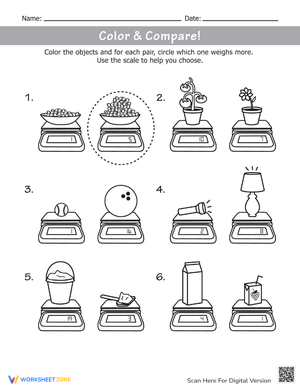
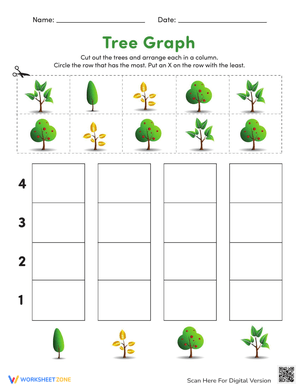
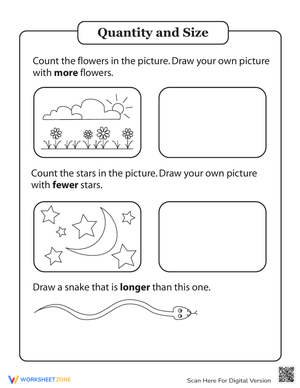
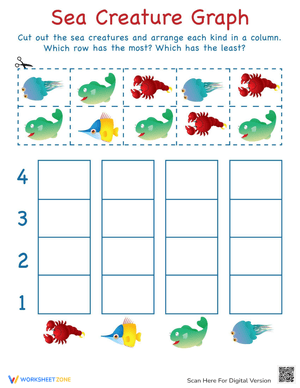
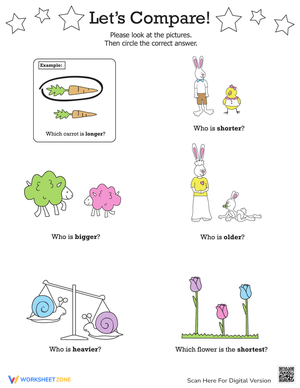
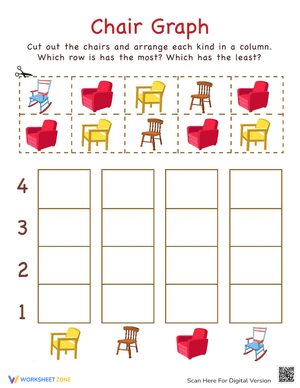
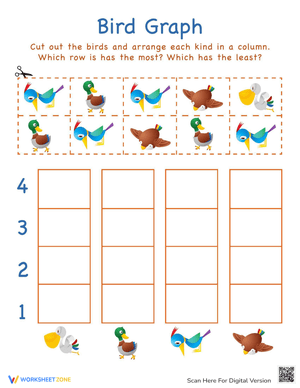
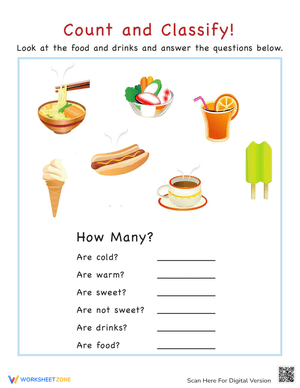
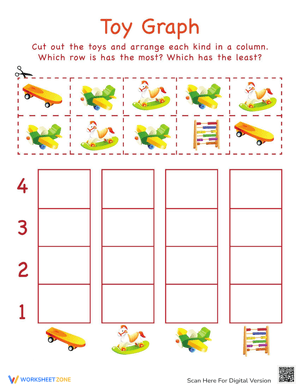
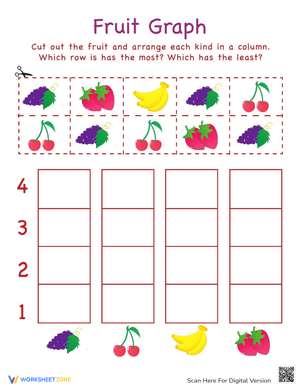
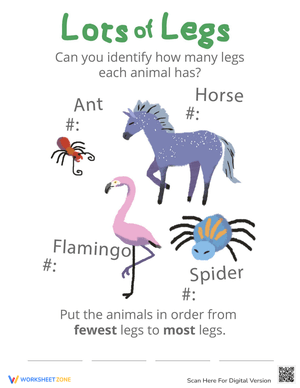
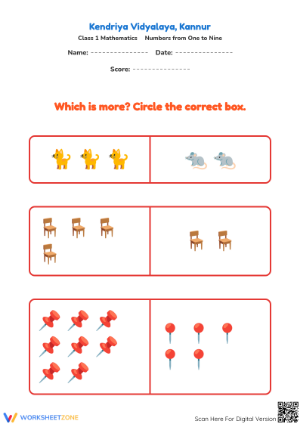
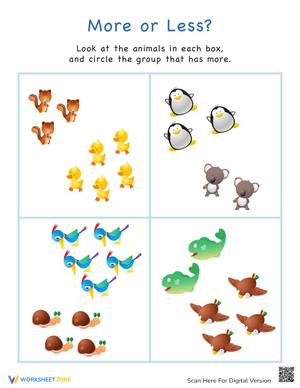
These comparing amount worksheets give PreK through 2nd grade teachers structured, print-ready practice across every format the skill requires — from picture groups and ten frames to written numerals with comparison symbols. The set covers the full developmental arc of quantity comparison, so one teacher can pull from it across multiple grade levels or use different pages with different groups in the same classroom.
Concepts on Each Page
The worksheets work across five distinct formats, each targeting the same underlying reasoning through a different representational pathway.
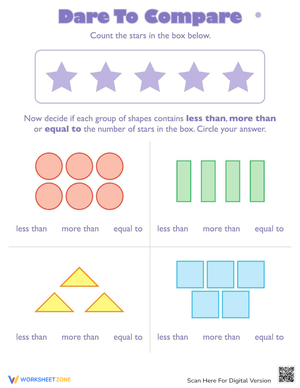
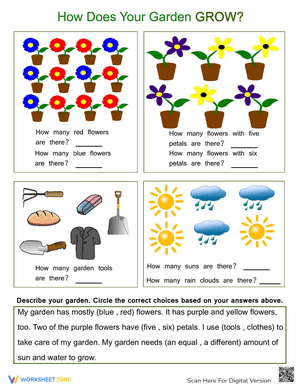
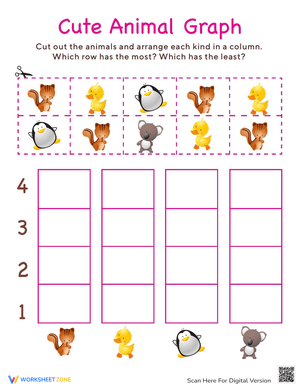
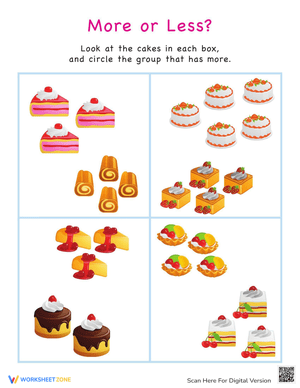
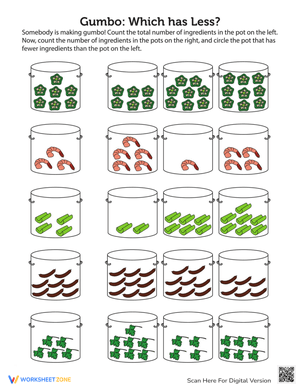
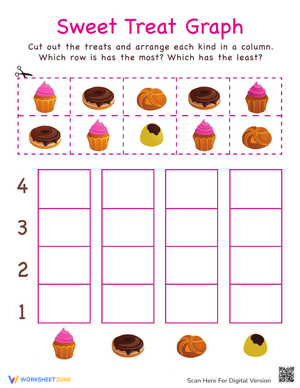
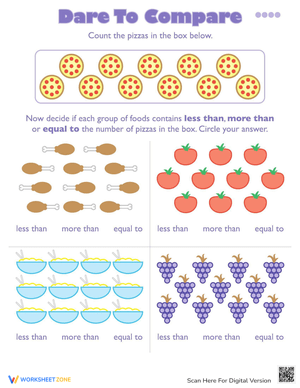
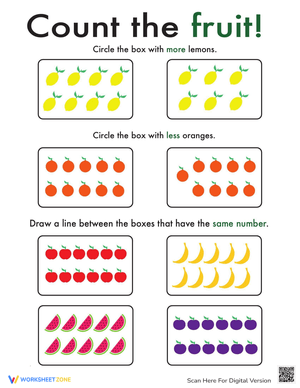
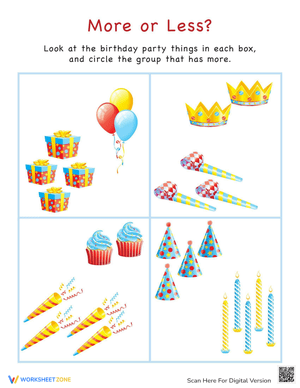
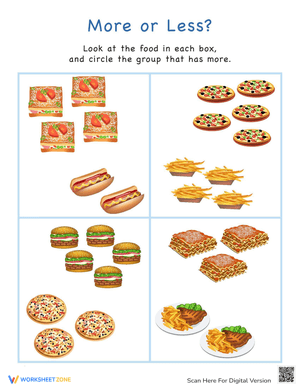
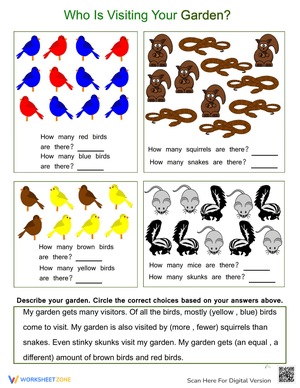
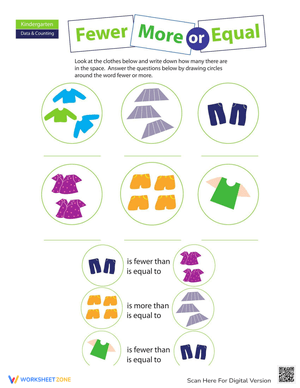
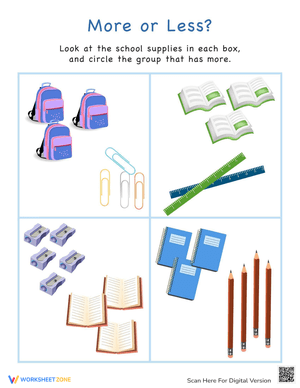
- Picture group comparison: Students count objects in two drawn sets — stars, animals, shapes — and mark which group has more or fewer. This format anchors the skill in one-to-one correspondence before any numeral appears on the page.
- Ten frame side-by-side: Two filled ten frames appear together, and students decide which holds the greater quantity. The ten frame structure naturally pulls students toward benchmarks of 5 and 10, which speeds up the comparison rather than requiring a full count each time.
- Written numeral comparison: Students read two numbers and place a >, <, or = symbol between them. This format belongs in late kindergarten and beyond, once students read numerals reliably and can reason about magnitude without pictures as scaffolding.
- Tally mark sets: Students count tally marks in two groups and identify which represents more. A secondary benefit: grouping by fives builds skip-counting fluency at the same time.
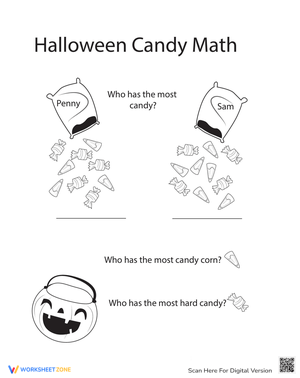
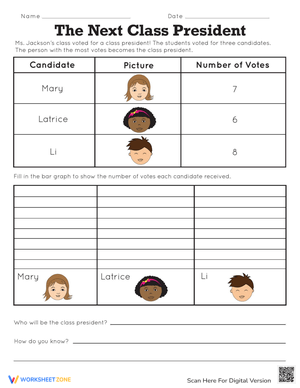
- Short context problems: Single-sentence scenarios ask students to extract two quantities and compare them — the number of crayons in two boxes, the number of students at two tables. This format requires students to identify what is being compared before they can answer, which is a layer of reasoning the other formats skip.
Where This Sits in the Standards
The core standard is K.CC.C.6, which requires kindergartners to identify whether the number of objects in one group is greater than, less than, or equal to another group for quantities up to 10. K.CC.C.7 extends that to written numerals between 1 and 10. These two standards sit at the end of the Counting and Cardinality domain intentionally — comparison is the payoff skill that demonstrates a student has genuinely internalized what numbers mean, not just their sequence. In 1st and 2nd grade, comparison work migrates into Number and Operations in Base Ten, where students compare two-digit and then three-digit numbers by reasoning about place value. The picture and ten-frame pages in this set address the kindergarten standards directly; the numeral-comparison and word-problem pages carry the skill into 1st and early 2nd grade territory.
Where Students Struggle Most
The most consistent error in early comparison work is not a counting error — it's a vocabulary error. Students who can accurately count both groups will still point to the smaller group when asked to circle the one with ""fewer,"" because ""fewer"" shows up far less often in everyday speech than ""less"" or ""more."" A student who says ""I have less"" instead of ""I have fewer"" at home has almost no exposure to the word outside math class. Posting the full vocabulary set — more, fewer, less, equal, greater than, less than — and referring to it by name during instruction closes that gap faster than additional counting practice.
A second pattern appears when students move from pictures to numerals: they lose confidence and start guessing directionally. A student who correctly identifies eight stars as more than five stars will sometimes write 5 > 8 when the same relationship appears as numerals, especially if the 5 is printed on the left. The spatial position of the larger number still pulls some students in early 1st grade. Ten-frame pages serve as a useful bridge here — the visual stays present while students practice the symbolic notation, so neither the picture scaffold nor the numeral stands alone.
How Teachers Use These Pages
The most reliable slot for these worksheets is the opening 8–10 minutes of math block — one page on the desk when students arrive, completed before the lesson launches. At that point the content functions as retrieval practice for prior instruction rather than new input, which keeps cognitive load low and gives you a quick read on where the class stands before you teach. By the time you call students to the meeting area, you have already scanned 20 completed pages.
In math centers, the strongest pairing is a ten-frame or picture worksheet alongside a set of two-color counters and two small trays. Students build both quantities in the trays before they write anything down. The physical act of lining objects up in one-to-one correspondence makes the size difference visible to students who are not yet confident reading quantities from a picture alone. The worksheet then becomes the recording step, not the reasoning step.
For small-group instruction, use the format gap deliberately: pull students who are solid on picture comparison but uncertain with numerals, and work through the written-numeral pages together. Students who are still working on one-to-one correspondence stay on picture comparison pages with manipulatives available. Running two different pages with two different groups simultaneously is straightforward because the formats are visually distinct — there is no confusion about which page belongs to which group.
Frequently Asked Questions
At what point should students stop using pictures and work only with numerals?
There is no fixed date, but a useful signal is consistency: when a student correctly compares picture groups of up to 10 across three or four independent attempts without needing to recount from 1, they are ready to move to numerals. Pushing students to symbols before one-to-one correspondence is solid tends to produce the positional guessing errors described above — the symbol becomes a coin flip rather than a reasoned choice.
How does comparison work connect to what comes later in the year?
Comparison is the precursor to ordering, which is the precursor to understanding the number line as a tool. Students who internalize that 7 is greater than 4 are ready to understand that 7 sits to the right of 4 on a number line — and from there, addition as movement to the right starts to make intuitive sense. The skip to measurement also comes naturally: comparing lengths, capacities, or weights uses identical reasoning. Which is more, which is less, or are they equal — that question runs through most of K-2 math.
My students know ""more"" but consistently misuse ""fewer."" Is that a math gap or a language gap?
It is a language gap, and it is worth treating it as one. ""Fewer"" applies to countable quantities; ""less"" applies to continuous quantities — that distinction is genuinely rare in ordinary speech, and many adults do not observe it consistently. Explicit vocabulary instruction with repeated oral practice during math talk — not just posted anchor charts — is what moves the needle. These worksheets support that work when teachers verbalize the terms alongside the written answers rather than accepting a circled picture as sufficient evidence of understanding.













 Interactive Worksheet Maker
 Quiz Maker
 Word Search Maker
 Crossword Puzzle Maker
 Word Scramble Generator
 Sentence Scramble Generator
 Handwriting Worksheet Generator
 Name Tracing Generator
 Fill In The Blank Generator