These kindergarten addition strategies pdf worksheets give early math teachers a concrete bridge between counter work and recorded number sentences — a gap that is wider than most kindergarten pacing guides acknowledge. Five-year-olds entering an addition unit typically haven't yet registered that a "+" sign means joining two distinct groups. The resources are organized by strategy rather than by seasonal theme, which makes them easier to sort, assign, and reuse across small groups, math centers, and intervention work.
Errors Students Make That These Worksheets Surface
The most predictable error in early addition is the recount-all habit. A student solving 5 + 2 restarts the count at 1, touching each dot or square from the beginning, and often loses track before reaching 7. They may arrive at the right answer through effort that takes twice as long as necessary — and they leave the worksheet no closer to counting on. Because students mark the worksheet as they work, the evidence stays visible: when a child scribbles extra tally marks on a draw-to-solve problem or re-touches dots already counted, you can see exactly where the process breaks down rather than guessing.
A second error appears on draw-to-solve tasks. Students hear "4 plus 3," sketch four marks, add three more — then, when counting the total, fold the first four marks into the second group's count, effectively adding the first addend twice. The answer is inflated, and without the drawn evidence on the worksheet it looks like a simple counting slip. The marks tell you the real story.
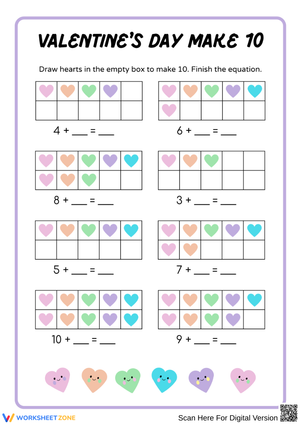
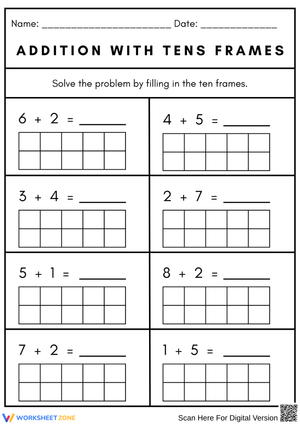
Ten-frame worksheets reveal a third pattern: students who can correctly fill a frame to show 6 will sometimes re-dot squares they already marked when adding the second addend. They haven't yet internalized the frame as a stable representation. Catching that early, before it hardens into habit, makes ten-frame instruction significantly more productive.
What Each Worksheet Practices
The full range of kindergarten addition strategies pdf worksheets in this collection covers the major strategies taught in a kindergarten addition unit, with one worksheet per strategy so teachers can assign them individually or sequence them across a week.
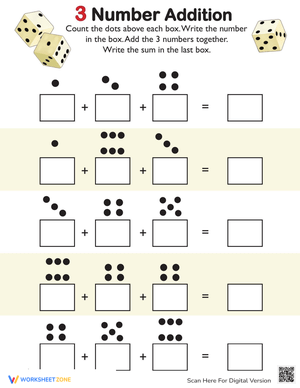
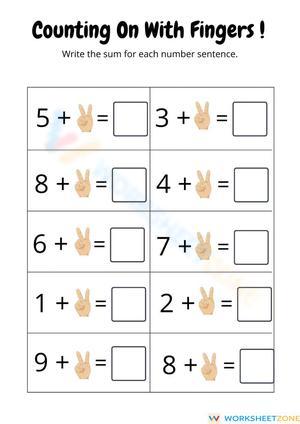
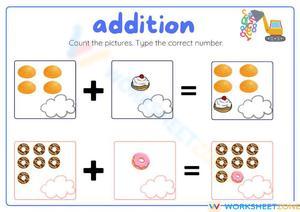
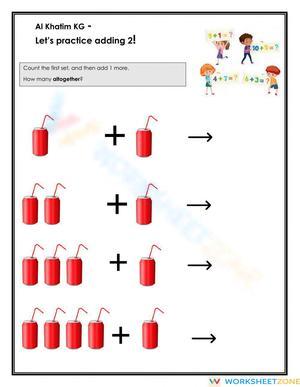
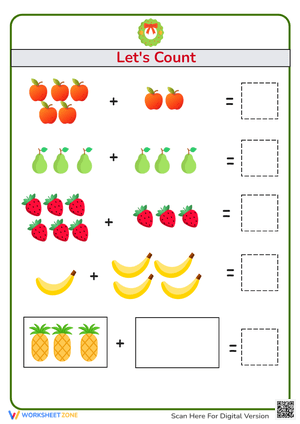
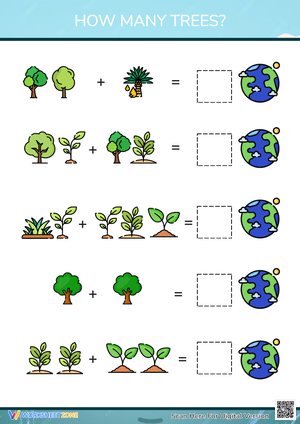
- Count-and-add: Students count two printed groups and record the total — the most direct entry point for students just beginning to add.
- Draw-to-solve: Students sketch their own marks or circles for each addend rather than using pre-printed images, which pushes toward internal representation.
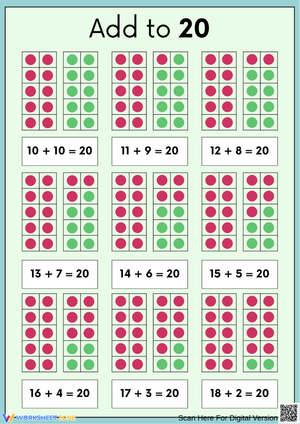
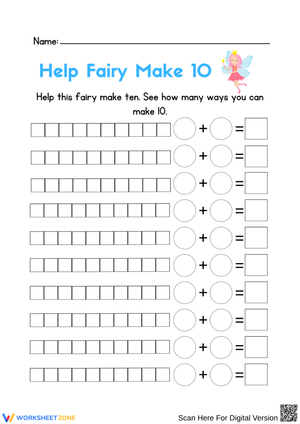
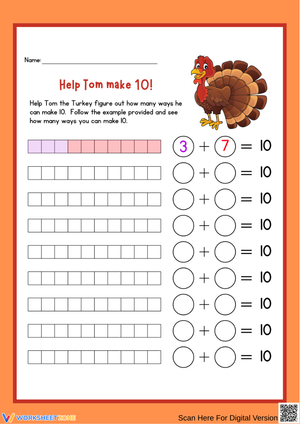
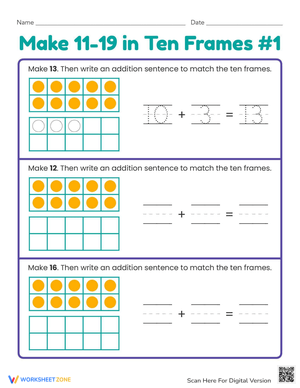
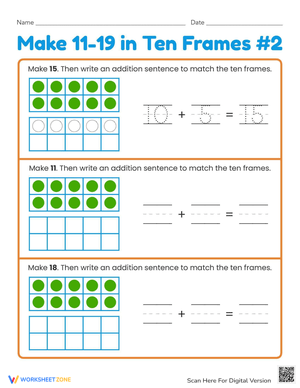
- Ten-frame addition: Students fill frames for two addends and find the combined total, making the parts-and-whole relationship visible and countable.
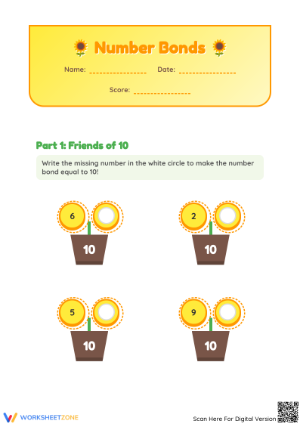
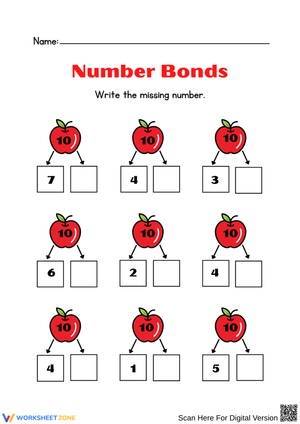
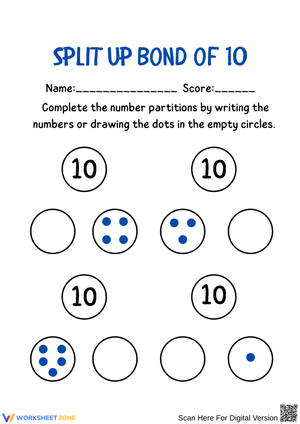
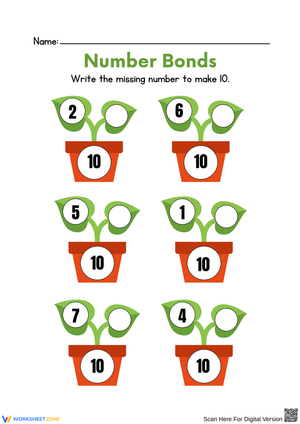
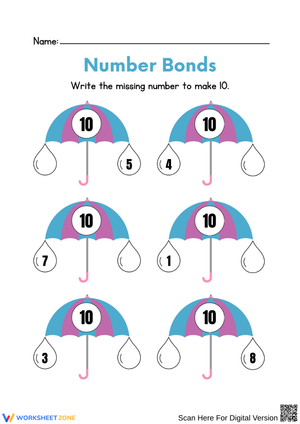
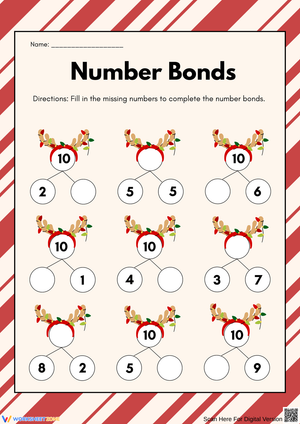
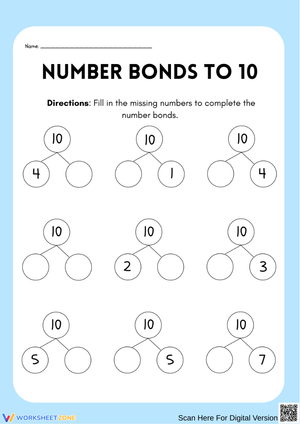
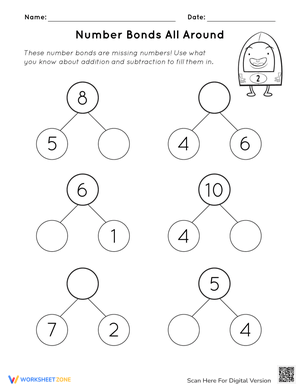
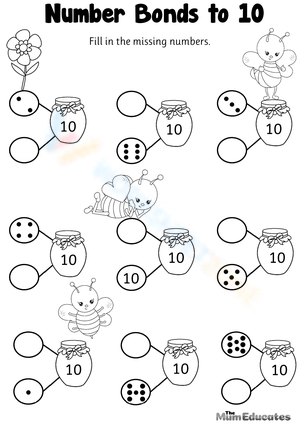
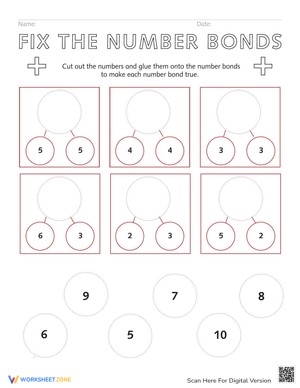
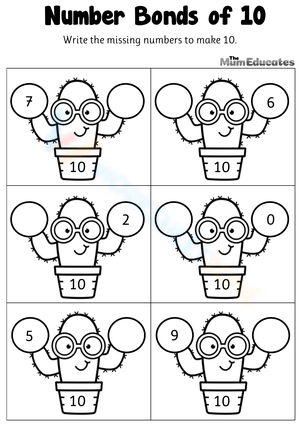
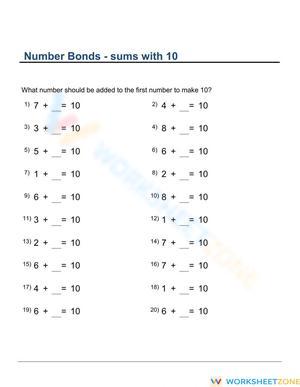
- Number bond completion: Students fill in a missing part or the whole in a part-part-whole diagram — the same relationship shown in a different visual structure.
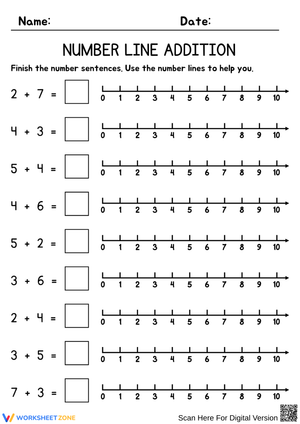
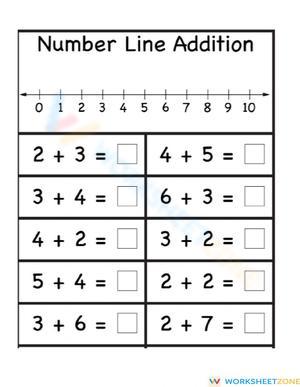
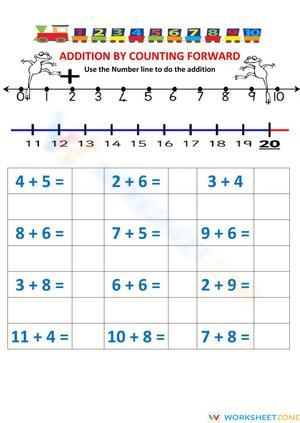
- Counting on from the larger number: Students identify the larger addend and count forward, with visual support that makes the jump physical before it becomes mental.
- Picture word problems: Short, real-context situations — frogs on a log, crayons in a box — connect addition to meaningful situations before numbers stand alone.
Every worksheet stays within sums to 10, which is the developmentally appropriate ceiling at this stage. Pushing past that boundary tends to produce rote behavior rather than understanding, so the limit is deliberate, not a constraint of the format.
How to Work These Worksheets Into a Lesson Cycle
A common planning mistake is to assign a worksheet before students have touched a manipulative that day. The worksheet lands flat because there's nothing concrete to connect it to. A more effective sequence: open with five minutes of counter or cube work, run through one shared example on a ten-frame or picture card, then use the worksheet as recorded practice that mirrors what students just did with objects. That pairing is what makes kindergarten addition strategies pdf worksheets land differently than a list of bare equations — students are transferring a model they've already built, not starting from scratch in the abstract.
These worksheets move across instructional contexts without much adaptation:
- Small-group instruction: Use one worksheet as the focus task while observing which strategy each student actually uses and asking them to explain their thinking aloud.
- Math centers: Pair a draw-to-solve or ten-frame worksheet with a small container of counters so students work concretely first, then record.
- Morning tubs: Count-and-add worksheets work well as early-arrival tasks because the visual entry point is self-explanatory without teacher setup.
- Exit checks: A half-sheet with two or three targeted problems after a mini-lesson gives a quick read on who understood the strategy and who needs another round before moving on.
- Intervention: Reusing the same worksheet format across several sessions lowers the processing load so students spend their cognitive effort on the math rather than decoding an unfamiliar layout.
One organizational move worth making: sort worksheets into folders by strategy rather than by holiday or seasonal theme. A "ten-frame" folder and a "draw to solve" folder let a paraprofessional or substitute pull the right support without having to interpret what a given worksheet is actually assessing.
Standard Alignment
These worksheets align to CCSS.MATH.CONTENT.K.OA.A.1, which calls for students to represent addition using objects, fingers, drawings, and equations. That standard deliberately lists physical and visual representations before written equations — the sequence in this set follows the same order. The worksheets also address CCSS.MATH.CONTENT.K.OA.A.2, solving addition problems within 10, and support early work toward K.OA.A.5, which targets fluency within 5 — a benchmark most students approach by late kindergarten. In classroom terms, these worksheets fit best in the months after students have joined physical objects with teacher support and before fluency assessments within 5 become the primary measurement target.
Adjusting These Worksheets for a Range of Learners
Every kindergarten class includes students who are still developing reliable one-to-one correspondence alongside students who already add within 5 without counting. The kindergarten addition strategies pdf worksheets in this set address that spread, but a few teacher moves extend the range further.
For students who need more support, placing physical counters directly on top of the worksheet is the simplest adjustment. Students set one counter on each printed object, push both groups together, and count the combined pile. The worksheet doesn't change; the physical layer does the work. Covering the lower portion of the worksheet with a blank piece of paper also helps students who lose accuracy when a full set of problems feels visually overwhelming — four problems with full attention consistently beats eight problems with declining focus.
For students who are moving ahead, the draw-to-solve and number bond worksheets extend naturally. Ask those students to solve one problem two ways: first by drawing marks, then by completing a number bond for the same equation. That two-method requirement forces them to connect representations rather than simply finishing faster. It adds genuine mathematical thinking without pushing numbers outside the kindergarten range.
Frequently Asked Questions
When should I introduce ten-frame worksheets instead of starting with picture-counting tasks?
Start with picture-counting and draw-to-solve worksheets. Once students reliably count two separate groups and record a total without losing track of which objects belong to which group, the ten-frame gives them a structure that makes quantity relationships visible — particularly how close a number sits to 5 or 10. Most classes reach that readiness point somewhere in the middle of the school year, though the timing varies.
How many problems per session is realistic for kindergarteners?
Four to six problems is a reasonable range during independent or guided practice. Longer worksheets tend to produce declining accuracy in the second half — not because students don't understand the math, but because attention and fine-motor stamina run out. Two shorter practice sessions across a day typically yield better results than one extended sitting.
Can families use these worksheets at home without prior explanation?
The picture-counting and draw-to-solve worksheets travel home well because the visual format communicates the task without text-heavy instructions. Ten-frame and number bond worksheets often need a brief setup — many families were never taught those structures themselves. Sending a completed example alongside the blank worksheet removes most of the confusion and keeps home practice productive rather than frustrating for everyone involved.
Are these resources appropriate for pre-K students who are already ready for addition?
The count-and-add and draw-to-solve worksheets work well for pre-K students who already understand one-to-one correspondence and count reliably to at least 5. Ten-frame and number bond worksheets require more conceptual readiness and are better reserved for students who can already join two groups and explain the total — regardless of grade placement.













 Interactive Worksheet Maker
 Quiz Maker
 Word Search Maker
 Crossword Puzzle Maker
 Word Scramble Generator
 Sentence Scramble Generator
 Handwriting Worksheet Generator
 Name Tracing Generator
 Fill In The Blank Generator