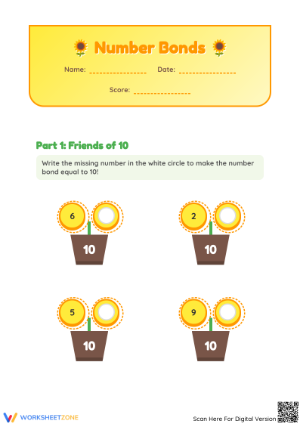
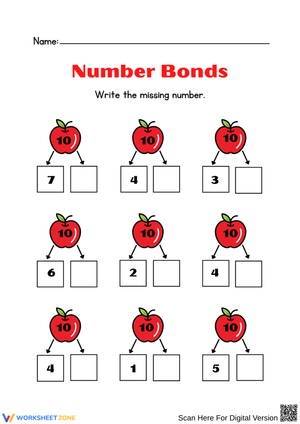
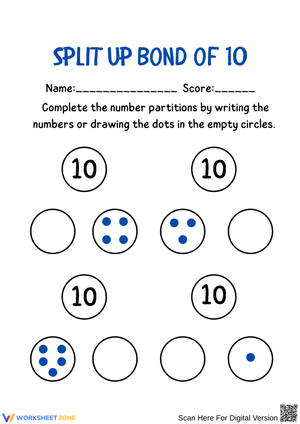
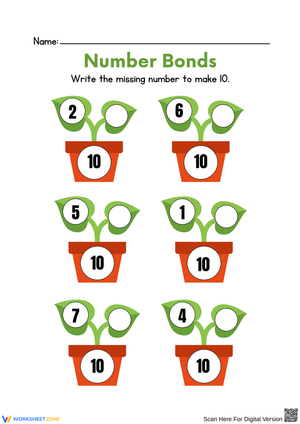
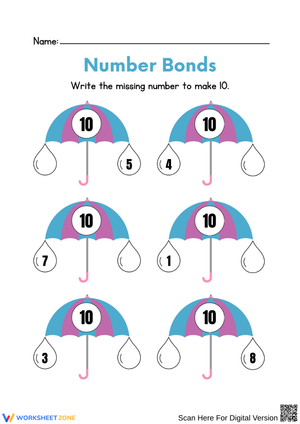
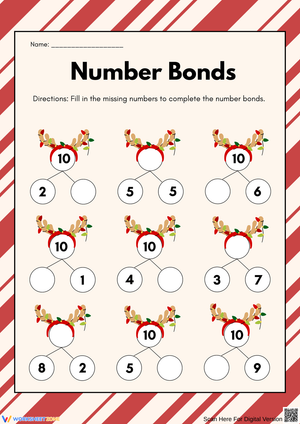
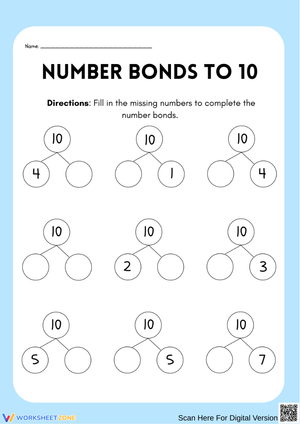
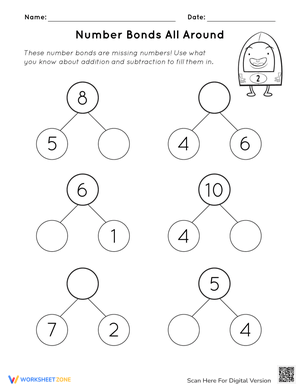
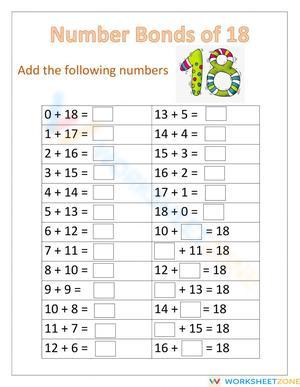
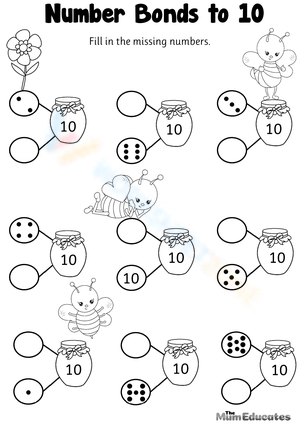
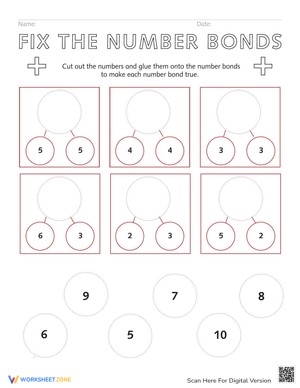
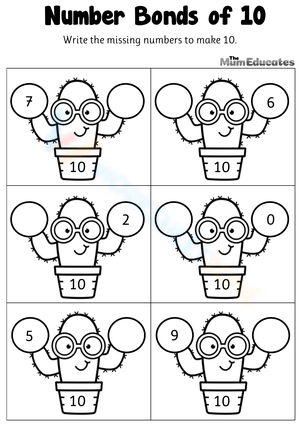
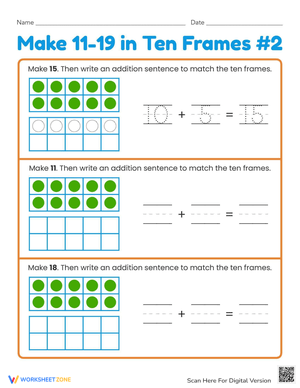
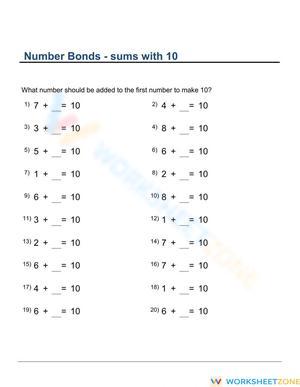
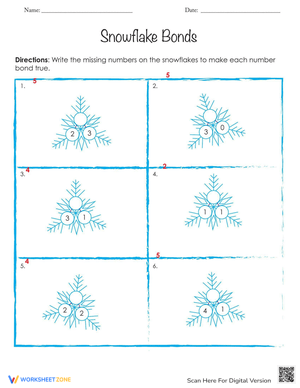
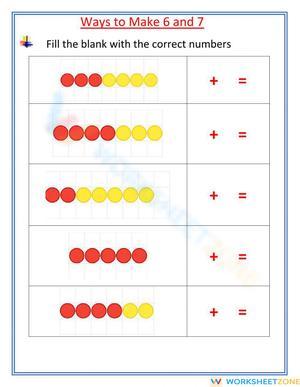
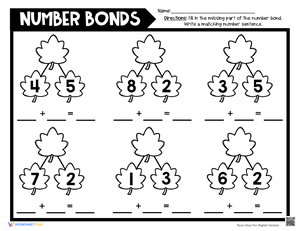
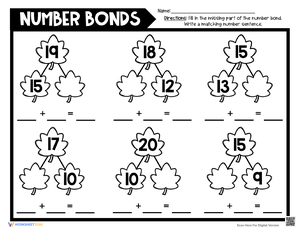
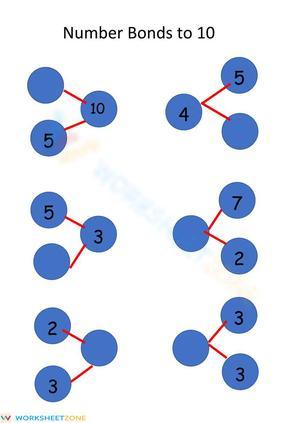
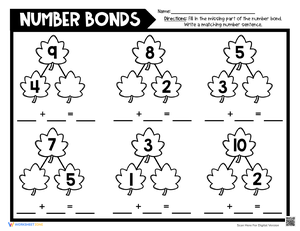
Composing and decomposing numbers worksheets for kindergarten give teachers a concrete bridge between hands-on number building and recorded math thinking. The resources in this set focus on part-part-whole reasoning within 10, helping students understand that 7 is not a single fixed combination — it can be 4 and 3, or 5 and 2, or 6 and 1, and each of those combinations is equally valid.
Skills These Worksheets Build
Each worksheet targets one or more of the part-part-whole relationships that kindergartners need to develop before addition and subtraction notation makes sense. The work spans several interrelated skills:
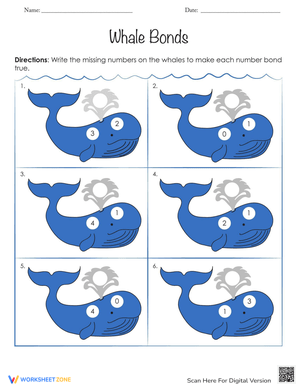
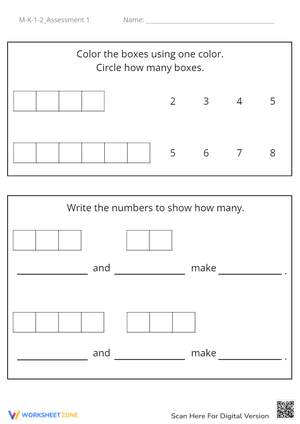
- Composing from two parts: students count two groups of objects and identify the total, recording it in a number bond, equation, or blank
- Decomposing into two parts: students start with a total and split it into two groups using pictures, ten frames, or physical counters
- Multiple decompositions: students show more than one way to make the same number — a key step toward flexible number thinking
- Missing-part tasks: one part and the total are given; students determine what's missing by counting on or reasoning about the relationship
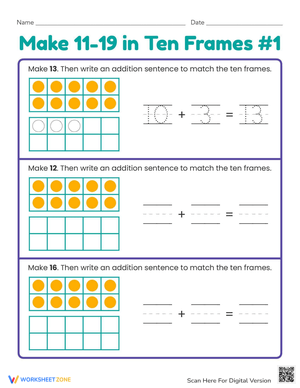
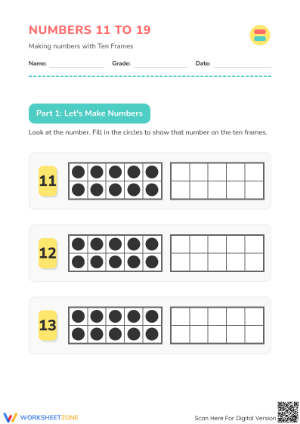
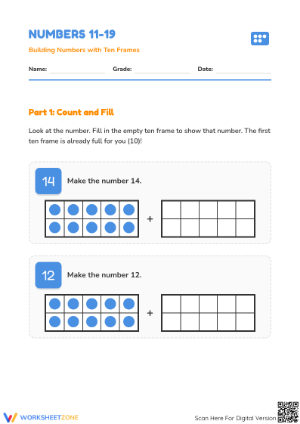
- Ten-frame recording: students fill or shade a ten frame and write the two-part equation that matches
The set stays within totals of 10, which matches the kindergarten scope of CCSS K.OA.A.3. Several worksheets begin within 5 so students can build confidence before tackling larger totals. Zero appears deliberately — students who see "5 and 0 make 5" are building an early foundation for additive identity, even if that term is years away.
Mistakes Students Make That These Worksheets Help You Catch
The most persistent error in this skill is treating the total as one of the parts. When a worksheet shows 5 = ___ + 2, a noticeable number of kindergartners write 5 in the blank. They see the 5 and copy it rather than reasoning about what's missing. That error is not a careless mistake — it signals that the student hasn't yet internalized the whole-part relationship. These worksheets surface that confusion early, before students hit formal addition instruction that expects them to hold the concept implicitly.
A second pattern worth watching: students who build "3 and 2 make 5" with cubes and record it correctly will still stare blankly when asked to show a different way to make 5. The idea that a number is flexible — that it doesn't have one correct decomposition — is genuinely novel at this age. Worksheets that ask for two or three decompositions of the same number force students to confront this rather than letting them stay comfortable with one combination.
Numeral reversals sometimes mask understanding in misleading directions. A student who draws the parts accurately but writes a reversed 3 is showing math sense; a student whose numerals are clean but whose parts don't match the total is the one who needs more model-and-record work. Looking at both tells you more than looking at either alone.
Building These Worksheets Into Your Lesson Plans
Composing and decomposing numbers worksheets for kindergarten work best when the worksheet follows physical modeling rather than replacing it. A reliable sequence: build the number with two-color chips or connecting cubes, separate into two groups, say the parts aloud ("4 is made of 1 and 3"), then complete the worksheet. When the worksheet arrives third in that sequence, it functions as a recording tool rather than the primary instruction. The math thinking happens first; the paper captures it.
One structural choice that pays off across the year is keeping a worksheet's format stable for three to four days while only the target number changes. When the layout stays familiar, students spend their attention on the math instead of decoding a new set of directions. That small consistency makes a real difference during math centers and small-group intervention, when the teacher can't be at every table.
These worksheets also fit naturally as morning warm-ups after the calendar block — five minutes of part-part-whole recording before the main lesson keeps the skill present without consuming instructional time. For the Friday review block, pulling a worksheet from earlier in the week and having students compare their current work to what they recorded then is a quick, low-prep formative moment that costs almost nothing to run.
Standard Alignment
The primary standard addressed is CCSS.MATH.CONTENT.K.OA.A.3: decompose numbers less than or equal to 10 into pairs in more than one way, and record each decomposition using objects, drawings, or equations. Classroom placement typically means these worksheets live in the Operations and Algebraic Thinking unit — usually introduced after counting and cardinality work is solid, because students need reliable one-to-one correspondence before they can trust the part counts they're recording. Introducing the skill too early, before counting is automatic, produces worksheets full of inaccurate parts that don't actually reflect what the student understands.
The set also touches K.OA.A.1, which covers representing addition and subtraction using objects, fingers, mental images, drawings, and equations. Worksheets that include a simple equation frame alongside a picture model make that connection explicit without requiring students to produce the equation format independently before they're ready.
Adjusting the Set for a Range of Learners
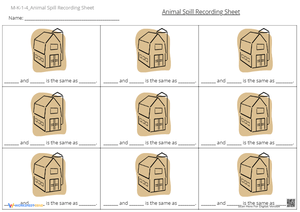
For students who need more support, limit the working range to totals of 5 or less and allow physical counters to sit directly on the worksheet while they work. Recording can stay at the level of circling or coloring rather than writing numerals — the part-part-whole thinking is still happening, and fine-motor demand isn't what's being assessed here. Dot images and a simple sentence frame ("___ and ___ make ___") give students enough structure to participate without stalling on the writing.
For students working ahead, composing and decomposing numbers worksheets for kindergarten can extend toward finding all possible decompositions of a number — asking how many ways they can make 8 and having students record every pair systematically. That task builds early combinatorial thinking and gives fast finishers something that genuinely stretches them rather than more of the same practice at the same level.
One practical middle path: assign the same worksheet to the whole class but give one group a ten frame they can reference while another group works without visual support. The worksheet is identical; the access point differs. That keeps planning manageable and keeps everyone working on the same core skill.
Frequently Asked Questions
When in the school year should I introduce composing and decomposing worksheets?
Most kindergarten teachers wait until students have solid one-to-one correspondence and can reliably count sets within 5. If a student miscounts the parts, the worksheet records an inaccurate equation — and that creates confusion rather than clearing it up. A common placement is mid-fall, after the counting and cardinality routines from the first weeks are running smoothly. Many teachers introduce part-part-whole with totals within 5 as early as late September and don't extend to totals within 10 until January or February.
How many decompositions should kindergartners find for a single number?
At the start, one decomposition per number is plenty. The goal is understanding that a number has parts — not memorizing every combination at once. Once students can reliably split a number one way and record it, asking for a second way pushes toward the flexibility CCSS K.OA.A.3 calls for. By the end of the year, students working at grade level should be able to find more than one way to make any number within 10 without starting the count over from zero each time.
What if a student can't yet form numerals — do these worksheets still work?
Composing and decomposing numbers worksheets for kindergarten that rely on circling, coloring, matching, and drawing rather than numeral writing let students demonstrate part-part-whole understanding before their handwriting is ready. Number bonds where students draw dots inside the circles, or ten frames they shade in, keep the math accessible. Numeral writing develops alongside the math reasoning at this age — it doesn't need to be a prerequisite for it.













 Interactive Worksheet Maker
 Quiz Maker
 Word Search Maker
 Crossword Puzzle Maker
 Word Scramble Generator
 Sentence Scramble Generator
 Handwriting Worksheet Generator
 Name Tracing Generator
 Fill In The Blank Generator