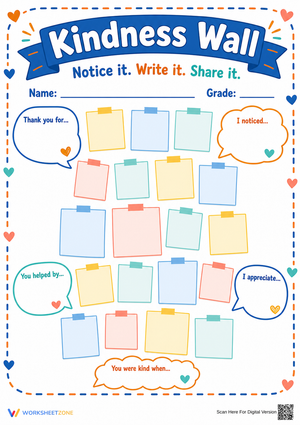
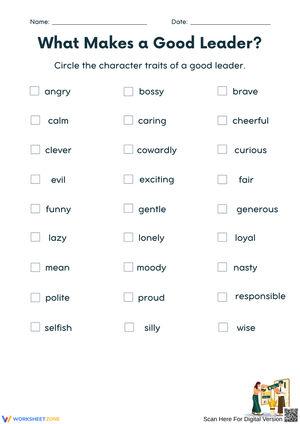
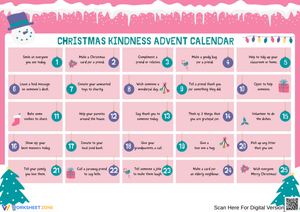
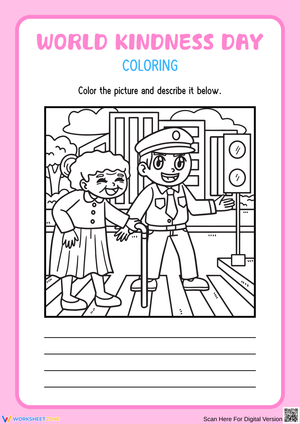
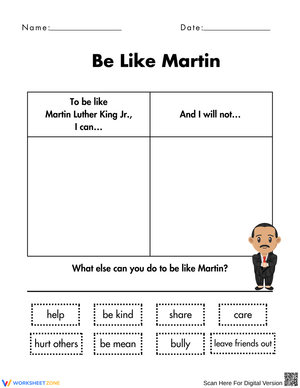
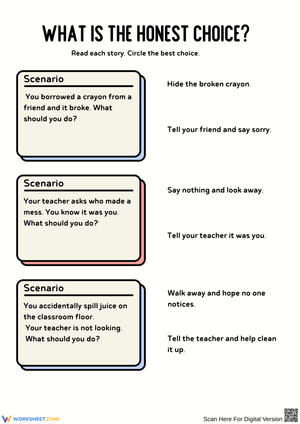
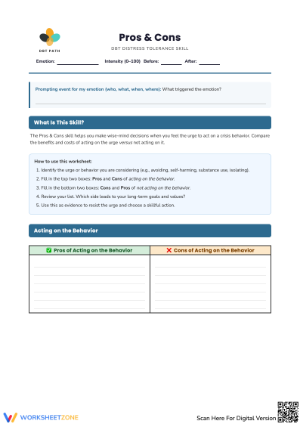
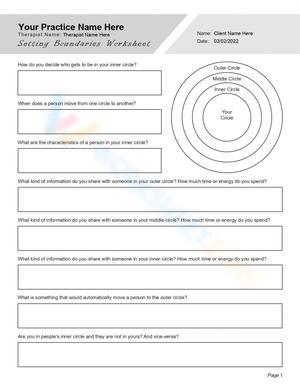
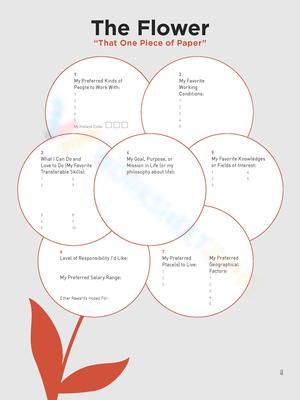
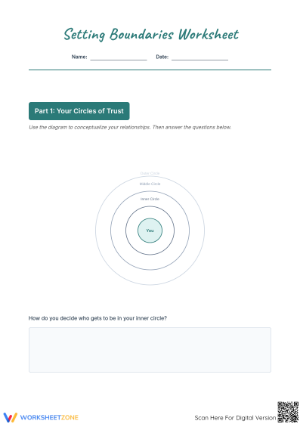
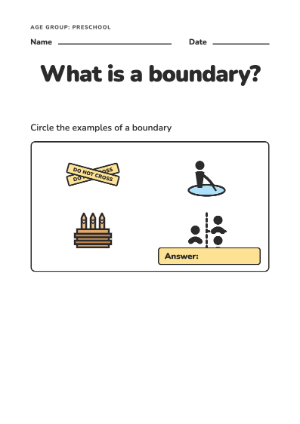
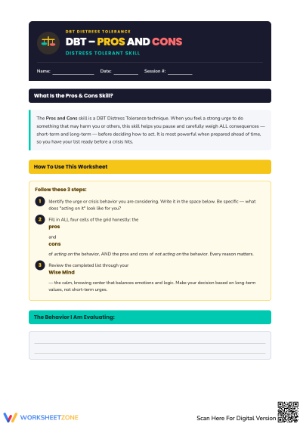
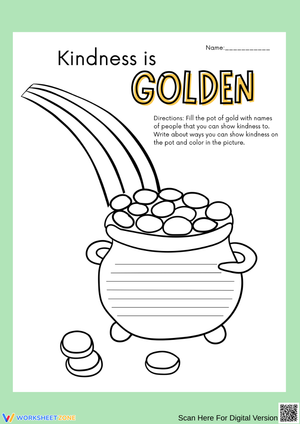
These kindergarten behavior worksheets printable give early childhood teachers a concrete visual entry point into social-emotional instruction — the kind of tool that does real work when a verbal reminder has already failed three times before snack. Each worksheet presents a specific social scenario through clear illustrations, then asks students to analyze, sort, color, or respond using picture-based tasks they can complete without reading proficiency. The set covers what actually dominates kindergarten social life: recognizing how others feel, understanding what expected behavior looks like across different settings, and practicing the basic self-regulation moves that keep classroom community intact.
Skills These Worksheets Build
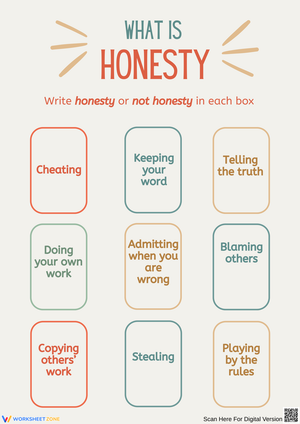
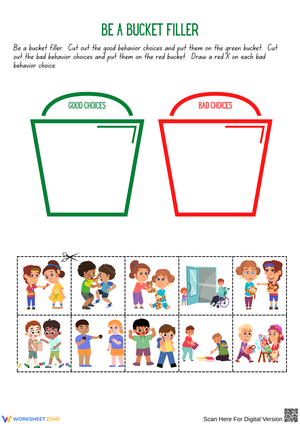
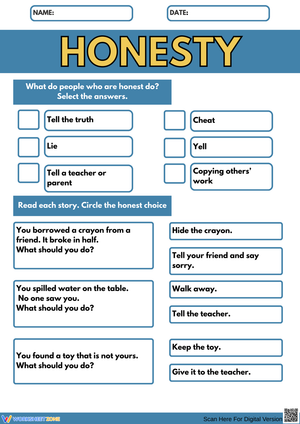
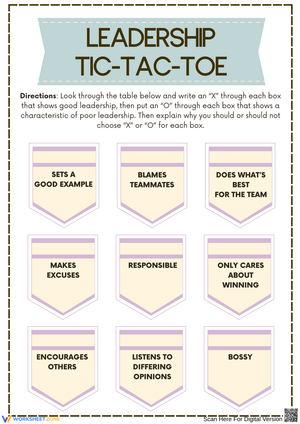
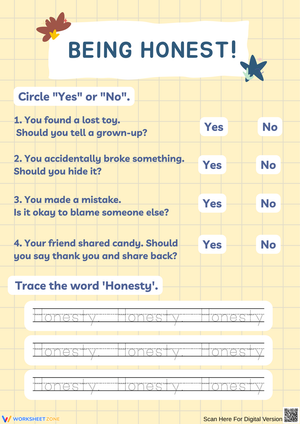
The central skill thread is perspective-taking — asking students to read a character's face and body posture, name the feeling they observe, and trace it back to what caused it. Worksheets pair that recognition work with cause-and-effect reasoning: one character grabs a crayon, and a second character's expression shifts. Students circle the feeling or draw an arrow to connect the action to the response. Cut-and-paste sorting worksheets ask students to categorize actions as expected or unexpected in a given classroom setting, which sidesteps the "good versus bad" framing that makes five-year-olds defensive about their own behavior. Several worksheets introduce basic calming strategies — deep breaths, asking an adult, taking a pause — and ask students to match a strategy to a specific feeling shown in an illustration.
- Reading facial expressions and body posture to identify emotions
- Sorting actions as expected or unexpected within specific classroom situations
- Tracing cause-and-effect relationships between one person's choice and another's emotional response
- Matching calming strategies to different emotional states shown in illustrations
- Recognizing what expected behavior looks like across varied settings: hallway, lunch table, partner work, carpet time
Common Misconceptions to Watch For and Correct
The most consistent pattern we see in student work is the knowing-doing gap. A student correctly identifies the expected behavior on a sorting worksheet, then walks into the hallway and does the opposite thirty seconds later. That gap is not a sign the worksheet failed — it is developmental. Five-year-olds are still operating largely in egocentric thinking; understanding that another person's internal state matters requires repeated, explicit practice spread across many weeks, not a single lesson. What the worksheet provides is a reference point: when that student later struggles in the hallway, the teacher can say, "Remember the picture where the kids were walking quietly? That's what we're doing now."
A second error pattern is over-generalization of the "unexpected" label. Students who pick up the sorting language quickly start applying it to any strong emotion — including a friend showing excitement or surprise — and flag those as unexpected behaviors. The illustrations in these worksheets let teachers address that directly, because you can point to a picture and ask, "Is this behavior fitting the situation, or not fitting?" Context is the variable students need to learn to read, and a worksheet depicting a specific setting — library quiet time versus recess — makes that distinction concrete rather than abstract.
How to Build These Worksheets Into Your Lesson Plans
The tightest use of a kindergarten behavior worksheets printable is as a pre-correction tool — meaning you run the activity directly before the transition or situation the behavior applies to. If the class is about to practice hallway walking, a two-minute sorting worksheet on hallway versus classroom voices prepares students by priming the behaviors they are about to need, rather than reminding them reactively after something has already gone wrong. This approach reflects PBIS's direct-instruction principle: treat behavioral expectations as a lesson with a before-practice phase, not just a rule posted on the wall.
Morning meeting is the other reliable slot. After a five-minute group discussion of a social scenario, students return to their tables to complete the corresponding worksheet individually — a gradual release from shared to independent practice. Small-group pull-outs with a school counselor work well too, especially for students who need more processing time or who shut down when the whole class is watching. In that quieter setting, the worksheet becomes a conversation starter rather than a task to finish, and students feel safer saying, "I don't know what to do when that happens."
Standard Alignment
These worksheets address the social-emotional learning competencies most commonly mapped to kindergarten under CASEL's framework: self-awareness (identifying one's own feelings), social awareness (recognizing others' emotions and perspectives), and responsible decision-making (evaluating the impact of choices on others). Within PBIS implementation, they support Tier 1 universal behavior instruction — the explicit teaching phase that PBIS requires before any consequence system is applied. Many state SEL standards at the kindergarten level include benchmarks such as "identifies a range of emotions in self and others" and "demonstrates understanding of classroom expectations," and each worksheet targets one of those benchmarks directly. Teachers working with state frameworks modeled on the Illinois SEL Standards will find strong alignment with Goal 1 (developing self-awareness and self-management) and Goal 2 (using social awareness and interpersonal skills to interact effectively with others).
Adjusting the Worksheets for a Range of Learners
For students who are encountering the expected/unexpected framework for the first time, start with worksheets that show only two characters and one clear action — less competing visual information means students can focus on the emotional response rather than parsing a complex scene. Students who move through the basic sorting tasks quickly can be asked to draw or dictate a third panel: what happens next? That extension shifts the practice from recognizing behavior to predicting consequences, which is the more demanding social-cognitive skill.
Students with autism or other developmental profiles that affect social cognition often respond well to the consistent, predictable layout these worksheets maintain — same task structure, same vocabulary, same visual format across the set. For those students, pairing each worksheet with a photograph of the actual classroom space depicted in the illustration closes the gap between an abstract drawing and the real environment where the behavior needs to happen. At the other end of the range, a student reading at a first-grade level can be given a lined box to write a one-sentence explanation of their sort, adding a language production component without altering the core social-skills practice.
Frequently Asked Questions
Can these worksheets be used without a full SEL curriculum in place?
Yes. Each worksheet stands alone and targets a single skill, so teachers who do not have a purchased SEL program can pull individual worksheets to address specific skills as they arise in classroom life. A kindergarten behavior worksheets printable works just as well as a standalone morning meeting activity as it does inside a structured weekly SEL unit — the skill focus is self-contained.
How often should behavior worksheets appear in kindergarten instruction?
Two to three times per week is the range where most teachers see genuine transfer into student behavior without the activity feeling rote. Daily use tends to dilute the impact — students go through the motions of sorting rather than actually processing the scenario. Spacing the practice across the week, ideally tied to a real situation the class is about to experience, keeps engagement and attention higher.
What should teachers do when a student completes a sort incorrectly?
That incorrect sort is actually the most useful data point in the lesson. Sit beside the student, point to the illustration, and ask what they notice about the characters' faces. Most of the time, the error is not a behavior problem — it is a vocabulary gap or a misread of the visual cue. The worksheet surfaces that gap in a low-stakes, private way that a whole-class discussion never could.
Are these appropriate for students who have experienced trauma?
Worksheets that center on expected versus unexpected behavior rather than "good" versus "bad" are generally more appropriate for students with trauma histories, because they remove the moral judgment from the activity and keep the focus on social context. Any kindergarten behavior worksheets printable that depicts conflict or distress scenarios should be previewed by the teacher first to make sure the content is not a direct trigger for a specific student's experience before it is placed on that student's desk.