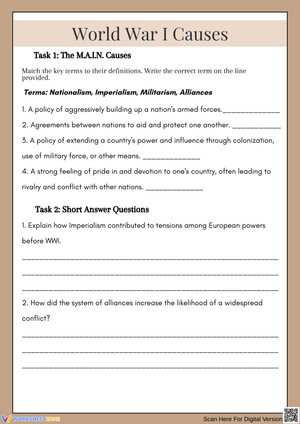
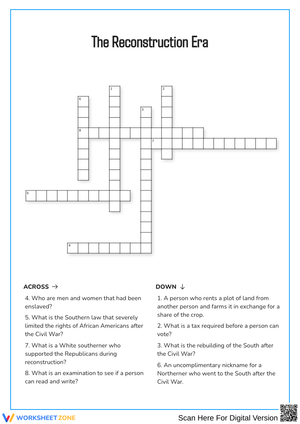
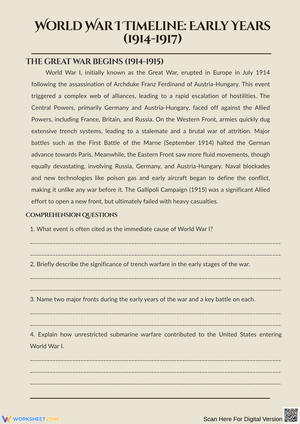
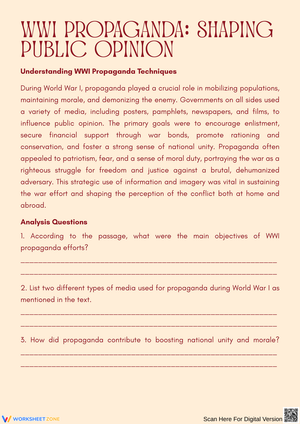
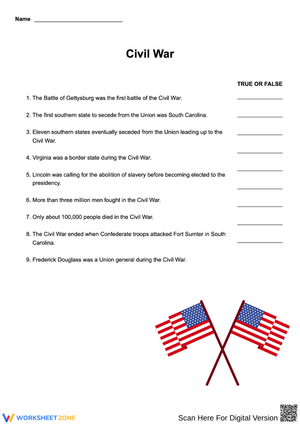
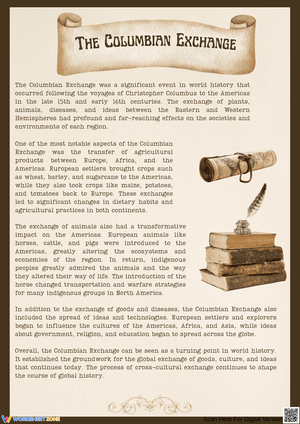
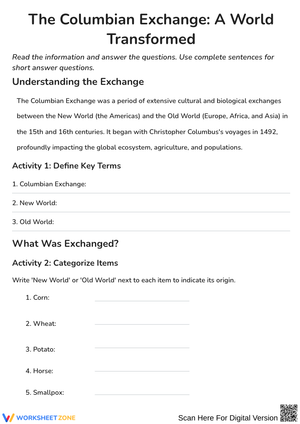
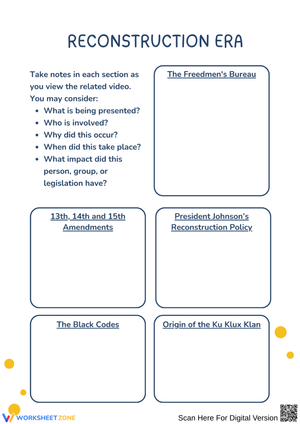
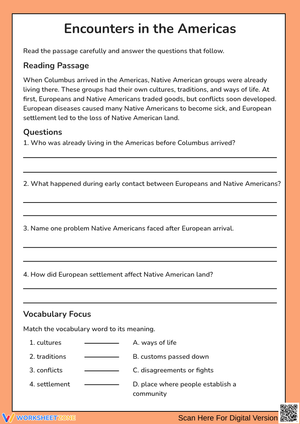
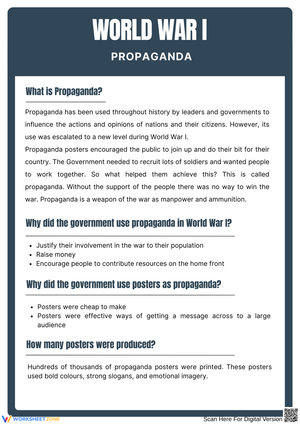
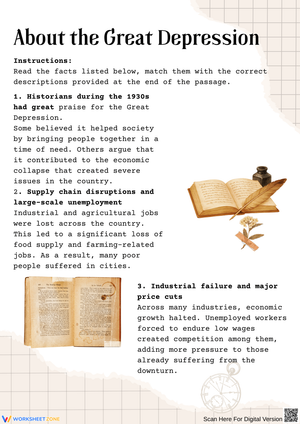
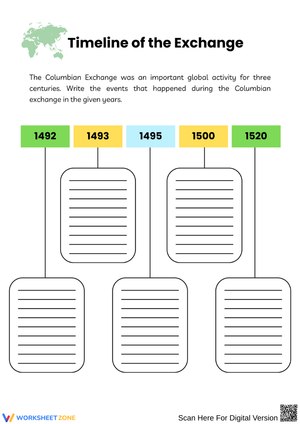
These history worksheets for 8th grade close the gap between what most free printables offer and what eighth-grade social studies actually demands from students. At this level, students are expected to sequence events with explanatory thinking behind the sequence, pull evidence from a primary source, and connect geographic details to larger historical patterns — not simply name a person or fill in a date. Each worksheet in this set targets one or two of those skills directly.
What Students Practice Across the Set
Eighth grade US history stretches from colonial foundations through Reconstruction, and the thinking skills underneath that content stay consistent regardless of which unit is running: chronological reasoning, cause-and-effect analysis, geographic connections, source evaluation, and academic vocabulary. These worksheets address all of those areas, which means a teacher can draw from this set whether the current topic is the Constitutional Convention, the Missouri Compromise, or the political landscape following the Civil War.
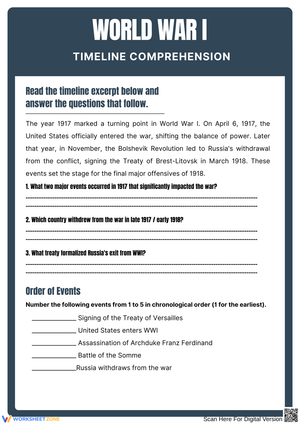
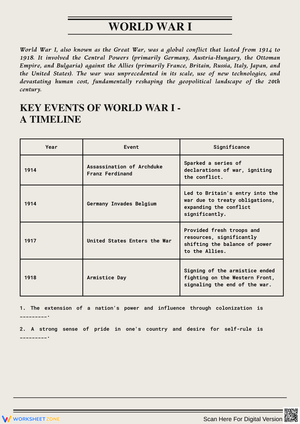
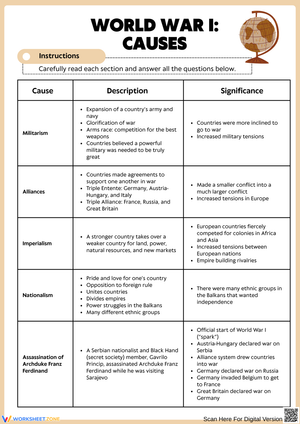
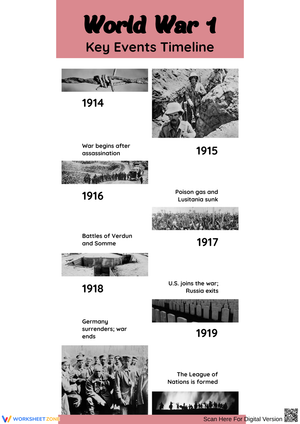
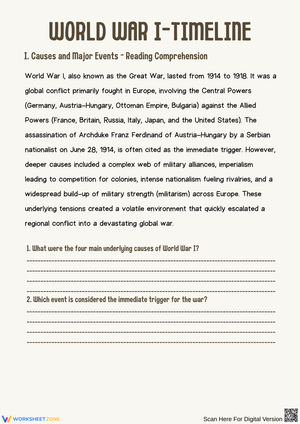
- Chronology worksheets ask students to order events and explain what changed between each — not just which came first, but what the sequence reveals about the period.
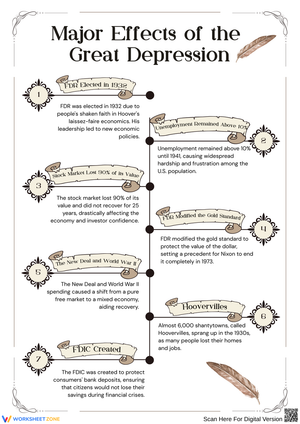
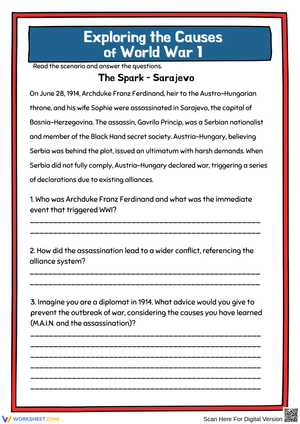
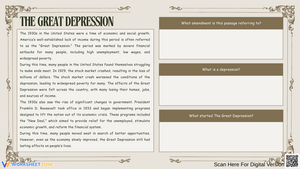
- Cause-and-effect worksheets move students from naming a development to tracing its consequences across social, political, or economic dimensions.
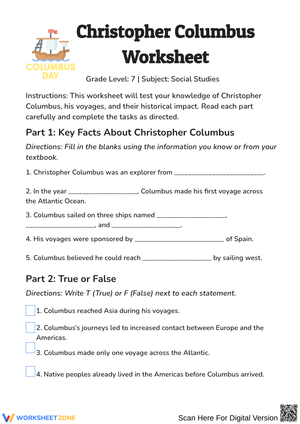
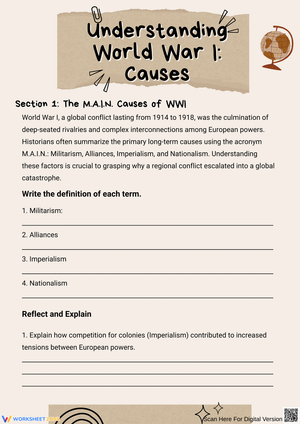
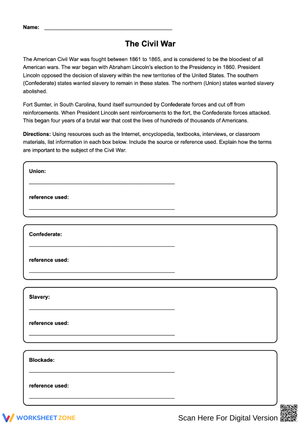
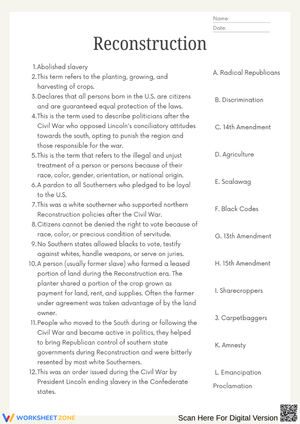
- Vocabulary worksheets ask students to use academic terms in context rather than match definitions in isolation.
- Map-based worksheets connect movement, territorial expansion, and regional conflict to specific locations.
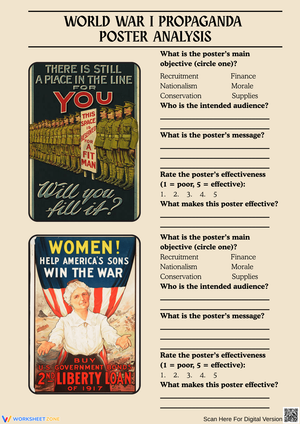
- Primary source analysis worksheets walk students through observation, context, and inference in a predictable sequence that transfers across document types.
The range matters because lesson needs shift across a unit. A teacher reviewing westward expansion might use a map worksheet on Monday and a source excerpt on Manifest Destiny on Tuesday. Having different formats available makes that flexibility realistic.
Mistakes Students Make That These Worksheets Help You Catch
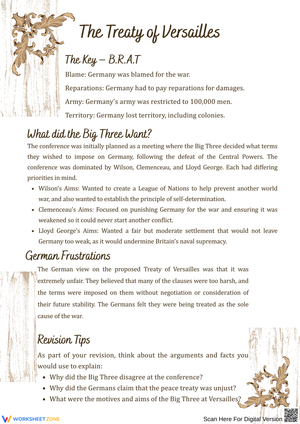
The most consistent error in 8th grade history work is the explanation that stops at identification. A student writes "The Civil War caused many deaths" but cannot explain why that toll created specific political and economic consequences in the Reconstruction period. These worksheets address that pattern by pairing identification prompts with explanation prompts — students who name an event are immediately asked what changed, why it mattered, or what evidence they would use to support that claim.
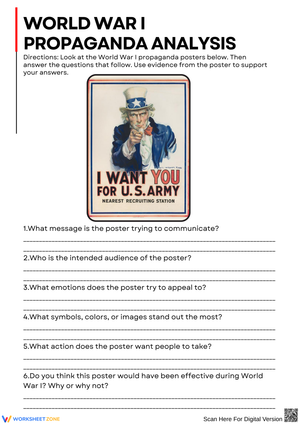
Primary source work surfaces a separate problem. When given a political cartoon from the 1840s, most students describe what they see without interpreting what it means — listing visual details as if the task were observation rather than analysis. A two-stage prompt, first "what do you notice?" and then "what does this suggest about the period?", moves students from description into historical thinking and lets a teacher see during a quick scan exactly where student reasoning breaks down.
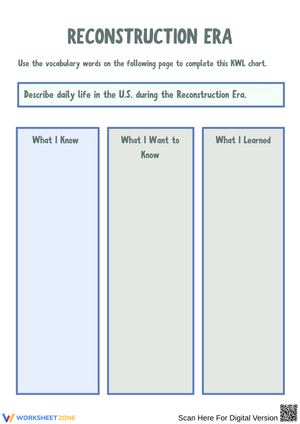
Vocabulary is a third consistent gap. Students who select the correct definition on a matching task often fail to use that term when explaining a historical development in writing. Items that require students to write a sentence using the term in context catch that gap before it shows up in a paragraph response or on a unit assessment.
Fitting These Worksheets Into a Lesson Without Losing Instructional Time
The most effective approach is treating each worksheet as one piece of a lesson sequence rather than the full period. A chronology worksheet used as a warm-up before direct instruction gives every student a common anchor before new content arrives. A cause-and-effect worksheet used as a five-minute exit check at the end of class tells the teacher quickly whether students can explain consequences or whether tomorrow needs a reteach before moving on.
Station work is a strong format for primary source worksheets. Four groups, four different documents from the same era, the same analysis structure on each worksheet — students rotate every eight to ten minutes and end the activity with four perspectives rather than one. The debrief that follows is richer because students are comparing evidence across sources instead of reviewing the same excerpt as a class.
- Use a chronology worksheet as a bell ringer before a quiz or unit review.
- Pair a vocabulary worksheet with two minutes of partner talk so students say the terms aloud before writing with them.
- Run primary source worksheets as station work when multiple document types illuminate the same moment in history.
- Use a cause-and-effect worksheet as the final five minutes of class to check whether students can explain consequences, not just name events.
- Leave a structured worksheet for sub plans — directions are embedded, the routine is familiar, and the work stays grade-level without requiring teacher setup.
Standard Alignment
The College, Career, and Civic Life (C3) Framework for Social Studies State Standards organizes its grades 6–8 band around four dimensions: constructing compelling questions, applying disciplinary concepts and tools, gathering and evaluating sources, and communicating conclusions. That framework describes exactly what strong history worksheets for 8th grade should require of students — not isolated content recall, but moves like sourcing a document, identifying relevant evidence, and connecting details to a claim about causation or significance. These worksheets align most directly to the Dimension 2 history standards (D2.His.1 through D2.His.16), which address chronological reasoning, causation, change and continuity, and contextualization at the middle school level. Most state US history standards for grade 8 track closely to this same framework language, which means the alignment holds across a wide range of district contexts.
Differentiating These Worksheets Across a Mixed Class
One reliable move is keeping the same worksheet and adjusting the response demand. Students who struggle with written explanation receive a sentence starter or a labeled response format. Grade-level students complete the full explanation prompt. Students who are ready for more use the same worksheet as evidence for a short written claim — "use two details from this worksheet to support an argument about why this event mattered in the long run." That approach preserves the shared historical content while making realistic adjustments without printing entirely separate versions of every resource.
For students who lack background knowledge entering a unit, pre-teaching three or four key terms before distributing the worksheet reduces the reading barrier enough that the thinking task stays accessible. This matters most with primary source worksheets, where unfamiliar vocabulary in the original document can stall student analysis before it starts. A word bank written at the top of the worksheet, or a brief whole-class term review before students read independently, solves that problem quickly.
The set of history worksheets for 8th grade also serves students who have already mastered a unit's basic content. Those students can take the same cause-and-effect or primary source worksheet and add one extension task: explain how this development connects to something studied earlier in the year. That kind of synthesis requires deeper thinking without requiring a separate resource or extra planning time.
Frequently Asked Questions
What content does this set cover?
The worksheets address the skills and topics most common in 8th grade US history: chronological reasoning, cause and effect, geographic connections, vocabulary in context, and primary source analysis. The formats support multiple units across the year rather than locking into one narrow historical topic.
How do I keep class from turning into a worksheet period?
Place each worksheet inside a larger lesson structure. A five-minute bell ringer, a station rotation, or a quick exit check are all effective slots. The worksheet handles the structured thinking task; instruction, discussion, and student talk carry the rest of the lesson around it.
Are these useful for homework and sub plans?
Yes. Short, targeted worksheets work well for homework because students can complete them without needing to ask the teacher for clarification — the directions are embedded and the task is bounded. For sub days, teachers who rely on history worksheets for 8th grade from a structured set find that students recognize the format, stay on task without close supervision, and return something usable the next day.
How do I handle primary source worksheets with students who struggle with complex texts?
Choose excerpts over full documents, pre-teach three to four key vocabulary terms, and use a two-stage analysis prompt that separates observation from interpretation. Keeping the excerpt short reduces the cognitive load enough that students reach the analytical part of the task rather than stalling at the vocabulary or losing the thread of the argument early on.












 Interactive Worksheet Maker
 Quiz Maker
 Word Search Maker
 Crossword Puzzle Maker
 Word Scramble Generator
 Sentence Scramble Generator
 Handwriting Worksheet Generator
 Name Tracing Generator
 Fill In The Blank Generator




 BACK TOSCHOOL