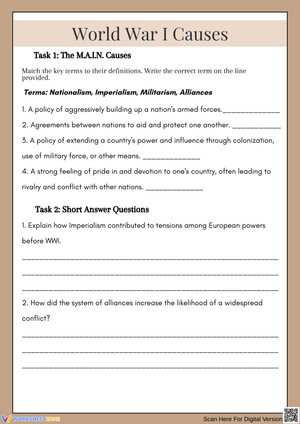
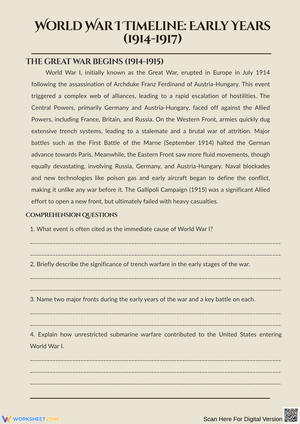
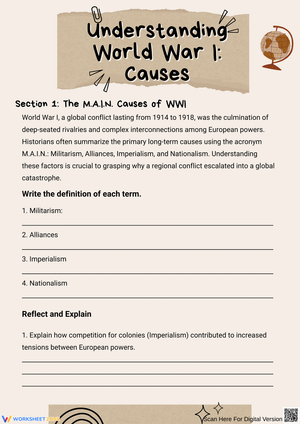
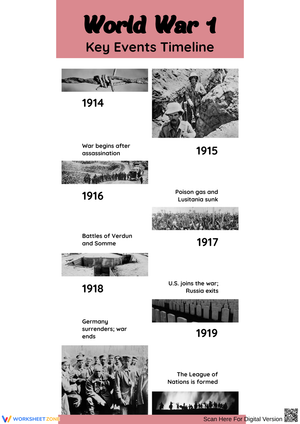
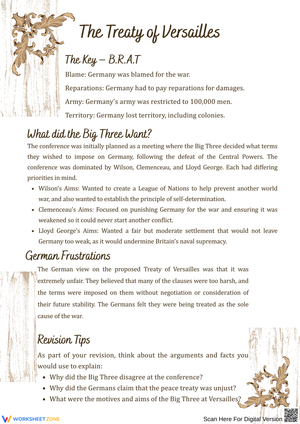
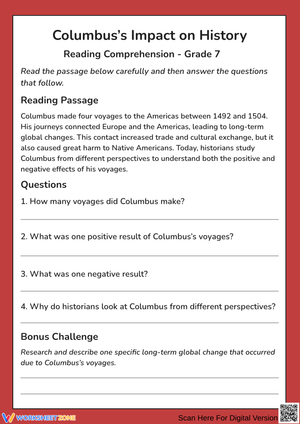
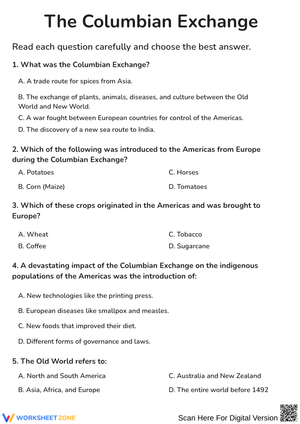
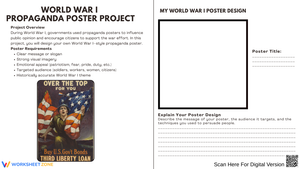
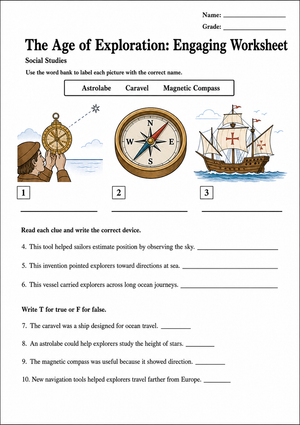
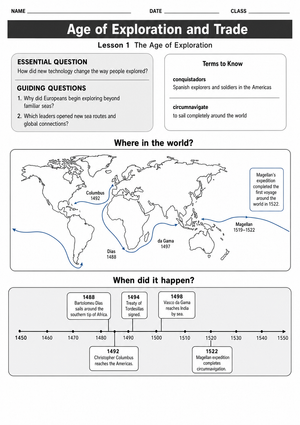
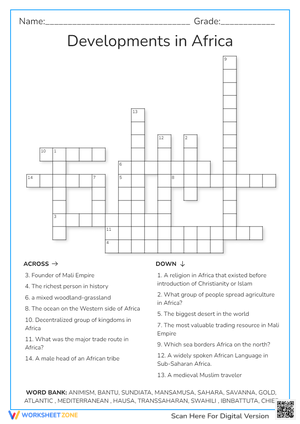
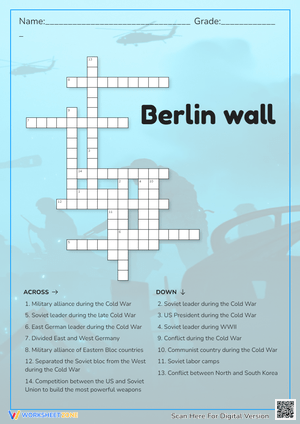
These world history pdf worksheets for 8th grade give teachers a set of skill-focused, classroom-ready resources organized by historical thinking task rather than textbook chapter—so each worksheet has a clear cognitive job, whether that is sequencing events on a timeline, analyzing a short primary source excerpt, tracing a trade route on a map, or comparing two societies through a structured chart. The topics span what most US middle school survey courses already teach: ancient river valley civilizations, classical empires, Silk Roads exchange, the spread of major belief systems, and political and cultural change across the medieval world.
The Historical Thinking Skills Built Into Each Worksheet
What separates a strong history worksheet from a fill-in-the-blank memory exercise is whether it asks students to do something with historical information rather than just retrieve it. Each worksheet targets one specific move: place events in sequence, identify a cause and its effect, locate empires on a political map, read a short passage and underline the evidence that supports a claim, or use a word bank to explain a concept in context.
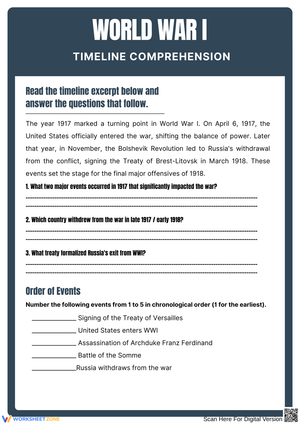
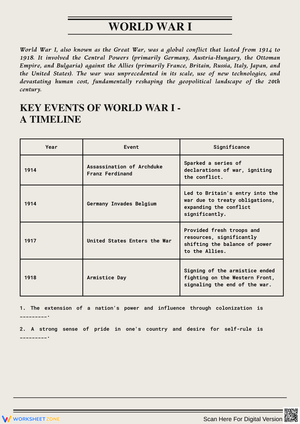
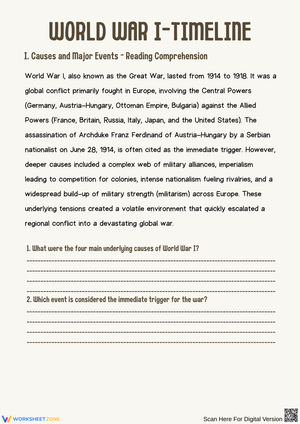
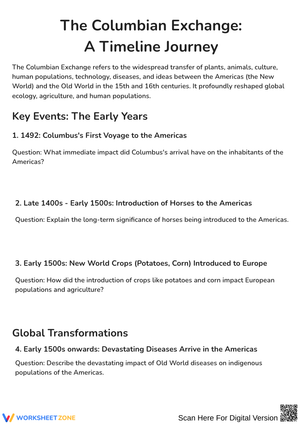
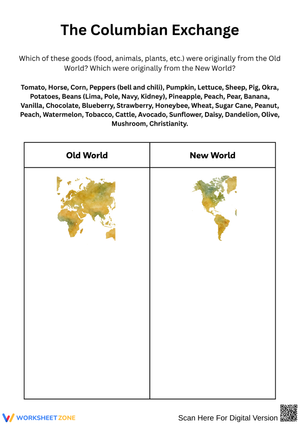
Map worksheets ask students to label regions, mark trade routes, and draw arrows showing the direction of cultural diffusion—tasks that connect geography to the political and economic questions the unit is already raising. Timeline worksheets give students a fixed set of events to sort, then ask one or two follow-up questions about what changed between two periods. Compare-and-contrast charts appear regularly because at this grade level, students benefit from a structured space to organize thinking before they write a paragraph or join a discussion. Primary-source response worksheets are the most demanding in the set; even a four-sentence excerpt carries a useful question about point of view, purpose, or what the source reveals about daily life in an empire.
- Map labeling and trade route tracing
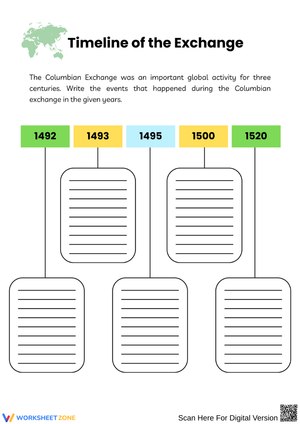
- Chronology and event sequencing on timelines
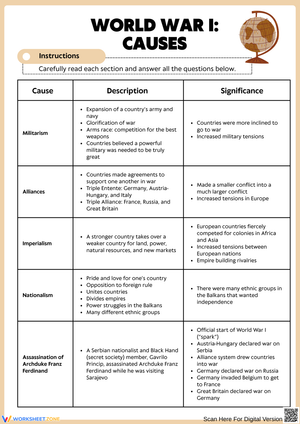
- Compare-and-contrast charts for civilizations, empires, and belief systems
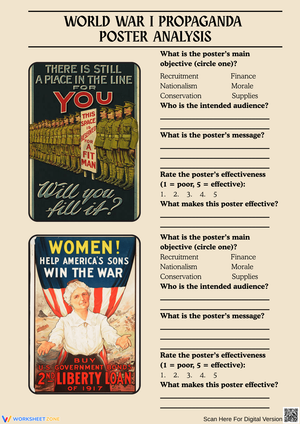
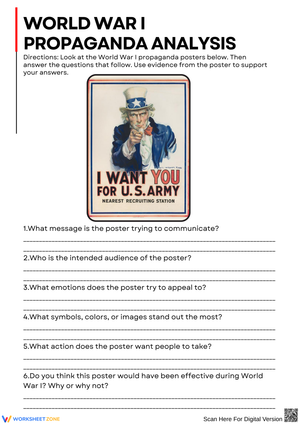
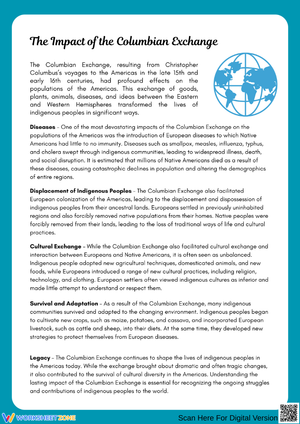
- Primary-source reading with evidence-based written response
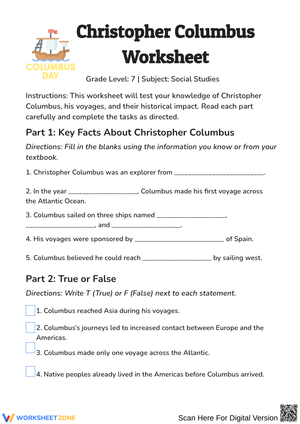
- Vocabulary in context, including word bank exercises
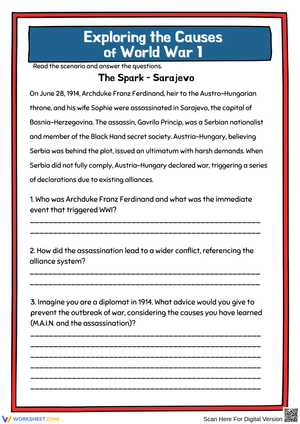
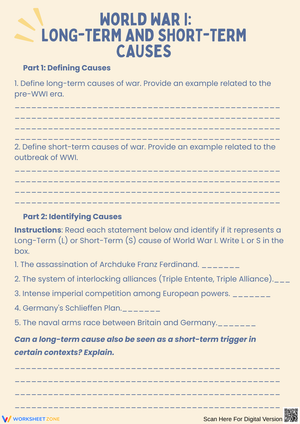
- Cause-and-effect analysis for political and cultural change
Mistakes Students Make That Reveal What Still Needs Teaching
One of the most consistent patterns in 8th grade history is what you might call chronology collapse. Students can tell you that the Roman Empire fell and that the Renaissance came later, but when asked to place the Byzantine Empire, the Tang Dynasty, and the rise of Islam on the same timeline, they compress everything into a vague "long time ago" without a real sense of relative sequence. A timeline worksheet that requires students to anchor events to approximate centuries—not just drag names to boxes—exposes that gap before it shows up on a unit test.
Source analysis brings out a different set of errors. When students first encounter a primary-source response question, they frequently restate what the source says rather than explain what it reveals. If an excerpt describes a busy market in a Song Dynasty city, a student who writes "it says there were many goods for sale" has not yet made the move to inference—explaining what that detail suggests about Chinese economic development or urban organization. These worksheets give teachers a low-stakes way to make that correction repeatedly before it costs students points on summative work.
A third pattern: students often treat compare-and-contrast charts as a race to fill boxes rather than a thinking tool. They match surface details—"both had rulers," "both built large structures"—without identifying the historically significant similarities or differences. A brief teacher model before students work independently, shown once, makes a measurable difference in what ends up on the page.
How to Work These Worksheets Into Your Lesson Plans
The most productive use of each worksheet depends on where a class is in the unit. Early on, map and timeline worksheets work well as structured note-taking tools or as a 7-to-10-minute bell ringer that brings students back to the previous lesson's geography before new content starts. Mid-unit, primary-source response worksheets give students something to do with the content they have been building—reading a source, marking evidence, and writing one or two sentences that connect it to a bigger historical question the class is investigating.
Station rotation is another strong fit. One table works a map, another handles a short source response, a third completes a vocabulary-in-context worksheet, and a fourth works through a cause-and-effect sequence. Because each worksheet targets a single task, students can move between stations without needing a re-explanation of directions at every stop. That setup also frees the teacher to sit with the group that needs the most support on source analysis without the rest of the room stalling.
These world history pdf worksheets for 8th grade also hold up as sub plans. A clear directions line, a short reading, and three focused questions give substitute teachers something that runs itself—and give students a structured task that does not require direct instruction to launch.
- Bell ringers for spaced retrieval at the start of class
- Station work where each table handles a different skill
- Homework that does not require a device or internet access
- Sub plans with self-contained directions and a single focused task
- Pre-discussion preparation so students enter a seminar with evidence already marked
Standard Alignment
These worksheets align with the C3 Framework's Dimension 2 (applying disciplinary concepts and tools) and Dimension 3 (gathering and evaluating sources). The C3 Framework pushes students toward inquiry-based work—identifying a compelling question, gathering evidence, and constructing an explanation—rather than treating history as a list of facts to memorize. Map work, primary-source analysis, and compare-and-contrast tasks all fall inside those dimensions because they require students to do something analytical with historical content, not just recognize it.
The literacy demands also connect directly to the Common Core Reading Standards for Literacy in History/Social Studies, grades 6–8. Source-response worksheets address RH.6-8.1 (citing textual evidence) and RH.6-8.2 (identifying central ideas). Map-integrated tasks address RH.6-8.7 (integrating information from visual and print sources). Vocabulary-in-context work ties to RH.6-8.4, which targets the meaning of domain-specific words in historical context. Teachers whose states use these literacy standards—or close state-level equivalents—will find those connections hold up across the full set.
Adjusting These Worksheets Across Student Readiness Levels
The same worksheet can function at different readiness levels without requiring the teacher to build a second version from scratch. For students who struggle with reading load, highlighting the two or three sentences in a source passage most critical for answering the prompt—then asking students to work from those sentences before returning to the full text—keeps the historical task intact while reducing the volume of text they need to process independently. Students are still identifying evidence and making a claim; the entry point is just narrower.
For students who move through core questions quickly, compare-and-contrast charts and source-response prompts have natural extension depth. A student who finishes the basic task can be asked to write a second paragraph explaining which detail is the most significant and why, or to identify a question the source does not answer. Those follow-up moves push historical thinking without requiring the teacher to distribute a separate worksheet.
World history pdf worksheets for 8th grade that include word banks, timeline frames, and sentence starters give multilingual learners and students with IEP accommodations a cleaner entry point. The historical demand stays the same—students still trace a trade route, sequence empires, or analyze a source excerpt—but the language generation burden drops enough that students can show what they actually know about history rather than what they can produce independently in English.
Frequently Asked Questions
What world history topics do these worksheets cover?
The set spans the units most US middle school courses already teach: ancient river valley civilizations, classical Greece and Rome, Silk Roads trade and cultural diffusion, the spread of Buddhism, Islam, and Christianity, and medieval political and cultural change across regions including Europe, East Asia, and West Africa.
Are these worksheets usable as formative assessment tools?
Yes. Each worksheet targets a narrow enough skill that it works as a quick check at the end of a lesson or the start of the next one. A timeline task shows whether students can place events in correct sequence. A source-response worksheet reveals whether students are restating or actually inferring. Those are the reads that tell a teacher what to address before moving to the next unit.
How long does each worksheet typically take to complete?
Most run between 8 and 15 minutes depending on format and class. Map and timeline tasks tend to land closer to the shorter end; source-response worksheets take longer because students need time to read, mark, and write. That range makes the set flexible enough to use as a focused opener, a mid-period task, or a homework assignment.
Can teachers use these resources with students who need additional reading support?
Adjustments that work well include highlighting key sentences, pairing students for the reading portion before they write responses independently, and using the word bank options built into select worksheets. The world history pdf worksheets for 8th grade in this set are built so that reading supports can be layered on without removing the historical thinking task the teacher actually wants to assess.