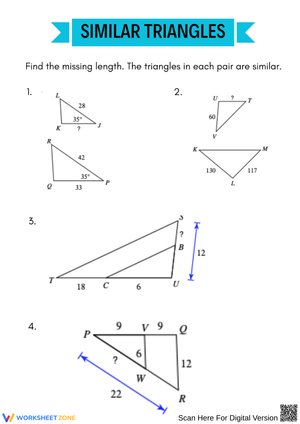
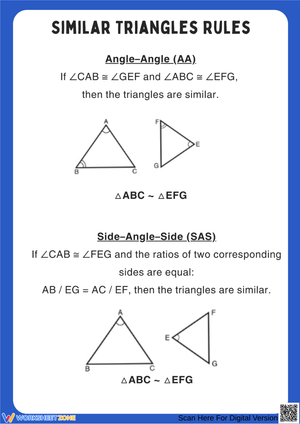
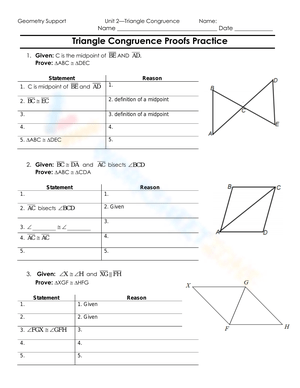
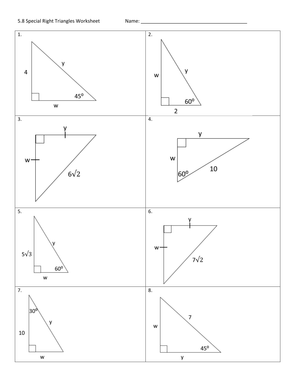
These triangles printable worksheets for 8th grade target the skill cluster where geometry gets noticeably harder — the point where classification, angle-sum reasoning, and the Pythagorean Theorem converge in a single unit. Each worksheet addresses one focused skill area, so teachers can assign based on what a class or small group actually needs that day rather than moving through the set in lock-step order.
What's Inside the Set
The six skill areas covered across the worksheets are:
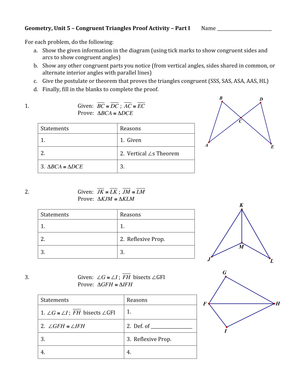
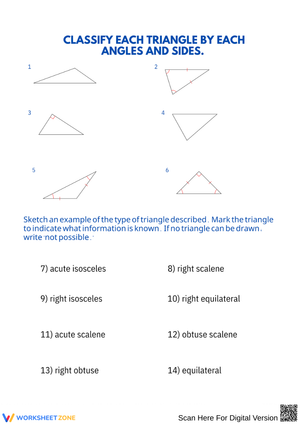
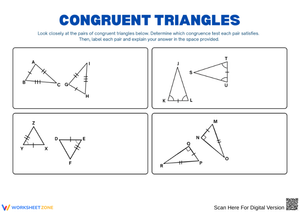
- Classification by side length: students label triangles as scalene, isosceles, or equilateral using given measurements or congruence markings on diagrams
- Classification by angle type: students determine whether a triangle is acute, right, or obtuse — sometimes from a diagram alone, sometimes by computing and comparing angle values
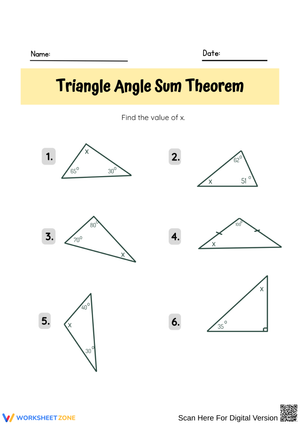
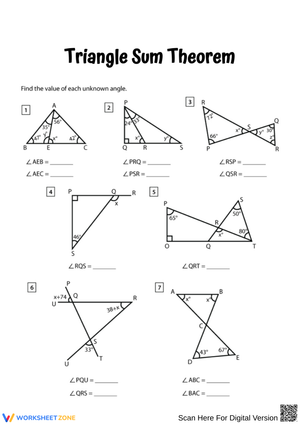
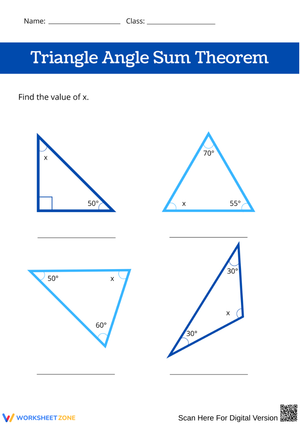
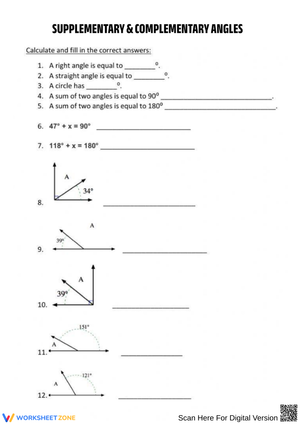
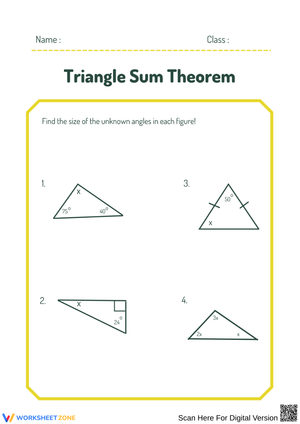
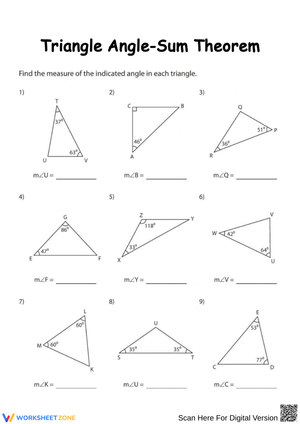
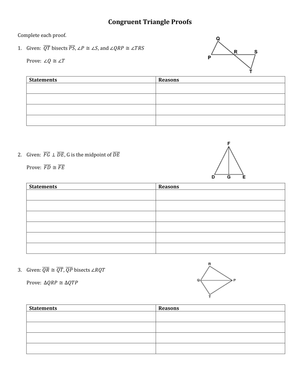
- Missing interior angles: students write and solve equations using the 180-degree angle-sum rule, moving from one-step to two-step problems within each worksheet
- Exterior angle relationships: students apply the exterior angle theorem in diagrams that show both the exterior angle and the two non-adjacent interior angles
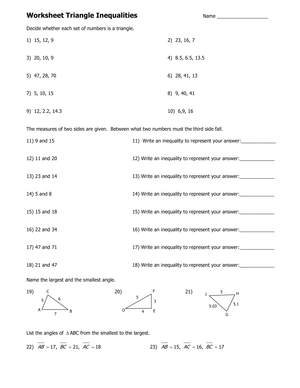
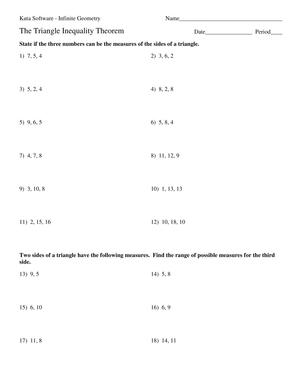
- Triangle inequality: students test whether three given side lengths can produce a valid triangle
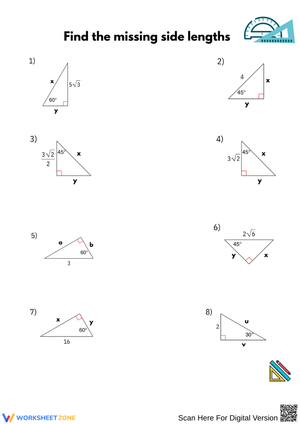
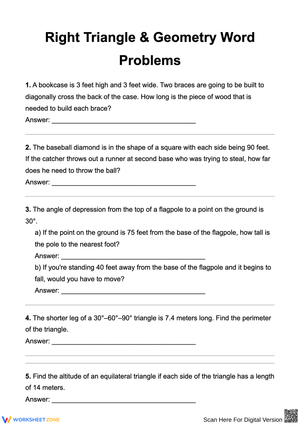
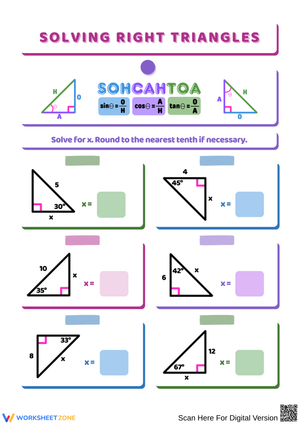
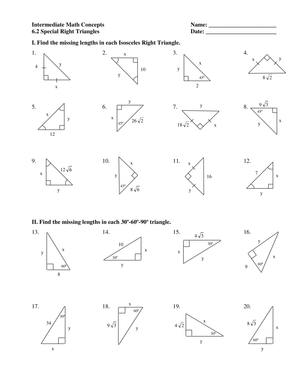
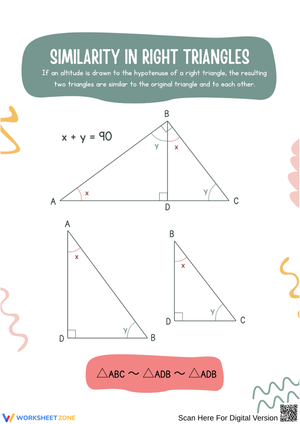
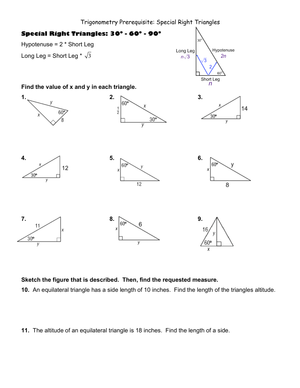
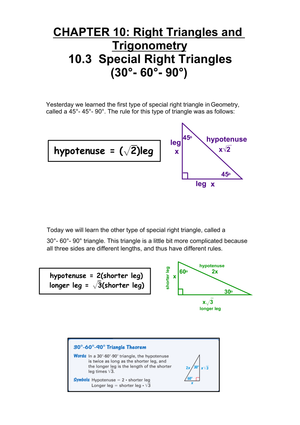
- Right-triangle problems: students use the Pythagorean Theorem to find missing side lengths in labeled right triangles
That span from visual classification to algebraic angle problems to Pythagorean application reflects what an actual 8th grade geometry unit asks students to do. A student who names triangle types by appearance with confidence may still write an incorrect equation when one angle is expressed as (2x + 5). Having separate worksheets for visual recognition and algebraic reasoning lets teachers assign with precision rather than hoping one mixed-skill resource covers both gaps at once.
Where Students Consistently Stumble in Triangle Work
Exterior-angle problems produce the most predictable error in this unit. Students who can recite that the exterior angle equals the sum of the two non-adjacent interior angles will still, in practice, subtract rather than add when working through a specific diagram. When the exterior angle is 130° and one remote interior angle is 50°, many students write 130 − 50 and stop, treating the exterior angle as a total to split rather than a result to reproduce with two addends. That error appears reliably around day three of exterior-angle instruction, and a completed worksheet surfaces it in a way that whole-class discussion rarely does.
Algebraic angle-sum problems produce a second consistent mistake. Students who correctly set up x + 48 + 67 = 180 often lose the algebraic structure when one angle is given as (3x − 10). The equation gets written down correctly, but then the expression collapses to 3x — the subtraction disappears — and the solution proceeds from there without anyone flagging the error. That specific drop-off is hard to catch during class but visible immediately on completed student work.
Triangle inequality questions trip students up most on degenerate cases — combinations like 4, 6, 10, where the two shorter sides sum exactly to the longest. Students who check visually rather than computing accept those combinations regularly. Including two or three near-miss cases on a worksheet, without signaling them, reveals this confusion before it costs students points on an assessment.
Fitting These Worksheets Into the Teaching Week
The cleanest assignment strategy is matching each worksheet to the lesson objective for that day rather than distributing the full set at once. A classification worksheet lands naturally right after the first lesson on triangle vocabulary. A missing-angle worksheet belongs in the 12- to 15-minute independent-practice window after angle-sum instruction. Spacing the set this way keeps cognitive demand focused and gives teachers formative information at each point in the unit.
These triangles printable worksheets for 8th grade also work well for sub days. The diagrams are labeled clearly enough that students can work without teacher explanation, and the included answer keys allow for same-period self-correction if the sub follows through with a class review at the end.
For bell ringers, three or four items from a classification or angle-sum worksheet take about five minutes and serve as a check on the previous day's lesson. For reteach groups, the missing-angle worksheet gives a natural structure: model equation setup on two items at the document camera, then release the group to complete the rest independently. For end-of-unit review, pairing a classification worksheet with an exterior-angle worksheet in the same sitting mirrors the kind of skill-switching that shows up on assessments — students who practice that shift during review handle it more smoothly when it counts.
Standard Alignment
The angle-relationship content aligns to CCSS.MATH.CONTENT.8.G.A.5, which addresses the sum of interior angles in a triangle and the relationship between exterior angles and their non-adjacent interior angles. In classroom sequencing, this standard typically lands mid-unit, after work with parallel lines cut by a transversal and before the class shifts into similarity. The right-triangle worksheets align to CCSS.MATH.CONTENT.8.G.B.7, which asks students to apply the Pythagorean Theorem to find unknown side lengths in given right triangles. Both standards expect students to move between diagram interpretation and equation work — exactly the structure these worksheets practice.
Adapting the Set for Students at Different Readiness Levels
Students who need additional support work best starting with the classification worksheets and one-step interior-angle problems, paired with a reference card showing the angle-sum rule and the definitions for scalene, isosceles, and equilateral. The goal is reducing working-memory demand so students can concentrate on the geometric relationship rather than recalling vocabulary mid-problem. Once those students show fluency on single-step items, moving them to the exterior-angle worksheet adds one new relationship without changing the diagram format they already know.
On-level students generally move through the full sequence without structural support. For extension, the right-triangle worksheet can be supplemented by asking students to write the Pythagorean equation symbolically before substituting values, then explain in a sentence why the theorem applies to that specific triangle. That added response step surfaces reasoning that pure calculation doesn't require.
One differentiation move that doesn't require creating separate materials: vary the response demand within the same worksheet. Some students circle and label. Others write a one-sentence justification for each classification decision. Teachers using the triangles printable worksheets for 8th grade set this way collect much richer evidence of understanding than when every student submits the same kind of answer — and the whole-class discussion that follows becomes more substantive because students have put their reasoning in writing.
Frequently Asked Questions
Do the worksheets include answer keys?
Yes. Each worksheet comes with a full answer key. For angle-sum and exterior-angle problems, the key shows the equation setup alongside the final answer, so teachers can tell whether a wrong answer came from misreading the diagram or from an error in solving the equation — a distinction that matters for deciding what to reteach.
Can individual worksheets be used separately, or do they need to be taught in sequence?
Each worksheet stands alone. Teachers can assign them in any order based on where the class is in the unit. The classification worksheets don't require prior completion of the angle-sum ones, and right-triangle problems can be assigned as a standalone extension without distributing the rest of the set.
Are these appropriate for advanced 7th graders?
The classification and triangle-inequality worksheets work for advanced 7th graders who have covered basic angle vocabulary. The exterior-angle and Pythagorean Theorem content assumes students have worked with one- and two-step algebraic equations, which places it firmly in Grade 8 territory. For mixed-grade or accelerated situations, those earlier worksheets from this triangles printable worksheets for 8th grade set can be assigned selectively without pulling the full collection.
How should I use these for test review?
On review days, pair one classification worksheet with one angle-reasoning worksheet so students shift between problem types in the same session. That kind of switching reflects what a geometry assessment actually requires — students rarely answer six classification items in a row followed by six angle problems. Moving between skill areas during review is better preparation than blocking all practice by type.













 Interactive Worksheet Maker
 Quiz Maker
 Word Search Maker
 Crossword Puzzle Maker
 Word Scramble Generator
 Sentence Scramble Generator
 Handwriting Worksheet Generator
 Name Tracing Generator
 Fill In The Blank Generator