




























1 / 2
0
Views
0
Downloads

0.0
0
Save
0 Likes
Share
Similar Triangles Rules Reference Chart
0 Views
0 Downloads

Paste this activity's link or code into your existing LMS (Google Classroom, Canvas, Teams, Schoology, Moodle, etc.).
Students can open and work on the activity right away, with no student login required.
You'll still be able to track student progress and results from your teacher account.
Information
Description
What It Is:
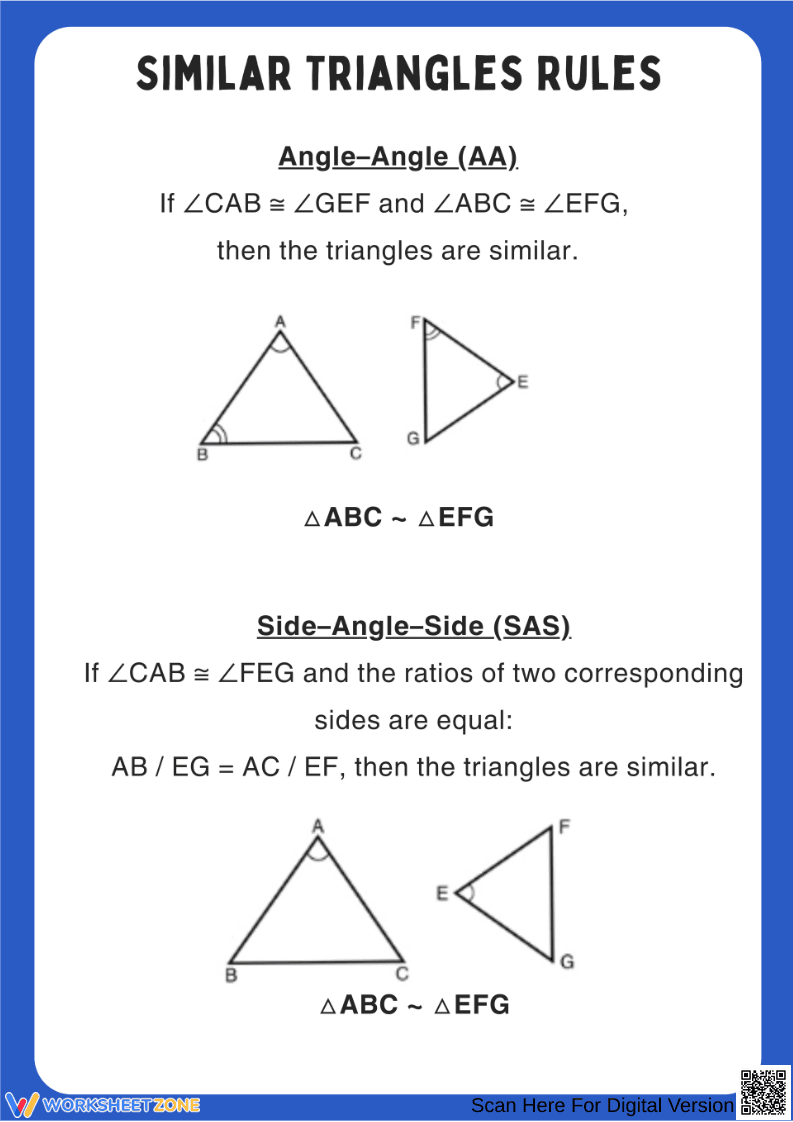
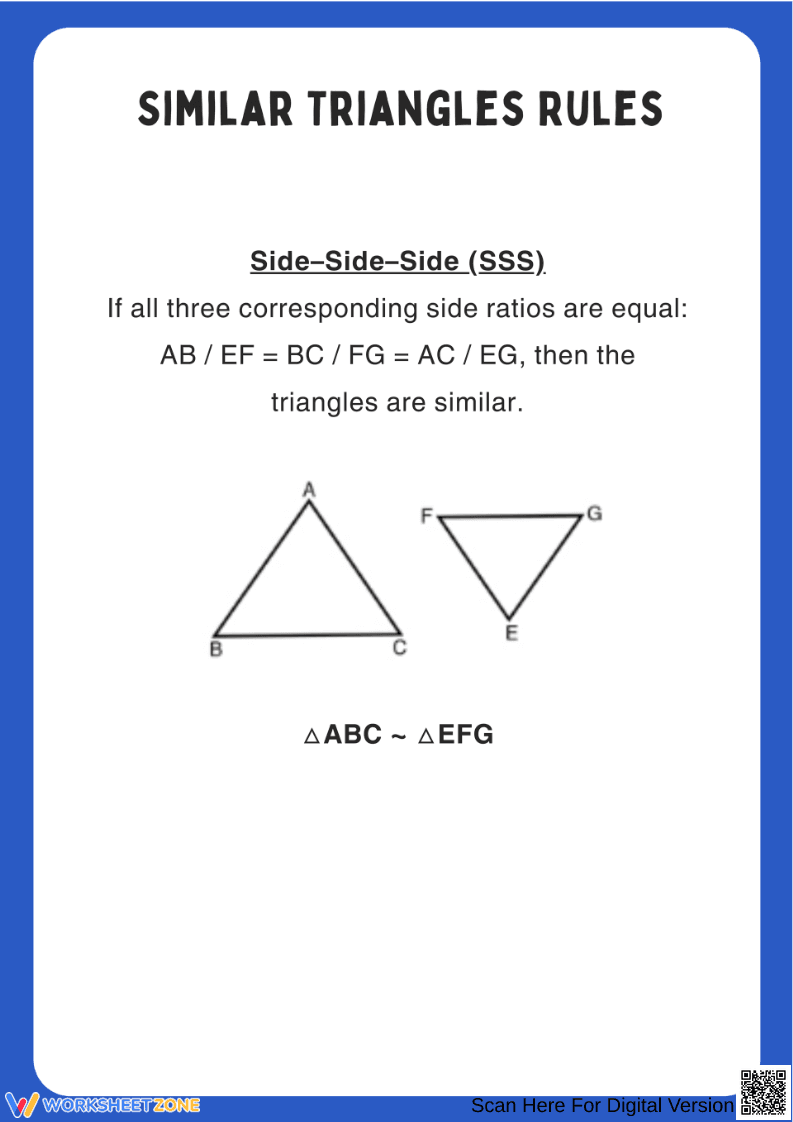
A visual reference chart that explains the key rules for determining whether two triangles are similar. It includes clear diagrams and definitions for the Angle–Angle (AA) and Side–Angle–Side (SAS) similarity criteria, helping students understand and identify similarity relationships in triangles.
Why Use It:
This chart gives students a clear, concise explanation of triangle similarity rules they’ll use in geometry. It supports visual learners, reinforces conceptual understanding, and provides an easy study guide for classwork, homework, or test preparation.
How to Use It:
• Display as a classroom poster or include in student math notebooks.
• Use during geometry lessons introducing triangle similarity proofs.
• Provide as a quick-reference tool for problem-solving or test review.
Grade Suitability:
Best suited for Grades 7–10.
• Ideal for students learning geometry, similarity, and proportional reasoning.
Target Users:
Geometry teachers, tutors, homeschool educators, and students needing support with triangle similarity concepts.
A visual reference chart that explains the key rules for determining whether two triangles are similar. It includes clear diagrams and definitions for the Angle–Angle (AA) and Side–Angle–Side (SAS) similarity criteria, helping students understand and identify similarity relationships in triangles.
Why Use It:
This chart gives students a clear, concise explanation of triangle similarity rules they’ll use in geometry. It supports visual learners, reinforces conceptual understanding, and provides an easy study guide for classwork, homework, or test preparation.
How to Use It:
• Display as a classroom poster or include in student math notebooks.
• Use during geometry lessons introducing triangle similarity proofs.
• Provide as a quick-reference tool for problem-solving or test review.
Grade Suitability:
Best suited for Grades 7–10.
• Ideal for students learning geometry, similarity, and proportional reasoning.
Target Users:
Geometry teachers, tutors, homeschool educators, and students needing support with triangle similarity concepts.


