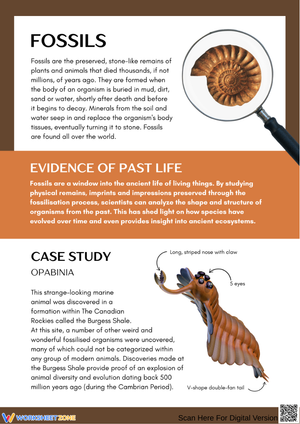
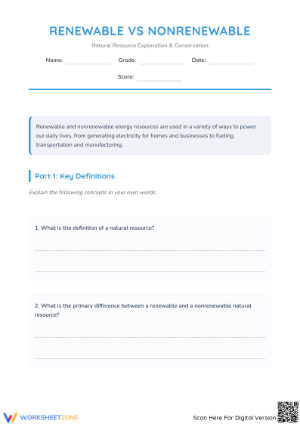
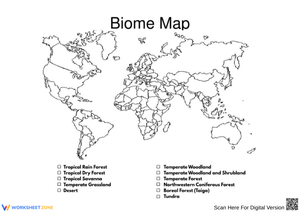
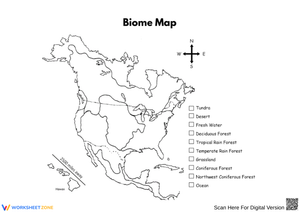
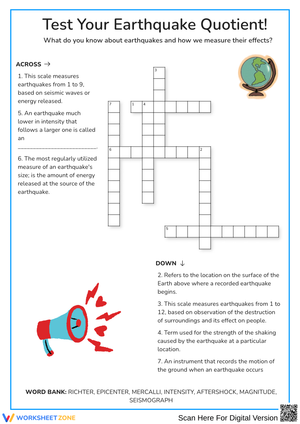
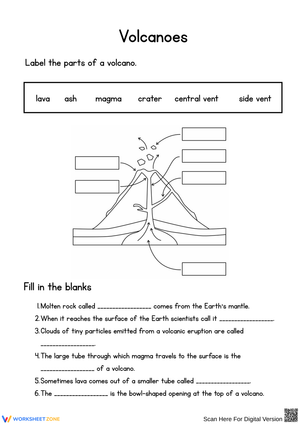
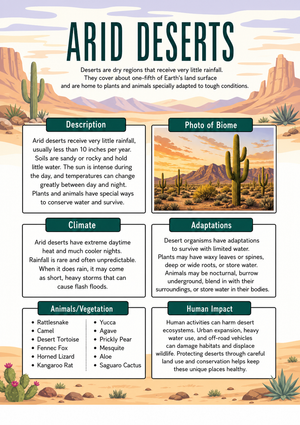
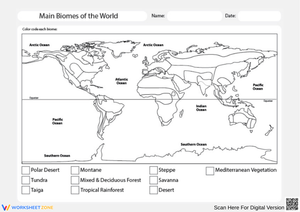
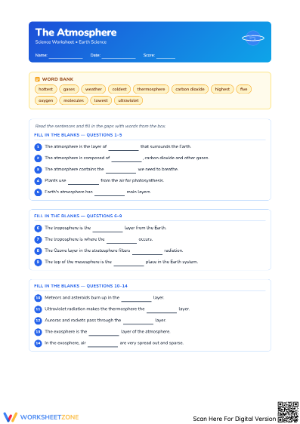
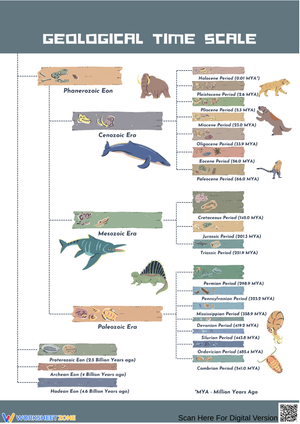
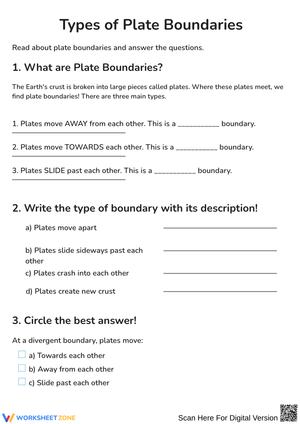
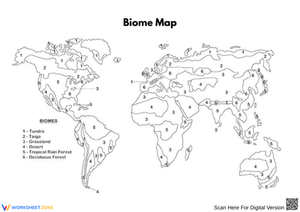
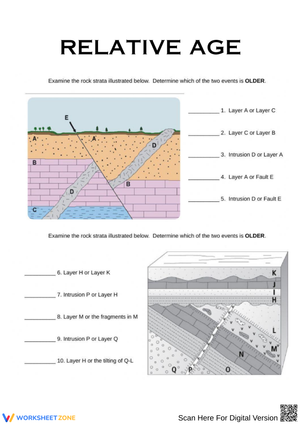
These 7th grade earth science worksheets resources give middle school teachers targeted, printable practice across every major unit in the grade-level sequence — plate tectonics, Earth's interior, the rock cycle, weather and climate, the water cycle, and surface processes including weathering and erosion. Each worksheet focuses on one clear instructional target, which keeps assignment decisions straightforward: pull the resource that matches today's lesson objective and it is ready to use.
What's Inside the Set
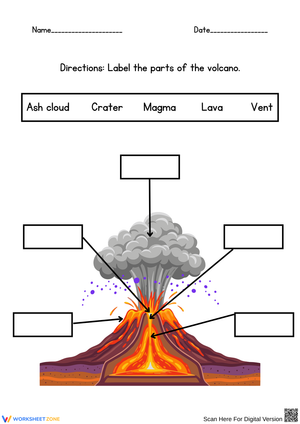
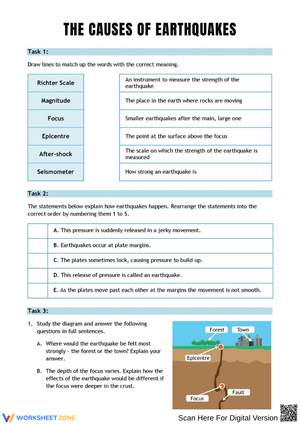
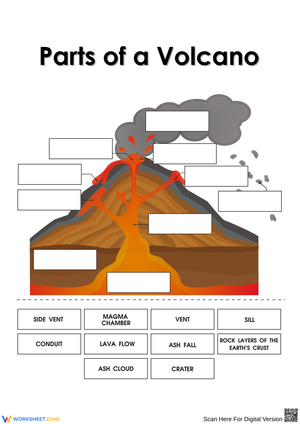
Grade 7 sits at an interesting point in science development. Students arrive with enough conceptual background to discuss Earth systems in broad terms, but they are still building the diagram-reading fluency and precise vocabulary to work with those systems accurately. Worksheets that ask students to label a cross-section, annotate a process diagram, or sort rock types by formation method close that gap in ways whole-class discussion cannot replicate on its own.
The resources cover the topics that appear consistently across middle school earth science curricula, organized so teachers can match each worksheet to a specific unit:
- Earth's interior: labeling the crust, mantle, outer core, and inner core from diagrams, both with and without a word bank
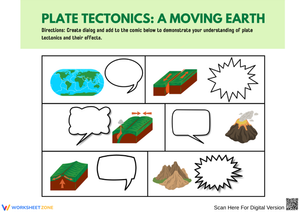
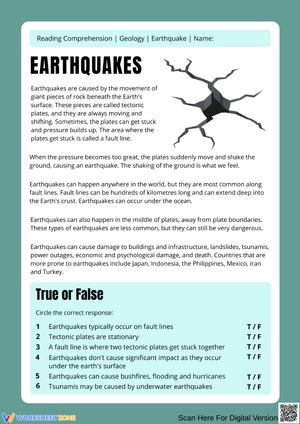
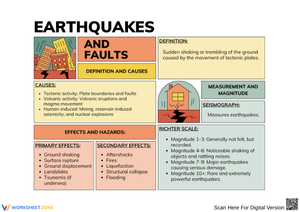
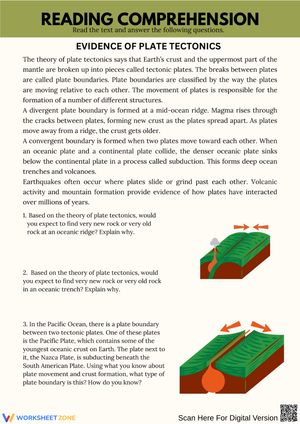
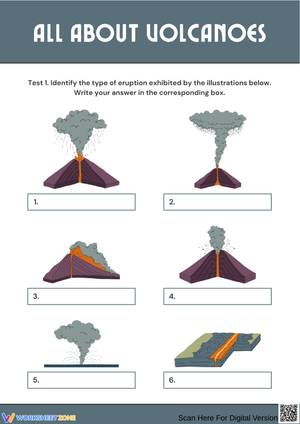
- Plate tectonics: classifying convergent, divergent, and transform boundaries; tracing plate locations on maps; and connecting boundary type to earthquakes and volcanic activity
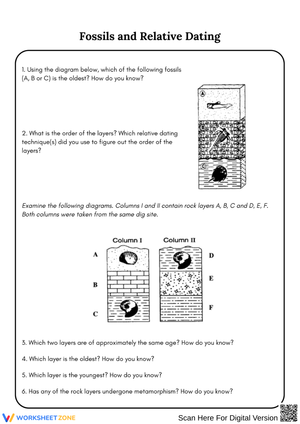
- Rocks and minerals: identifying properties including hardness, luster, and cleavage; classifying rock samples by formation type; and tracing the rock cycle as a network of pathways rather than a single loop
- Weathering, erosion, and deposition: distinguishing among the three processes, identifying agents of erosion, and predicting deposition outcomes from scenario prompts
- Water cycle: labeling evaporation, condensation, precipitation, runoff, transpiration, and groundwater recharge; explaining how energy drives each stage
- Weather and climate: reading weather maps and surface charts, interpreting temperature and precipitation data, and comparing regional climate patterns over time
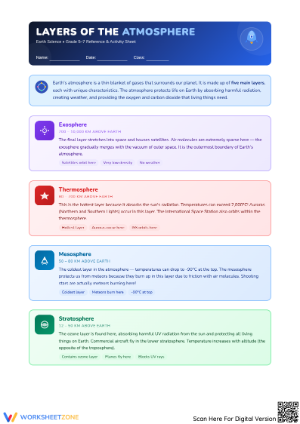
- Earth systems interactions: tracing matter and energy exchanges across the geosphere, hydrosphere, atmosphere, and biosphere
Most worksheets include a mix of task types within one document — labeling, short answer, matching, and at least one data-reading item. That variety keeps the cognitive demand from flattening into pure recall.
Frequent Student Errors Worth Watching For in This Content Area
Weathering and erosion are the most reliably confused pair in Grade 7 earth science. Students understand both terms in isolation, but under assessment pressure they write them interchangeably. On worksheets that ask students to explain why a river delta forms, it is common to see answers describing sediment "weathering away" from the delta rather than being deposited there — a confusion that persists well after both terms have been introduced in class. Worksheets that separate the two processes into distinct tasks before combining them surface that error earlier than a unit test does.
Plate boundary classification produces a similar pattern. Most students quickly fix convergent as "plates push together," but divergent boundaries — where plates pull apart and new crust forms at the seafloor — tend not to stick the same way. On tasks that ask students to draw and annotate what happens at each boundary type, divergent boundaries consistently produce the vaguest or most incorrect responses. Having students annotate a seafloor spreading diagram, rather than simply match the boundary name to a definition, forces engagement with the mechanism rather than the label.
On Earth's interior worksheets, a recurring error is identifying the outer core as solid and the inner core as liquid. Students reason intuitively that the deepest layer must be the most solid — which is correct for the inner core — but they apply that logic to the outer core first. A labeling task that requires students to record both composition and physical state of matter in separate columns catches that inversion at the practice stage rather than on the unit test.
Smart Ways to Work These Worksheets Into Your Week
The most reliable entry point for these resources is the first five minutes of class. A three- to four-question opener drawn from the previous day's material — mineral properties on Tuesday after Monday's direct instruction, or water cycle stages the morning after a full-period discussion — gives students retrieval practice before new content arrives. That repetition narrows the drop-off between what students understand during the lesson and what they can recall independently a few days later.
Station rotations work especially well for the diagram-heavy worksheets. A plate tectonics worksheet paired with a physical map of plate boundaries, or a rock cycle worksheet alongside a set of actual rock samples, turns a solo task into an observation-based activity without requiring a rewrite of the original material. The worksheet anchors the station and gives students a written record of what they observed and interpreted.
For sub plans, teachers who download a 7th grade earth science worksheets collection find it useful to organize their resources into three grab-and-go folders from the start — skill practice, review, and sub plans — rather than searching through a flat file each time a lesson runs short. Pull three worksheets covering topics already taught, attach clear written directions, include an answer key, and the folder runs itself. Earth science content suits independent work well because most tasks are visual and self-contained: students do not need that day's instruction to work through a mineral identification table or label the stages of the water cycle.
Differentiating the Worksheets for a Mixed-Readiness Class
The most practical adjustment for mixed-readiness classes is the word bank. Adding one to any labeling or short-answer task keeps the science expectation intact while removing the vocabulary retrieval demand that blocks some students before they can demonstrate any content knowledge at all. For Earth's layers, rock types, or water cycle terms, a word bank shifts the task from recall to recognition — still meaningful, but accessible to students still building academic vocabulary in English or in science specifically.
For students ready to push further, remove the word bank and add an explanation column. On a rock cycle worksheet, rather than just tracing the pathway from igneous to sedimentary, those students record the specific process — weathering, compaction, cementation — that drives each transition. That extension reuses the same worksheet with a different expectation attached; no second document required.
Cause-and-effect responses about erosion, climate patterns, or plate movement often benefit from a sentence frame for students who struggle to organize scientific reasoning in writing: When ___ happens, ___ occurs because ___. That structure does not lower the science expectation — it removes the writing barrier so the student's actual understanding of the concept becomes visible. The science stays the same; the entry point shifts.
Standard Alignment
These worksheets address several NGSS middle school Earth and Space Science performance expectations. MS-ESS2-2 asks students to construct an explanation based on evidence for how geoscience processes have changed Earth's surface at varying time and spatial scales — weathering, erosion, and deposition worksheets address this directly. MS-ESS2-3 targets the role of water in Earth's surface processes, mapping to water cycle worksheets that ask students to trace the movement of water and explain the energy driving it. MS-ESS2-6 focuses on patterns of atmospheric and oceanic circulation caused by unequal heating and Earth's rotation, which connects to weather and climate worksheets that ask students to interpret pressure maps and temperature data rather than simply describe conditions.
Plate tectonics tasks align primarily with MS-ESS2-1, which requires students to develop a model of Earth's interior and the forces that drive plate movement. In instructional terms, this standard pushes students past simple recall — they need to explain mechanisms, not just name boundary types. Worksheets that ask students to annotate a cross-section or write a brief explanation of why volcanoes cluster near subduction zones move toward that expectation in a manageable, teacher-assessed format.
Frequently Asked Questions
Do these worksheets include answer keys?
Yes. Each worksheet comes with a corresponding answer key, which makes the resources practical for grading, post-activity student self-correction, and sub plans where the substitute needs to return marked work by the end of the period.
What file format are these resources available in?
All resources are available as 7th grade earth science worksheets downloads, formatted to print clearly on standard letter-size paper in black and white. No design software is required — any standard PDF reader opens and prints them without adjustment.
How do these worksheets fit into a classroom that already uses a textbook or science notebook?
They work as supplemental practice alongside existing materials rather than replacing them. A typical use: students read a textbook section on plate tectonics, then complete a boundary classification worksheet to apply what they read. Teachers often have students transfer completed diagrams or key conclusions into their science notebooks afterward, so the worksheet becomes part of the student's unit record rather than a standalone task that disappears into a folder.
Can the same worksheet work as both a practice activity and a brief assessment?
Several worksheets in the set are structured so teachers can use them either way. A mineral properties worksheet used for guided practice in class can reappear as a short assessment after the unit moves forward — the task format stays familiar, so the score reflects content knowledge rather than confusion about directions. Teachers who rely on 7th grade earth science worksheets downloads for both purposes often keep a practice copy and a clean copy filed separately for exactly that reason.












 Interactive Worksheet Maker
 Quiz Maker
 Word Search Maker
 Crossword Puzzle Maker
 Word Scramble Generator
 Sentence Scramble Generator
 Handwriting Worksheet Generator
 Name Tracing Generator
 Fill In The Blank Generator