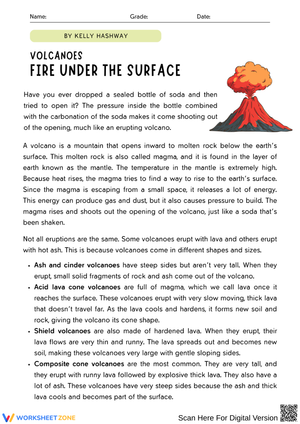
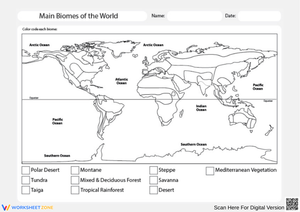
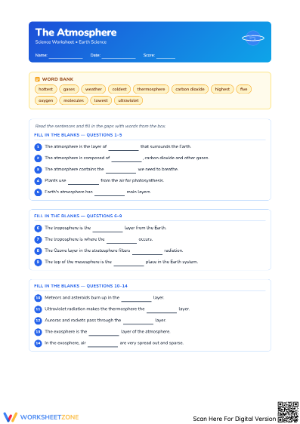
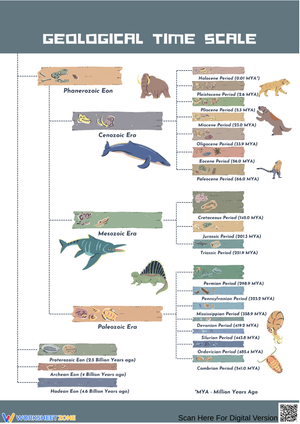
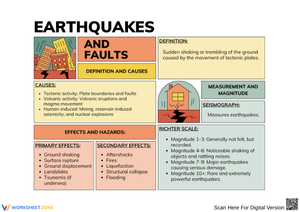
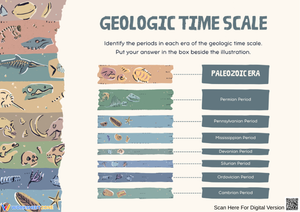
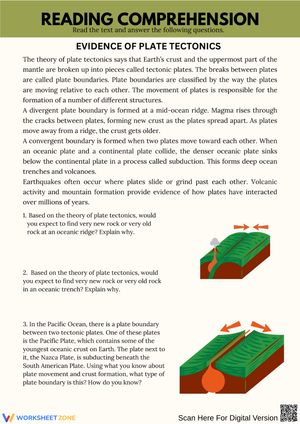
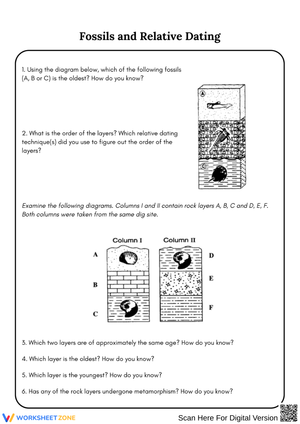
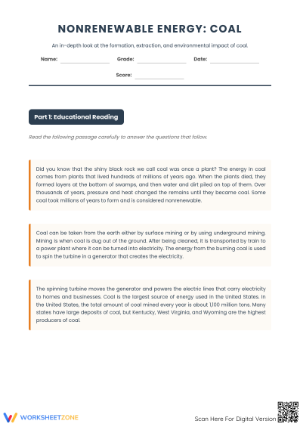
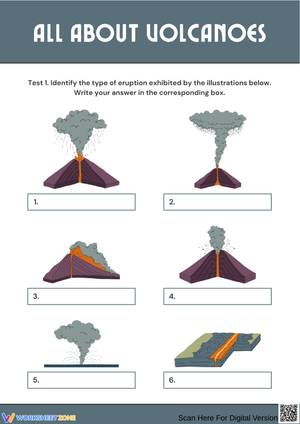
Earth and spaces printable worksheets for 7th grade give teachers a working set of topic-focused practice tools spanning the full middle school Earth science sequence — plate tectonics, Earth's layers, moon phases, eclipses, weather and climate, and the solar system. These resources are built for actual classroom conditions: clean black-and-white print layouts, directions students can follow independently after a brief model, and questions that push past simple identification into interpretation and explanation.
Topics and Task Types in the Set
Each worksheet targets a single concept cluster, so teachers can pull exactly what a lesson needs rather than sorting through unrelated content. Topic coverage runs across five main clusters.
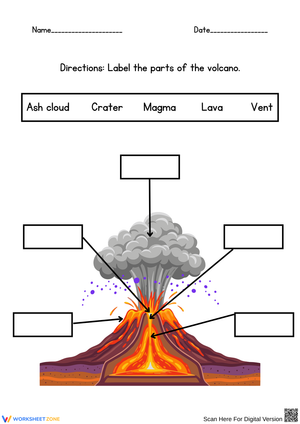
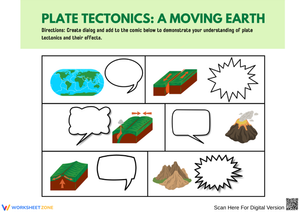
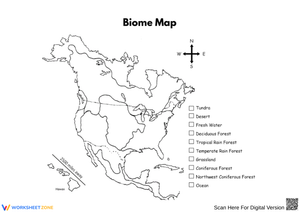
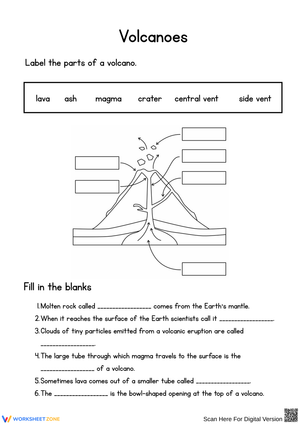
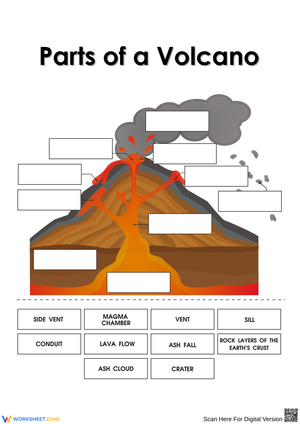
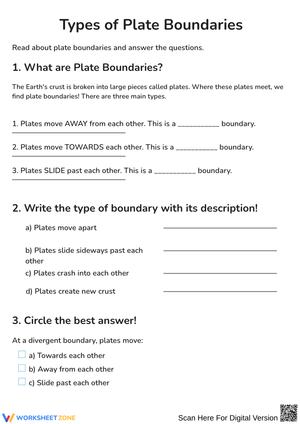
- Earth's structure and plate processes: labeling cross-sections, identifying plate boundary types, explaining how surface features form through convergent, divergent, and transform interactions
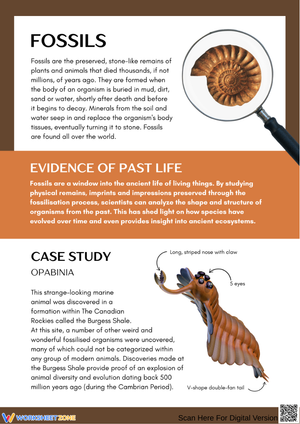
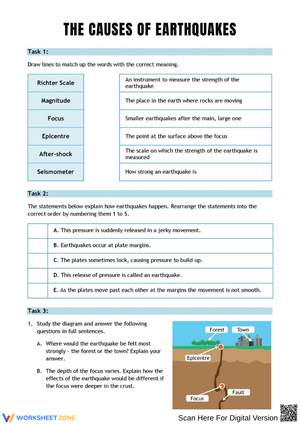
- Rock cycle and surface changes: sorting processes into stages, matching geologic agents to surface changes, answering constructed-response questions about cause-and-effect sequences in the rock cycle
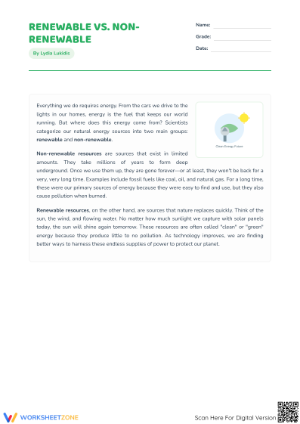
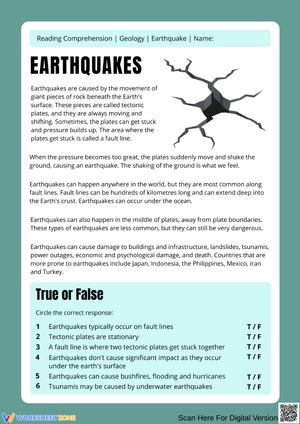
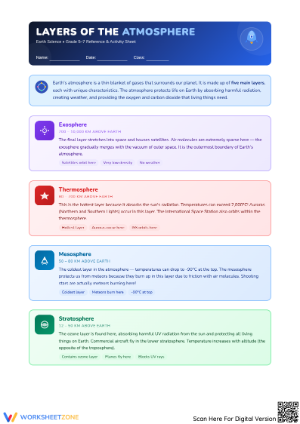
- Weather and climate: distinguishing daily atmospheric conditions from long-term regional patterns, reading simple data tables, and interpreting climate graphs from different latitudes
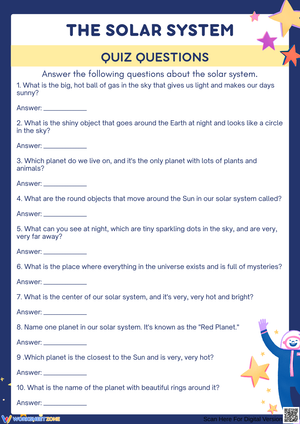
- Solar system and gravity: comparing planetary characteristics, working with orbit vocabulary, and answering questions about how mass and distance affect gravitational pull
- Earth-Sun-Moon system: sequencing moon phases, positioning bodies in eclipse diagrams, explaining tidal patterns, and writing explanations for why seasons occur
Task variety is built deliberately into each worksheet. Students label diagrams, sort vocabulary, annotate short passages, interpret data tables, and write brief evidence-based responses. A worksheet that asks students only to fill in a word bank trains recall but not reasoning. The tasks here include both identification and explanation, with the explanation tasks carrying more instructional weight.
Mistakes Students Make That These Worksheets Surface Quickly
The most stubborn misconception in this unit is the seasons-distance error. Students who correctly understand that Earth orbits the Sun will still write that summer is warmer because Earth is "closer to the Sun." Several worksheets address this directly by having students annotate tilt-angle diagrams and then explain — in writing — why the Northern and Southern Hemispheres have opposite seasons at the same orbital position. The explanation requirement forces the reasoning rather than allowing students to select a correct answer without understanding the model behind it.
Moon phase diagrams surface a different problem. Students often position the new moon correctly on a diagram, then select it again as the answer for a solar eclipse question — treating the two as interchangeable rather than understanding that an eclipse requires a specific geometric alignment, not just a particular phase. Worksheets that pair both concepts in the same task make that distinction explicit in a way that a multiple-choice test item rarely does.
Two smaller errors appear consistently in the rock cycle and Earth-layer work. Students treat the rock cycle as a fixed single loop rather than a branching system with multiple pathways, which means they cannot explain how igneous rock can become metamorphic without first becoming sedimentary. They also confuse weathering with weather — not because the concepts overlap, but because the words look enough alike that students don't slow down to distinguish them. Tasks that require students to use each term in a written sentence, rather than just match a definition, push that confusion into the open where it can be corrected.
Where These Fit Into Your Instructional Week
Bell ringers work well with a single diagram question — a moon phase sequence or a plate boundary cross-section — because students can start without teacher direction and the class can review in under five minutes. Guided practice works differently: pause after each section and have students compare answers with a partner before moving on. That structure surfaces reasoning differences faster than waiting until the end of the worksheet to review.
Review packets are the strongest use case for pulling multiple worksheets together. Combining tasks on moon phases, weather versus climate, Earth layers, and solar system vocabulary gives students repeated retrieval across an entire unit in a single sitting. Spaced retrieval — returning to a concept on a diagram two weeks after the original lesson — outperforms end-of-unit cramming for the spatial and visual content that dominates Earth and space science. Teachers can build that spacing deliberately by holding specific worksheets back until review week rather than assigning them immediately after instruction.
Sub plans are where printable PDF format pays off most clearly. Self-contained directions, familiar vocabulary, and tasks that require no lab materials or internet access keep science moving when the regular teacher is out. A substitute can distribute and collect these without needing to understand the content deeply, which matters more than it should on the actual day it comes up.
Standard Alignment
Teachers evaluating earth and spaces printable worksheets for 7th grade against current standards will find alignment across several NGSS middle school performance expectations. MS-ESS1-1 covers the Earth-Sun-Moon system and the cyclic patterns of lunar phases, eclipses, and seasons — the topic area with the highest density of worksheets in the set. MS-ESS1-2 addresses the role of gravity in solar system motions, and MS-ESS1-3 calls for analyzing and interpreting data to determine scale properties of objects in the solar system, both supported through diagram-interpretation and data-comparison tasks. MS-ESS2-2 targets geoscience processes that change Earth's surface over varying time scales — the plate tectonics and rock cycle worksheets address this directly. MS-ESS2-5 focuses on the interactions of air masses and their effects on weather conditions, which the weather-and-climate worksheets approach through data tables and short passage tasks.
The reading and diagram tasks across the set also support CCSS.ELA-LITERACY.RST.6-8.7, which asks students to integrate quantitative or technical information expressed in text with information expressed visually — exactly what students do when they annotate an eclipse diagram alongside a brief explanatory passage. In practical classroom terms, these worksheets sit in the mid-unit practice window: after direct instruction and before formal assessment, when students need structured repetition to make concepts stick before applying them in a lab or written argument.
Adjusting These Worksheets for a Range of Learners
Earth and spaces printable worksheets for 7th grade support differentiation primarily through task sequencing and pacing rather than through separate versions of every resource. A teacher working with students who need more support can assign the labeling and matching tasks from a given worksheet first, check for accuracy, and then introduce the constructed-response questions as a second step. That sequence reduces the number of simultaneous demands on working memory without lowering the expectation that students will eventually explain the concept in writing.
For students who finish core tasks quickly, the explanation questions extend the work without pulling materials from a separate unit. A student who correctly labels all moon phase positions can then be asked to write a prediction: at which phase would a coastal observer most likely notice the highest tidal change, and why? That task uses the same visual but requires a reasoning step most students haven't rehearsed, which stretches comprehension without introducing new content.
Students who struggle with written response but demonstrate understanding through diagrams can treat annotation tasks as their primary evidence. A student who labels a plate boundary diagram in detail — including arrows for plate direction, named surface features at each boundary type, and a brief note on associated geologic hazards — shows content knowledge even when their explanatory sentences are minimal. That output gives the teacher something concrete to evaluate and respond to rather than a blank page.
Frequently Asked Questions
Do these worksheets work for digital delivery as well as print?
The PDF format is built around print — specifically black-and-white classroom printing. Teachers who assign digitally often use them as fillable documents in Google Classroom or similar platforms, though the layout is optimized for paper. Diagrams and spacing hold up well on screen, but the tasks assume students have a pencil and can annotate, underline, and mark up the worksheet directly.
How do the seasons worksheets address the distance misconception rather than just presenting the correct model?
Several worksheets require students to annotate orbital diagrams and write a sentence explaining why the Northern Hemisphere receives more direct sunlight in June than in December despite no meaningful difference in Earth's distance from the Sun at those two positions. The explanation task forces students to articulate the tilt model rather than select a correct-looking answer. A circled multiple-choice response can hide a wrong mental model; a written sentence usually cannot.
Are these resources appropriate for inclusion classrooms as well as general education?
Earth and spaces printable worksheets for 7th grade work in both settings, though inclusion classrooms often need the short reading passages chunked or read aloud for students working significantly below grade level in reading. The diagram tasks are generally more accessible to students with reading-based learning differences than the passage-dependent tasks are. Labeling and sequencing tasks can serve as the primary evidence of understanding for students who produce minimal written work, giving teachers a clear picture of what each student knows without requiring them to navigate dense text first.
Can individual worksheets function as formative assessments?
Yes — particularly the constructed-response sections. A student's written explanation of why a lunar eclipse requires a full moon, or why diverging plates produce a rift valley rather than a mountain range, reveals whether the student is using the correct mental model or just matching vocabulary from memory. Teachers who collect these at the end of a class period get a quick read on which concepts need revisiting before the unit moves forward — which is the exact information a formative assessment is supposed to produce.












 Interactive Worksheet Maker
 Quiz Maker
 Word Search Maker
 Crossword Puzzle Maker
 Word Scramble Generator
 Sentence Scramble Generator
 Handwriting Worksheet Generator
 Name Tracing Generator
 Fill In The Blank Generator