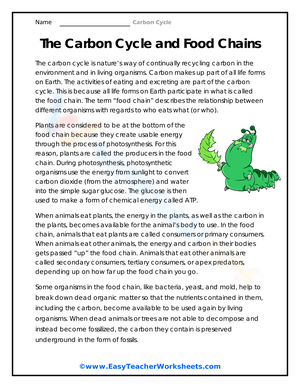
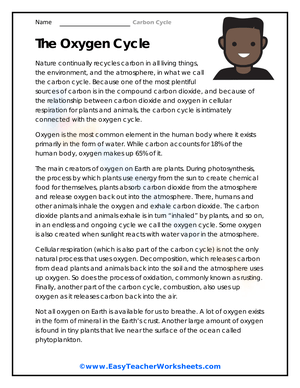
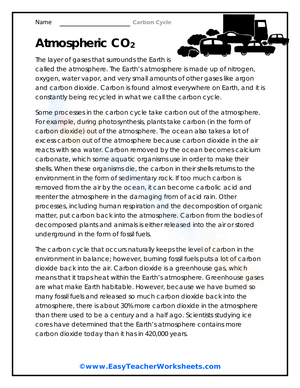
7th grade the carbon cycle pdf worksheets give teachers a concrete way to address one of the most visually demanding concepts in middle school science — how carbon moves continuously among Earth's living and nonliving systems. What teachers actually receive is a set of targeted practice activities built around the four core processes and five major reservoirs students are expected to understand by the unit's end.
The Specific Skills Each Worksheet Builds
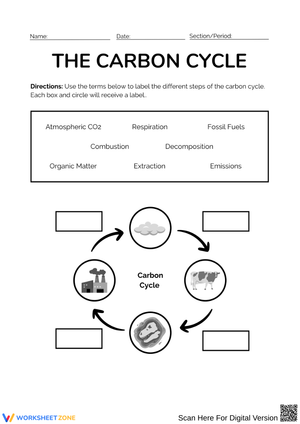
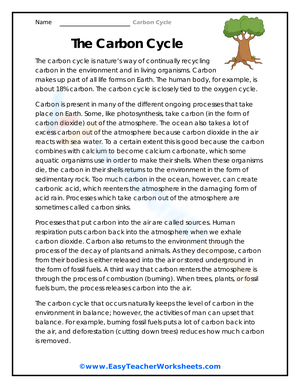
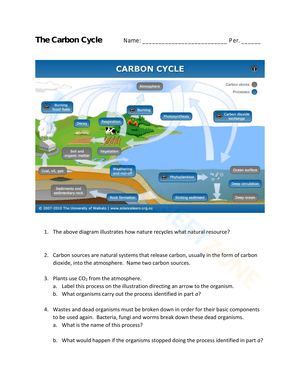
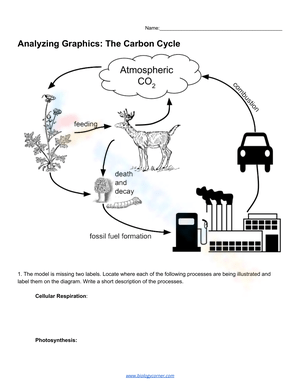
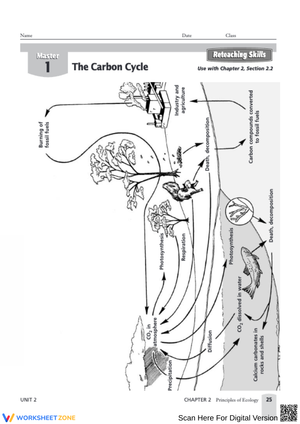
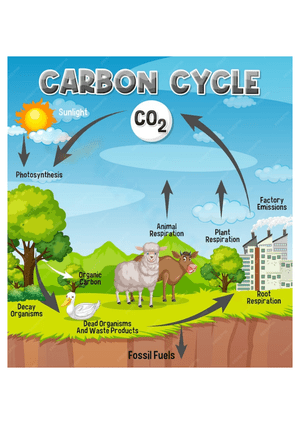
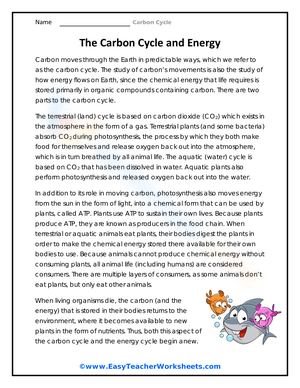
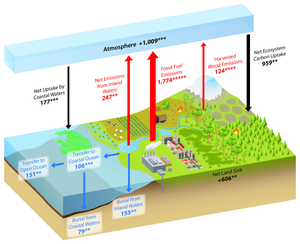
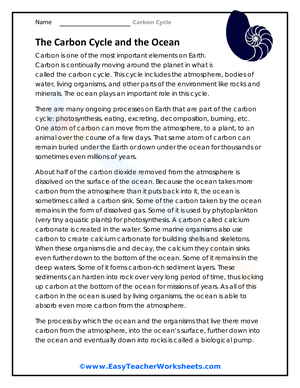
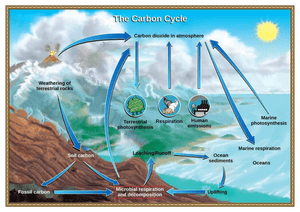
Carbon cycle instruction at the seventh grade level has to do two things at once: build accurate vocabulary and develop systems thinking. Each worksheet in this set addresses both. Students identify where carbon is stored — in the atmosphere, plants, animals, soil, oceans, and rock or fossil fuel deposits — and then work out which processes drive carbon between those locations. The four processes that appear consistently across the resources are photosynthesis, cellular respiration, decomposition, and combustion.
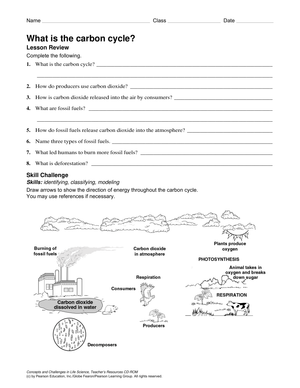
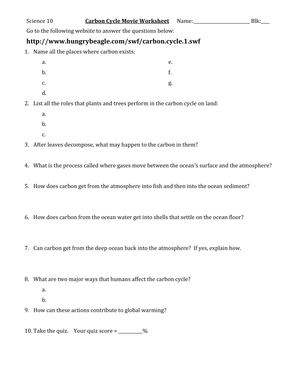
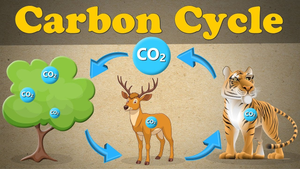
Beyond labeling, students answer short-response questions that ask them to explain direction and cause. A question like Why does burning a forest release carbon into the atmosphere? requires a student to understand combustion as a process, not just a vocabulary term. Several worksheets also ask students to trace a complete carbon pathway — from atmospheric CO₂ into a plant, through an animal that eats the plant, and back to the soil via decomposition. Tracing a full cycle forces students to hold multiple steps in working memory simultaneously, which is harder than labeling individual parts but far more useful for long-term retention.
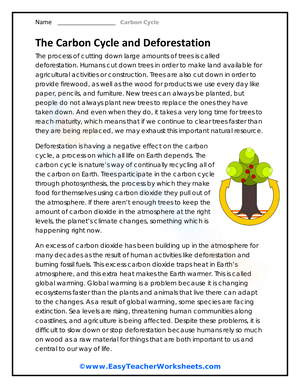
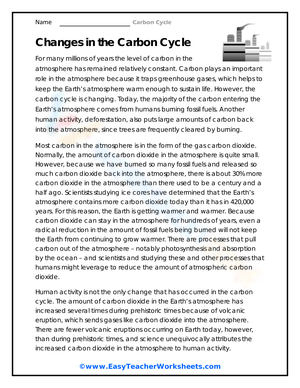
Human impact questions are woven into multiple worksheets. Students examine how burning fossil fuels and large-scale deforestation alter the rate at which carbon moves between reservoirs. That connection matters at 7th grade because it links the carbon cycle to real climate consequences without requiring students to work through advanced atmospheric chemistry first.
Common Carbon Cycle Errors and What They Tell You About Student Understanding
The most persistent error in 7th grade carbon cycle work is conflating a reservoir with a process. Students who write "photosynthesis" correctly beside an arrow will still list "photosynthesis" as their answer when asked where carbon is stored in a plant. They have memorized the word without anchoring it to a category. A worksheet that physically separates "places carbon is stored" from "processes that move carbon" — using two distinct columns or shaded diagram zones — surfaces that confusion before the unit test rather than during it.
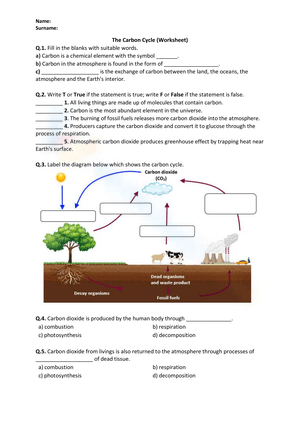
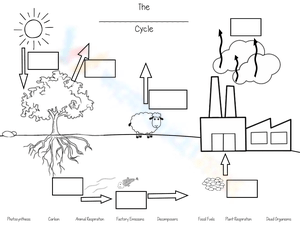
Arrow direction is the second major issue. Students almost universally draw the photosynthesis arrow moving from the plant outward, toward the atmosphere. They read the word as describing something a plant sends out, rather than something a plant takes in. When you see arrows pointing the wrong direction on a student's labeled diagram, it typically signals that the student built their understanding from the word's sound, not from what the process actually does to carbon. A worksheet task that asks students to mark the arrow's starting point before writing the label forces them to reason about direction specifically before filling in the blank.
A third error that does not get enough attention: students assume combustion only refers to cars and power plants. They do not apply the term to wildfires or agricultural burning. When a worksheet presents combustion across industrial, natural, and agricultural contexts, students start treating it as a category of process rather than a synonym for factory emissions. One practical technique worth adding to any lesson using these worksheets — asking students to use two different colors on the diagram, one for reservoirs and one for processes — reduces all three of these errors by forcing the categorical distinction before the labeling begins.
Building These Worksheets Into Your Weekly Lesson Plan
The diagram labeling worksheet works best at the start of a unit, not the end. Running it on day one or two — even before students have read about the carbon cycle — gives them a visual structure they can revise and add to as instruction continues. When students later encounter a reading passage or teacher explanation, they already have a mental map to attach new information to, which reduces the cognitive load of processing an unfamiliar system all at once.
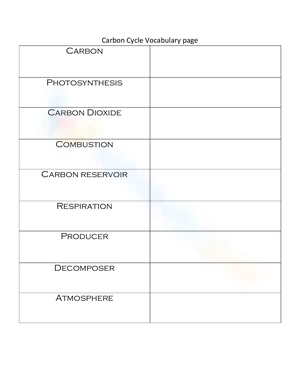
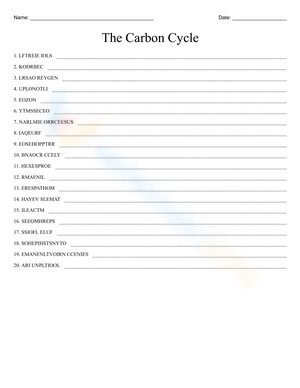
Short vocabulary and matching worksheets fit the ten to twelve minutes right after morning announcements but before the main lesson block. They keep students working productively without demanding heavy thinking during a transition. Save pathway-tracing and short-response worksheets for the center of the class period, when attention is steadier.
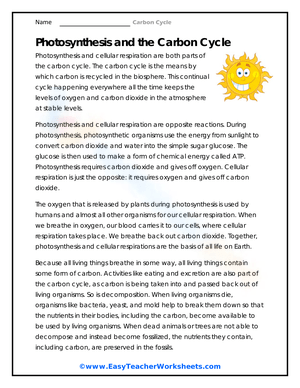
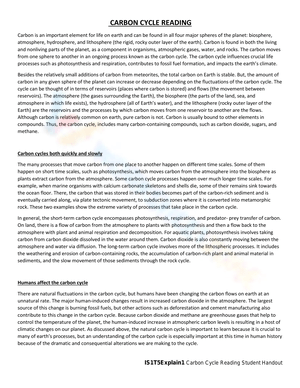
For sub plans, 7th grade the carbon cycle pdf worksheets that include a reading passage and an answer key are the most practical choice. The reading gives students the context they need to answer independently, and the key lets the sub circulate and check work without fielding science questions they may not be prepared to handle.
Adjusting the Worksheets for a Range of Learners
7th grade the carbon cycle pdf worksheets are built around diagrams and structured questions, which means the task demand — not the content — is the easiest variable to adjust. For students who need extra support, provide a word bank and ask them to complete only the reservoir labels before attempting the process arrows. Keeping the first task narrow and achievable matters for students who tend to shut down when they see a complex diagram with many blank lines.
On-level students can complete the full diagram and then add a written explanation of one pathway in their own words. The sentence stem Carbon moves from ___ to ___ when ___ because ___ provides enough structure to get started without doing the thinking for them.
For students ready for a greater challenge, ask them to extend the diagram: add an ocean reservoir, a rock and fossil fuel reservoir, or an arrow showing how deforestation changes the rate of carbon flow. This pushes students from reproducing the system into applying it — and the resulting work makes a strong anchor for whole-group discussion the next day.
Standard Alignment
These worksheets align with NGSS MS-LS2-3, which calls on middle schoolers to develop a model describing the cycling of matter and the flow of energy among living and nonliving parts of an ecosystem. The carbon cycle sits at the center of that standard: students build a working model of how carbon moves through both biotic and abiotic components, which is exactly what diagram labeling, pathway tracing, and process-matching tasks develop. This standard is typically addressed in 7th grade life science or integrated Earth and life science courses, placing it squarely in the same unit where teachers reach for these resources most.
Frequently Asked Questions
What should 7th graders be able to do with the carbon cycle by unit's end?
Students should be able to name the major carbon reservoirs, correctly identify photosynthesis, respiration, decomposition, and combustion as carbon-moving processes, and trace at least one complete pathway — from the atmosphere into a living organism and back. They should also be able to explain in plain language why burning fossil fuels increases the concentration of carbon in the atmosphere.
How do the worksheets in this set fit together?
Each worksheet targets a distinct part of the carbon cycle — diagram labeling, vocabulary practice, process matching, pathway tracing, and review. Teachers do not need to assign every worksheet; most use three or four across a unit and hold the remaining resources for intervention groups, early finishers, or substitute lessons.
Do these resources connect to food web and matter cycling units?
Yes, and the connection is worth making explicit to students. 7th grade the carbon cycle pdf worksheets fit naturally into a broader unit on ecosystem interdependence and matter cycling. When students understand that photosynthesis draws carbon from the atmosphere into plant matter — and that plant matter becomes the food source for consumers — they begin to see carbon cycling and food webs as two descriptions of the same underlying system rather than two separate topics to memorize.
Do these worksheets work for students reading below grade level?
The diagram-based worksheets work well for below-grade-level readers because they minimize reading demand. The reading passage worksheets include vocabulary that may need pre-teaching or a word bank added alongside them. For the most significant reading gaps, pairing a worksheet with a brief teacher read-aloud or partner read gives students access to the content without letting vocabulary become the main barrier to participation.












 Interactive Worksheet Maker
 Quiz Maker
 Word Search Maker
 Crossword Puzzle Maker
 Word Scramble Generator
 Sentence Scramble Generator
 Handwriting Worksheet Generator
 Name Tracing Generator
 Fill In The Blank Generator