These 7th grade ecosystem printable worksheets resources cover the full arc of a middle school ecology unit — sorting biotic and abiotic factors, tracing energy flow through food webs, analyzing trophic levels, and examining how human activity disrupts ecological balance. Teachers get a set they can pull from across multiple lesson types: direct instruction follow-up, station rotations, homework, test review, or a reliable plan when a sub walks in.
What Each Worksheet Targets
The set spreads practice across the core concepts that middle school life science teachers assess most consistently. Each worksheet isolates one idea clearly enough for students to work independently — but the concepts build on each other when taught in sequence.
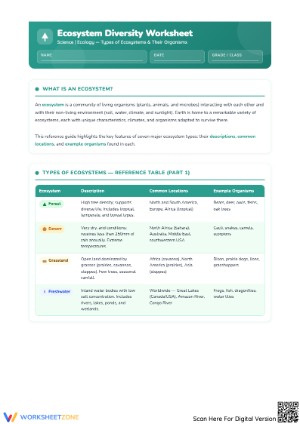
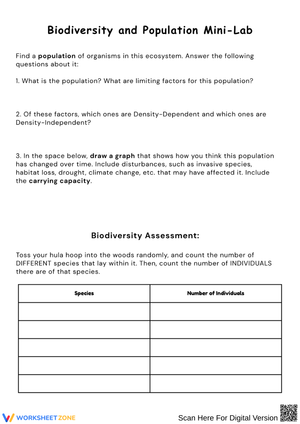
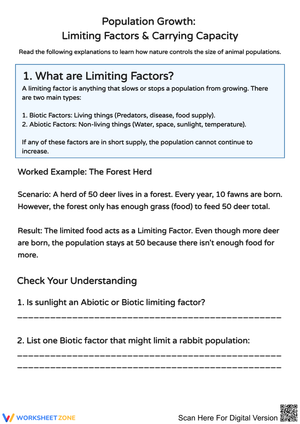
- Biotic and abiotic factors: Students sort components of a given environment into living and nonliving categories, then explain how each supports the organisms in the system.
- Levels of ecological organization: Exercises distinguish population, community, and ecosystem — three terms students conflate well into high school if the distinction is not made concrete early.
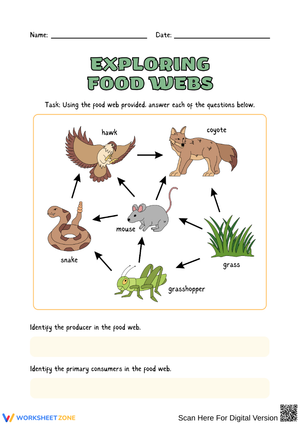
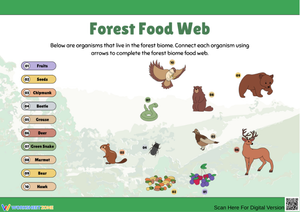
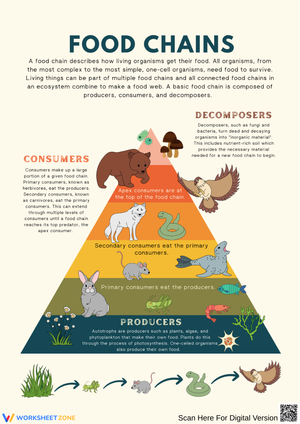
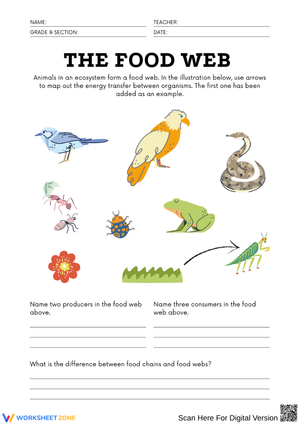
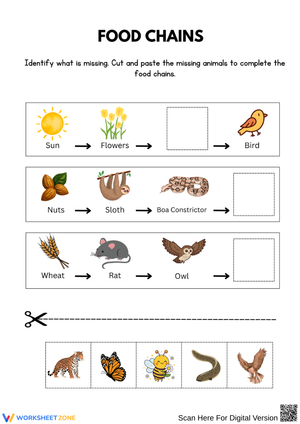
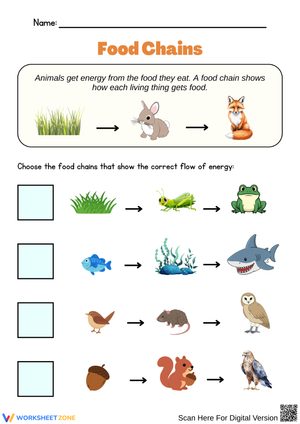
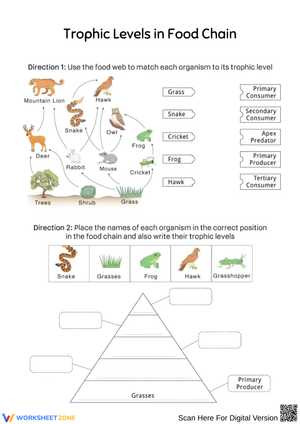
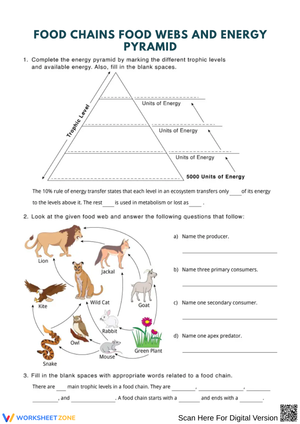
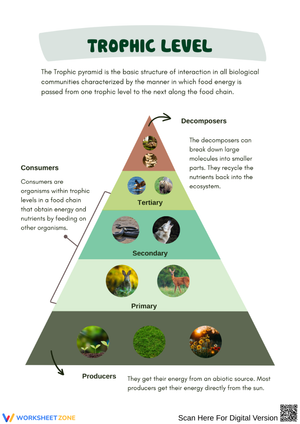
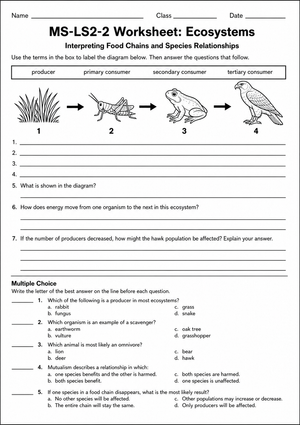
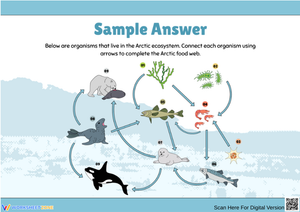
- Food chains and food webs: Students label producers, primary consumers, secondary consumers, and decomposers, then draw or interpret energy-flow arrows.
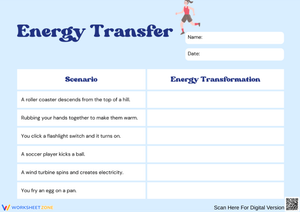
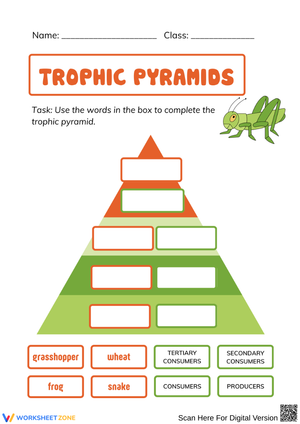
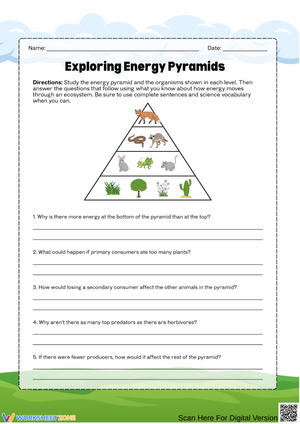
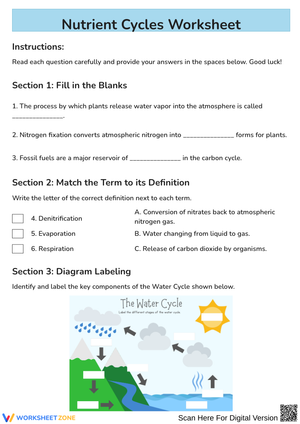
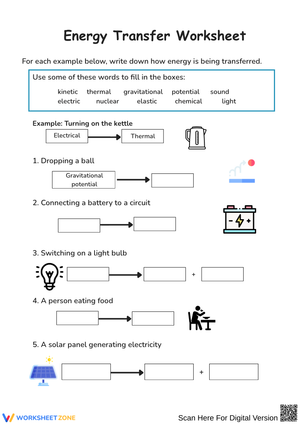
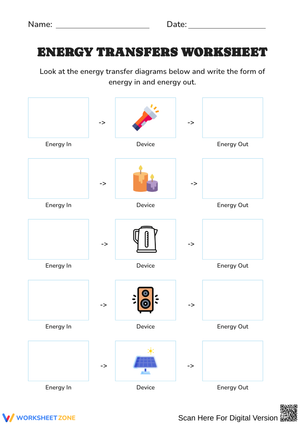
- Energy transfer and trophic levels: Worksheets ask students to explain why only roughly ten percent of energy passes from each level to the next — and what that means for the number of organisms each level can support.
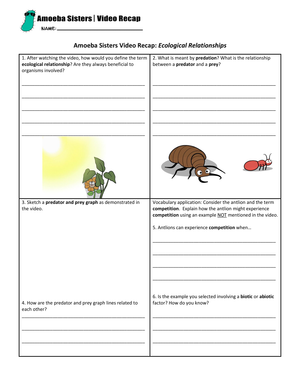
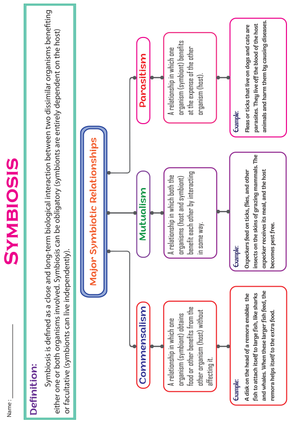
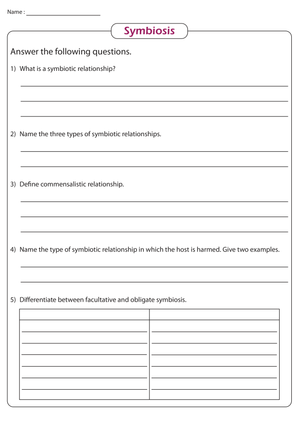
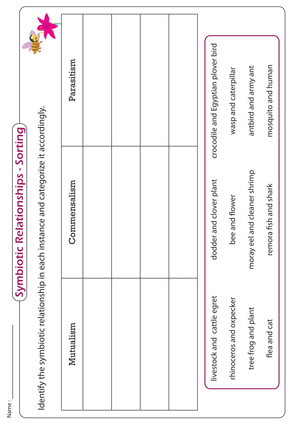
- Ecological interactions: Predation, competition, mutualism, commensalism, and parasitism each appear in short scenarios and classification tasks.
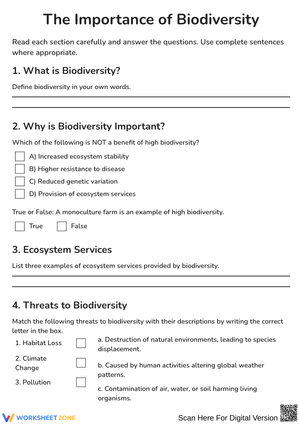
- Human impact: Students analyze habitat loss, invasive species introductions, and pollution events through cause-and-effect prompts and short constructed responses.
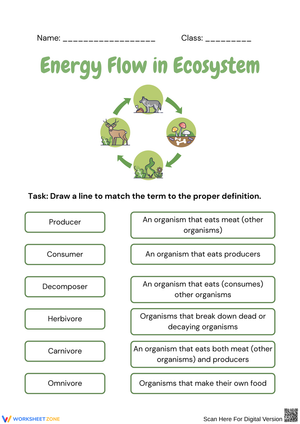
Vocabulary support is built into several worksheets — word banks appear where academic language would otherwise stall students who understand the concept but are not yet fluent with terms like heterotroph or decomposer. That support structure does not lower the science expectation; it just removes an unnecessary obstacle to demonstrating understanding.
Student Error Patterns Worth Knowing Before You Assign
The most persistent mistake in food web work is arrow direction. Students draw the arrow pointing from prey to predator — which feels logical if they are thinking "the fox eats the rabbit" — when energy-flow diagrams require arrows pointing from energy source to receiver. A student who draws a correct, simple food chain will often reverse arrows the moment the diagram gets more complex and the relationships branch. Worth addressing explicitly at the start of class rather than discovering it while grading a full set.
A second reliable confusion is the difference between community and ecosystem. Students who correctly define both terms in isolation will still write "the deer, rabbits, and grasses form an ecosystem" on a short-answer item. They know the vocabulary but have not internalized that an ecosystem requires the abiotic environment — soil, water, temperature, sunlight — to be part of the definition. The comparison exercises in this set require students to make that distinction actively, not simply copy a definition from a notes page.
Trophic levels generate a third predictable error: students read the ten-percent energy rule as meaning "most energy is wasted," rather than understanding that energy converts to heat and metabolic work at each transfer. That misread produces answers that treat energy loss as a flaw in the system rather than as a thermodynamic consequence. Worksheets that ask students to explain the rule in their own words — rather than just plug numbers into a calculation — surface this misconception early enough to address it.
Building These Worksheets Into Your Unit Sequence
These 7th grade ecosystem printable worksheets materials fit most naturally into a three-to-four week ecology unit, used as focused practice after each new concept rather than distributed all at once. On the day you introduce food webs, the diagram worksheet works as a 15-minute structured follow-up while the instruction is still fresh. By Thursday, a short trophic levels exercise makes a clean warm-up — something that activates what students covered earlier in the week before you move into energy pyramids. The human impact worksheet belongs near the end of the unit as a formative check, since it asks students to synthesize earlier concepts rather than recall isolated definitions.
For station days, three or four worksheets rotate well as independent tasks: a vocabulary-and-matching station, a food web diagram station, an ecological interactions scenario station, and a short-reading analysis tied to a real case like wolf reintroduction in Yellowstone. Each station takes 10–12 minutes, which keeps movement purposeful without rushing the thinking. Sub plans benefit from the worksheets with embedded reading passages and answer keys — a substitute with no science background can run those without issue, and the included answer keys make it straightforward for students to self-check afterward.
Standard Alignment
These worksheets align with NGSS MS-LS2, the middle school Ecosystems cluster. MS-LS2-1, which addresses interdependent relationships in ecosystems, maps directly to the biotic and abiotic sorting tasks and food web analysis. MS-LS2-2 covers the cycling of matter and flow of energy, which is the basis for trophic level and energy pyramid exercises. MS-LS2-4 and MS-LS2-5 address ecosystem dynamics and human impact, supporting the cause-and-effect worksheets later in the unit. Teachers in states that have adopted NGSS frameworks should find these resources slot cleanly into existing unit plans without needing adaptation.
Adjusting the Set for a Range of Learners
For students who need more support, the diagram-based worksheets are the most accessible entry point. A partially labeled food web with only two or three organisms to place gives students a foothold without reducing the conceptual demand. Adding a reference card with key vocabulary and definitions — kept at the desk, not collected — lets those students focus on the ecology thinking instead of spending cognitive energy on term recall. The goal is reducing extraneous load, not reducing the science.
Students ready for additional challenge benefit from open-ended extensions. Asking them to design a food web for a biome of their choice, or to write a paragraph predicting the cascading effects if the apex predator in a given system were removed, moves beyond what 7th grade ecosystem printable worksheets resources typically ask and gives stronger students a genuine problem to reason through rather than a faster version of the same task. That kind of transfer work also reveals how deeply students understand the concept versus how well they have memorized the format.
For multilingual learners, the worksheets with visual diagrams and word banks reduce the language barrier without lowering the science expectation. A brief whole-class discussion before independent work helps students connect English terminology to concepts they may already understand in another language — particularly for terms like producers and consumers, which carry heavy everyday meanings that can interfere with the scientific ones.
Frequently Asked Questions
Do these worksheets work for a mixed-ability science class?
Yes. The set includes both diagram-and-label tasks and short constructed-response prompts, which serve different readiness levels. Teachers can assign the same worksheet to the whole class while offering a vocabulary reference card or partially completed diagram to students who need that structure — the science expectation stays consistent across the room.
How many class periods does the full set cover?
That depends on how you use the resources. Assigned as warm-ups, individual worksheets take 5–8 minutes. Used for guided practice or station work, most take 12–20 minutes. The full set covers enough material to support a three-to-four week ecology unit when distributed across lesson types rather than used all at once.
Are answer keys included?
Yes. Each worksheet comes with a corresponding answer key. For diagram tasks — particularly food web arrows and energy pyramid labeling — the answer key specifies correct direction and placement, which matters when students or peer reviewers are checking their own work. That detail makes these resources practical for review packets and sub plans where the teacher is not in the room to clarify.
What grade level are these best suited for?
These 7th grade ecosystem printable worksheets resources are written for Grade 7 life science, but teachers have used them in 6th and 8th grade as well. The vocabulary and task complexity align with middle school expectations under NGSS, and the human impact sections connect naturally to environmental science topics that appear in some 8th grade courses.












 Interactive Worksheet Maker
 Quiz Maker
 Word Search Maker
 Crossword Puzzle Maker
 Word Scramble Generator
 Sentence Scramble Generator
 Handwriting Worksheet Generator
 Name Tracing Generator
 Fill In The Blank Generator