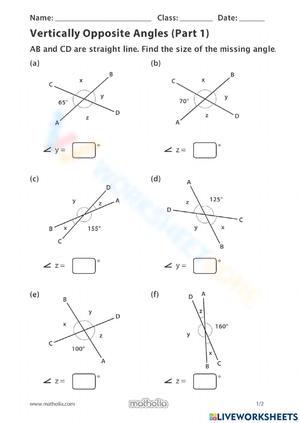
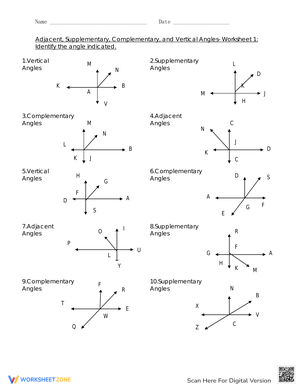
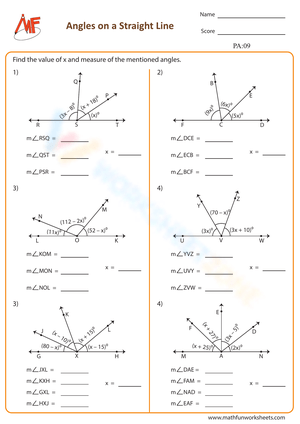
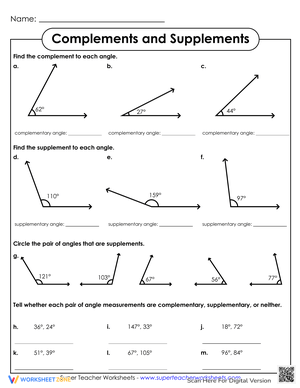
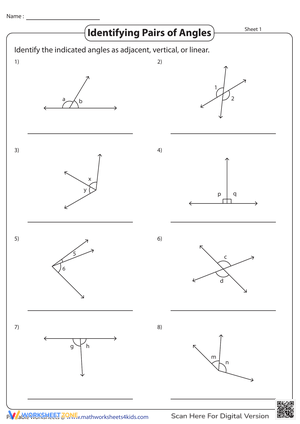
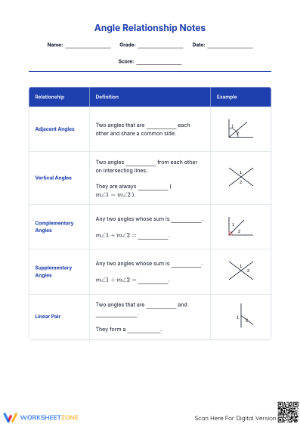
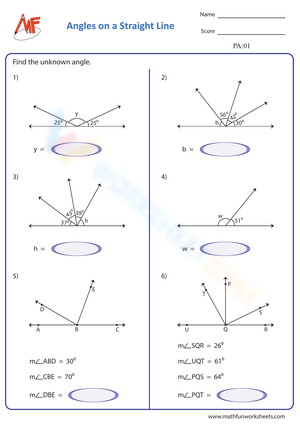
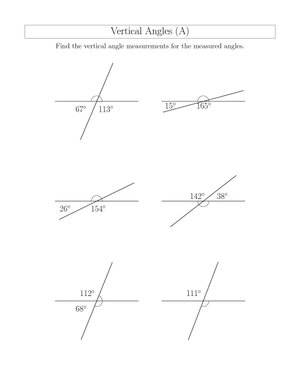
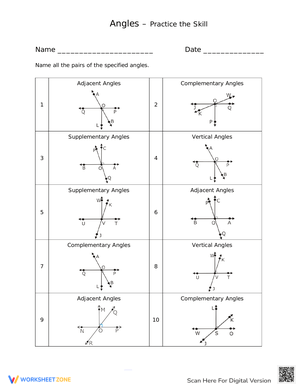
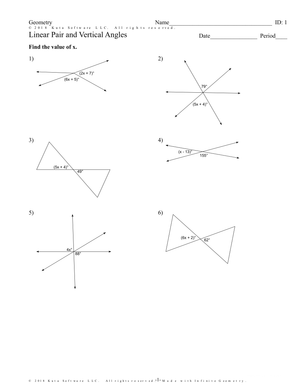
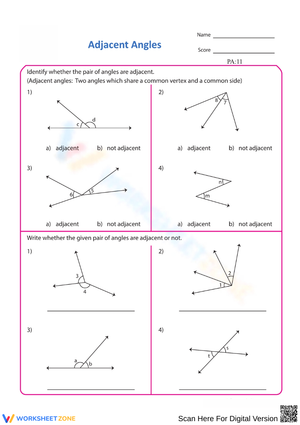
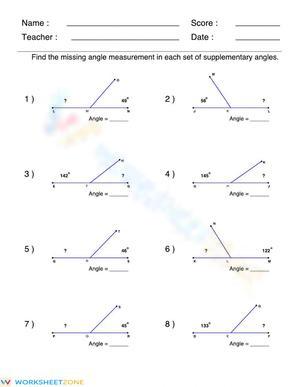
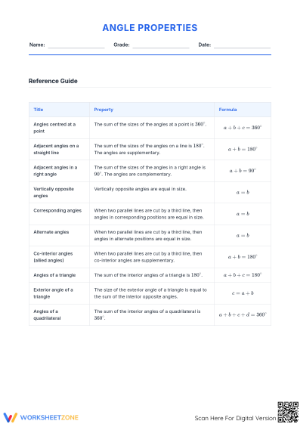
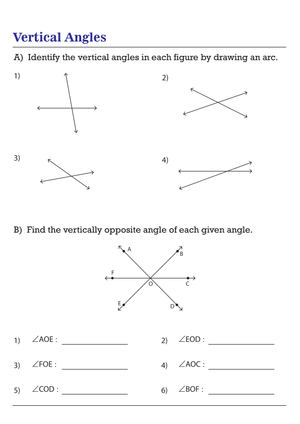
These complementary supplementary vertical and adjacent angles printable worksheets for 7th grade give teachers a structured set of practice materials that move students through identification, numerical calculation, and algebraic equation-solving — the full arc of what CCSS.MATH.CONTENT.7.G.B.5 actually demands. The set covers all four angle relationships in a deliberate sequence, with diagrams that require students to name the correct relationship before writing a single number.
The Four Relationships These Worksheets Target
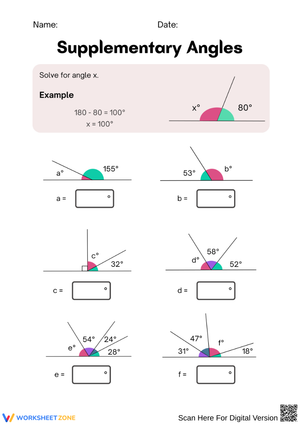
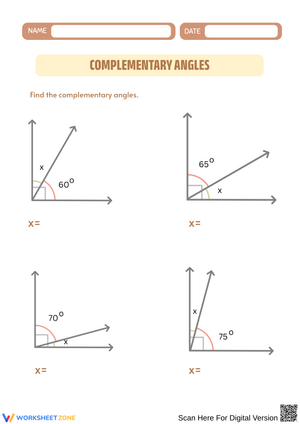
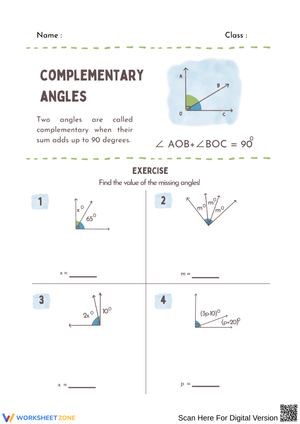
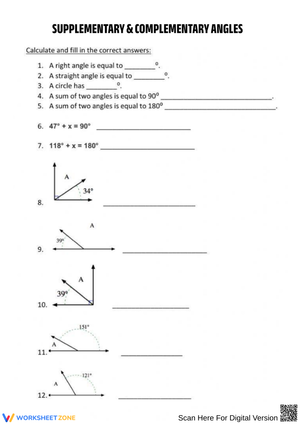
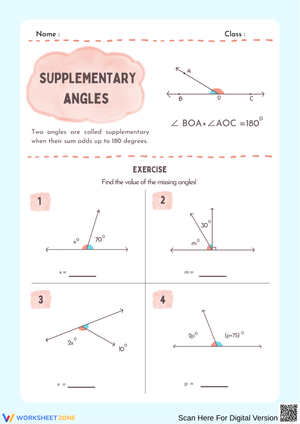
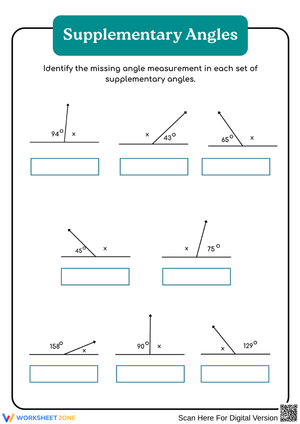
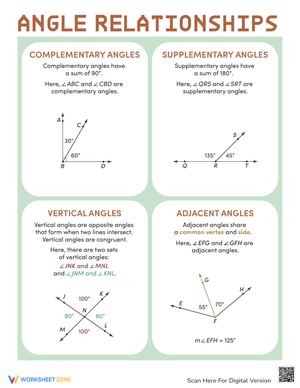
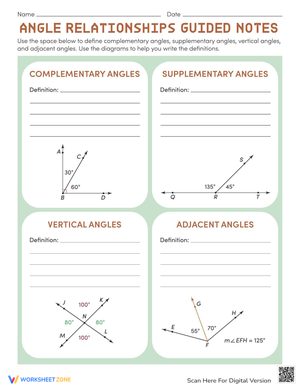
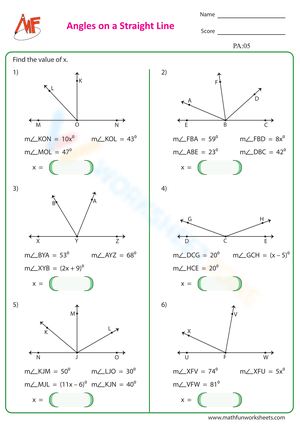
Students work through complementary and supplementary angles first, keeping the two relationships separated before problems begin mixing them. Complementary pairs are tied to right angles — students identify the corner, confirm the 90-degree sum, and calculate the missing measure. Supplementary pairs follow the same logic along a straight line. Early worksheets in the set isolate these two types intentionally, because the moment they appear in the same diagram, students start swapping the sums.
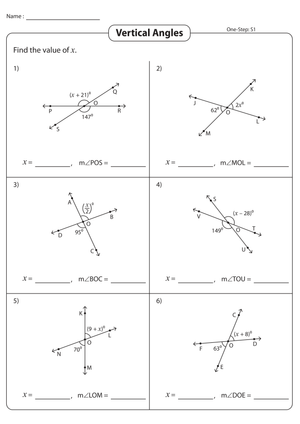
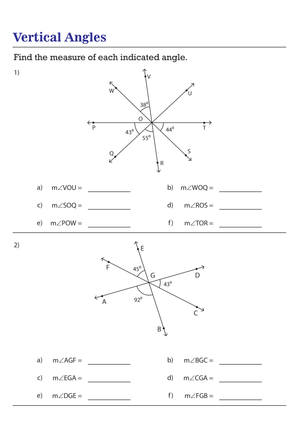
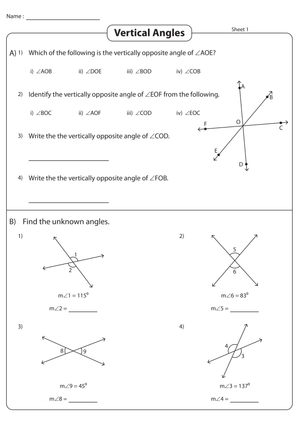
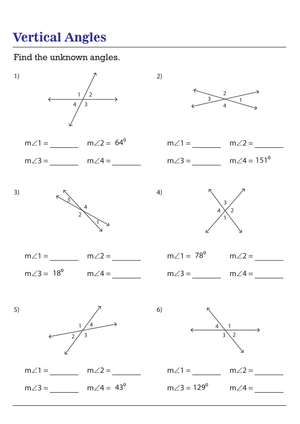
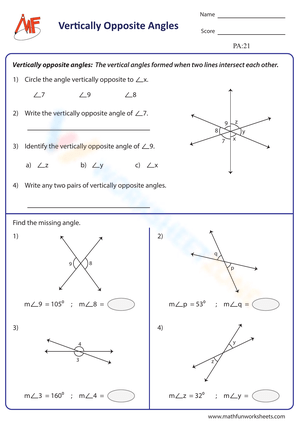
Vertical and adjacent angles shift the focus from numerical sums to position. Adjacent angles share a vertex and a side; vertical angles share only the vertex — and are always congruent. Each worksheet builds the habit of checking position first before reaching for a numerical rule, which matters when problems ask for algebraic expressions rather than simple calculations.
Where Algebra Enters the Picture
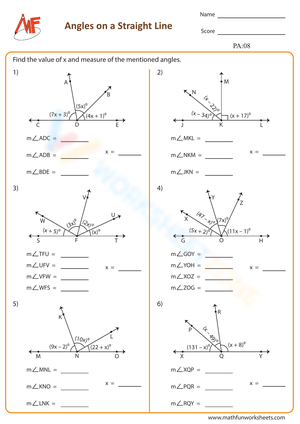
The most demanding tasks in the set require students to write and solve equations from labeled diagrams. A typical problem gives two supplementary angles expressed as expressions like (3x + 15) and (2x − 5), and students must construct the full equation before solving. The writing step is harder than the arithmetic. Students who can factor and simplify a two-term equation in under a minute will still write "= 90" if they've misidentified the relationship. These worksheets require students to name the angle relationship before setting up the equation — a small structural demand that disrupts a surprisingly common reflex and surfaces the conceptual gap before it becomes a graded mistake.
Mistakes Students Make That Are Worth Anticipating Before the Lesson
The most consistent error across 7th grade student work isn't a forgotten definition — it's applying the right rule to the wrong pair. Students will correctly identify that vertical angles are congruent at an intersection, set up 5x = 100 correctly, and then report the value for the adjacent angle when the problem asked for the vertical one. The labeled diagrams in these worksheets create enough visual complexity to surface that error during practice, where it can be addressed before it shows up on an assessment.
A second pattern worth flagging before students start: students who identify supplementary angles without difficulty on standalone problems will write "x + y = 90" the moment a right-angle marker appears anywhere in the figure — even when the pair they're working with forms a straight line. The right-angle symbol pulls the eye. Naming that trap out loud before distributing the worksheets prevents it in most cases. It takes fifteen seconds and saves you from a classroom full of setup errors you'd otherwise have to unwind mid-lesson.
The third error is subtler and shows up in diagrams where two angles are labeled on opposite sides of a figure without a clear intersection drawn. Students assume positional opposites must be vertical. Vertical angles only exist where two lines actually cross — no intersection, no vertical pair — and several worksheets in the set specifically test whether students are confirming that crossing before making the designation.
How to Fit These Worksheets Into Your Weekly Plan
The identification worksheets hold up well as Monday warm-ups — five minutes during morning transitions when students need a concrete, low-stakes entry point back into math thinking after the weekend. The algebraic equation tasks are better suited to independent practice mid-lesson, after direct instruction on equation setup, when students have a solid block of uninterrupted time to write out their steps.
One reliable mid-lesson structure: project a single intersecting-lines diagram on the board while students work the same problem on their worksheets. Stop everyone after the equation-writing step — before any solving happens — and do a quick check on the equations students have written. That pause catches setup errors before they cascade into wrong answers, and it creates a natural formative-assessment checkpoint without the overhead of a formal quiz. Students who wrote "= 90" for a supplementary pair are identifiable in about two minutes of circulating.
Adjusting the Set for a Range of Learners
Students who struggle with spatial reasoning benefit from working through the identification worksheets with color-coding — one color per relationship type — before any calculation begins. That visual sorting step slows the rush to calculate and gives teachers a readable record of whether the gap is in identifying the pair or in applying the correct numerical rule. Those are different problems that need different follow-up.
Students who are solid on complementary and supplementary pairs but shaky on vertical angles do better starting with worksheets that keep the diagram clean: two intersecting lines, four angles, minimal labeling. That removes the visual noise competing with the equation work. For students who move through the standard problems quickly, the complementary supplementary vertical and adjacent angles printable worksheets for 7th grade that include three or more intersecting lines offer the right level of challenge. Push those students to find every unknown in the diagram using only one given measure, not just the specific angle the problem asks for.
Standard Alignment
The complementary supplementary vertical and adjacent angles printable worksheets for 7th grade address CCSS.MATH.CONTENT.7.G.B.5, which requires students to use facts about supplementary, complementary, vertical, and adjacent angles to write and solve simple equations for unknown angle measures in a figure. In instructional terms, that standard sits at the end of a specific teaching sequence: students need working definitions of all four relationships, the ability to recognize each one visually in a diagram, and enough single-variable algebra to isolate x — before the standard's full intent can be addressed. The set moves through that sequence, with definitional and identification work on earlier worksheets and multi-step algebraic problems toward the end, rather than dropping students into equation-solving before the conceptual foundation is in place.
Frequently Asked Questions
Why do students name the relationship correctly but still set the equation equal to the wrong value?
This almost always traces back to the equation-writing step rather than the solving step. A student who labels a pair as supplementary and then writes "= 90" hasn't forgotten the algebra — they've lost the definition somewhere between recognition and notation. Requiring students to write a brief rule statement — "supplementary: sum equals 180" — before writing the equation interrupts that disconnect. It adds ten seconds per problem and eliminates a large share of those errors across the class.
How do adjacent angles and supplementary angles get confused with each other?
Adjacent is a positional description; supplementary describes a numerical relationship. The confusion happens because two angles can be both simultaneously — adjacent and supplementary at once, which is exactly what occurs along a straight line. When students ask whether the two terms mean the same thing, that's actually a sign they've noticed the overlap. What they need to clarify is that "adjacent" answers where and "supplementary" answers how much, and a given pair can satisfy both conditions at the same time.
Do these worksheets work as a diagnostic before instruction begins?
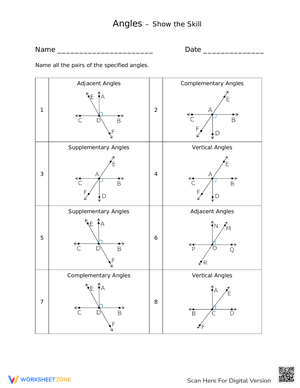
The identification tasks on the simpler worksheets function well as a pre-unit diagnostic. Common incoming misconceptions from 6th grade include believing that vertical angles must look like a perfectly balanced X (students sometimes reject shallow-angle intersections as not counting) and assuming that complementary angles must always be adjacent to each other. Running a few identification worksheets at the start of the unit surfaces those assumptions before instruction inadvertently builds on them.
Can these worksheets support preparation for state math assessments?
Angle relationship problems appear consistently on state 7th grade math tests, including SBAC and PARCC-aligned assessments. The format in these complementary supplementary vertical and adjacent angles printable worksheets for 7th grade — a labeled diagram followed by a problem requiring students to write and solve an equation — matches how those items typically appear. Students who have practiced the equation-writing step repeatedly tend to recognize the problem structure immediately on a formal assessment rather than spending time decoding what the question is asking.













 Interactive Worksheet Maker
 Quiz Maker
 Word Search Maker
 Crossword Puzzle Maker
 Word Scramble Generator
 Sentence Scramble Generator
 Handwriting Worksheet Generator
 Name Tracing Generator
 Fill In The Blank Generator