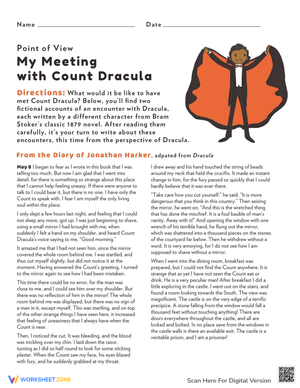
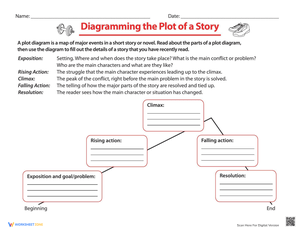
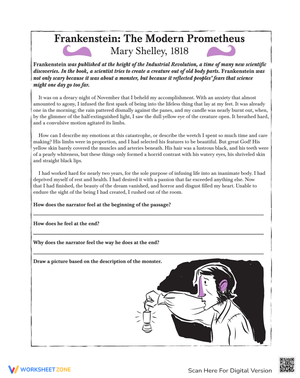
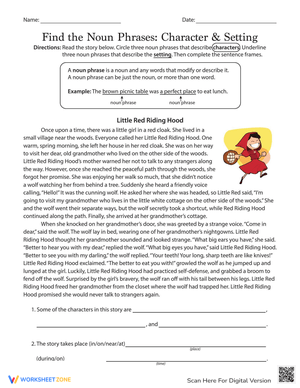
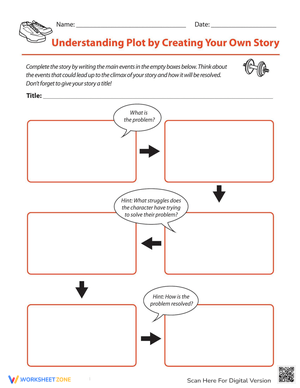
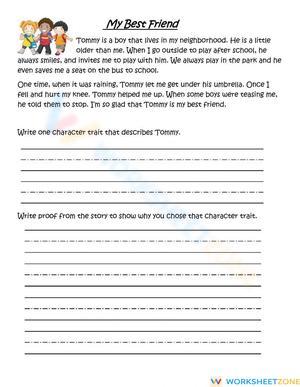
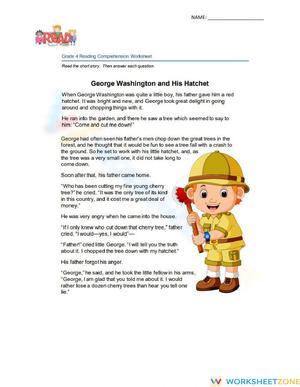
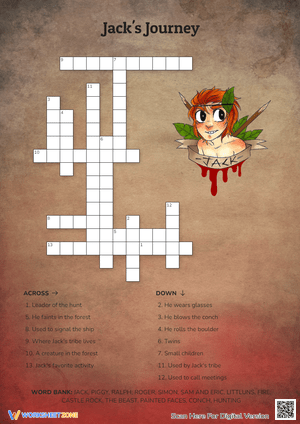
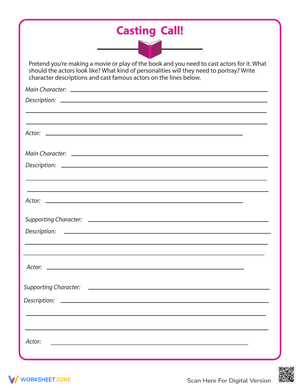
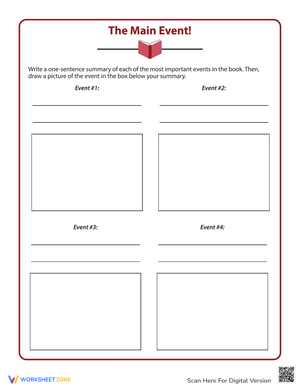
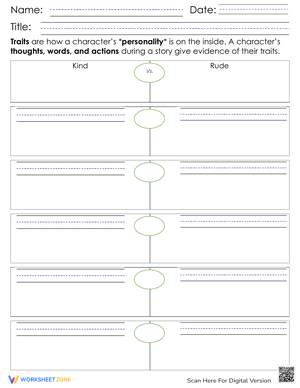
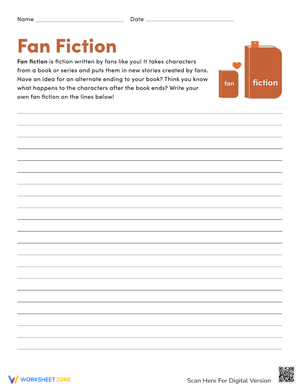
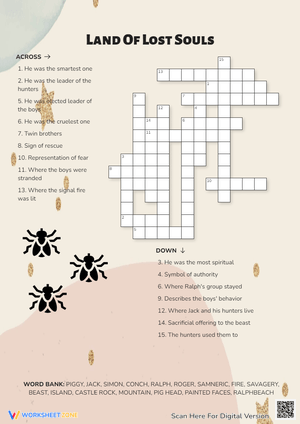
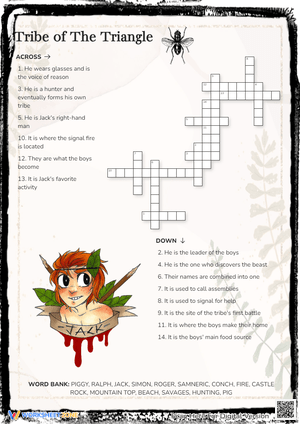
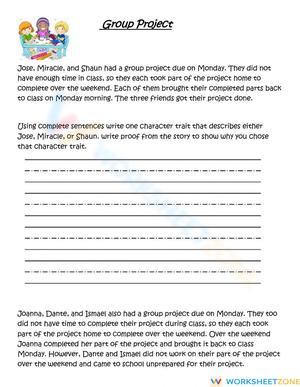
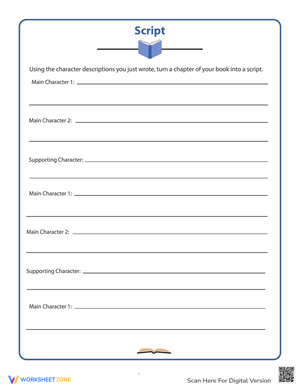
These 5th grade analyzing character worksheets give students a structured way to move past trait labeling and into evidence-based thinking — the kind that shows up in constructed responses, literature discussions, and reading assessments. Each worksheet asks students to return to the text, locate specific details in dialogue, actions, or thoughts, and then explain what those details reveal about how a character operates in the story. That combination of close reading and written reasoning is exactly what upper elementary ELA instruction needs to build.
The Specific Skills Each Worksheet Targets
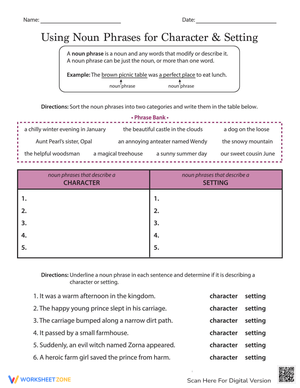
Character work in grade 5 goes beyond identifying that a character is "brave" or "selfish." Students at this level need to explain how the text proves that claim — what the character says, does, or thinks in a specific scene, and what that reveals. These worksheets ask students to do several kinds of analytical work:
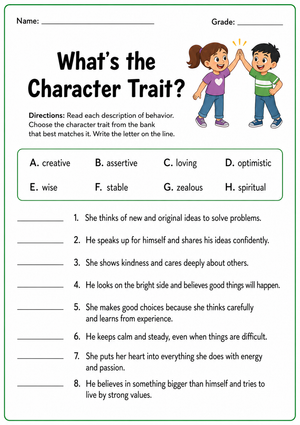
- Selecting a trait and matching it to a direct quote or paraphrase from the text
- Explaining a character's motivation in a key scene and connecting it to the character's broader behavior
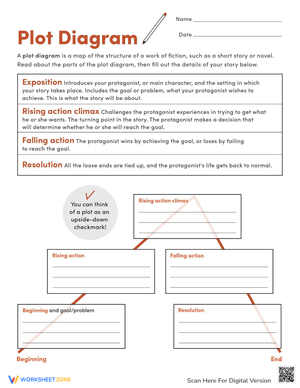
- Tracking change across a story — noting how the character at the end differs from the character at the beginning, and why
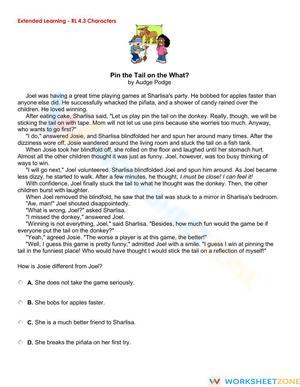
- Comparing two characters' responses to the same problem or event using specific details
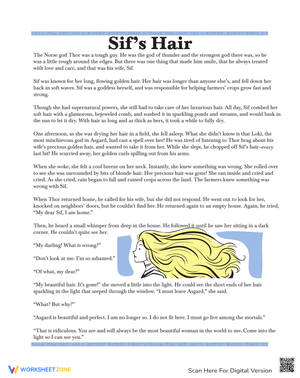
- Analyzing how a character's interactions with others expose personality traits that internal narration might not reveal
The focus throughout is on evidence. Students are not asked to decide whether they like or dislike a character; they are asked to demonstrate what the text shows. That habit of mind — claim, then proof, then explanation — is what makes character analysis useful preparation for literary essays and formal reading assessments.
Common Errors That Surface in Fifth-Grade Character Analysis
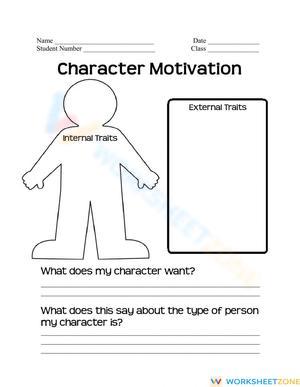
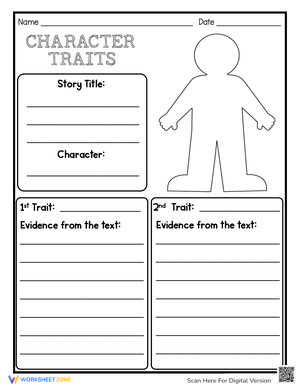
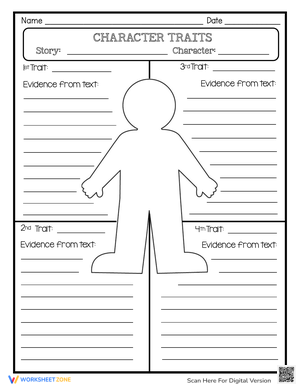
The most common mistake fifth graders make is choosing a trait word first and then hunting for anything that seems to confirm it. That approach produces thin, circular responses: a student decides a character is "determined" and offers as evidence that the character "kept trying." What is missing is the specific moment — the scene where the character refuses help after failing twice, or the dialogue where the character admits fear but acts anyway. These worksheets address this directly by requiring students to collect two or three text details before selecting the best-fitting trait. When the evidence-gathering step comes first, responses sharpen noticeably. Teachers who sequence the task that way consistently get more accurate comparisons and more grounded explanations.
A second pattern worth watching: students who track external actions but miss internal signals. They note that a character "ran away" but overlook the line of interior thought that tells readers whether the decision came from fear, strategy, or self-protection. Prompts that specifically ask what the character thinks — not just what the character does — close that gap without requiring a separate lesson.
Building These Worksheets Into a Fifth-Grade Literacy Block
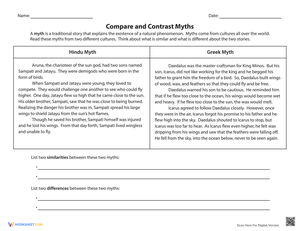
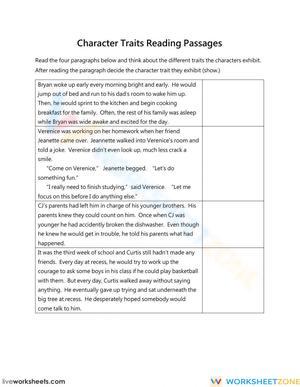
These resources fit across multiple points in a literacy block rather than belonging to one lesson type. During a whole-class read-aloud, an evidence chart gives students something concrete to do in the last ten minutes before wrapping up — it moves discussion into writing without requiring a separate assignment. In small-group reading, a targeted compare-and-contrast organizer lets a teacher focus the conversation on one analytical move at a time. For literacy stations, a short passage with character response questions works well because the reading load is contained and the task is clear enough to run without teacher presence.
These 5th grade analyzing character worksheets also make reliable sub plans. A character evidence table or compare-and-contrast graphic organizer is self-explanatory enough for a substitute to manage without deep ELA background. Students stay on a familiar routine, the work connects to whatever novel or anthology text the class is already reading, and teachers return to something usable for formative assessment. For homework, a short response worksheet gives families a clear task without turning independent reading into a long writing project.
Standard Alignment
The 5th grade analyzing character worksheets in this collection address RL.5.3, which requires students to compare and contrast two or more characters, settings, or events in a story using specific details from the text. In classroom terms, RL.5.3 rarely lives in a single lesson — it runs through close reading, guided reading follow-up, literary essay preparation, and state reading assessment practice. Students who struggle with it are usually not failing to notice character traits; they are failing to connect those traits to textual proof in writing. The graphic organizer formats in this set make that gap visible quickly, which means reteaching stays focused rather than general.
Adjusting Support Without Changing the Core Skill
These 5th grade analyzing character worksheets accommodate a range of learners without reducing the core analytical demand. For students who struggle to generate written responses independently, a chart with sentence frames — The character seems ___ because in the text it says ___ — keeps the thinking on track while lowering the cognitive load of open-ended writing. For students working above grade level, the same skill becomes a more open written comparison: two characters, one problem, a multi-paragraph response built entirely from text evidence.
Beyond format, teachers can adjust reading load. A student in intervention may work through a shorter passage with one focused question; a student ready for enrichment may read a longer excerpt and construct a full evidence-based comparison. The skill stays constant across both versions — locating evidence, identifying what it reveals, explaining the connection to character — but the entry point shifts to match what each student can manage independently. What matters is that even the most supported version of these worksheets keeps students pointing to words, actions, thoughts, and interactions in the text. The habit of returning to evidence does not get negotiated away in the name of access.
Frequently Asked Questions
What kinds of text evidence should fifth graders use when analyzing a character?
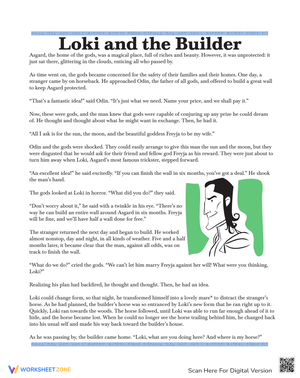
Students should draw on four primary sources: what the character says (dialogue), what the character does (actions), what the character thinks (internal narration), and how other characters respond to them. Quoting directly works well when the exact wording matters; paraphrasing is appropriate when the student is summarizing a scene. The important thing is that each claim connects to a specific moment in the text rather than a general impression of the character across the whole story.
Can these worksheets be used with any novel or short story, or do they require a specific text?
Each worksheet is text-flexible. Students apply the analytical task to whatever novel, short story, or anthology selection the class is already reading. That makes the set practical across the full school year without being tied to a single title. Teachers using class novel sets, reading workshop with student-choice books, and whole-class anthology work all find the format usable without modification.
How does repeated practice with these worksheets support standardized reading assessments?
State reading assessments for grade 5 consistently include constructed-response questions asking students to describe a character and support their answer with text evidence. The format these worksheets use — identify a trait or change, locate supporting details, explain the connection — mirrors the reasoning process those prompts require. Repeated practice in that format reduces the cognitive unfamiliarity students sometimes feel when they encounter a similar question on assessment day.
How do I know if a student has met the expectation for RL.5.3 using these worksheets?
Look at whether the evidence is specific and accurately quoted or paraphrased, whether the explanation connects the detail to the claim rather than restating it, and whether any comparison draws on details from both characters rather than describing each one in isolation. Vague responses — "the character is brave because she was brave in the story" — signal that the student has named the trait but has not yet learned to locate and explain the proof. These worksheets surface that pattern quickly because the task requires students to produce each reasoning step in writing before moving on.












 Interactive Worksheet Maker
 Quiz Maker
 Word Search Maker
 Crossword Puzzle Maker
 Word Scramble Generator
 Sentence Scramble Generator
 Handwriting Worksheet Generator
 Name Tracing Generator
 Fill In The Blank Generator