


























Views
Downloads
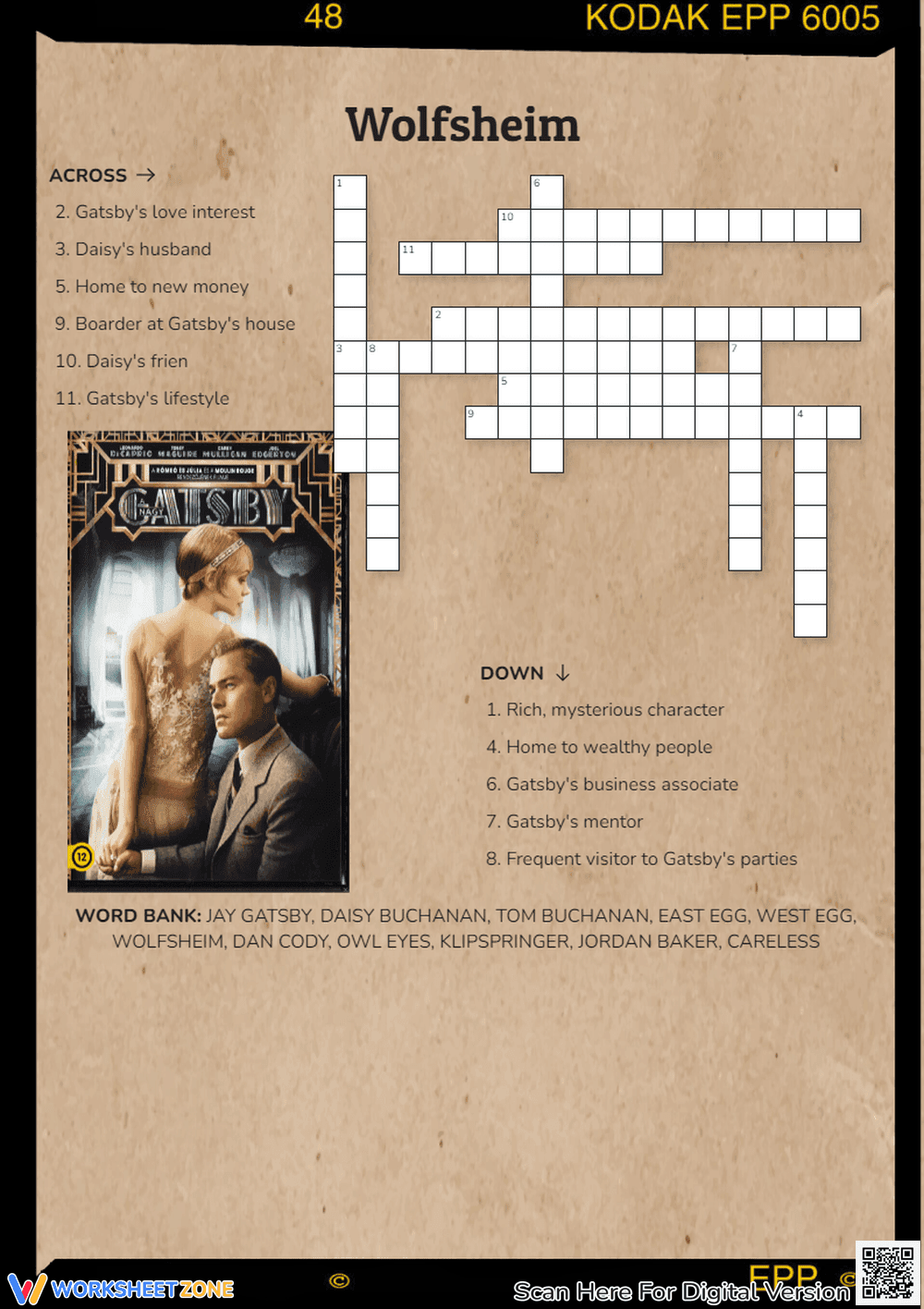

Printable Wolfsheim Crossword | Grade 5 ELA
Paste this activity's link or code into your existing LMS (Google Classroom, Canvas, Teams, Schoology, Moodle, etc.).
Students can open and work on the activity right away, with no student login required.
You'll still be able to track student progress and results from your teacher account.
This Grade 5 reading comprehension worksheet reinforces character identification and plot details from The Great Gatsby. Students complete an engaging crossword puzzle by matching descriptive clues to key figures and locations from the text, strengthening their recall and analytical skills in a fun, accessible format.
At a Glance
- Grade: 5 · Subject: ELA
- Standard:
CCSS.ELA-LITERACY.RL.5.3— Identify and describe characters and settings- Skill Focus: Character Analysis
- Format: 1 page · 11 problems · Answer key included · PDF
- Best For: Independent practice and review
- Time: 15–20 minutes
This single-page resource features an 11-clue crossword puzzle focused on the characters, settings, and plot points of The Great Gatsby. The worksheet includes a helpful word bank at the bottom to support students as they match descriptions to names like Jay Gatsby, Daisy Buchanan, and Meyer Wolfsheim. A complete answer key is provided for quick grading and self-assessment.
Zero-Prep Workflow
- Print (1 minute): Simply download the PDF and print a class set. The layout is clean and requires no special formatting.
- Distribute (1 minute): Hand out the puzzle as a bell-ringer, early finisher activity, or part of a substitute teacher plan.
- Review (3 minutes): Use the included answer key to quickly check student responses or project it on the board for self-correction.
Total teacher prep time is under two minutes, making this an ideal print-and-go solution for busy educators needing reliable literature review materials.
Standards Alignment
This activity aligns with CCSS.ELA-LITERACY.RL.5.3, requiring students to compare and contrast two or more characters, settings, or events in a story or drama, drawing on specific details in the text. By matching traits and relationships to specific characters, students demonstrate comprehension of textual details. Both standard codes can be copied directly into lesson plans, IEP goals, or district curriculum mapping tools.
How to Use It
Deploy this crossword puzzle after reading introductory chapters to assess initial character comprehension, or use it as a low-stakes review activity before a unit test. As a formative assessment tip, observe which clues students struggle to answer without the word bank; this indicates which character relationships may need further discussion. Expected completion time ranges from 15 to 20 minutes depending on reading fluency.
Who It's For
This worksheet is designed for Grade 5 students developing their literary analysis skills. The included word bank provides built-in differentiation, supporting English Language Learners and students who benefit from vocabulary scaffolding. It pairs perfectly with a character map graphic organizer or a direct instruction lesson on character motivation and setting.
Integrating structured vocabulary and comprehension activities like this crossword puzzle significantly reinforces student retention of literary details. Aligned with CCSS.ELA-LITERACY.RL.5.3 to identify and describe characters and settings, this resource provides targeted practice in recalling specific textual evidence. According to Fisher & Frey (2014), providing students with multiple exposures to academic vocabulary and character traits in varied formats increases overall reading comprehension and analytical proficiency. By requiring learners to connect descriptive clues to specific nouns from the text, educators facilitate deeper cognitive mapping of the narrative structure. This targeted approach ensures that students move beyond basic recall, establishing a foundational understanding of character dynamics necessary for advanced literary critique. Utilizing such focused, low-stakes assessments allows teachers to monitor progress effectively while maintaining high student engagement throughout the literature unit.


