


























Views
Downloads

Dr. Seuss Characters Coloring Page | Essential K-5 Ready
Paste this activity's link or code into your existing LMS (Google Classroom, Canvas, Teams, Schoology, Moodle, etc.).
Students can open and work on the activity right away, with no student login required.
You'll still be able to track student progress and results from your teacher account.
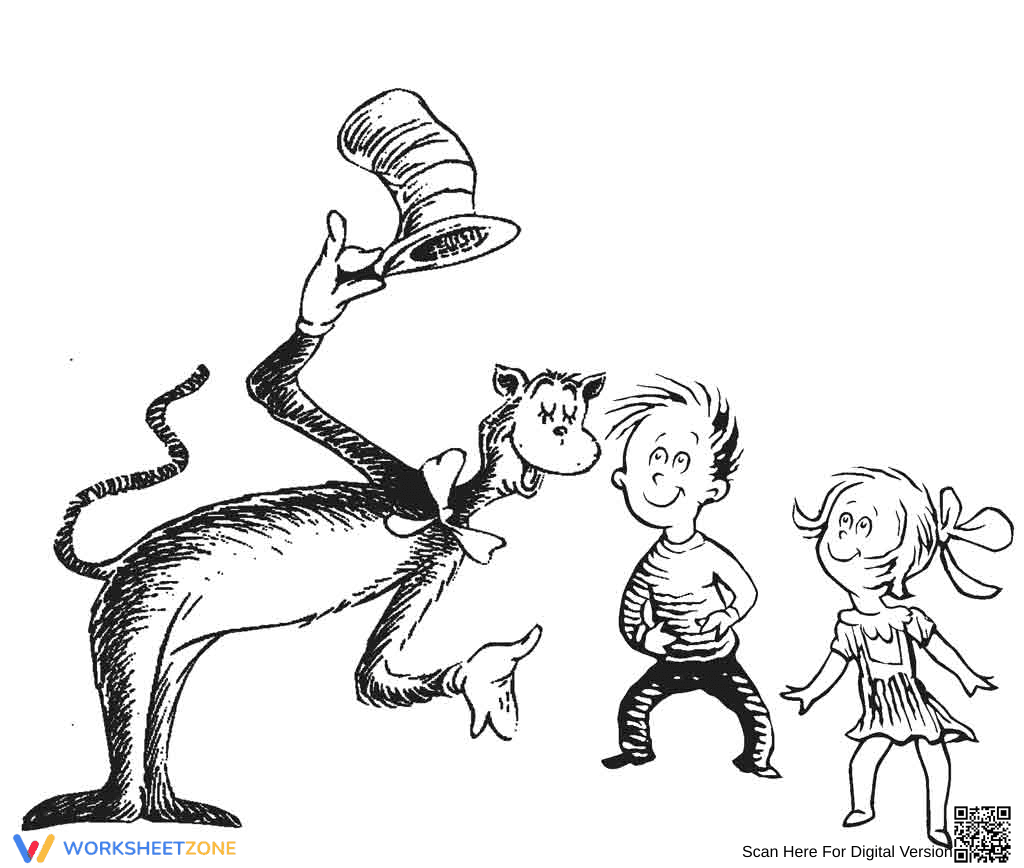
This Dr. Seuss characters coloring page provides a creative outlet for students to engage with iconic literary figures. By coloring the Cat in the Hat and his companions, learners develop essential fine motor control while reinforcing visual recognition of characters from classic texts. It serves as a perfect bridge between reading time and artistic expression.
At a Glance
- Grade: K-5 · Subject: English / Arts
- Standard:
CCSS.ELA-LITERACY.RL.K.3— Identify characters, settings, and major events in a story- Skill Focus: Fine motor skills & character recognition
- Format: 1 page · 1 task · No answer key · PDF
- Best For: Literacy centers and early finisher activities
- Time: 15–20 minutes
This single-page PDF features a high-resolution illustration of the Cat in the Hat, Sally, and Conrad. The clean line art is designed for easy coloring with crayons, markers, or colored pencils. There are no complex instructions, making it accessible for the youngest learners to use independently immediately after a Dr. Seuss read-aloud session or during a dedicated arts block.
The zero-prep workflow for this resource is designed for maximum efficiency in a busy classroom. First, print the single-page PDF (30 seconds). Second, distribute the sheets to students during a transition or literacy block (1 minute). Third, review the character names as a group to reinforce story recall (30 seconds). Total teacher preparation time is under 2 minutes, making it an ideal sub-plan addition or emergency filler activity.
The primary standard addressed is CCSS.ELA-LITERACY.RL.K.3: "With prompting and support, identify characters, settings, and major events in a story." While primarily an artistic task, the visual representation of specific characters allows teachers to assess whether students can identify the protagonists of the text. Both standard codes can be copied directly into lesson plans, IEP goals, or district curriculum mapping tools.
Use this worksheet as a post-reading activity following a Dr. Seuss unit. As students color, circulate the room to perform a formative assessment by asking them to name the characters and describe their roles in the story. It also functions well as a calming morning work task or an indoor recess option that maintains a connection to the curriculum. Expected completion time ranges from 15 to 20 minutes depending on the student's age.
This resource is tailored for Kindergarten through Grade 5 students, particularly those who benefit from tactile engagement with literature. It is an excellent tool for English Language Learners (ELLs) to build vocabulary related to physical descriptions and clothing. Pair this with a character trait anchor chart or a direct instruction lesson on story elements to maximize the educational impact.
According to research by Fisher & Frey (2014) on the gradual release of responsibility, providing visual and creative scaffolds helps solidify student understanding of literary elements like characterization. This coloring page acts as a non-linguistic representation of the text, which is a proven strategy for increasing comprehension among early readers. By focusing on CCSS.ELA-LITERACY.RL.K.3, the activity moves beyond simple coloring and into active character identification. The use of familiar imagery from Dr. Seuss reduces cognitive load, allowing students to focus on the fine motor demands of the task while mentally rehearsing the narrative structure of the book. This alignment ensures that even creative activities contribute to the broader goal of literacy mastery and standard-based achievement in the primary classroom. It is a reliable resource for any early elementary educator looking to blend art with literacy goals.


