


























Views
Downloads

Printable Character Traits Graphic Organizer | Grades 3-6
Paste this activity's link or code into your existing LMS (Google Classroom, Canvas, Teams, Schoology, Moodle, etc.).
Students can open and work on the activity right away, with no student login required.
You'll still be able to track student progress and results from your teacher account.
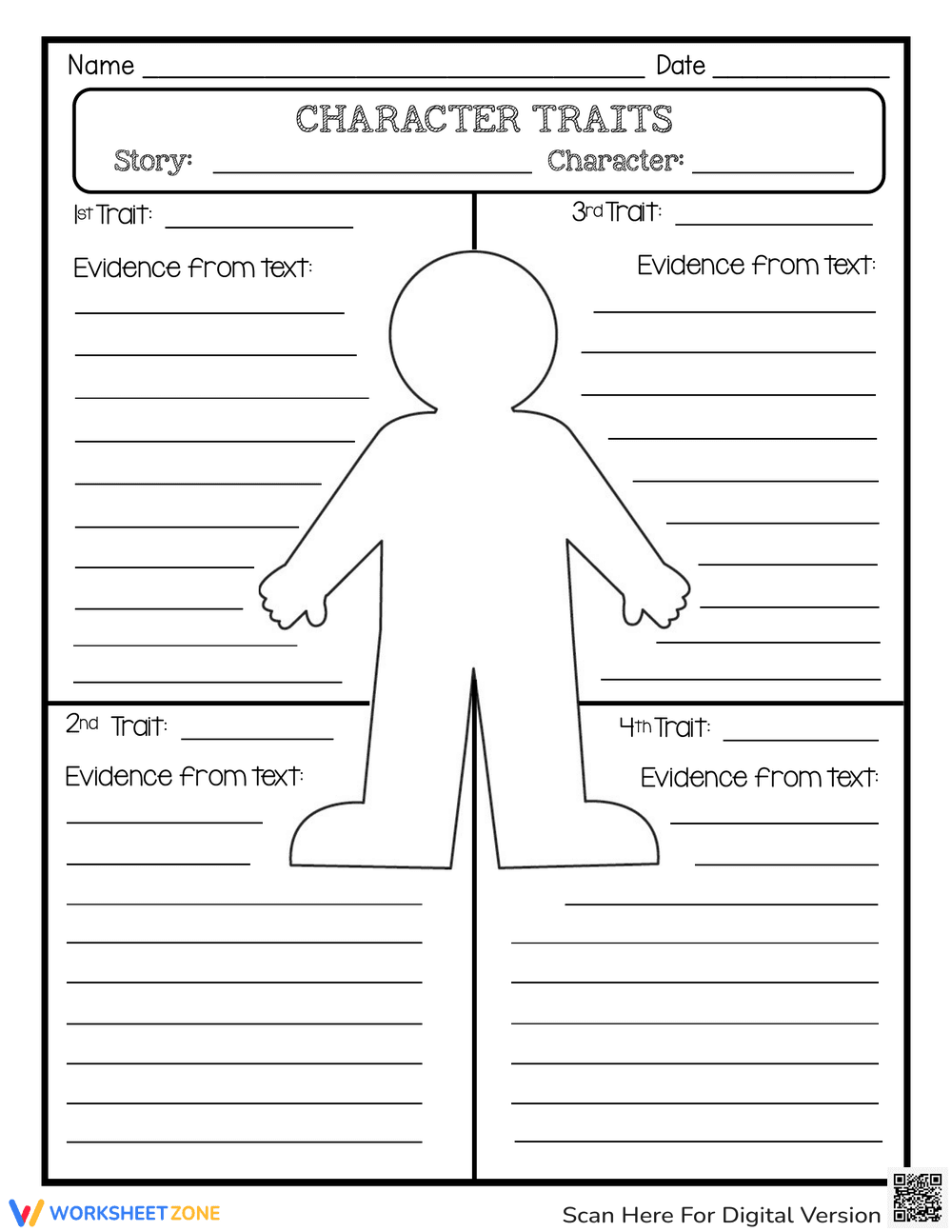
This printable character traits graphic organizer helps students analyze literary characters by identifying four traits and supporting them with textual evidence. Students read any text, choose a character, and fill out the structured quadrants to build critical reading comprehension skills.
At a Glance
- Grade: 3-6 · Subject: English Language Arts
- Standard:
CCSS.ELA-LITERACY.RL.4.3— Describe a character in depth using details from the text- Skill Focus: Character analysis and textual evidence
- Format: 1 page · 4 tasks · No answer key · PDF
- Best For: Independent reading response and literature circles
- Time: 15–25 minutes
This single-page PDF features a clean layout centered around a character silhouette. It contains four quadrants where students record a trait and write supporting evidence from the story. The top includes fields for name, date, story title, and character name, making it easy to organize and grade.
This zero-prep worksheet integrates into your daily ELA routine. First, print the single-page PDF, taking less than 1 minute. Next, distribute the organizer during independent reading, requiring only a brief 2-minute explanation. Finally, review student responses or collect them for a quick formative assessment. This efficient workflow makes the resource an ideal choice for emergency sub plans.
Standards Alignment
This worksheet aligns with Common Core Standard CCSS.ELA-LITERACY.RL.4.3, which requires students to describe a character in depth using details from the text. By prompting students to find evidence for four traits, it also supports CCSS.ELA-LITERACY.RL.3.3. Both standard codes can be copied directly into lesson plans, IEP goals, or district curriculum mapping tools.
How to Use It
Deploy this graphic organizer during independent practice after direct instruction on characterization. As students work, observe if they can distinguish between temporary emotions and permanent traits, noting who needs support. Expect students to complete the four quadrants in 15 to 25 minutes, depending on the text complexity.
Who It's For
This resource is designed for students in grades 3 through 6, including English language learners. It pairs naturally with short stories, novel chapters, or anchor charts detailing trait vocabulary. Teachers can scaffold the activity by providing a word bank of traits.
This character analysis worksheet supports evidence-based reading instruction by requiring students to anchor their character trait claims in direct textual citations. According to research from Fisher & Frey (2014) on close reading, visual frameworks help intermediate students organize thoughts and transition from basic comprehension to deeper analytical writing. By aligning with the rigorous demands of CCSS.ELA-LITERACY.RL.4.3, this tool ensures that students do not merely guess character motivations but instead locate concrete textual proof. Using structured organizers like this has been shown to improve reading comprehension scores on standardized assessments by providing a repeatable strategy for analyzing complex texts. Teachers can confidently integrate this worksheet into daily instruction, knowing it reinforces the exact cognitive processes evaluated in state exams and supports long-term literacy development across multiple grade levels.


