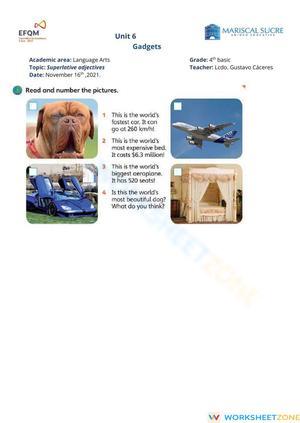
These 5th grade adjectives worksheets give teachers a print-ready grammar resource that connects directly to student writing — covering identification, comparative forms, word choice revision, and adjective-adverb distinction in formats students can work through independently.
Skills Covered in These 5th Grade Adjectives Worksheets
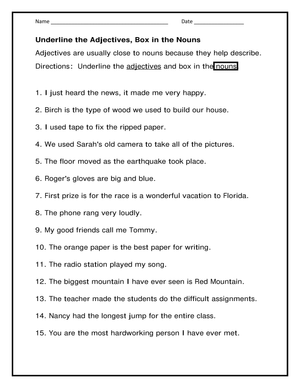
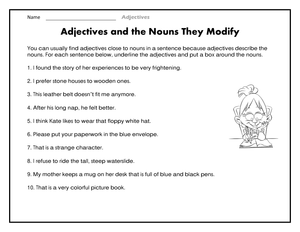
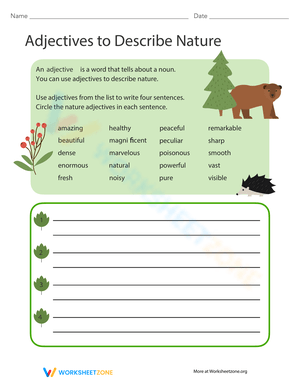
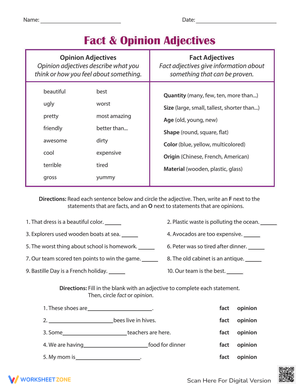
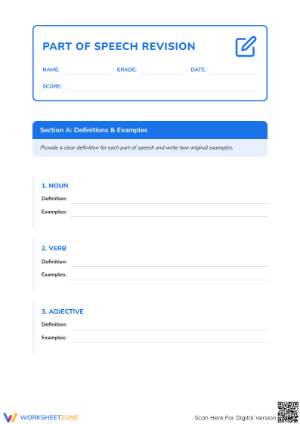
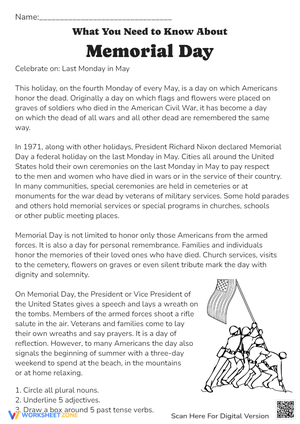
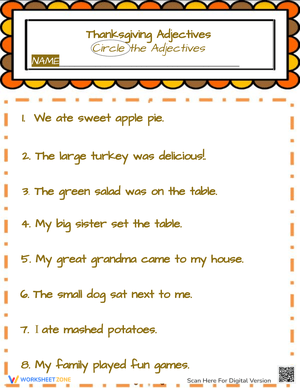
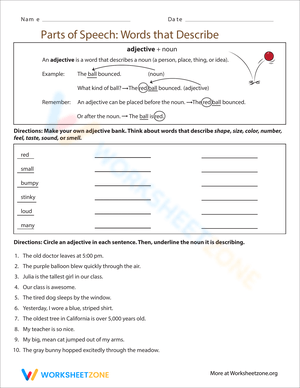
- Identifying adjectives in context — students locate describing words within sentences and short paragraphs, not isolated lists, so the skill transfers to actual reading and editing tasks.
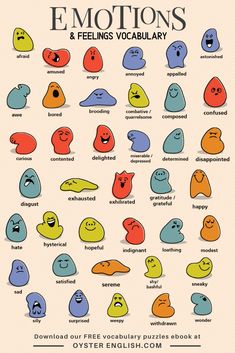
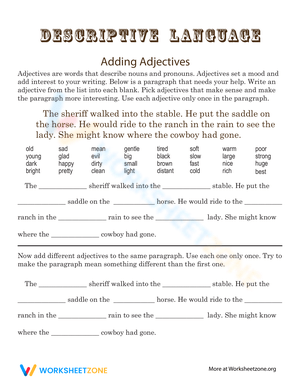
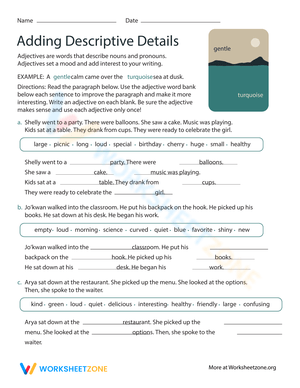
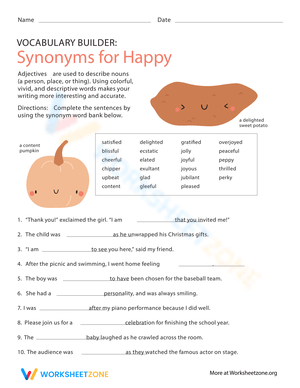
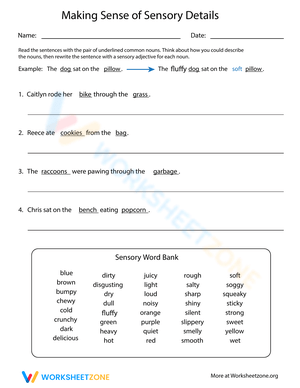
- Choosing precise descriptive language — exercises ask students to replace vague adjectives with specific ones, building the word-selection habit that shows up in stronger informational and narrative writing.
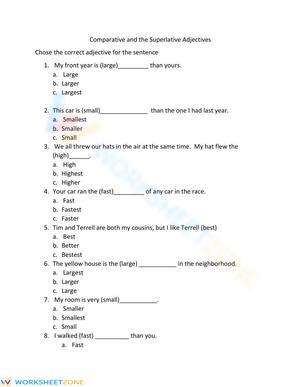
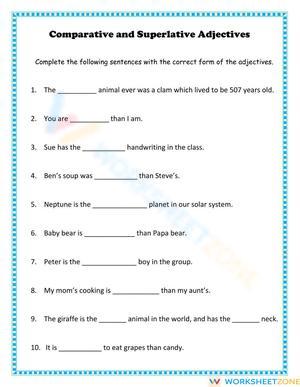
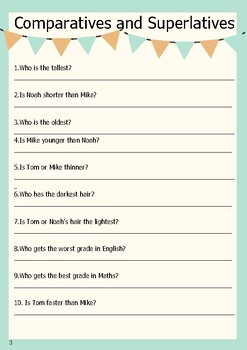
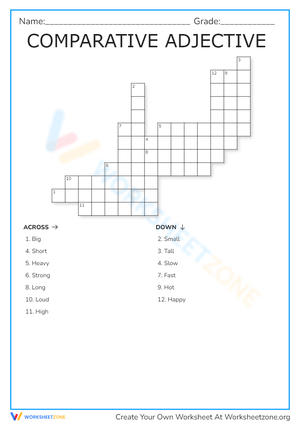
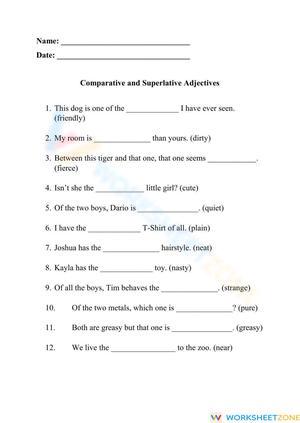
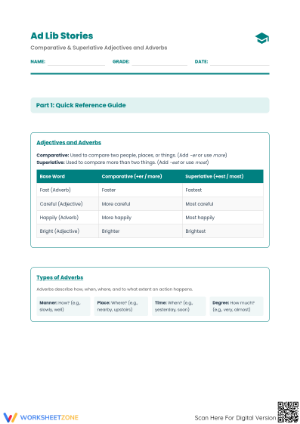
- Comparative and superlative forms — targeted items address both regular endings (-er/-est) and irregular forms (good/better/best), including sentences where students must decide whether more or most is appropriate.
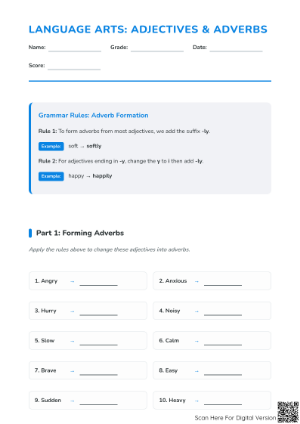
- Adjective vs. adverb distinction — side-by-side sentence pairs require students to identify which word modifies a noun versus a verb, a common point of confusion in grade 5 writing and editing.
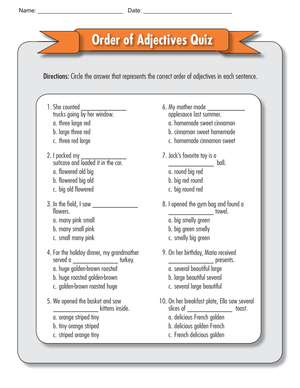
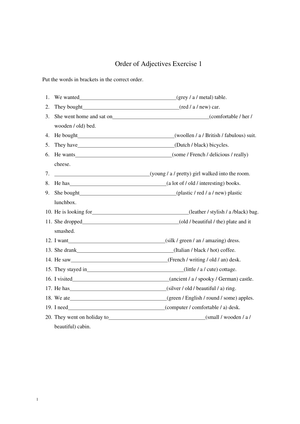
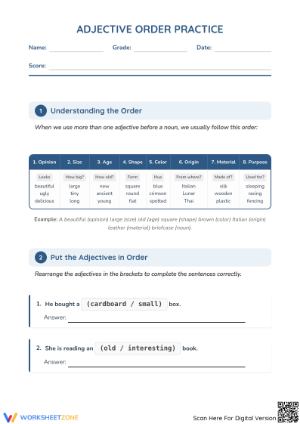
- Sentence revision using adjective order — students rewrite sentences with awkwardly stacked or weak descriptors, turning grammar practice into a sentence-level writing skill.
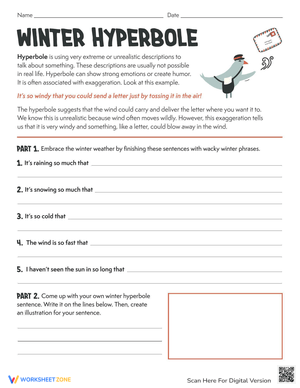
- Original sentence production — open-response items reveal whether students understand how adjectives function in a sentence, not just how to recognize them.
Standards Alignment
These worksheets align with CCSS L.5.1, which requires students to demonstrate command of standard English grammar and usage in writing and speaking, and with CCSS L.5.3, which focuses on choosing words and phrases for effect and recognizing differences between written and spoken language conventions. Comparative and superlative items directly address the grade 5 expectation that students use forms correctly in original writing, not only in recognition tasks. Sentence-revision exercises support both standards simultaneously by asking students to apply grammatical knowledge to produce cleaner, more precise text.
Common Adjective Errors These Worksheets Target
- Students apply -er and -est endings to multisyllabic adjectives, writing importanter or carefulest instead of using more and most.
- Students use more and most alongside an inflected form, producing double comparatives like more bigger or most fastest.
- Students confuse adjective and adverb placement, writing she ran quick rather than she ran quickly, then misidentifying quick as an adjective because it "describes" the action.
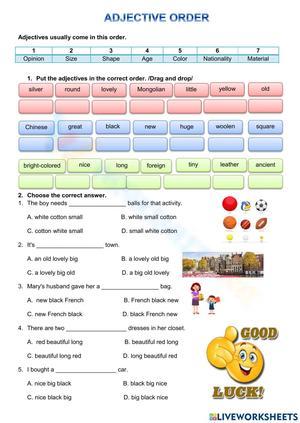
- Students stack three or four adjectives before a noun without considering order conventions, resulting in phrases like the wooden small old red box that read as unnatural even when each word is technically correct.
- Students choose the first adjective that comes to mind rather than the most specific one, defaulting to big, nice, or bad in sentence-writing tasks even when context calls for a more precise descriptor.
- Students treat predicate adjectives as adverbs, circling tired in the runner looked tired as a verb modifier rather than recognizing that it describes the subject through a linking verb.
Test Prep and Formative Assessment Value
A single adjective worksheet page can function as a quick diagnostic when you sort student responses by error type rather than overall score. Three items — one identification, one comparative form, one sentence revision — produce enough evidence to sort students into three instructional groups: those who need work on form, those who understand form but struggle with word choice, and those ready to apply adjective work independently in writing. State ELA assessments at grade 5 frequently embed grammar knowledge in editing tasks and extended writing, so regular practice that mimics that format builds both the skill and the test-taking familiarity students need without turning grammar instruction into isolated test prep.
Frequentlty Asked Questions
1. What adjective skills are expected of fifth graders under Common Core?
CCSS L.5.1 expects students to use adjectives correctly in writing, including comparative and superlative forms. L.5.3 pushes further, asking students to choose adjectives for effect and recognize when word choice sharpens or weakens a sentence — a skill that goes well beyond labeling.
2. How often should teachers practice adjectives at this grade level?
Short, frequent practice outperforms a single extended unit. Two or three focused items embedded in morning work or exit tickets each week keeps the skill visible without crowding out writing instruction, and spaced repetition helps students retain forms they would otherwise revert to misusing.
3. How can I tell whether a student truly understands adjectives or is just memorizing?
Ask them to revise a sentence rather than label a word. A student who can change the dog barked into the frightened dog barked at the delivery driver demonstrates functional understanding; a student who can only circle big in a list may be pattern-matching without grasping how adjectives work in meaning-making.
4. Do these worksheets cover adjective-adverb distinction?
Yes. That distinction is one of the most consistently troublesome areas in grade 5 grammar because both parts of speech appear near verbs and nouns in similar sentence positions. Exercises that present both in context — rather than in separate, clearly labeled sections — better reflect the confusion students actually experience during writing and editing.












 Interactive Worksheet Maker
 Quiz Maker
 Word Search Maker
 Crossword Puzzle Maker
 Word Scramble Generator
 Sentence Scramble Generator
 Handwriting Worksheet Generator
 Name Tracing Generator
 Fill In The Blank Generator