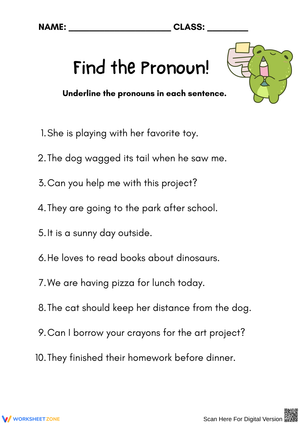
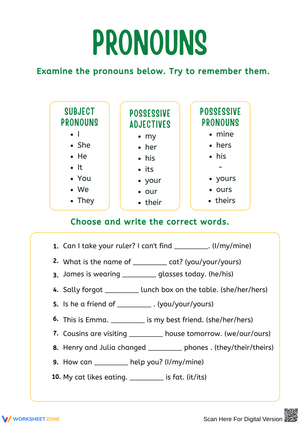
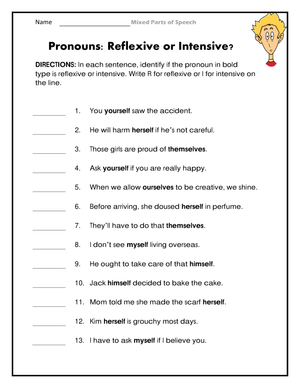
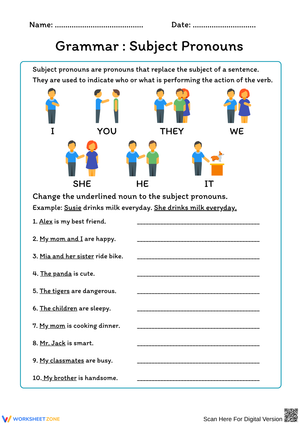
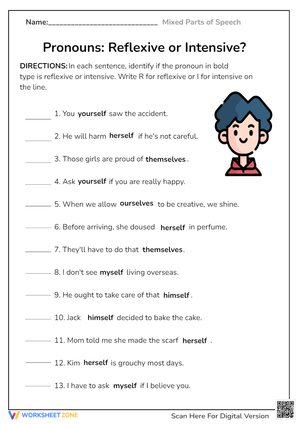
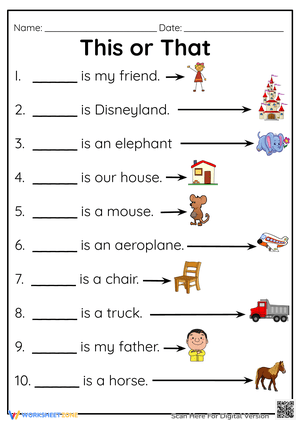
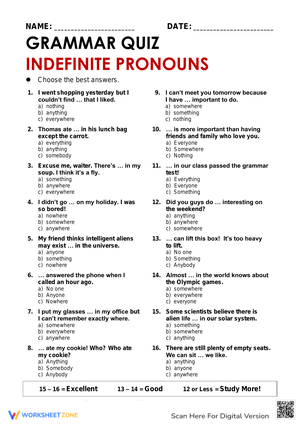
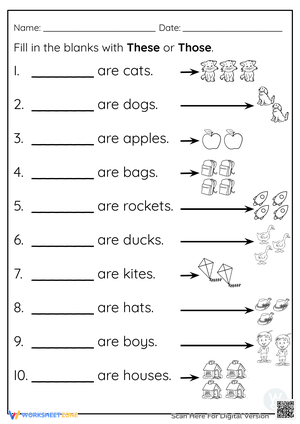
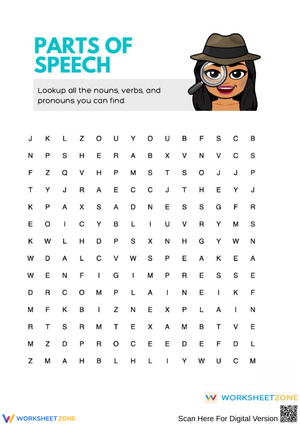
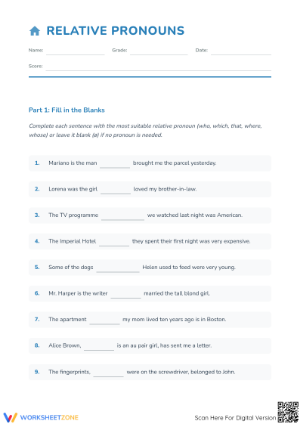
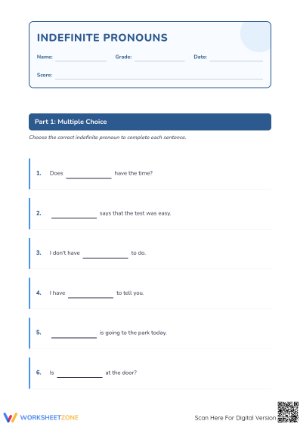
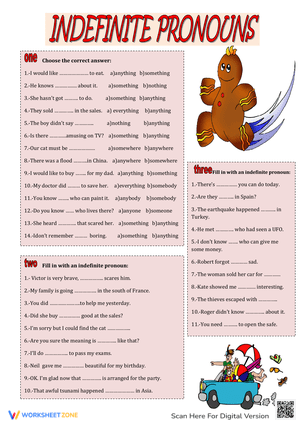
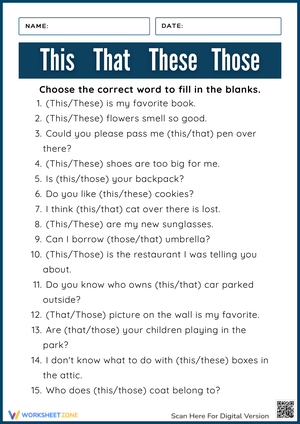
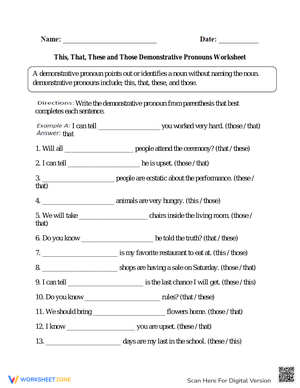
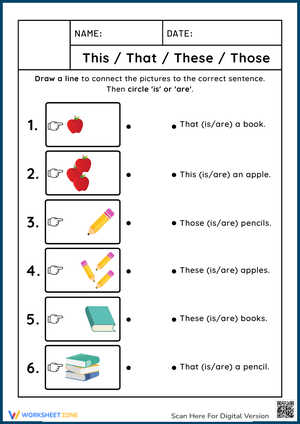
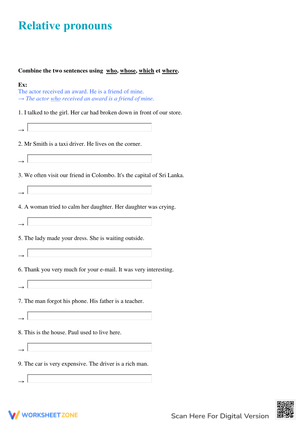
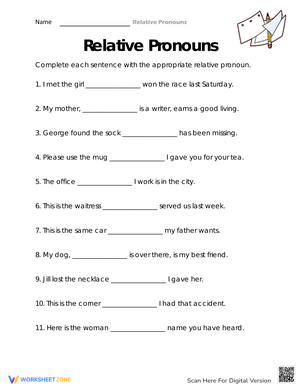
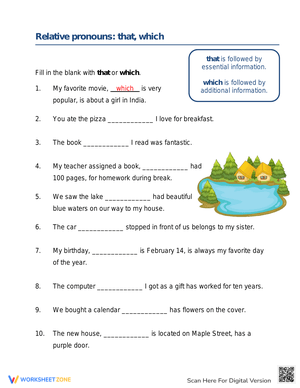
These pronouns worksheets for 5th grade give teachers a focused, print-ready resource for the pronoun skills that matter most at this level — agreement, clear reference, and choosing the right form in context. Each worksheet targets a specific task so teachers can slot exactly the right practice into bell ringers, small-group reteach, or homework folders without any reformatting. The set works especially well in the weeks when students are writing longer responses and pronoun errors start surfacing in their drafts.
The Specific Skills Targeted
Fifth grade is the point where students are expected to do more than identify pronouns — they need to edit with them. That shift matters because a student can correctly identify "he" as a pronoun in a sample sentence and still write "Me and Jordan stayed after school" in a paragraph of their own. These worksheets address that gap by moving from recognition tasks into correction and rewrite tasks, which is where pronoun instruction actually sticks.
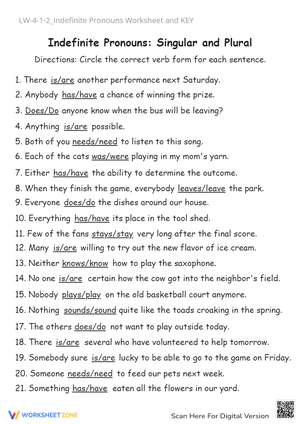
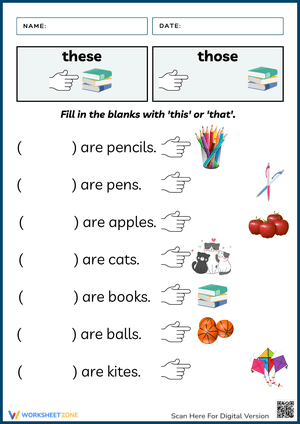
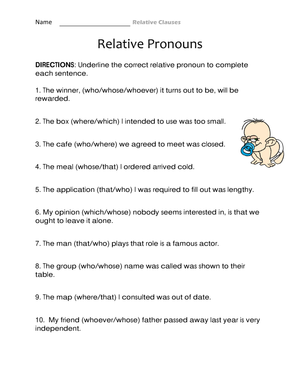
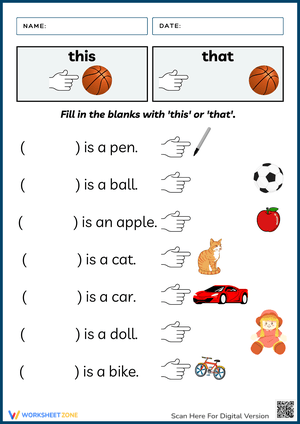
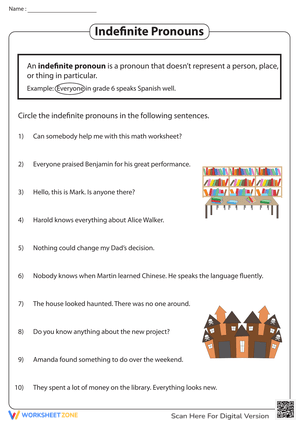
- Identifying personal, possessive, and indefinite pronouns in sentences and short passages
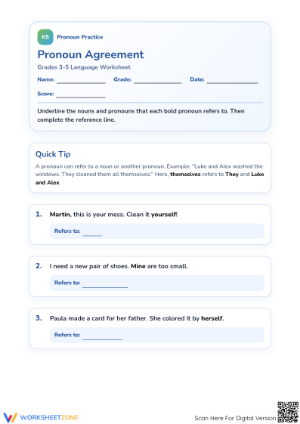
- Matching pronouns to their antecedents and marking the connection
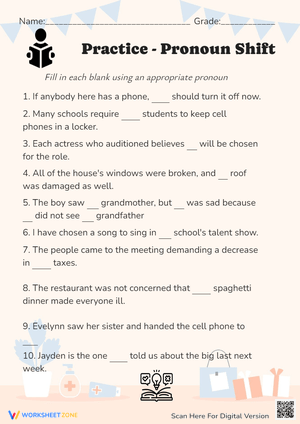
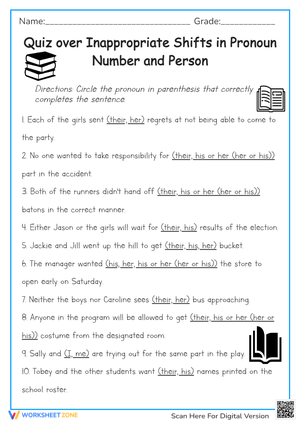
- Correcting pronoun-antecedent agreement errors, including singular and plural mismatches
- Choosing between subject and object forms in sentences with compound subjects and objects
- Revising sentences with ambiguous reference — "After the coach spoke with Dario, he looked relieved" is the kind of item where two possible antecedents require students to make a deliberate choice
- Rewriting multi-sentence passages to correct pronoun use throughout
The ambiguous-reference items tend to surface the most interesting errors. Fifth graders writing longer reports often place a pronoun several sentences after its antecedent, assuming the reader has tracked the referent. Worksheets that ask students to draw a line from pronoun to antecedent — and then judge whether that connection holds across the distance — build the kind of awareness that eventually shows up in actual revision.
Frequent Errors Worth Watching For and Addressing
The compound-subject error is the most persistent pattern at this grade level. Students who would never write "Me went to the library" will consistently write "Me and my partner went to the library" because the compound construction disrupts the internal check they normally run automatically. Worksheets that isolate this exact situation — presenting sentences where the compound subject includes a pronoun — let teachers address the pattern directly rather than hoping students self-correct during writing conferences.
Pronoun-antecedent agreement with indefinite pronouns creates a separate layer of confusion. When a student writes "Everyone forgot their homework," they are following a pattern absorbed from spoken English, but the traditional standard calls for a singular pronoun. Fifth graders need some explicit instruction about that tension before worksheet practice can reinforce consistent habits — otherwise the practice just entrenches the ambiguity. Worksheets that present both versions and ask students to explain the difference are worth assigning before moving to straight error correction.
A third pattern shows up in longer writing tasks: a pronoun whose antecedent appeared two or three sentences earlier. The student knows what they meant; the reader does not. Worksheets built around short paragraph excerpts rather than isolated sentences give teachers a far more accurate picture of where each student's pronoun clarity actually breaks down.
Standard Alignment
These worksheets align to CCSS.ELA-LITERACY.L.5.1a, which addresses pronoun case — the standard governing subject and object pronoun use, agreement, and recognition of incorrect pronoun shifts. When students correct "Give the permission slip to Natalie or I" and rewrite the sentence using the correct object pronoun, they are doing exactly what L.5.1a calls for. Because this standard sits within the conventions and usage strand, teachers often reach for pronouns worksheets for 5th grade during revision-focused weeks or ahead of state writing assessments, when editing accuracy carries direct instructional weight.
How to Build These Worksheets Into Your Lesson Plans
The most effective use pattern for pronouns worksheets for 5th grade runs like this: assign a single worksheet as a four-minute starter, then spend five minutes reviewing two or three items aloud — not all of them, just the ones that generated the most varied answers. That short discussion surfaces the reasoning behind the correct choice and gives students language they can carry into writing conferences. Spending twelve minutes reviewing every item teaches less than spending five minutes on a targeted conversation about the ones that caused genuine disagreement.
For reteach blocks, keep the task narrow. If a small group is struggling specifically with pronoun-antecedent agreement, pull the worksheet that addresses only that issue. Mixing agreement practice with pronoun case work in the same session adds too much to track at once, and the resulting student work tends to be surface-level rather than genuinely corrected. Clean, one-skill practice produces cleaner data about where each student actually stands.
Sub plans are another practical fit. A well-structured worksheet with clear directions runs itself — substitutes do not need to explain the grammar content because the items do that work. Leaving a brief answer key with the plans makes it possible to review the session with students the next day rather than losing the practice entirely.
Differentiating These Worksheets Across Ability Levels
For students who need more support, start with worksheets where the antecedent and pronoun appear in the same sentence. Asking those students to draw a line between the two makes the relationship visible before asking them to correct anything. That physical step on the worksheet — drawing the arrow, circling the noun — reduces cognitive load enough that students can focus on whether the forms agree rather than spending energy just locating the relevant pieces. Once they can do that consistently, move them to worksheets where the antecedent appears in a previous sentence.
Students who struggle specifically with compound-subject errors benefit from working in pairs. One student reads the sentence aloud while dropping the first noun — "Me stayed after school" versus "I stayed after school" — and the other confirms whether it sounds right. That spoken-language check catches the error faster than staring at it silently, and the partner structure keeps both students actively working rather than one checking answers while the other waits.
For students who are ready for more challenge, the pronouns worksheets for 5th grade that include paragraph-level revision tasks are the right entry point. Instead of correcting isolated sentences, those students revise a full paragraph containing multiple pronoun errors and then produce a clean rewrite. Adding a self-editing checklist in the margin gives advanced students a structured way to verify their revisions without teacher intervention — which frees up time to work directly with students who need more support.
Frequently Asked Questions
What pronoun skills matter most at the fifth-grade level?
Pronoun-antecedent agreement, correct case in compound subjects and objects, and clear pronoun reference are the three areas that produce the most errors in fifth-grade writing. Most students at this level can name pronouns by definition; consistent and correct use inside their own sentences is the harder skill, and that is what targeted worksheet practice builds over time.
Can these worksheets connect to writing instruction rather than functioning as standalone grammar drills?
Yes, and that connection is worth making deliberately. After students correct sentences on a worksheet, asking them to apply the same edit to a sentence from their current draft treats the grammar skill as a usable tool rather than an isolated exercise. Worksheets with built-in rewrite tasks are the easiest to bridge into writing because the revision step is already part of the item format.
How do teachers use these effectively in a differentiated grammar block?
Because each worksheet addresses a distinct skill, teachers can assign different worksheets to different groups at the same time. One group works on basic identification and antecedent matching while another works through paragraph-level ambiguous reference revision. That structure keeps everyone on pronoun practice without making the differentiation obvious or disruptive to the room.
Are these worksheets useful for English Language Learners?
Worksheets that use shorter, clearly structured sentences work well for English Language Learners building sentence-level reading fluency alongside grammar skills. Pronoun case and agreement are genuinely difficult for ELL students because the rules do not map cleanly onto every home language. Having the pronoun forms visible on the printed worksheet — rather than asking students to recall them from memory — makes the practice productive rather than frustrating.












 Interactive Worksheet Maker
 Quiz Maker
 Word Search Maker
 Crossword Puzzle Maker
 Word Scramble Generator
 Sentence Scramble Generator
 Handwriting Worksheet Generator
 Name Tracing Generator
 Fill In The Blank Generator