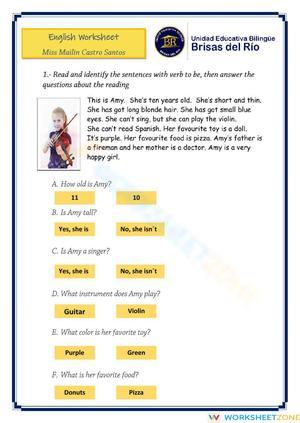
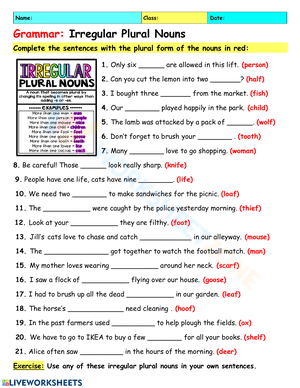
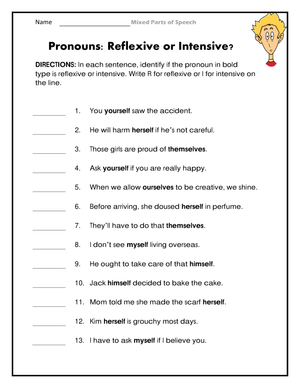
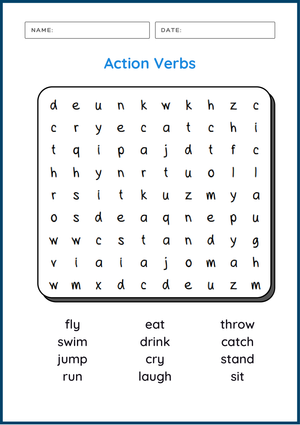
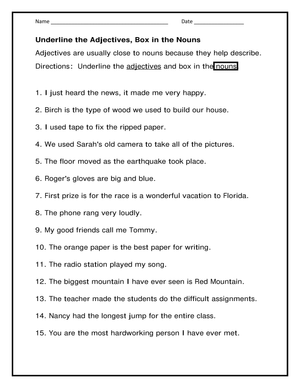
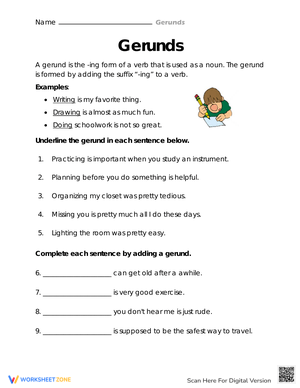
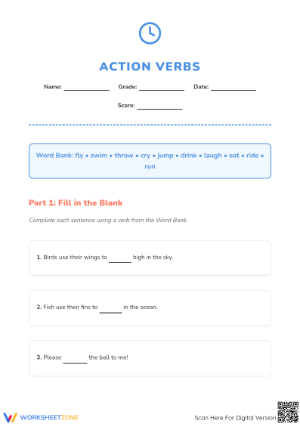
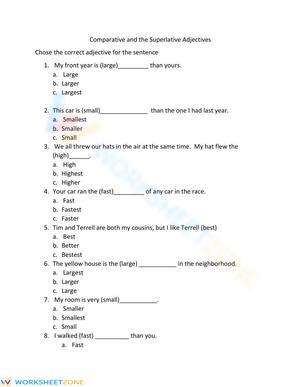
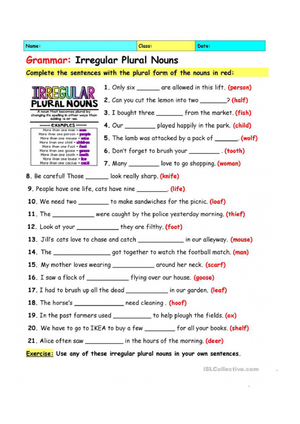
Parts of speech worksheets for 5th grade give teachers ready-to-print practice that moves students beyond simple word labeling — toward explaining how nouns, conjunctions, prepositions, and other word classes actually shape sentence meaning. This collection supports grammar instruction during writing units, targeted small-group reteach, and independent practice without requiring any additional prep.
Skills Covered in These Parts of Speech Worksheets for 5th Grade
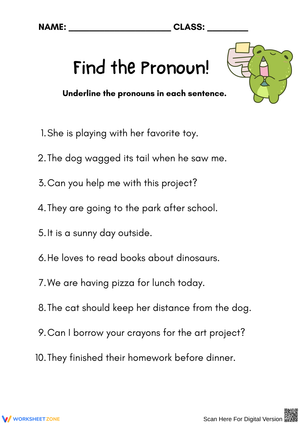
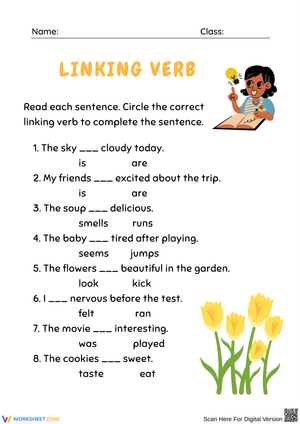
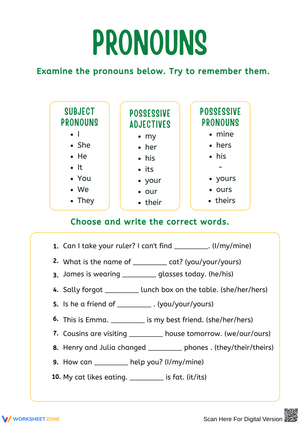
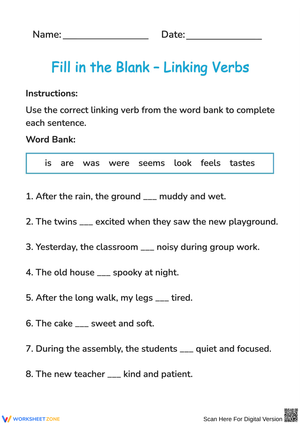
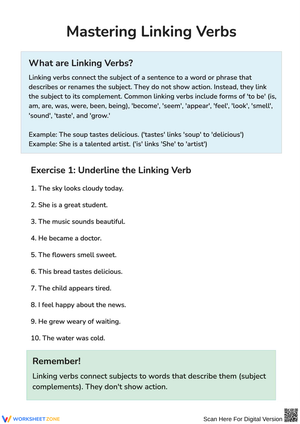
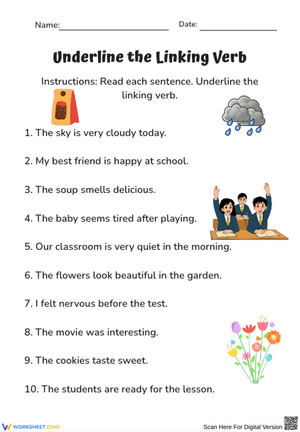
- Function-based identification — Students determine a word's grammatical role inside a complete sentence rather than in isolation, the exact skill grade 5 requires.
- Conjunction analysis — Tasks ask students to explain how a coordinating or subordinating conjunction changes the logical relationship between two clauses.
- Preposition and prepositional phrase recognition — Students locate prepositional phrases and identify what noun or verb each phrase modifies.
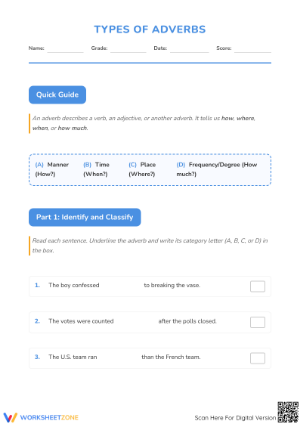
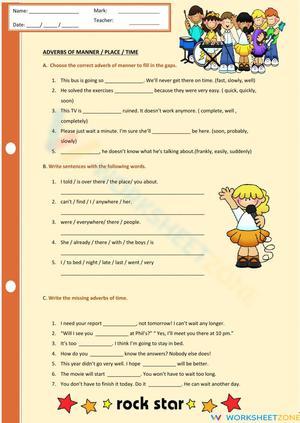
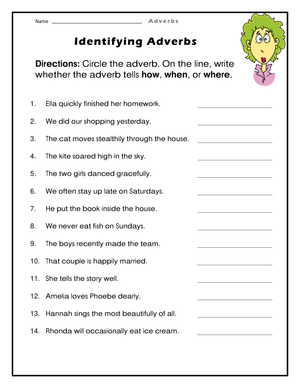
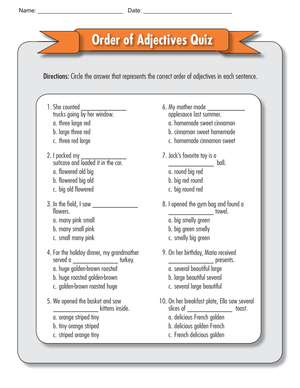
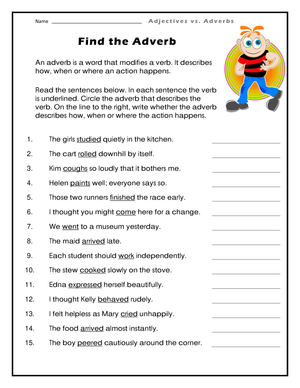
- Adjective and adverb distinction — Exercises present look-alike modifier pairs so students practice deciding what each word is describing and whether it modifies a noun or a verb.
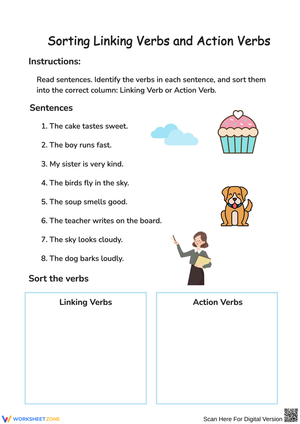
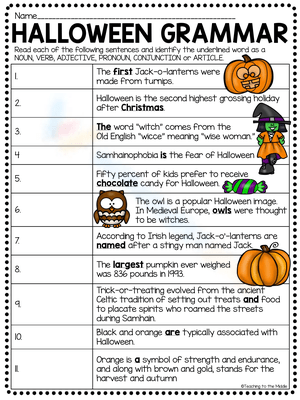
- Mixed-category sorting — Students sort words pulled from authentic-sounding sentences by word class, revealing whether they can apply category knowledge across varied contexts.
- Sentence revision application — Writing-level tasks ask students to replace a weak modifier, rewrite a choppy passage using a conjunction, or add a preposition phrase for precision.
Why Sentence-Embedded Practice Works Better at This Grade Level
Fifth graders are past the stage where circling a noun on a word list counts as grammar instruction. At this point, the cognitive demand has to include context — students need to decide whether before is functioning as a preposition or a conjunction depending on what follows it. Sentence-embedded tasks create exactly that decision point, which means a teacher can read a completed page and immediately see which students are applying a rule versus guessing by pattern. That diagnostic clarity is what makes this format useful for planning reteach groups, not just for filling seat time.
Many grammar printables aimed at upper elementary still default to isolated fill-in lists — one column of words, one column of category labels. That format tends to reward memorization of familiar examples rather than flexible understanding. When students encounter the same words inside varied sentence structures, the task requires genuine analysis, and errors become more informative: a student who consistently mislabels adverbs as adjectives needs a different conversation than one who struggles only with less common prepositions.
How Teachers Use These Grammar Printables in the Classroom
- Bell ringer — Project or print a single sentence-identification task to focus students before a writing workshop mini-lesson on word choice or sentence variety.
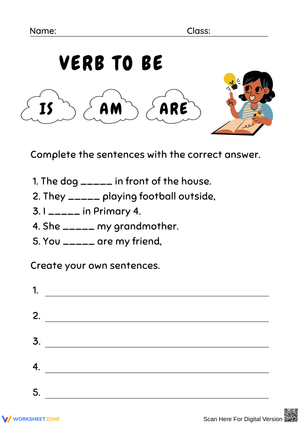
- Exit ticket — Assign three to five targeted sentences at the end of a grammar lesson; collect responses to sort students into the next day's guided groups.
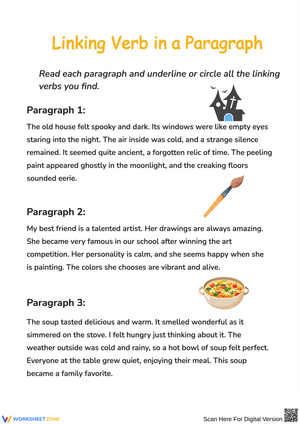
- Literacy center — Place a sentence-sorting page in a grammar station with a self-check answer strip so students can work and verify independently while the teacher pulls small groups.
- Homework — Send home focused single-skill pages — one word class per night — so families can follow along without needing a grammar refresher themselves.
- Sub plans — Because the directions are self-contained and the tasks require no classroom setup, a full page works cleanly as substitute-day independent work without extra instructions.
- Intervention groups — Use a completed page as a diagnostic entry point, then work through only the missed item types with the group rather than re-teaching all eight word classes.
Common Grammar Errors These Worksheets Target
- Labeling a word by its most familiar role — marking light as a noun every time even when it functions as an adjective or verb in a given sentence.
- Treating all -ly words as adverbs without checking whether they modify a noun (as some adjectives do, such as friendly or lively).
- Confusing subordinating conjunctions with prepositions when both appear before a noun phrase — for example, treating after the game the same way regardless of whether a clause or a noun phrase follows.
- Marking the object of a preposition as the subject of a sentence, leading to agreement errors in the student's own writing.
- Skipping interjections entirely in mixed-review tasks because students assume they always appear with an exclamation point and fail to recognize softer examples like well or oh inside sentences.
- Over-relying on position — assuming the first noun in a sentence is always the subject — rather than tracing the verb's relationship to each noun.
Standards Alignment
These resources address CCSS.ELA-LITERACY.L.5.1.a, which requires students to explain the function of conjunctions, prepositions, and interjections in general and in particular sentences. The critical word in that standard is explain — not just identify — which is why the sentence-revision and written-response tasks in this collection are built to produce the kind of student language that actually satisfies that standard during a writing conference or grammar assessment.
Differentiation Options
- Below grade level — Provide a reference card listing each word class with one sentence example, and limit tasks to identification only before introducing revision or sorting work.
- On grade level — Use the full page as designed: identification, classification, and at least one sentence-application item per session.
- Above grade level — After completing a page, ask students to write two to three original sentences that deliberately use a target word class in an unusual position, then annotate their choices.
Test Prep and Formative Assessment Value
A single completed page from this collection gives a teacher three distinct data points: whether a student can identify word classes in context, whether they can distinguish easily confused categories such as adjectives versus adverbs, and whether they can apply grammatical awareness when revising a sentence. Because the tasks stay tied to sentence function throughout, performance on the worksheet correlates more directly to standardized grammar items — which consistently embed parts of speech inside context — than drill sheets built around isolated word lists do. Collecting responses after independent practice gives teachers a quick, low-stakes look at which categories need another pass before a unit assessment.
Frequently Asked Questions
1. Which word classes do these fifth grade grammar worksheets cover?
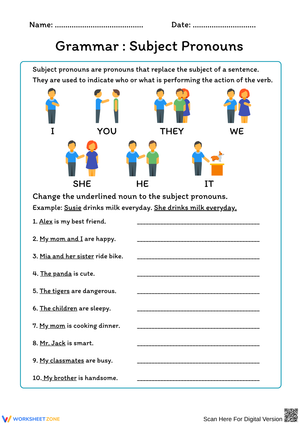
The collection covers all eight major categories: nouns, pronouns, verbs, adjectives, adverbs, prepositions, conjunctions, and interjections. Mixed-review pages combine several categories on a single sheet, while focused pages isolate one or two for targeted reteach.
2. How do these printables address the CCSS grade 5 language standard for conjunctions and prepositions?
CCSS.ELA-LITERACY.L.5.1.a asks students to explain function, not just name categories. Tasks on these pages require students to state what a conjunction or preposition is doing in a specific sentence, which produces exactly the kind of evidence that standard calls for.
3. Can I use a parts of speech PDF as a diagnostic tool rather than just practice?
Yes — the sentence-embedded format makes error patterns informative. A student who consistently mislabels prepositional phrases or confuses adverbs with adjectives will show that pattern across multiple items, giving you a clear target for a brief small-group lesson rather than a full reteach.
4. Are these printable grammar pages appropriate for intervention students working below grade level?
They work well with a small scaffold: pair the page with a word-class reference card and start with identification-only items before moving to the revision tasks. The sentence context actually helps struggling students more than isolated word lists because they have more cues to work from.












 Interactive Worksheet Maker
 Quiz Maker
 Word Search Maker
 Crossword Puzzle Maker
 Word Scramble Generator
 Sentence Scramble Generator
 Handwriting Worksheet Generator
 Name Tracing Generator
 Fill In The Blank Generator