These 5th grade adverbs worksheets give teachers a ready-to-use collection that moves students from basic identification through sentence-level revision — the progression upper elementary grammar instruction actually demands. Each page targets a specific skill so teachers can drop one into a mini-lesson, a center, or a quick formative check without modification.
Skills Covered in These 5th Grade Adverbs Worksheets
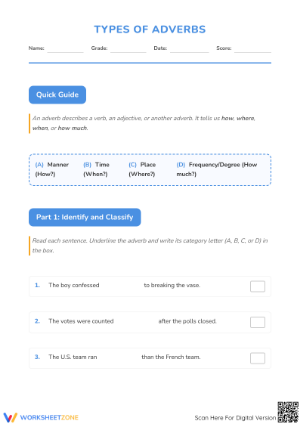
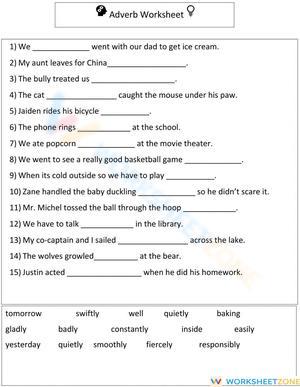
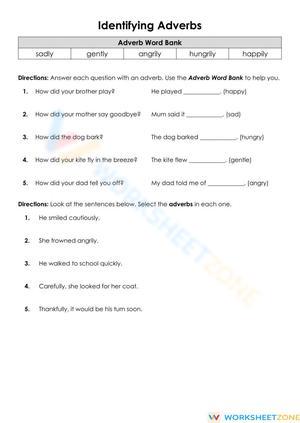
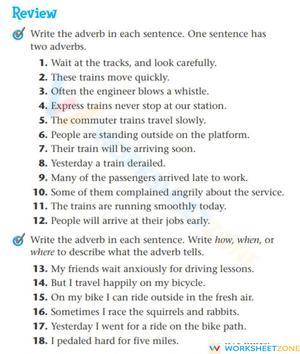
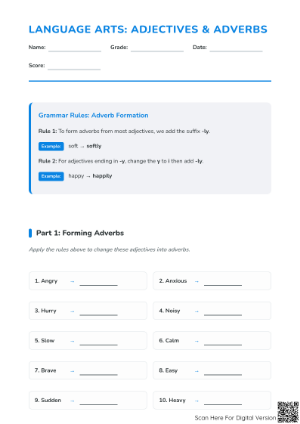
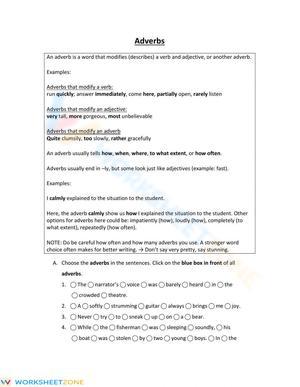
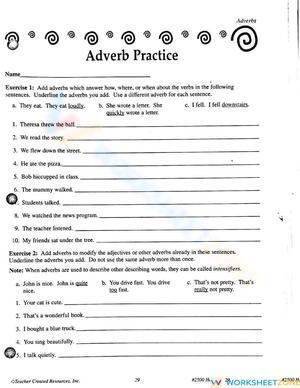
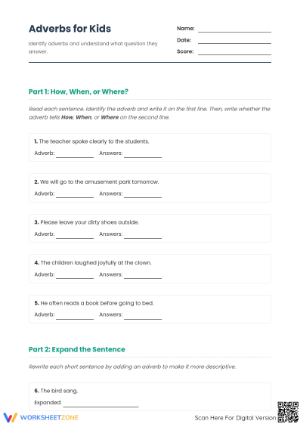
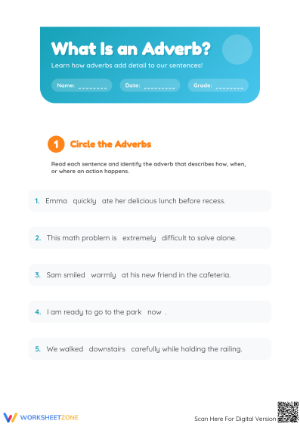
- Adverb identification in context — students locate adverbs inside complete, grade-appropriate sentences rather than scanning isolated word lists, which surfaces function instead of just pattern recognition.
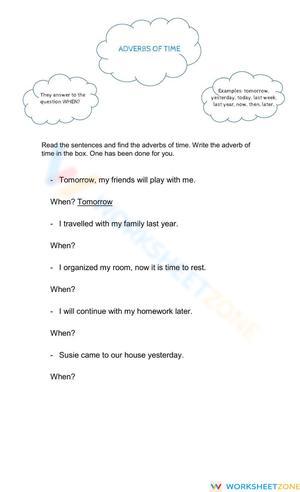
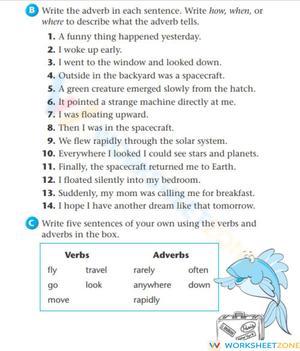
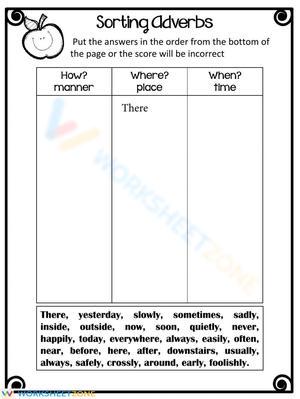
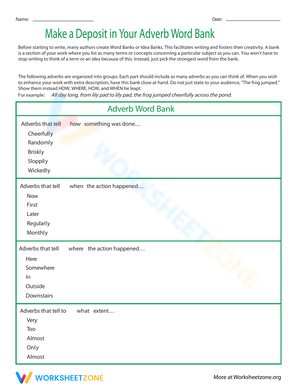
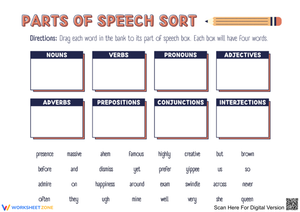
- Classification by type — tasks sort adverbs of manner, time, place, frequency, and degree so students build a working mental framework rather than treating every modifier the same way.
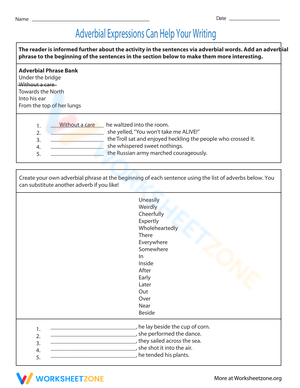
- Adverb phrases vs. single-word adverbs — pages include multi-word modifiers such as with surprising speed or before the end of class, the structure most fifth graders have not practiced in earlier grade work.
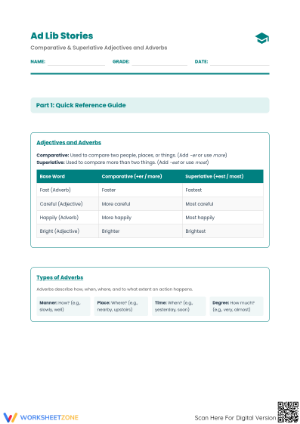
- Comparative and superlative forms — students choose between quickly, more quickly, and most quickly in sentence context, directly addressing a grammar point tested on state ELA assessments.
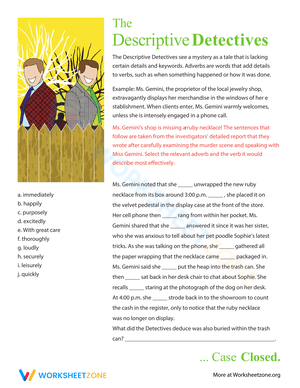
- Sentence revision for precision — students compare two versions of the same sentence and explain why one adverb choice sharpens meaning while another only adds length.
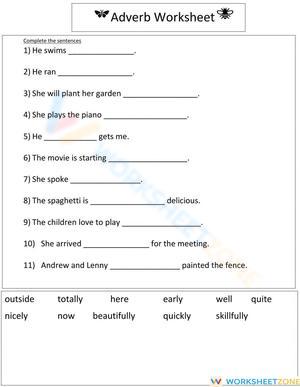
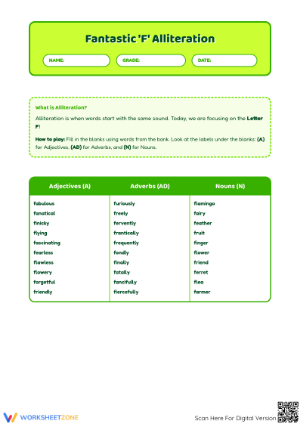
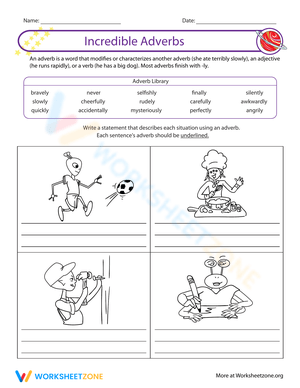
- Writing transfer — brief original-sentence tasks at the close of each sheet ask students to apply the skill rather than finish with another fill-in.
Standards Alignment
These materials address CCSS.ELA-LITERACY.L.5.1.A, which expects fifth graders to explain the function of conjunctions, prepositions, and interjections in sentences, and connects directly to the broader L.5.1 standard requiring students to demonstrate command of standard English grammar. Adverb phrase work also supports CCSS.ELA-LITERACY.L.5.3.A, which asks students to expand, combine, and reduce sentences for meaning, reader interest, and style — a standard that is difficult to teach without grammar practice grounded in actual sentence construction and revision.
Why Sentence-Based Practice Works Better at This Grade Level
By fifth grade, most students can circle quickly in a simple sentence without thinking. The cognitive demand worth targeting is judgment: does this modifier clarify, and what exactly does it change about the sentence's meaning? Worksheets that anchor every task inside a complete thought — where the adverb interacts with a verb, an adjective, or another modifier — make that reasoning visible. Students have to commit to a function label and defend it, which is the same skill they need during revision conferences and editing runs on their own writing.
Many worksheets labeled for grade 5 still rely on short, stripped-down sentences that give away the answer through sentence position alone. A student who sees "She ran _____ down the hall" already knows an adverb of manner belongs there before reading the choices. These pages instead use natural, multi-clause sentences where the adverb's role is only clear after the student reads the whole thought — a more accurate measure of grammatical understanding and far better preparation for the sentence-manipulation tasks that appear on standardized ELA assessments.
Common Adverb Errors These Worksheets Target
- Students label any word ending in -ly as an adverb, including adjectives like friendly or lovely, without checking whether the word modifies a verb, adjective, or another adverb.
- Students treat very, really, and so as intensifiers that automatically improve writing, rather than recognizing them as degree adverbs that often signal a weaker word choice than a precise verb or adjective would provide.
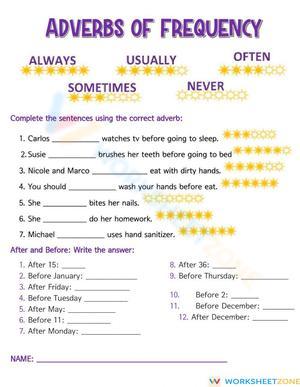
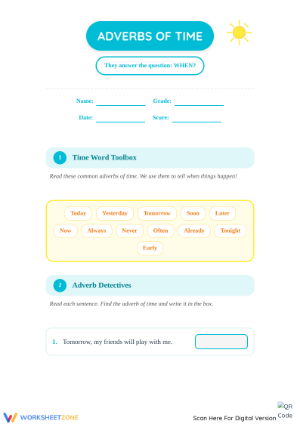
- Students misclassify adverbs of frequency (rarely, always) as adverbs of time (yesterday, soon) because both answer questions about when — a distinction that requires attention to what the word expresses about recurrence vs. moment.
- Students confuse comparative adverb forms, writing more faster or quicklier instead of applying the correct pattern for one-syllable vs. multi-syllable adverbs.
- Students omit the adverb phrase entirely during sentence revision, replacing it with a single weak modifier, because they haven't practiced writing prepositional or infinitive phrases as adverbial units.
- Students can locate an adverb in an isolated sentence but lose track of it when the sentence contains a subordinate clause, placing their underlining on the clause connector instead of the true modifier.
Test Prep and Formative Assessment Value
A single completed revision page gives teachers meaningful diagnostic information: whether a student understands function (not just location), whether they can apply comparative forms correctly, and whether they confuse adverb types that share surface features. That three-part picture is hard to get from a multiple-choice grammar quiz but shows up clearly when students have to label, choose, and justify in writing. State ELA assessments at the fifth-grade level frequently embed grammar within editing and revision tasks rather than testing definitions in isolation, so worksheets that ask students to compare sentence versions and explain their choices are building exactly the applied skill those items measure.
Frequently Asked Questions
1. What adverb skills are expected by the end of 5th grade?
Fifth graders are expected to identify adverbs that modify verbs, adjectives, other adverbs, and whole clauses; classify them by function (manner, time, place, frequency, degree); use comparative and superlative forms correctly; and work with adverb phrases — not just single-word modifiers. They should also be able to explain what an adverb contributes to a sentence's meaning, not simply locate it.
2. How do these worksheets connect to writing instruction?
The revision-focused pages ask students to choose between sentence versions and explain which adverb is more precise — the same decision-making process teachers coach during drafting conferences. That connection makes grammar practice transferable: students begin to notice weak modifiers in their own work rather than only on a labeled worksheet.
3. Can these pages work for students who are still shaky on basic adverb recognition?
Yes. The identification and classification pages at the start of the set use straightforward sentence structures and can serve as an accessible entry point for students still building foundational understanding. Teachers can assign those pages to intervention groups while on-grade-level students work on revision tasks.
4. How many worksheets are typically needed to cover adverbs for a full unit?
Most fifth-grade grammar units on adverbs run four to six instructional days. A set of six to eight pages — two identification, two classification, two revision, one transfer task, and one mixed review — covers a full unit cycle while leaving room to pull individual pages for spiral review weeks later.