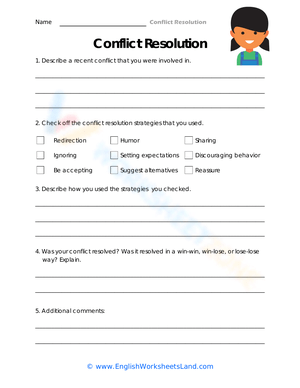
Upper elementary students are ready for more than simple coloring pages or one-word matching tasks. They can read short peer scenarios, compare points of view, and write a few sentences about what each person could say next. That makes printable conflict resolution pages especially useful in fifth grade, where teachers want materials that respect student maturity while still guiding behavior.
These PDFs also help when classroom issues keep repeating. Instead of handling every disagreement with an improvised talk, teachers can move students into a predictable routine: read the situation, identify the problem, consider both perspectives, and write a repair step. That kind of repeatable practice helps students connect social skills to real school situations.
What Good Grade 5 Conflict Resolution Worksheets Include
The best grade 5 pages focus on realistic school-based conflicts. Students might disagree during group work, feel excluded at recess, argue about supplies, misread a classmate's tone, or get frustrated when someone changes the rules of a game. When the examples feel familiar, students are more likely to respond honestly instead of guessing the answer the teacher wants.
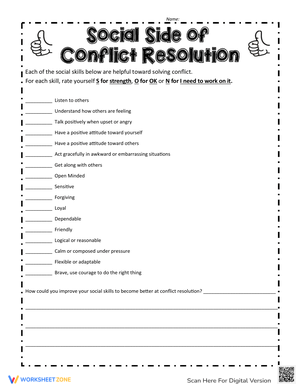
Useful worksheets also balance thinking and writing. Fifth graders benefit from sentence starters such as I felt ___ when ___, I need ___, or A fair next step would be ___. Those prompts make the task manageable for students who understand the problem but struggle to begin. Teachers can quickly review the written responses and spot who understands respectful language, perspective-taking, and repair.
- Short peer scenarios with believable school conflicts
- Feelings identification tied to actions and consequences
- Sentence stems for respectful communication
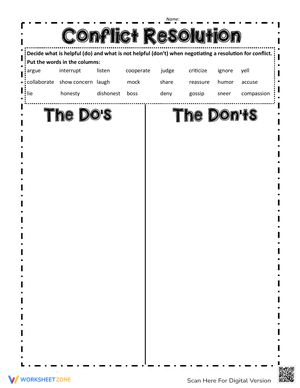
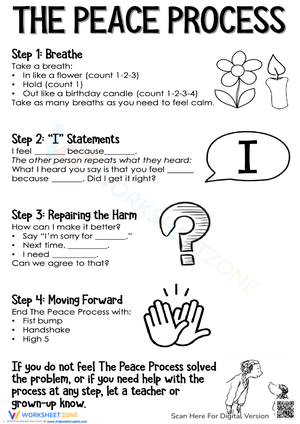
- Simple problem-solving steps students can remember later
- Reflection questions that show whether learning transfers
A well-made printable should also leave room for teacher judgment. Some students need independent writing, while others need partner talk first. The most flexible worksheet pages work in both settings and can support whole-class SEL, small groups, or one-on-one behavior conferences.
Worksheet Types Teachers Actually Use
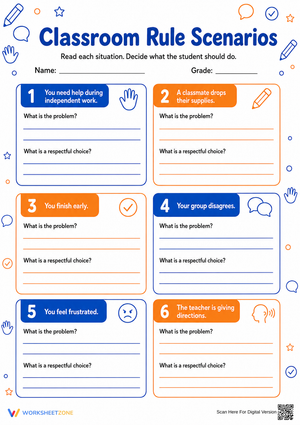
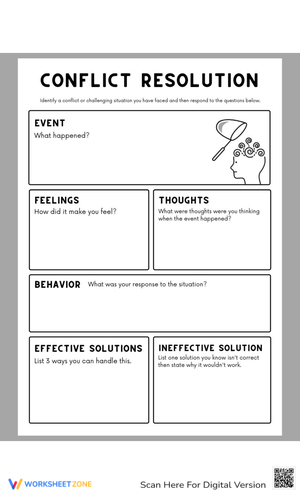
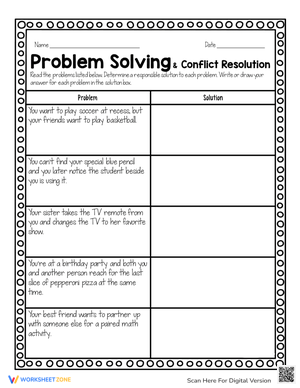
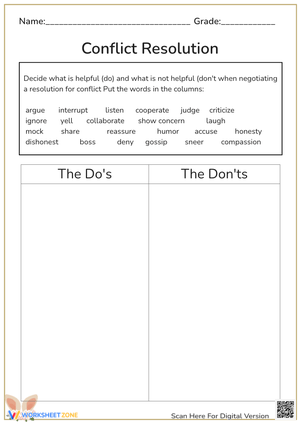
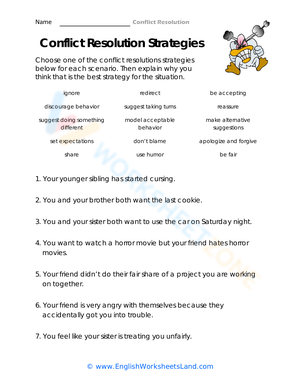
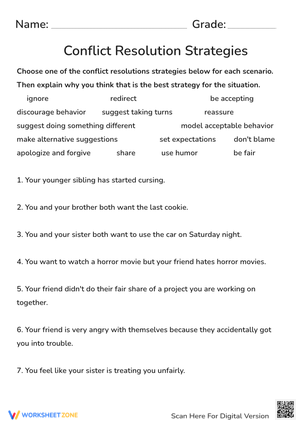
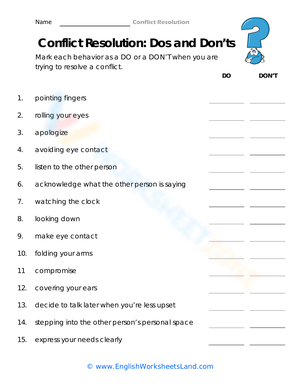
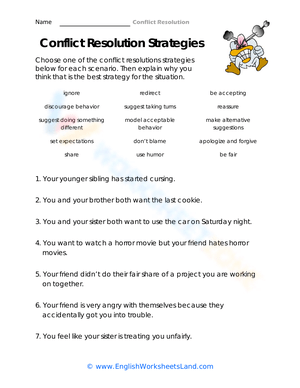
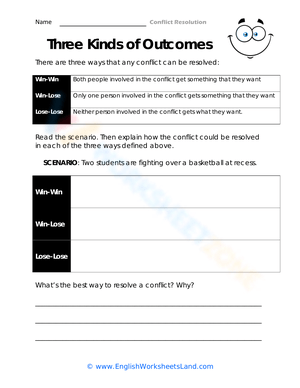
Not every conflict resolution page serves the same purpose. In practice, teachers usually need a small set of worksheet types they can rotate across the week. Scenario response pages are often the most versatile because students read a problem and explain what each person could do differently. These are useful for mini-lessons, centers, and fast reteaching after a class conflict.
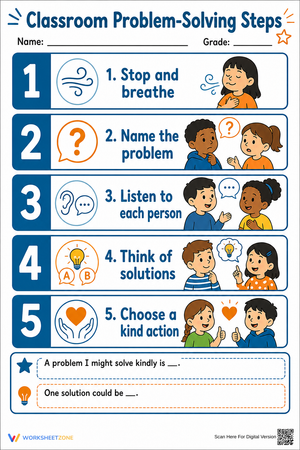
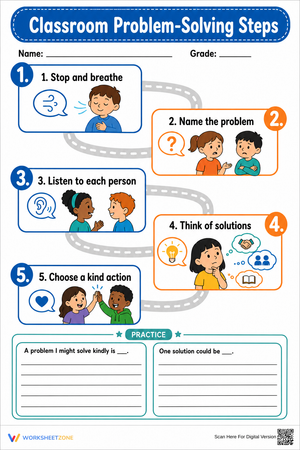
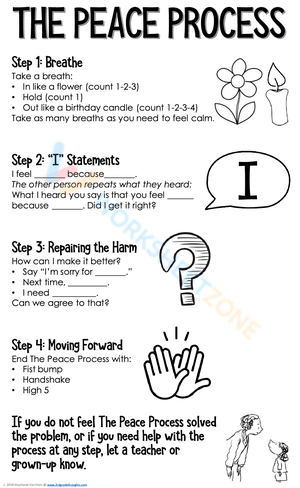
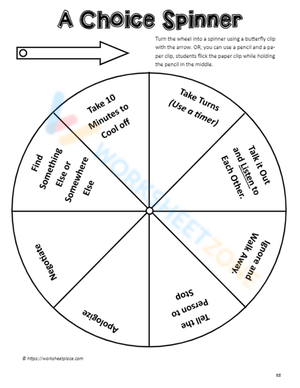
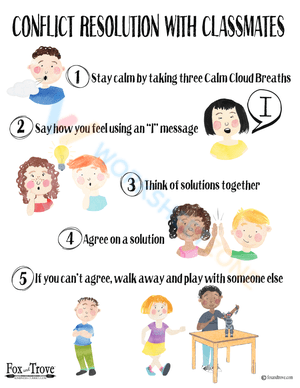
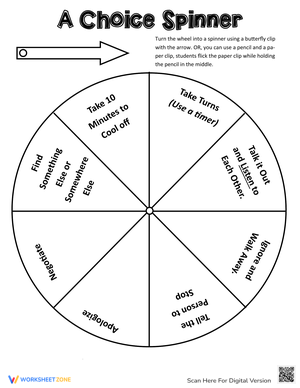
Problem-solving sequence sheets are another strong option. These break the process into clear steps, such as stopping, naming the issue, listening to both sides, and agreeing on a next move. Students in grade 5 are old enough to compare several choices and explain why one response is more respectful or effective than another.
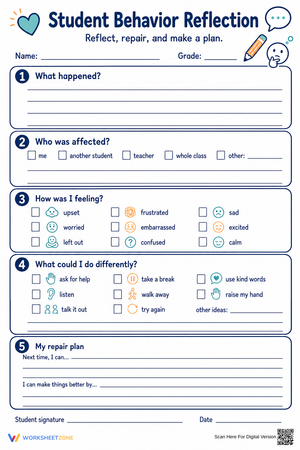
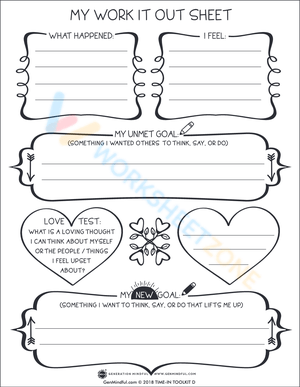
Apology and repair pages matter too, especially when a student needs to move beyond saying sorry. A stronger worksheet asks what harm was caused, what action can fix part of it, and how the student will handle a similar problem next time. That turns a behavior moment into a plan instead of a script.
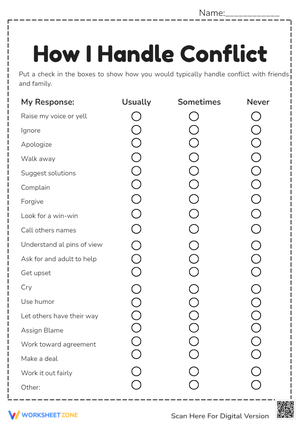
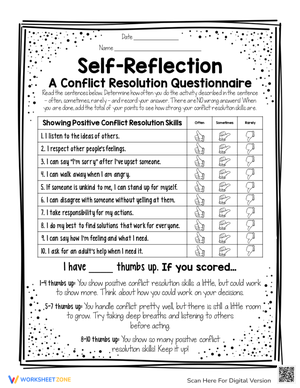
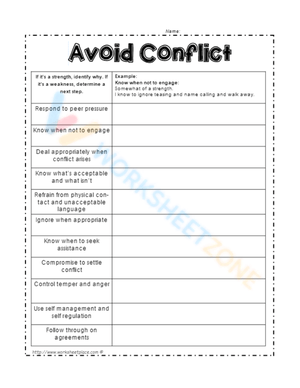
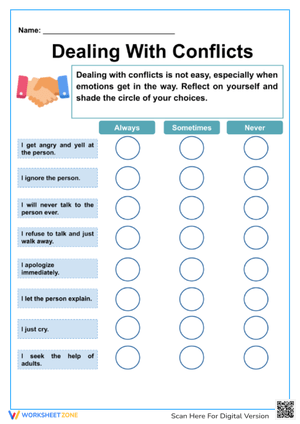
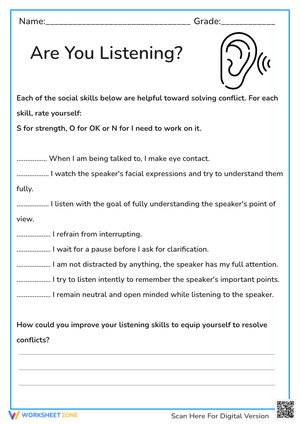
Reflection sheets are helpful for counseling groups, sub plans, and early finisher work. They give students a quiet way to process a disagreement after emotions settle down. Because the format is printable, teachers can keep copies on hand and use them the same day a problem happens.
Peer Conflict Is Not the Same as Bullying
Conflict resolution worksheets are appropriate when two students have a disagreement and the power balance is fairly even. That might look like an argument over partner roles, a misunderstanding during a game, or two classmates using unkind words in the middle of frustration. In those moments, students can practice listening, respectful language, and problem solving.
Teachers still need to separate ordinary peer conflict from bullying. StopBullying.gov explains that other aggressive behavior can include conflict that is not bullying, which matters because the response should be different. If there is a power imbalance, repeated targeting, threats, or ongoing intimidation, that situation should not be treated as a simple worksheet-based problem-solving exercise between equals.
For grade 5 teachers, this distinction protects students and keeps SEL instruction accurate. A worksheet can support reflection after a minor disagreement, but it should never replace adult-led intervention when the issue involves repeated harm or safety concerns. The printable is a teaching tool, not a substitute for school procedures.
Classroom Implementation
These worksheets work best when they are part of a routine instead of a one-time response. A teacher might introduce one problem-solving page during an SEL mini-lesson, model how to complete it with a common classroom scenario, and then revisit the same structure whenever conflicts show up in group work or transitions. Repetition makes the language more usable in the moment students actually need it.
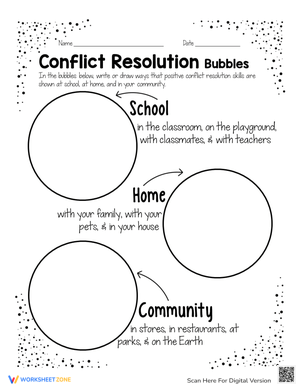
In a general classroom, the pages can fit several formats. They work as morning meeting follow-up after a rough day, a calm independent task after recess, a partner discussion warm-up before a restorative conversation, or a short station during SEL centers. Because fifth graders can read and write independently, the printable format saves teacher time while still producing evidence of student thinking.
- Use one scenario page for whole-class modeling and discussion
- Keep reflection sheets in a behavior support folder for quick access
- Assign apology and repair pages after minor peer harm
- Use small-group practice with counselors or intervention staff
- Review student responses to spot patterns in language or impulse control
Teachers also get practical documentation. A completed worksheet shows how a student interpreted the conflict, what solutions they considered, and whether they can identify a fair repair step. That is useful when planning reteaching, communicating with support staff, or tracking whether a student is improving across several incidents.
Frequently Asked Questions
1. What should a 5th grade conflict resolution worksheet include?
A strong page should include a realistic peer scenario, feeling identification, sentence starters for respectful language, a few problem-solving steps, and short reflection prompts. Fifth graders do best with tasks that ask for reading, perspective-taking, and brief written responses instead of very simple primary-style activities.
2. How do teachers use conflict resolution worksheets in class or counseling groups?
Teachers use them during SEL mini-lessons, morning work, behavior reteaching, restorative conversations, counseling groups, centers, and sub plans. The printable format makes it easy to respond quickly when a peer issue comes up without building a new lesson from scratch.
3. What is the difference between peer conflict and bullying?
Peer conflict usually involves a disagreement between students with similar power. Bullying involves repeated harm, intimidation, or a power imbalance and requires adult-led intervention. A worksheet can support reflection after a disagreement, but it should not be the main response to bullying concerns.
4. Are printable PDF worksheets appropriate for SEL centers or morning work?
Yes, as long as the tasks are age-appropriate and tied to clear SEL goals. In grade 5, printable pages work well for independent practice because students can read a short scenario, write a response, and reflect on better choices in a structured format teachers can review quickly.