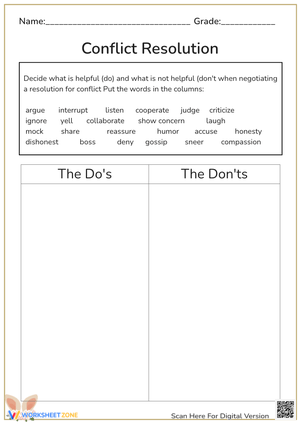
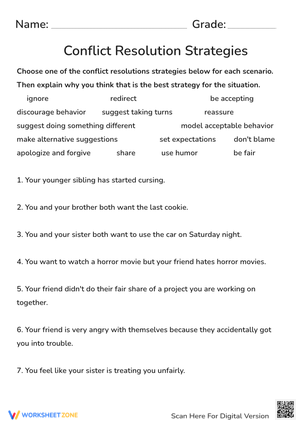
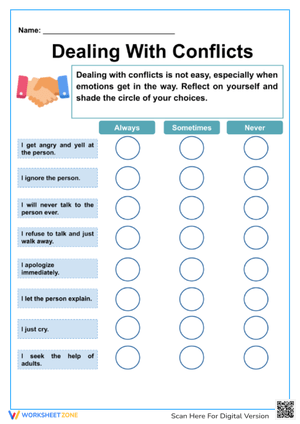
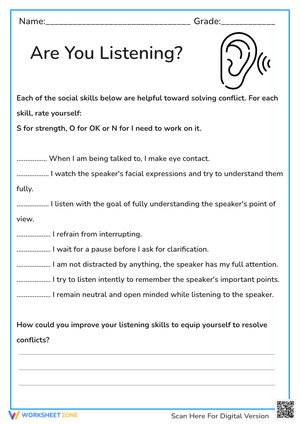
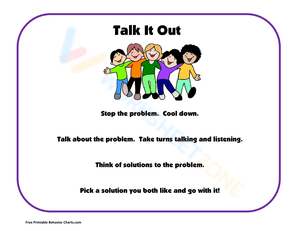
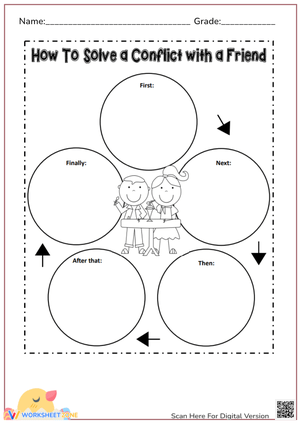
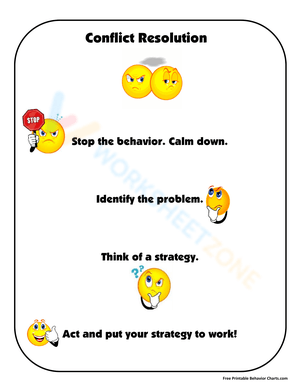
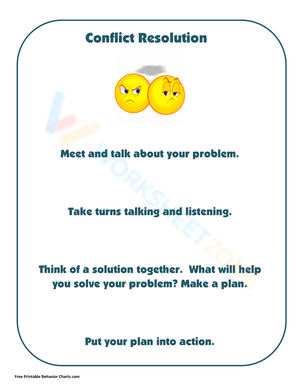
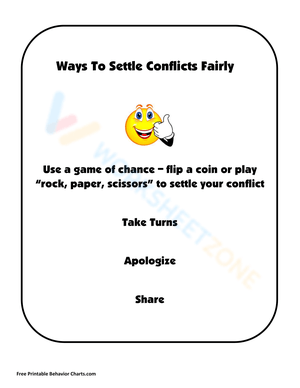
The Worksheetzone Grade 5 Conflict Resolution Worksheets page is most valuable when teachers treat it as a reusable tool, not a one-off handout. The printable gives students a stable format, while the teacher supplies context, language, and follow-through. And the most useful pages also respect teacher time. They can work as independent practice, a quick reteach, homework, a small-group reset, or part of a sub plan. Instead of asking teachers to build an SEL lesson from scratch, the worksheet gives them a starting point they can plug into the day they already have.
What To Look For in a Strong Conflict Resolution Worksheet
Not every printable is worth class time. In a Grade 5 elementary setting, the worksheet should ask students to do more than label feelings or circle a rule. It should guide them through the kind of thinking they actually need when a disagreement happens with a classmate, group member, or friend.
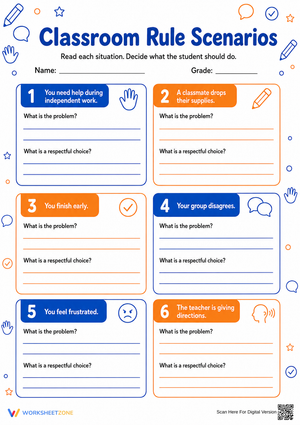
- Clear scenario work: Students should be able to read or picture a common school conflict and decide what happened, what each person may be thinking, and what a better response could look like.
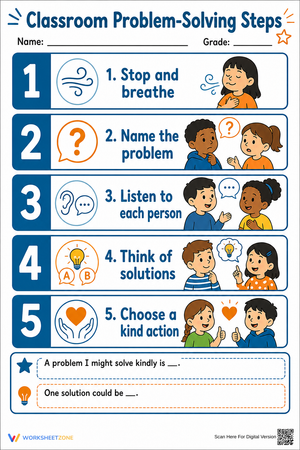
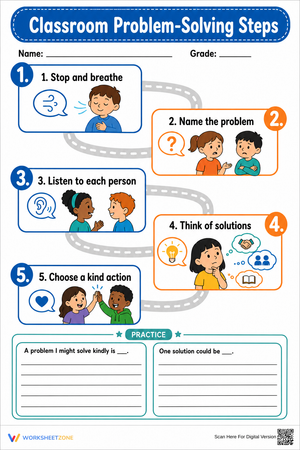
- Language practice: The page should give room for sentence stems, apology language, or calm problem-solving statements students can reuse in class.
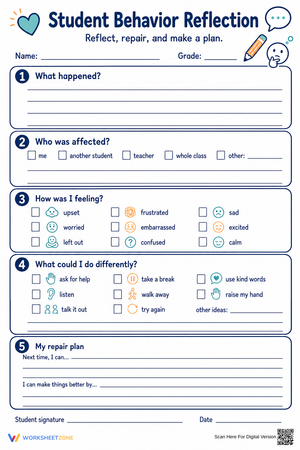
- Reflection: Strong worksheets help students consider cause, impact, and next steps instead of stopping at whether a choice was right or wrong.
- Age-appropriate independence: Fifth graders can write, compare options, and justify answers, so the task should feel more thoughtful than a primary-grade behavior sheet.
When those elements are present, the PDF becomes more than filler. It gives teachers evidence of student thinking and creates a bridge to discussion, conferencing, and class norms. That is especially helpful when you want a calm way to revisit expectations after a rough transition or a partner issue.
Where These PDFs Fit in the School Day
Teachers rarely use conflict-resolution worksheets as a stand-alone event. The better question is where the printable fits inside a wider classroom routine. Grade 5 teachers often need tools that work in short windows, so a printable PDF should be flexible enough to support several parts of the day.
- Bell work: Use a short conflict scenario to settle the room and shift students into reflective thinking at the start of the day.
- Centers or rotation time: Place the worksheet in a social skills, reading response, or intervention station where students can work independently and then debrief with an adult.
- Small-group reteach: Pull a few students who need extra coaching on peer interaction and use the worksheet as a shared discussion tool.
- Homework or take-home reflection: Send home a brief page when you want students to revisit a classroom issue and return ready to talk.
- Sub plans: Keep a printable on hand for days when the class needs structure, writing practice, and a reminder about collaboration.
This kind of flexibility is why printable PDFs remain useful. Teachers can match the worksheet to the moment instead of redesigning the lesson. For upper elementary classrooms, that practical fit matters as much as the topic itself.
Classroom Implementation
The worksheet works best when it is paired with quick teacher moves before and after students write. Start by naming the situation clearly. Tell students whether the page is for practice before a problem, reflection after one, or prep for partner work. That small framing step keeps the assignment from feeling random.
Next, model one item aloud. Show students how to identify the conflict, separate facts from emotions, and choose a response that protects relationships and classroom expectations. Fifth graders can do this independently, but a short think-aloud raises the quality of their answers and reduces vague responses.
After students complete the page, close the loop. Ask for a turn-and-talk, a quick share-out, or a written exit response such as, What would you try next time? This final step matters because conflict-resolution skills improve when students connect the worksheet to their own behavior, not just to a fictional scenario.
Teachers can also use the printable as a conference tool. During a one-on-one or small-group check-in, the worksheet gives both teacher and student a neutral object to discuss. That often lowers defensiveness and helps students explain their choices with more honesty.
How To Differentiate for Student Readiness
One reason teachers look for printable Grade 5 PDFs is that they can adapt them quickly. A conflict-resolution worksheet can support several readiness levels without forcing you to rewrite the entire task.
- For students who need more support: Read the scenario aloud, preteach key vocabulary, and narrow the response choices so students focus on one decision at a time.
- For on-level students: Ask for complete written explanations that describe the problem, the likely feelings involved, and the best next move.
- For students ready for more challenge: Have them compare two possible responses, explain tradeoffs, and predict how each choice could affect the relationship.
- For early finishers: Let them rewrite the scenario from another student's point of view or create a new classroom-based example.
This kind of differentiation keeps the worksheet practical in intervention blocks, homeroom, and mixed-readiness classes. It also helps teachers use one printable across several groups instead of hunting for separate materials each time. For busy school weeks, that is a real advantage.
Frequently Asked Questions
1. What skills can these Grade 5 printable worksheets support?
They can support conflict resolution, perspective taking, reflection, responsible decision-making, discussion language, and written explanation. In a grade 5 class, the best worksheets also help students explain why one response is stronger than another.
2. How can teachers use grade 5 PDF worksheets without turning them into busywork?
Use them as part of a short routine: introduce the situation, model one example, let students complete the page, and end with discussion or reflection. That keeps the worksheet tied to classroom behavior and not just paper completion.
3. Are these worksheets appropriate for elementary homerooms, intervention blocks, or homework?
Yes. They fit homeroom because peer issues often show up there first, intervention because students may need guided reteach, and homework when you want a short written reflection students can bring back for discussion.
4. How do I choose a 5th grade worksheet that matches student readiness?
Look for a printable that can be scaffolded up or down. A strong choice gives enough structure for students who need support, while still leaving room for older elementary students to justify their thinking, compare options, and reflect on consequences.












 Interactive Worksheet Maker
 Quiz Maker
 Word Search Maker
 Crossword Puzzle Maker
 Word Scramble Generator
 Sentence Scramble Generator
 Handwriting Worksheet Generator
 Name Tracing Generator
 Fill In The Blank Generator