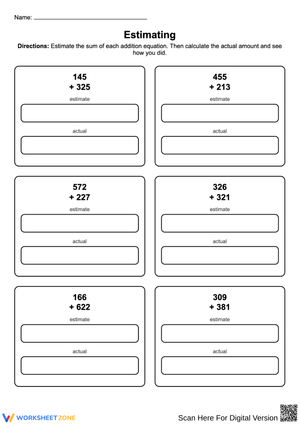
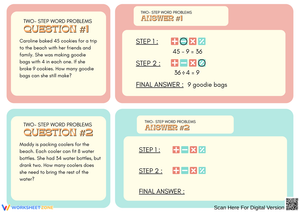
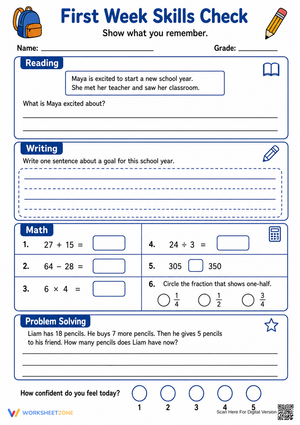
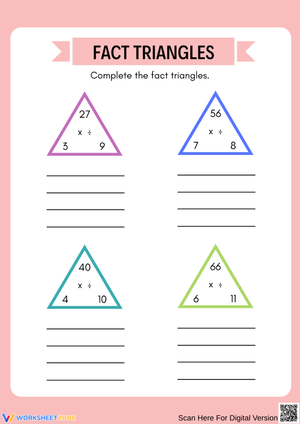
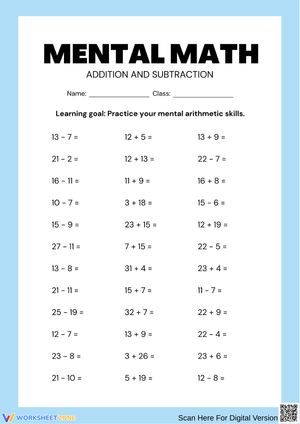
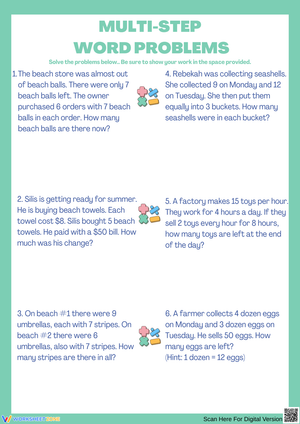
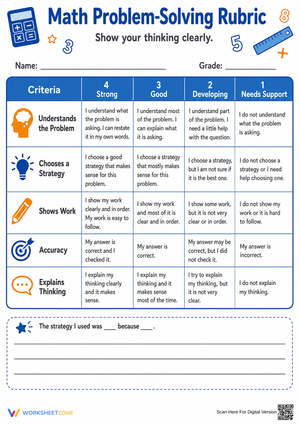
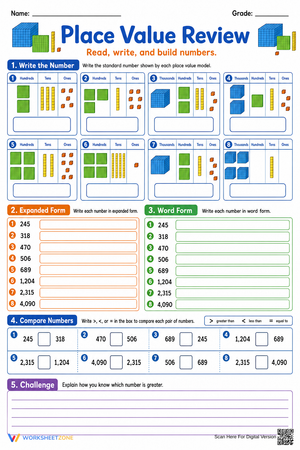
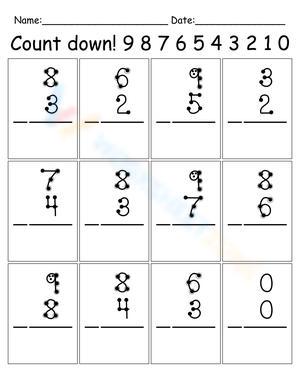
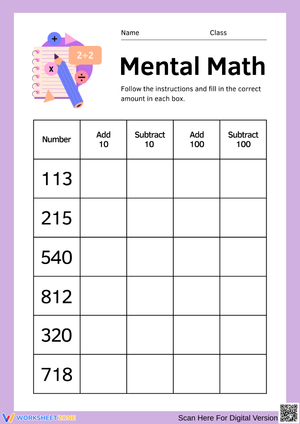
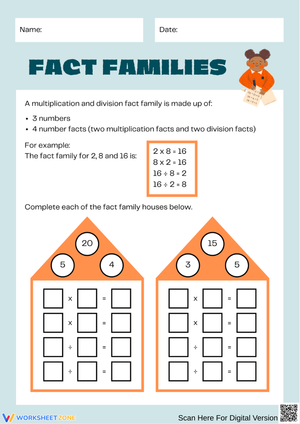
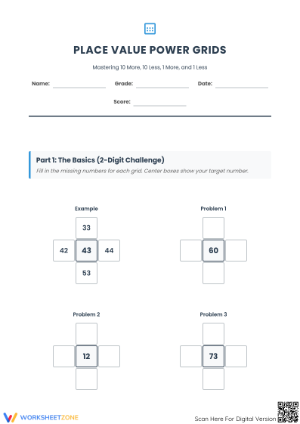
These others math worksheets for 4th grade cover the skills that sit outside the main computation strands — algebraic patterns, coordinate grids, Roman numerals, measurement conversions, data analysis, and logic reasoning — and that appear on standardized assessments far more often than students actually get to practice them. The set gives teachers a ready-to-print bank of resources for topics that most core programs only brush past.
What the Set Covers
The topics here fall under what many curriculum maps label "miscellaneous" or "supplementary," but they build distinct mathematical reasoning skills that carry directly into 5th grade. Here is what students work through across the worksheets:
- Algebraic patterns and sequences — identifying, extending, and generating number or shape patterns based on stated rules
- Coordinate grids — plotting ordered pairs in the first quadrant and answering simple grid-based problems
- Roman numerals — converting between Roman and Arabic numerals up to 1,000
- Measurement conversions — converting within customary and metric units of length, weight, capacity, and time
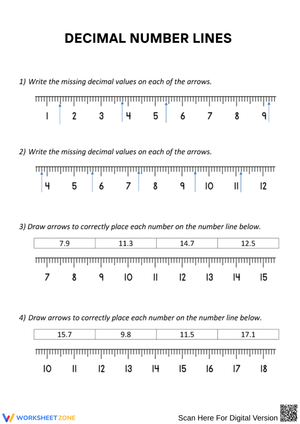
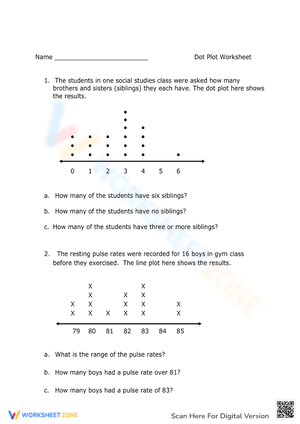
- Data analysis — reading and interpreting bar graphs, line plots, and pictographs
- Logic and reasoning puzzles — using elimination and given clues to work through multi-step problems
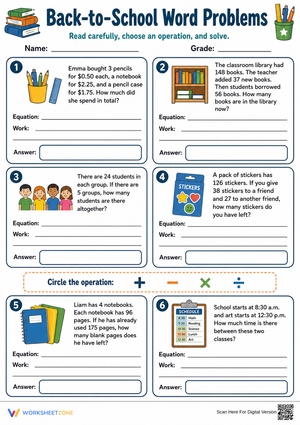
- Elapsed time and money — calculating time intervals and making change in realistic contexts
These strands appear on 4th-grade assessments precisely because they test applied reasoning rather than procedure recall. A student can have multiplication facts memorized cold and still completely freeze on a line-plot question or a pattern governed by two simultaneous rules.
Mistakes Students Make That These Worksheets Help You Catch
Roman numeral conversion produces the most consistent errors at this grade level. Students learn that V = 5 and I = 1, then write 9 as VIIII rather than IX, because the subtractive principle — where a smaller numeral placed before a larger one signals subtraction — runs counter to everything they know about reading left to right and adding values together. That error appears in nearly every class the first time this topic comes up. More practice reps will not fix it; the concept requires direct, explicit explanation.
On coordinate grids, reversing the x and y values when plotting is so common it functions almost like a developmental checkpoint. Students given the pair (3, 5) go up 3 and across 5, reading the values in the wrong order. One low-tech correction that sticks: point to the horizontal axis and note that it shares its name with the first letter of the alphabet, so the first number always belongs to it. That mnemonic works faster than restating the formal definition.
Measurement conversions generate a subtler step-management error. Students know there are 12 inches in a foot, but when converting 4 feet 7 inches to total inches, they multiply 4 by 12 and stop — forgetting to add the remaining 7. The concept is solid; the process breaks down. Students who record conversions in a two-column format (unit × conversion rate, then add leftovers) make that mistake far less frequently than students who work in a single line.
Building These Worksheets Into Your Week Without Losing Instructional Time
The most effective placement for others math worksheets for 4th grade is the 8 to 10 minutes before the main lesson begins. A Roman numerals worksheet takes most students about 6 minutes to complete — substantive enough to matter, brief enough to leave the bulk of the period intact. Students work independently, you handle attendance and morning logistics, and the debrief takes 2 minutes. That is a genuinely low-cost way to build consistent exposure to topics that would otherwise get skipped.
Math center rotations are another natural home for these worksheets. Designate one station for supplementary topics and rotate the focus each week — patterns one week, coordinate grids the next. Over an 8-week grading period, students cycle through most of the strands without any single topic consuming an entire lesson. The rotation also spreads diagnostic information across multiple weeks, so you can identify the student who struggles with data analysis but handles logic puzzles easily, and act on that information before the assessment window arrives.
For small-group work, targeted selection matters more than coverage. If four students consistently misread bar graphs, pull the data analysis worksheets, work through the first two problems aloud while students observe your thinking, then let them finish the rest independently. That 15-minute pull gives more actionable feedback than a whole-class assignment because you can watch exactly where the reading process breaks down.
Standard Alignment
Several standards in the Common Core State Standards for Mathematics — Grade 4 map directly to these worksheets. Standard 4.OA.C.5 asks students to generate a number or shape pattern given a rule and then identify features of the pattern not explicitly stated in that rule — the exact cognitive move the algebraic pattern worksheets require. Standard 4.MD.A.1 covers measurement conversion within a single system, both customary and metric, which the measurement conversion worksheets address directly. Standard 4.MD.B.4 targets representing and interpreting data on line plots, connecting to the data analysis worksheets in the set.
When lesson plans require standard-code documentation, these worksheets make that step straightforward. A brief note — "pattern worksheet, 4.OA.C.5, 10-minute bell ringer" — establishes alignment without adding paperwork overhead to an already full planning session.
Adjusting the Set for a Mixed-Ability Classroom
For students who need more support, the most useful adjustment is adding a reference anchor directly to each worksheet — a small conversion chart in the margin, a labeled coordinate grid, or a partially worked example at the top. These additions reduce the cognitive load of recalling two things at once (the procedure and the content facts) and let students focus their attention on the skill being practiced. Avoid simply shortening the worksheet; students who receive fewer problems often recognize it as the "easier version" and disengage before finishing.
The others math worksheets for 4th grade also work well as a baseline check at the start of a topic. Distribute the same worksheet to the whole class on day one and again near the end of the teaching sequence. The before-and-after comparison tells you which students made genuine gains and which ones already knew the material before instruction began — information that shapes grouping decisions far more precisely than general observation or exit tickets alone.
For students working above grade level, extend the pattern and logic worksheets by asking them to write the governing rule before solving, then verify it against every term in the sequence. That metacognitive step is harder than it sounds. A student who can extend ABABC... by eye often cannot articulate the rule precisely in writing, and that gap is worth addressing before 5th grade introduces more formal algebraic thinking.
Frequently Asked Questions
What exactly falls under "others" math topics at the 4th-grade level?
The label covers math skills that sit outside the primary strands of whole-number operations and fractions. For 4th grade, that includes algebraic patterns, coordinate graphing, Roman numerals, measurement conversions, data analysis (bar graphs, line plots, pictographs), elapsed time, money applications, and logic-reasoning problems. Different publishers draw the boundary slightly differently, but those topics appear across most sets.
How frequently should these worksheets show up in a student's week?
One to two worksheets per week provides enough contact to build real familiarity with these topics without displacing core instruction. The benefit comes from distribution over many weeks rather than concentration in a single unit. Supplementary skills like coordinate plotting and elapsed time consolidate more reliably through repeated short encounters than through a four-day intensive block.
Do the worksheets include answer keys?
Most sets of others math worksheets for 4th grade include answer keys, which is the main time-saving feature for homework and independent practice contexts. Check the product description carefully — some sellers provide keys for pattern and logic worksheets only, since computation-heavy worksheets involve multi-step work that varies across students and does not reduce to a single correct numerical path.
Can these worksheets replace a direct lesson on supplementary topics?
No — and that limitation is worth being direct about. Each worksheet assumes students have had at least a brief teacher-led introduction to the concept. A student encountering coordinate notation for the first time without any prior explanation will sit confused and learn very little from the worksheet itself. These resources work as practice and consolidation tools after direct teaching, not as standalone introductory experiences.













 Interactive Worksheet Maker
 Quiz Maker
 Word Search Maker
 Crossword Puzzle Maker
 Word Scramble Generator
 Sentence Scramble Generator
 Handwriting Worksheet Generator
 Name Tracing Generator
 Fill In The Blank Generator