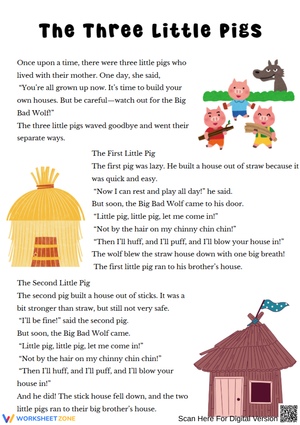
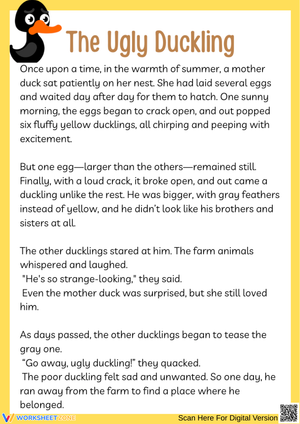
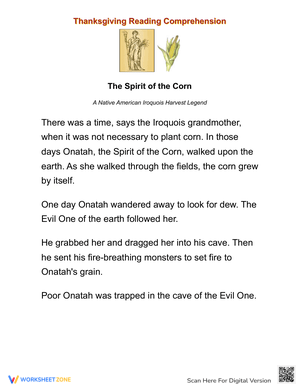
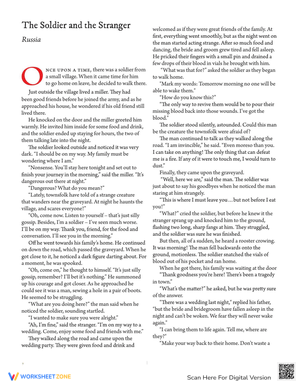
These folktales worksheets for 3rd grade address one of the most persistent gaps in third-grade literacy: the shift from "what happened in the story" to "what the story is trying to say." Each worksheet targets a specific skill — story structure, character analysis, moral identification, or cross-cultural comparison — and asks students to do interpretive work anchored in the text, not guesswork.
What Students Practice Across the Set
The skills build outward from close reading. On story-mapping worksheets, students record the beginning, middle, and end, then trace how the conflict's resolution points toward the central lesson — two separate tasks that prevent students from stopping at summary. Character-trait worksheets require students to mark text evidence before they write any trait words, which keeps responses grounded in what the author actually wrote rather than general impressions.
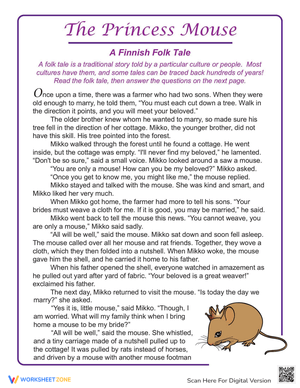
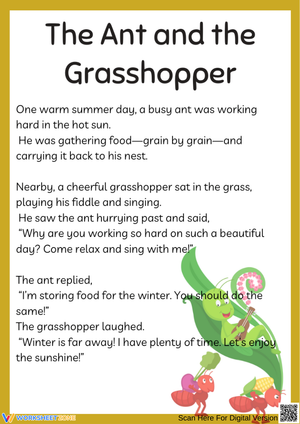
Several worksheets focus on the recurring elements of folklore: the rule of three, character archetypes like the trickster and the wise elder, and the use of talking animals or magic to stand in for human behavior. One worksheet type places two versions of a structurally similar tale — say, a West African trickster story alongside a European fairy tale with a parallel arc — side by side and asks students to mark what stays constant across both. That is usually the moment when "universal theme" stops being a vocabulary term on an anchor chart and becomes something students actually recognize.
Standard Alignment
RL.3.2 requires students to recount stories from diverse cultures and determine the central message, lesson, or moral, then explain how key details in the text convey it. The second half of that standard is where instruction tends to stall. Most eight-year-olds can tell you The Tortoise and the Hare is about overconfidence, but far fewer can point to the specific moment in the text where the hare's attitude becomes the cause of the outcome. The prompts in this folktales worksheets for 3rd grade set target exactly that gap: students locate the turning point, name the moral, and write the connection between the two — which is what RL.3.2 mastery looks like in actual student work, not just in a rubric description.
Mistakes Students Make That Teachers Need to Anticipate
The most common error in this genre unit is conflating plot summary with moral identification. Ask a class "What is the lesson of this story?" after reading Anansi and the Pot of Beans, and a significant number will write "Anansi tricked everyone but got caught in the end." That is a recount, not an inference. The moral-identification worksheets address this directly by separating the two prompts — one asks what happened at the resolution, the next asks what a reader should draw from it — which forces students to take an interpretive step beyond retelling rather than treating the two as the same task.
A second pattern worth watching: students correctly identify a character archetype but fill in trait words that are too vague to be useful. "Mean" and "good" appear constantly in student work when the text itself has offered them "greedy" or "generous." Word banks drawn from the story text redirect this habit without removing the cognitive work of selecting the right term — students still have to decide; they just have better raw material to choose from.
How to Work These Worksheets Into Your Literacy Block
The most natural entry point is immediately after a whole-class read-aloud. Once students have heard a tale together, the story map worksheet gives them a structured way to capture what they just processed before the details scatter — particularly useful on Monday mornings when students are still warming up and a familiar narrative structure keeps cognitive load low while the written task keeps them accountable. By mid-week, most teachers shift to small-group guided reading with a second tale, using the character-analysis worksheet to surface who has internalized the skill and who needs another pass with closer support.
Literacy centers are the third natural placement. Students who have already worked through a tale with the class can complete the cross-cultural comparison worksheet independently — the side-by-side format makes the task largely self-directing. The character interview worksheet, where students write questions they would ask a character and answer from that character's perspective using evidence from the text, works especially well as a center task because it requires no additional materials and produces writing samples that double as informal assessments of RL.3.2 progress. This folktales worksheets for 3rd grade set also includes a tale-planning worksheet that earns its place at the end of a unit: asking students to select a hero, a conflict, a rule-of-three structure, and a moral before drafting prevents the wandering-story problem that surfaces in almost every third-grade creative writing block.
Differentiating the Set Across a Range of Learners
For students who need more support with the analytical tasks, one effective move is to walk through a completed example first — a filled-in story map for a tale the class knows well — before asking them to complete one for a new text. This removes comprehension as a variable and lets students direct their attention to the task structure itself. Reading partners help here too: having a stronger reader handle the oral portion while both students work through the worksheet keeps the analytical demand intact for everyone at the table.
Students who finish early are well-served by the comparison task: locate a second version of the same folktale from a different culture and complete a second worksheet independently. The differences they notice become the most productive material in whole-class debrief. For students ready for more challenge, the character interview worksheet extends naturally — ask them to write a second interview from the antagonist's point of view, then compare how the two perspectives illuminate different layers of the same moral. That kind of dual-perspective analysis reaches well beyond the RL.3.2 floor.
Frequently Asked Questions
Do these worksheets require specific folktale titles, or do they work with any text?
Each worksheet uses a text-independent format, so students work with whatever tale the class is reading — library books, basal anthology selections, teacher read-alouds. No additional materials are required beyond the text itself, which makes the set easy to pair with whatever folktales a teacher already has on hand.
How do the moral-identification prompts keep students from just summarizing the plot?
The prompts are built in two stages. First, students describe what happens at the resolution. Then a separate prompt asks what lesson a reader should draw from that resolution. Requiring both answers in sequence makes the gap between retelling and interpretation visible to students — they can see that answering the first question did not answer the second.
Can these worksheets function as formative assessments?
Yes. The story map and moral-identification worksheets show clearly whether a student has grasped the distinction between plot and theme, which is the central RL.3.2 target. The character-trait worksheet works well as a mid-unit check before deciding whether the class is ready to move into writing their own tales. Both produce student work that is easy to review quickly between lessons.
Are these realistic for independent use after teacher-led instruction?
After one or two walkthroughs with the class, most third graders can apply the process to a new text on their own. Folktales follow predictable enough patterns that the analytical moves transfer without needing to re-teach the format every time — which is why this folktales worksheets for 3rd grade set fits well in literacy centers, intervention rotations, and take-home practice without requiring additional teacher setup each time.












 Interactive Worksheet Maker
 Quiz Maker
 Word Search Maker
 Crossword Puzzle Maker
 Word Scramble Generator
 Sentence Scramble Generator
 Handwriting Worksheet Generator
 Name Tracing Generator
 Fill In The Blank Generator