


























Views
Downloads


Grade 2 Folktales — Printable No-Prep Reading Passage
Paste this activity's link or code into your existing LMS (Google Classroom, Canvas, Teams, Schoology, Moodle, etc.).
Students can open and work on the activity right away, with no student login required.
You'll still be able to track student progress and results from your teacher account.
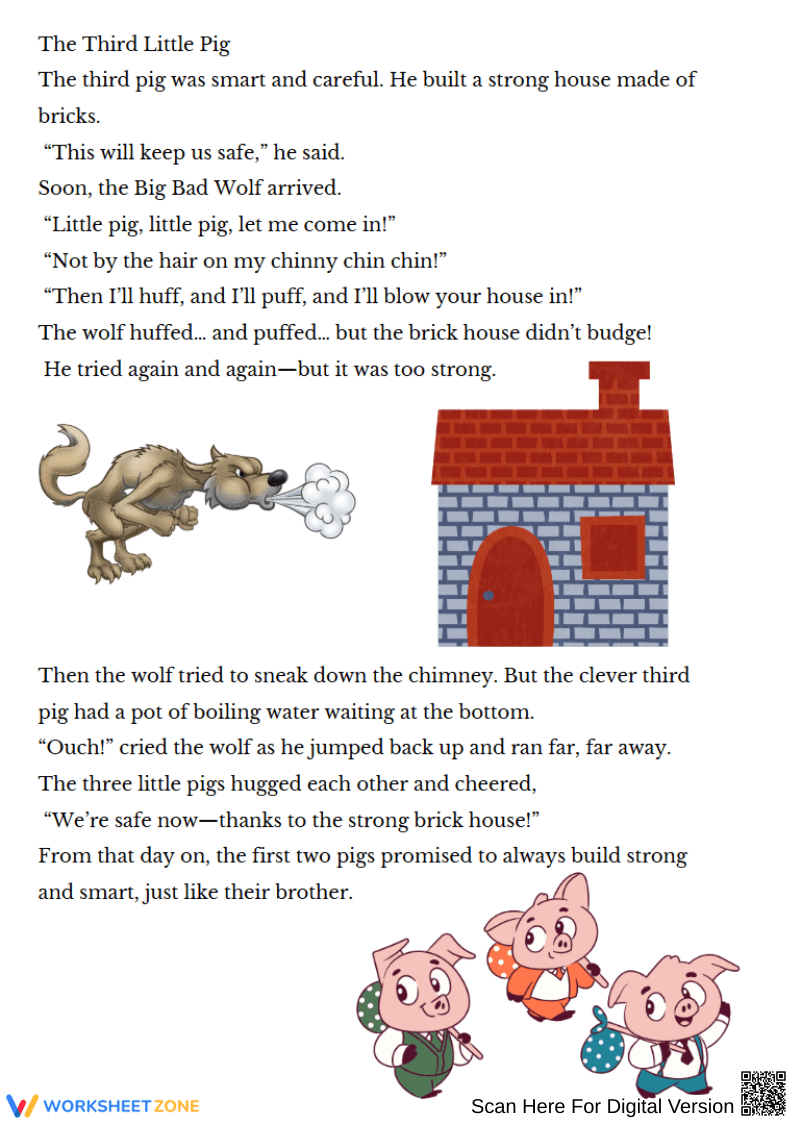
This printable reading passage presents the classic folktale of the three little pigs to help early elementary students build essential literacy skills. Students read the two-page narrative to identify key story elements, sequence events, and determine the central moral about hard work and preparation.
At a Glance
- Grade: 2 · Subject: ELA
- Standard:
CCSS.ELA-LITERACY.RL.2.2— Recount folktales to determine their central message- Skill Focus: Reading comprehension and folktale analysis
- Format: 2 pages · 0 problems · No answer key · PDF
- Best For: Shared reading and fluency practice
- Time: 15–20 minutes
This resource contains a complete two-page illustrated version of the traditional story. The text features clear, accessible language tailored for early readers, accompanied by vibrant illustrations that depict the straw, stick, and brick houses. The layout uses large, readable fonts and paragraph breaks to help young learners track text easily during independent or guided reading sessions.
The zero-prep workflow makes this resource highly efficient for busy educators. First, print the two-page PDF document, which takes less than one minute. Next, distribute the copies directly to your students during your reading block. Finally, review the story elements together as a class, requiring zero advance preparation. This simple setup makes the passage an ideal choice for emergency sub plans or morning work.
This reading passage aligns directly with the Common Core State Standard CCSS.ELA-LITERACY.RL.2.2, which requires students to recount stories, including fables and folktales from diverse cultures, and determine their central message, lesson, or moral. It also supports foundational reading fluency and vocabulary acquisition in early elementary grades. Both standard codes can be copied directly into lesson plans, IEP goals, or district curriculum mapping tools.
Use this passage during direct instruction to introduce the genre of folktales and discuss character traits. Alternatively, assign it as a partner reading activity where students take turns reading the dialogue of the Big Bad Wolf and the three pigs. During the activity, observe how accurately students decode high-frequency words and track punctuation cues to guide their oral reading expression. Expect this reading activity to take 15 to 20 minutes.
This resource is designed for first, second, and third-grade students who are developing their narrative comprehension skills. It is particularly beneficial for English language learners who benefit from highly illustrated texts to support vocabulary acquisition. Pair this passage with a graphic organizer for sequencing plot events or a simple writing prompt about the story's moral.
This educational resource supports the development of narrative comprehension and genre awareness in early childhood classrooms. According to research from Fisher & Frey (2014) on close reading instruction, structured exposure to classic folktales helps young learners build schema and recognize recurring story structures. By engaging with the repetitive text patterns in this version of the story, students strengthen their phonological awareness and oral reading fluency. The passage aligns with standard CCSS.ELA-LITERACY.RL.2.2, focusing on recounting stories to determine their central moral. Utilizing this print-ready resource allows teachers to integrate high-quality literature into daily instruction without additional prep time. The combination of clear text and supportive illustrations ensures that diverse learners can access the narrative, making it a valuable addition to any early elementary reading curriculum. It provides a strong foundation for future literary analysis.


