


























Views
Downloads


Grade 2 Little Red Riding Hood — Printable Story
Paste this activity's link or code into your existing LMS (Google Classroom, Canvas, Teams, Schoology, Moodle, etc.).
Students can open and work on the activity right away, with no student login required.
You'll still be able to track student progress and results from your teacher account.
Students build reading fluency and comprehension by engaging with the classic folktale of Little Red Riding Hood. This two-page reading passage helps early elementary readers identify key story elements, sequence plot events, and analyze character decisions. By reading this structured narrative, students develop critical literacy skills and learn valuable lessons about caution and bravery.
At a Glance
- Grade: Grade 2 · Subject: ELA Reading
- Standard:
CCSS.ELA-LITERACY.RL.2.2— Recount stories and determine their central message, lesson, or moral- Skill Focus: Folktale analysis and reading comprehension
- Format: 2 pages · 1 reading task · No answer key · PDF
- Best For: Independent reading and story structure lessons
- Time: 15–20 minutes
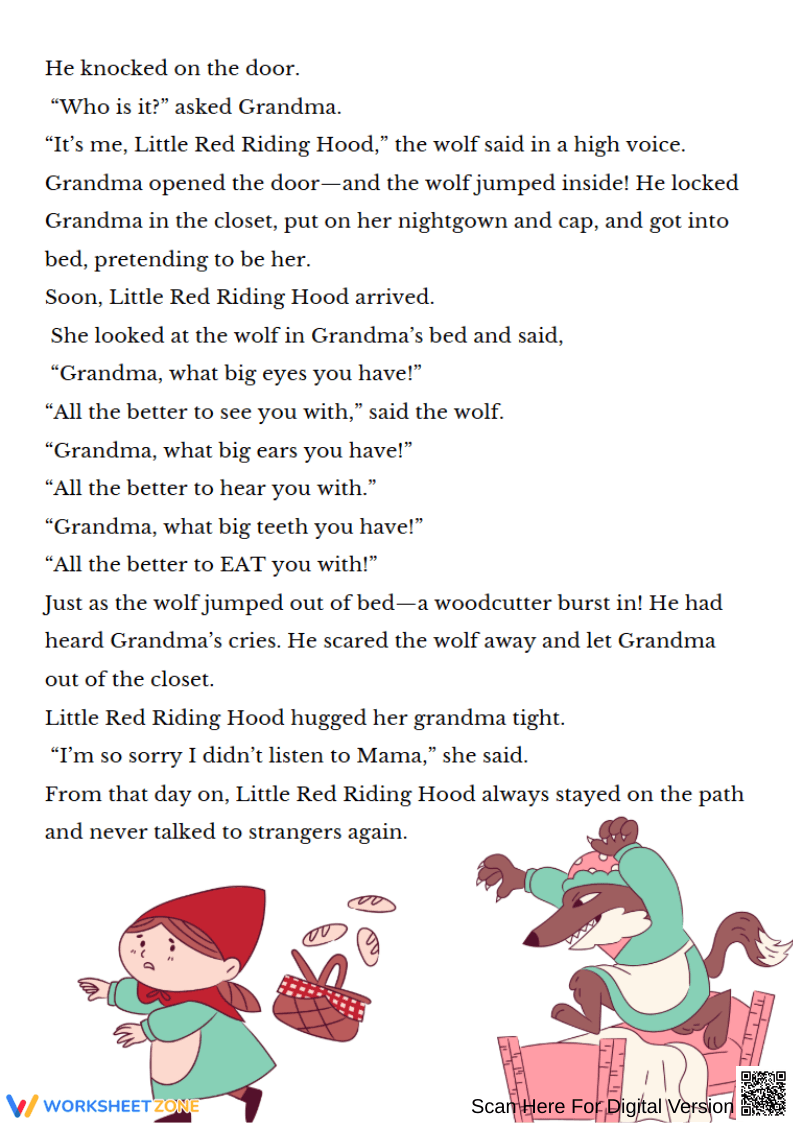
This resource contains a complete, two-page illustrated version of the classic Little Red Riding Hood fairy tale. The text is formatted with clear, readable typography and features engaging illustrations of Little Red Riding Hood and the wolf to support visual learners. The narrative structure follows the traditional plot, providing a reliable text for tracking character actions, dialogue, and setting transitions without any distracting elements.
Zero-Prep Workflow
- Print (1 minute): Print the two-page PDF document for your class.
- Distribute (1 minute): Distribute the sheets directly to students during your reading block.
- Review (15 minutes): Review the story elements as a whole group or have students partner-read the text.
This straightforward layout makes it an ideal option for emergency sub plans, morning work, or independent reading centers.
Standards Alignment
This worksheet aligns directly with the primary standard CCSS.ELA-LITERACY.RL.2.2, which requires students to recount stories, including fables and folktales, and determine their central message. Additionally, it supports CCSS.ELA-LITERACY.RL.2.1 by prompting students to ask and answer questions about key details. Both standard codes can be copied directly into lesson plans, IEP goals, or district curriculum mapping tools.
How to Use It
Use this passage during direct instruction to model plot mapping and character analysis, or assign it as an independent reading activity after introducing the genre of folktales. For a quick formative assessment, observe how students track the dialogue between the wolf and Little Red Riding Hood, noting their ability to distinguish character voices. Expect students to complete the reading and initial discussion within 15 to 20 minutes.
Who It's For
This resource is designed for first, second, and third-grade students who are developing their reading stamina and comprehension of narrative texts. It serves as an excellent tool for English language learners who benefit from the clear illustrations and structured dialogue. Pair this passage with a graphic organizer for story mapping or an anchor chart detailing the elements of traditional fairy tales.
According to research by Fisher & Frey (2014) on close reading, exposing early elementary students to structured narrative texts like folktales builds the foundational schema necessary for complex text analysis in later grades. This resource targets CCSS.ELA-LITERACY.RL.2.2 by providing a clean, distraction-free layout that allows students to focus entirely on recounting key details and identifying the central moral of the story. By engaging with this classic tale, young readers practice decoding dialogue and tracking character motivations, which are critical components of reading comprehension. The 2-page format ensures that students remain focused on the text without experiencing cognitive overload, making it a highly effective tool for classroom instruction. Educators can confidently integrate this passage into their ELA curriculum to support evidence-based reading strategies and foster independent literacy growth.


