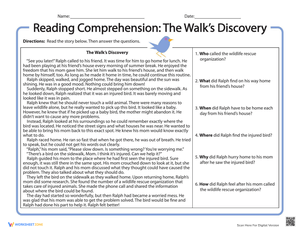
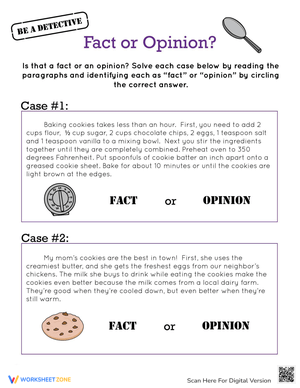
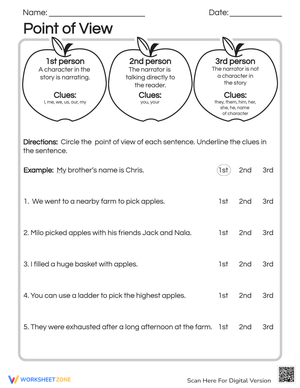
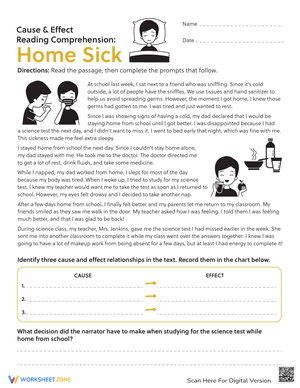
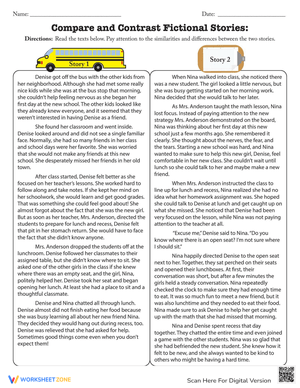
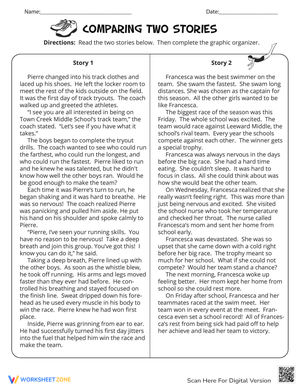
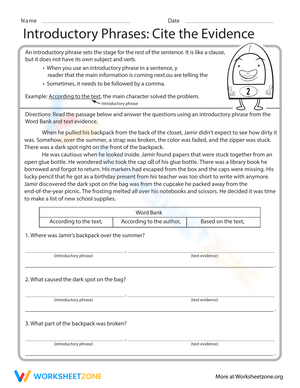
Fiction printable worksheets for 3rd grade address a specific inflection point in reading development — this is the grade where most students stop treating text as a word-by-word sounding-out task and start carrying meaning across longer stretches of narrative. The set covers character traits, setting, plot structure, and central message, with each worksheet pairing a short fiction passage with a targeted response task. Students underline evidence, complete graphic organizers, sequence events, and write brief text-based answers.
What Students Practice Across the Set
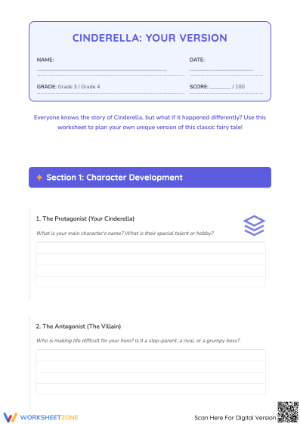
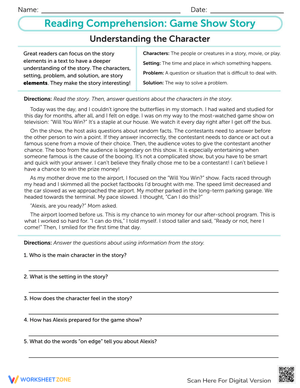
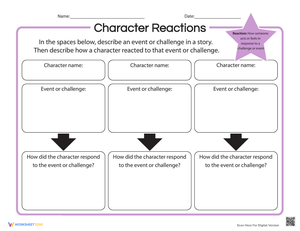
Character analysis runs through more worksheets here than any other skill, because it sits at the intersection of close reading and inference. Students work with internal and external traits separately — several tasks ask them to name a trait and identify two textual moments that support it, rather than accepting "she was brave" as a finished answer. Setting gets its own targeted treatment: students identify time and place from context clues, then explain how the setting shapes a character's decision or the mood of the scene. That second prompt pushes past labeling.
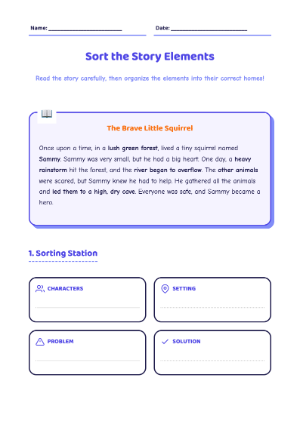
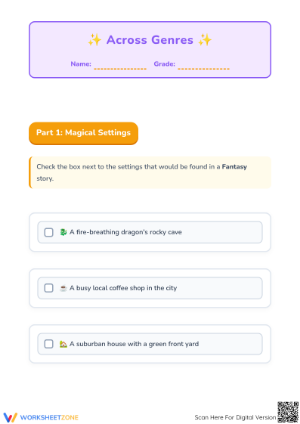
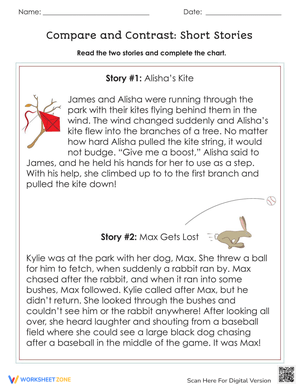
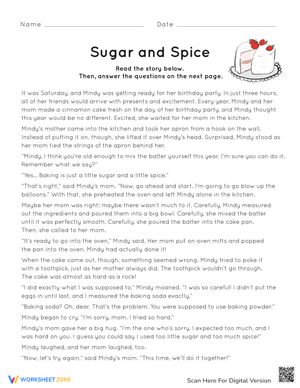
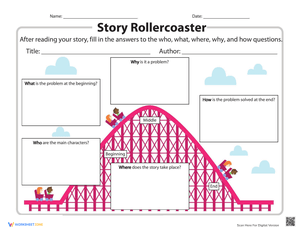
Plot work centers on problem, rising events, and resolution rather than a generic "beginning, middle, end" frame. Students who can label a beginning and an ending often miss the mechanics of how a conflict escalates before it resolves — the problem/resolution structure makes that progression visible. Genre awareness rounds out the skills, with worksheets covering realistic fiction, fables and folktales, and fantasy. Each genre grouping uses vocabulary specific to that type of story.
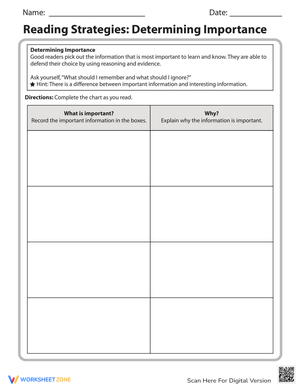
- Character traits and motivation: students name a trait, support it with two pieces of evidence, and distinguish between what a character does and what that reveals about who they are
- Setting analysis: identifying time and place from context clues; explaining how setting affects mood or drives character choices
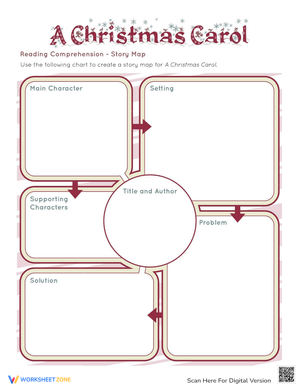
- Plot structure: mapping problem, key events, climax, and resolution using sequencing organizers
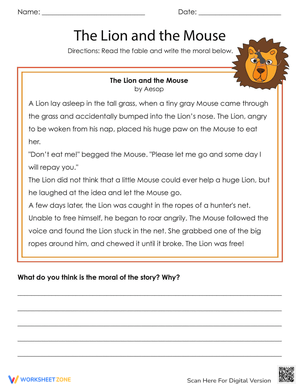
- Central message and moral: separating a story's universal lesson from its literal ending — most directly targeted in the fable worksheets
- Genre conventions: recognizing structural patterns in realistic fiction, fables, and fantasy and applying those patterns to unfamiliar passages
Error Patterns to Watch For as Students Work Through These Passages
The most persistent error in third-grade character work: students describe what a character does instead of naming a trait. Asked to identify a character trait, a student will write "Charlotte spun words into her web" — which is a plot detail. The character analysis worksheets push back on this directly by requiring students to record the trait label first (e.g., "clever," "loyal") and then find two separate passages to support it. The two-evidence requirement forces students to test their claim against the text rather than rely on one convenient moment.
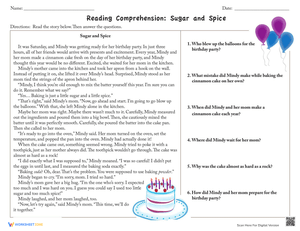
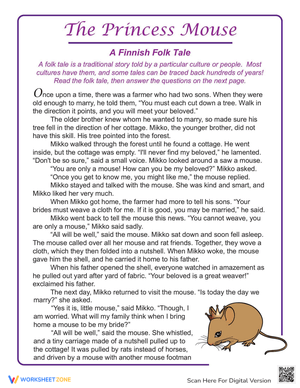
Fable work produces its own reliable error. When asked for the moral, third graders almost always write the literal ending — "The tortoise won the race" instead of "Slow and steady wins the race." They're summarizing the plot rather than abstracting to the lesson. The fable worksheets handle this by separating the prompts deliberately: one question asks what happened in the story, the next asks what lesson this story would teach anyone in a similar situation. That separation makes the abstraction step explicit instead of assumed.
Setting is the third trouble spot. Students write one word — "forest," "school" — and consider the job done. The worksheets follow up with a second question: "How does this setting affect what the character decides to do?" Without that follow-up, setting analysis stays at the surface. The answer to that second question is usually where the real comprehension shows — and where the gaps show too.
Fitting These Worksheets Into Your Literacy Block
The most reliable use pattern is as a follow-up to whole-group read-aloud. After reading a story aloud and discussing it together, students work independently on a corresponding worksheet — typically 10 to 15 minutes of solo work. The transition from shared discussion to individual written response is exactly the gap third graders need to practice. A focused worksheet prevents that moment from turning into a blank stare at an open-ended journal prompt, which is what happens when students have the understanding but not the structure to record it.
Fiction printable worksheets for 3rd grade also fit cleanly into literacy center rotations. Assigning one story-element skill per station — character at one, setting at another, plot sequencing at a third — lets students touch multiple skills in a single period without any one task dragging. The shorter graphic-organizer formats work well for a 10 to 12 minute rotation; the longer analytical response tasks work better as a post-read-aloud close activity where students have more time to think before writing.
- Guided reading groups: use a worksheet as a shared response task after the group finishes a leveled reader — the teacher observes written responses in real time and addresses errors immediately rather than collecting and grading later
- Independent reading accountability: a post-reading worksheet keeps students anchored to what they finished rather than rushing ahead without processing it
- End-of-week review: one targeted worksheet on Thursday or Friday serves as a formative check before moving to the next unit — students who struggled with character motivation all week tend to make it visible here
Standard Alignment
These worksheets align to the following Common Core ELA Reading Literature standards for Grade 3:
- RL.3.1 — Ask and answer questions using explicit textual evidence. Every worksheet in the set requires students to cite the text rather than respond from general memory or personal opinion.
- RL.3.2 — Recount stories and determine the central message, lesson, or moral. The fable and folktale worksheets target this standard directly, with separate prompts for plot summary and moral identification so students cannot conflate the two.
- RL.3.3 — Describe characters and explain how their actions contribute to the sequence of events. Character trait worksheets link evidence of a trait to its consequences in the plot rather than treating traits as isolated labels.
- RL.3.5 — Refer to parts of stories using appropriate terminology. Plot-structure worksheets ask students to label and sequence story parts using terms like problem, rising action, and resolution — building the vocabulary that appears in both classroom discussion and standardized assessments at this level.
Tailoring These Worksheets to the Full Range of Your Class
For students who stall on open-ended written prompts, adding a sentence frame to evidence-based questions is the most effective adjustment. "The character is ________ because the text says ________" gives a struggling reader a grammatical container without removing the thinking requirement. That addition can be written by hand on a printed copy before distributing it — no separate version needed, and it avoids the cognitive load of a blank page for students who already know the answer but can't find a way in.
Fiction printable worksheets for 3rd grade in the genre-focus grouping offer a natural way to tier complexity across ability levels. Fables and folktales have predictable structures and explicit morals, which makes them accessible entry points for below-grade readers. Realistic fiction demands more inference from social and emotional context. Fantasy passages introduce invented rules — unfamiliar settings, magic systems, non-human characters — which requires students to hold more novel information in working memory while still tracking plot and character. That demand is real, and it's worth reserving those worksheets for students who are already solid on the simpler story elements.
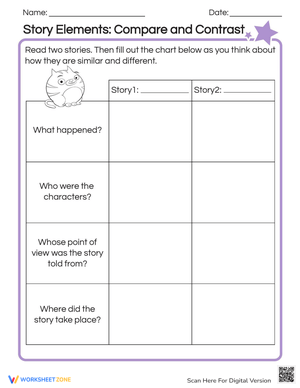
Advanced students can extend the character and setting worksheets into comparison tasks without any additional materials. Instead of analyzing one character, they compare how two characters respond differently to the same story event, using a two-column format alongside the standard worksheet. This produces substantially more analytical writing and surfaces the kind of thinking third graders need for the grade 4 reading expectations coming next year.
Frequently Asked Questions
Do these worksheets come with answer keys?
Yes. Factual and multiple-choice items include a standard answer key. For open-ended written response prompts, sample responses are provided with notes on what strong answers include — which is more useful for grading than a single "correct" answer, since third-grade fiction responses vary considerably. Teachers need benchmarks for what adequate textual evidence looks like versus a vague claim, and the sample responses provide that calibration.
Can I use these alongside a class read-aloud instead of the included passages?
Each worksheet includes its own short fiction passage, so no additional text is required. That said, the response formats — character trait organizers, plot sequencing charts, moral identification prompts — transfer directly to any fiction text. Teachers frequently print a worksheet, set the included passage aside, and direct students to apply the same task to a chapter book or shared read-aloud. The response structure holds up either way.
Can these worksheets serve as assessment tools?
These fiction printable worksheets for 3rd grade work well for formative assessment. A completed worksheet gives a concrete record of whether a student can name a character trait with supporting evidence, abstract a moral from a fable's literal ending, or sequence a plot accurately. For summative purposes, select one worksheet from the set and administer it independently after instruction on that skill is complete. The written evidence prompts reveal depth of understanding rather than surface recall — a student who copies a sentence from the text verbatim is doing something different from a student who paraphrases it and explains how it supports their answer.
Do the included passages work across different reading levels?
The passages are written at a typical third-grade Lexile range, but the comprehension tasks vary in cognitive demand across the set. Genre-identification and basic sequencing tasks place less demand on working memory than the character motivation or central message prompts. Teachers working with mixed-ability groups often assign the same passage to everyone and vary the response prompt — keeping the text consistent while adjusting the depth of thinking required. That approach also simplifies class discussion afterward, since all students read the same story.












 Interactive Worksheet Maker
 Quiz Maker
 Word Search Maker
 Crossword Puzzle Maker
 Word Scramble Generator
 Sentence Scramble Generator
 Handwriting Worksheet Generator
 Name Tracing Generator
 Fill In The Blank Generator