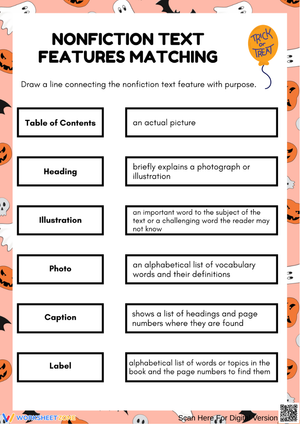
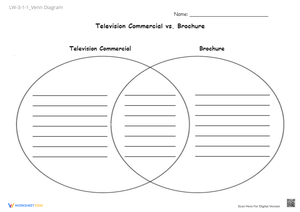
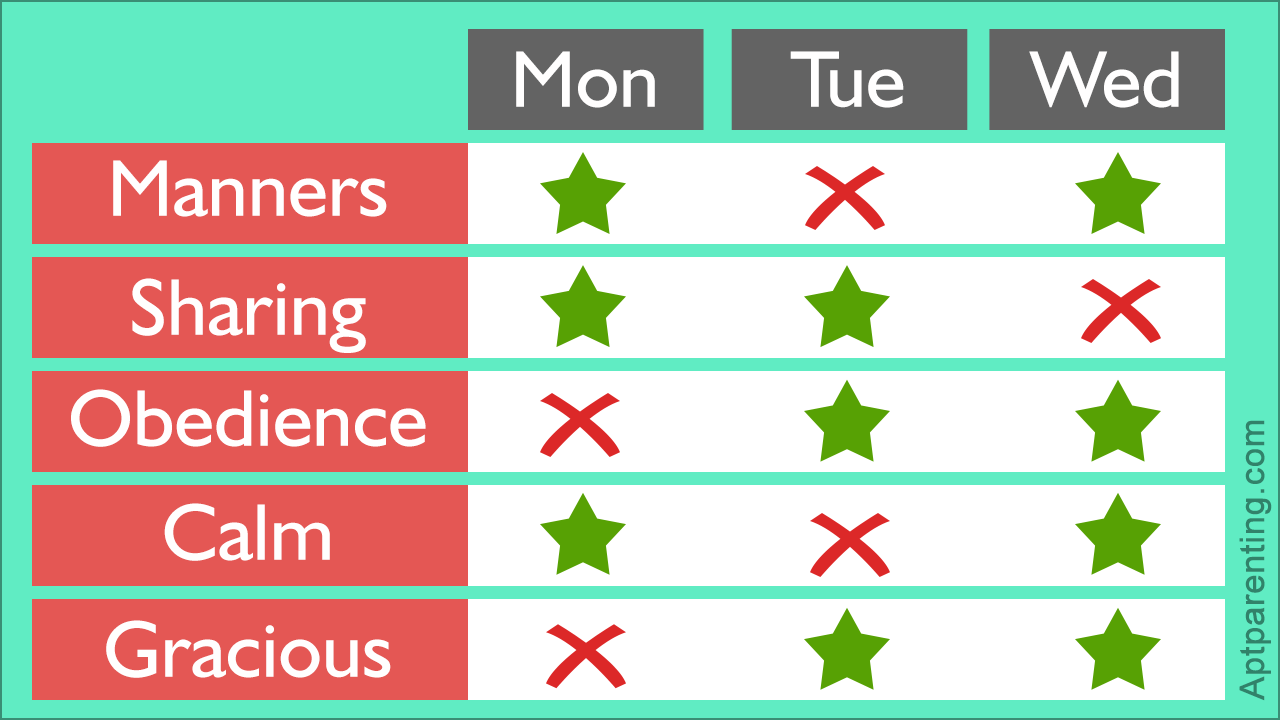
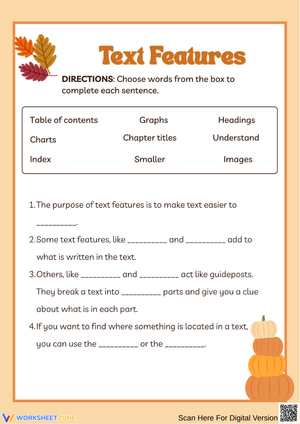
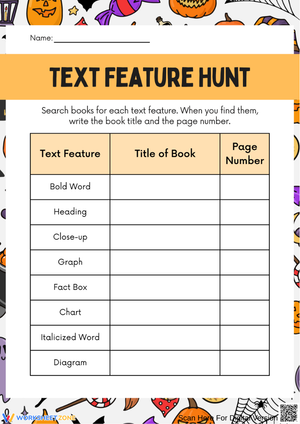
These 3rd grade nonfiction text features printable worksheets resources give teachers a focused set of practice materials for one of the most concrete — and most underestimated — shifts in third-grade reading: learning to use the parts of a nonfiction text that aren't the running prose. Each worksheet targets a specific feature or a related cluster, so teachers can sequence them across a unit or pull individual worksheets for targeted practice within small groups.
The Specific Skills Each Worksheet Builds
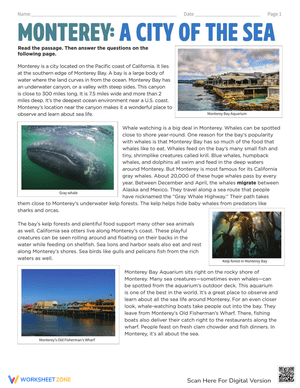
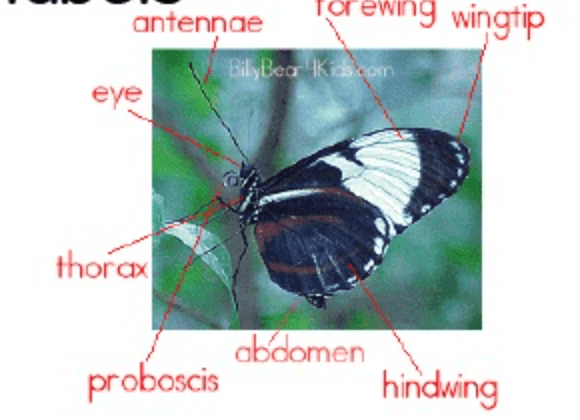
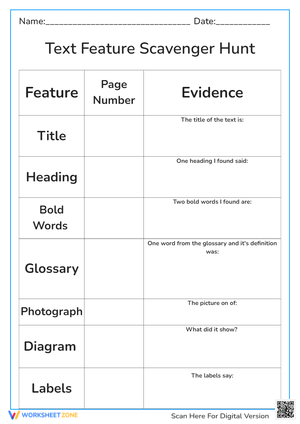
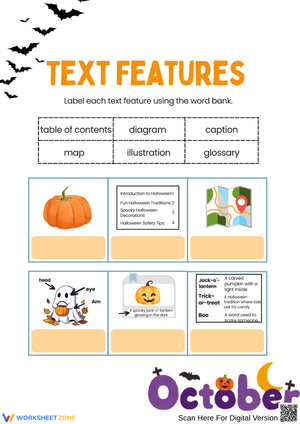
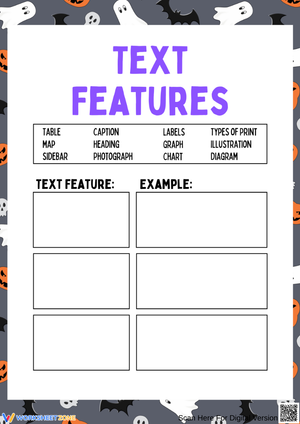
The set covers two categories: organizational features and visual features. Organizational features — table of contents, index, glossary, headings, and subheadings — teach students how a nonfiction text is structured and how to navigate it efficiently. Visual features — diagrams, labeled photographs, bar graphs, maps, and captions — require students to read information that exists outside the main body of text. Third graders routinely treat visual features as decoration, so worksheets in this category ask students to answer comprehension questions that can only be answered by reading the image, not the paragraph beside it.
Specific tasks across the set include:
- Using a sample table of contents to answer page-location questions
- Writing a caption for a provided photograph based on information in the surrounding text
- Reading a bar graph and pulling one data point to support a stated claim
- Marking the function of bold print within a short passage
- Distinguishing between what a subheading promises and what its paragraph actually explains
That last task — comparing the heading's scope to the paragraph's content — is one of the more demanding exercises in the set and one of the most useful for building real comprehension habits rather than surface-level feature naming.
Errors Students Make That These Worksheets Help You Catch
The most consistent error at third grade is confusing the table of contents with the index. Students who haven't internalized the difference use whichever one they opened first, then report frustration when a specific term doesn't appear in the chapter list. A more nuanced version of the same error: students who can correctly explain the difference in isolation will still reach for the table of contents when a task asks them to locate a specific subtopic, because using the index requires alphabetical thinking layered on top of reading strategy — two demands at once.
Captions are routinely skipped. A student will answer a comprehension question incorrectly, and when shown the answer, say "Oh, that's in the picture." The picture was right there. They just weren't in the habit of treating it as a required stop. This pattern shows up not just in reading logs but in actual assessment data. Worksheets that mix caption-based questions with body-text questions — without labeling which is which — train students to check both sources before answering, rather than defaulting to the nearest paragraph.
A third pattern worth watching: students see bold print and register "important word" but don't connect it to the glossary as a next step. They know the glossary exists. They just don't use it automatically. Tasks that require students to find a bolded term in a passage, locate it in a sample glossary, and then reread the original sentence using the definition make that connection deliberate until it becomes a habit.
Standard Alignment
The 3rd grade nonfiction text features printable worksheets set addresses RI.3.5, which requires third graders to use text features and search tools to locate information relevant to a given topic efficiently. This standard sits at the intersection of reading comprehension and research readiness — identification alone is not enough; students must demonstrate that they can use features to answer real questions. RI.3.5 builds directly on RI.2.5, which introduces headings and captions in simpler texts. By third grade, the expectation shifts from "Can you find it?" to "Can you use it and explain why?" — and the worksheets are structured to reflect that shift, pushing students toward purpose and function rather than naming alone.
Building These Worksheets Into Your Weekly Lesson Plans
The clearest entry point is as a pre-reading routine during science or social studies units. Before students open a textbook chapter, spend 8–10 minutes on one worksheet targeting the features most relevant to that chapter — a diagram worksheet before a science chapter heavy in labeled illustrations, for example. That brief practice session primes students to notice those features in the chapter they're about to read. Teachers who do this consistently through the first marking period report that students start flagging features independently during read-alouds by mid-October.
Several simpler identification worksheets work well as Monday warm-ups in a literacy block — concrete enough that students settle in quickly after a weekend, short enough to leave room for the lesson that follows. The more demanding worksheets, such as writing original captions or cross-feature tasks that require students to use an index and a diagram together, fit better as guided instruction activities where you can address confusion before students attempt independent work. A natural progression: whole-class identification worksheet on Tuesday, paired application worksheet on Wednesday, independent exit task Thursday or Friday.
Adjusting the Set for Readers at Different Levels
For students who are still working on decoding fluency, the visual feature worksheets — diagrams, maps, graphs — carry less reading load while teaching the same conceptual skill. Assigning those first gives struggling readers early success with text features before they encounter the more text-heavy organizational feature tasks. Providing a simple reference card — a one-column chart listing each feature, where it appears in a book, and what it helps the reader do — functions as a solid support structure during independent practice. Removing the card after a week or two is then a clear and manageable step toward independence.
Students who move through identification tasks quickly benefit from production tasks: writing a two-entry glossary after reading a short passage, constructing a subheading outline for a text that has no headings, or labeling a blank diagram using only information from a provided paragraph. These tasks require the same conceptual knowledge but demand considerably more application. Both kinds of adjustments — added support and extended challenge — can run simultaneously in a 3rd grade nonfiction text features printable worksheets rotation without students needing to know they're working on different versions of the task.
Frequently Asked Questions
What features does the set cover?
The worksheets cover table of contents, index, glossary, headings, subheadings, captions, bold print, diagrams with labels, bar graphs, and maps. Some worksheets focus on a single feature; others ask students to compare or use two features together to answer a question.
How long does each worksheet take?
Identification and matching worksheets generally run 8–12 minutes. Application worksheets — those asking students to write captions, interpret a graph, or use multiple features to answer a question — run closer to 15–20 minutes depending on the group.
Can these worksheets be used across subject areas?
Yes. The worksheets use short passages and sample pages drawn from science and social studies contexts, so they fit equally well in an ELA block or embedded in a content-area unit. The skills transfer regardless of subject matter, which is the point — text features show up in science textbooks, social studies magazines, and library reference books alike.
Are these appropriate for second or fourth graders?
The identification worksheets work well for second graders who have had initial exposure to text features but need more structured practice before RI.2.5 expectations are formally assessed. Fourth graders who are struggling with RI.4.7 — integrating information from both visual and written sources — often find the cross-feature worksheets in this set useful as a concrete starting point before moving to multi-source tasks. Among the 3rd grade nonfiction text features printable worksheets options available for bridging that grade range, this set sits at a level that supports both directions without oversimplifying the underlying concept.












 Interactive Worksheet Maker
 Quiz Maker
 Word Search Maker
 Crossword Puzzle Maker
 Word Scramble Generator
 Sentence Scramble Generator
 Handwriting Worksheet Generator
 Name Tracing Generator
 Fill In The Blank Generator