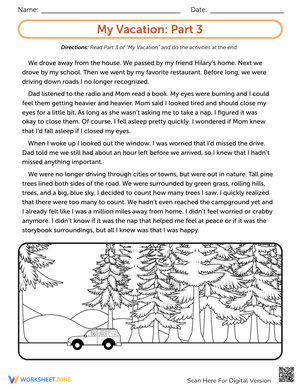
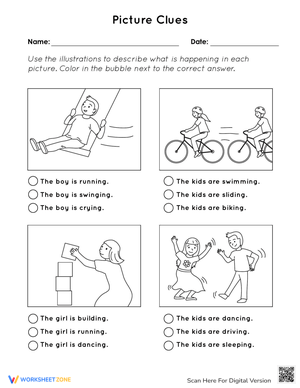
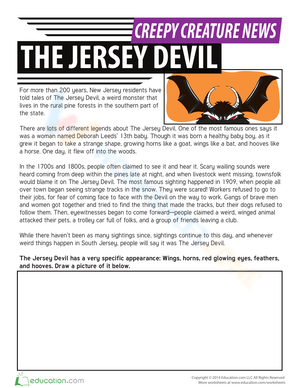
These 3rd grade using text features worksheets give teachers a direct line to one of third grade's most underestimated comprehension skills — reading the parts of informational text that live outside the main paragraphs. Students who can navigate a table of contents, interpret a caption, and use an index to pinpoint specific information read nonfiction more efficiently and hold onto more of what they encounter. The set covers the features third graders meet most often in science and social studies texts.
What the Set Targets, Feature by Feature
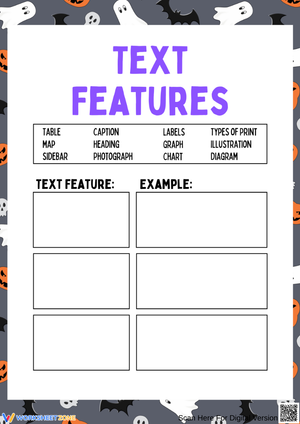
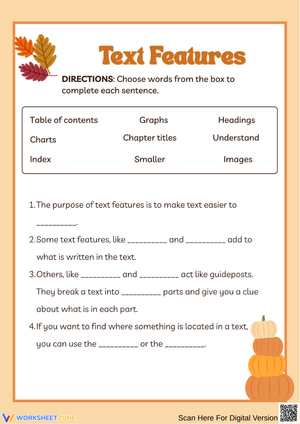
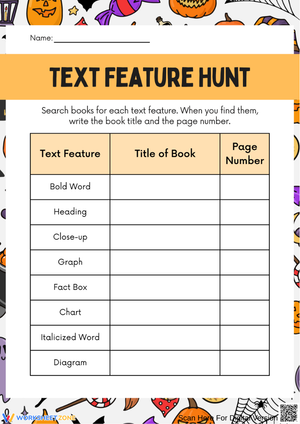
Each worksheet focuses on one feature or a small cluster of closely related features, which keeps the task manageable and lets students build one skill before layering in the next. The features covered include:
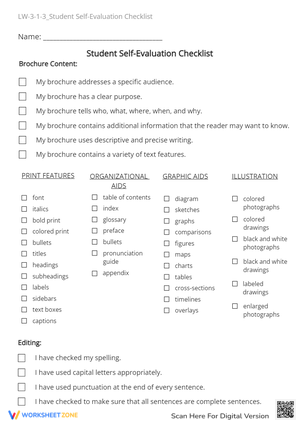
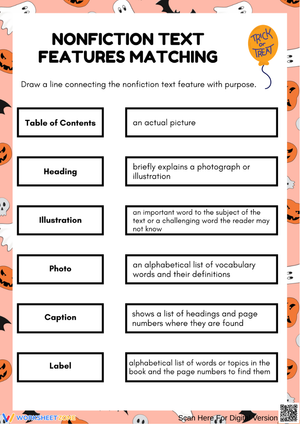
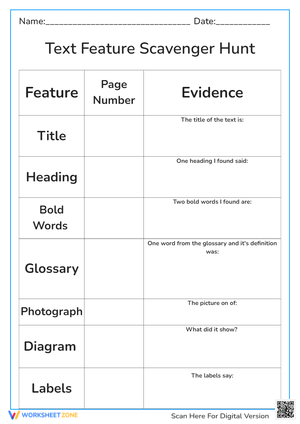
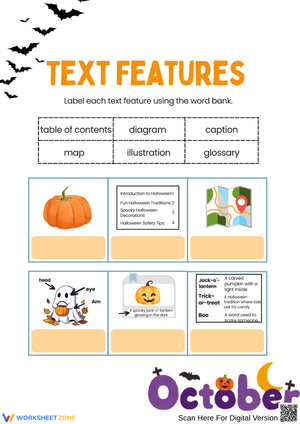
- Table of contents and index — Students use both to locate information and distinguish between the two: the table of contents gives broad chapter-level navigation from the front of the book; the index gives alphabetical keyword lookup from the back.
- Glossary and bold print — Students find a bolded term in a passage and locate its definition in a sample glossary, building the habit of checking meaning rather than guessing at hard words.
- Subheadings — Students read a short section and identify what the subheading signals about the content that follows, then write a sentence explaining why that heading is useful to a reader.
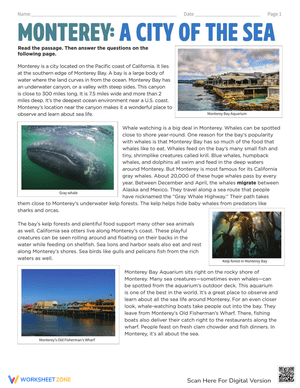
- Captions and photographs — Students read a caption alongside a description of an image and answer questions whose answers live only in the caption, not in the body text.
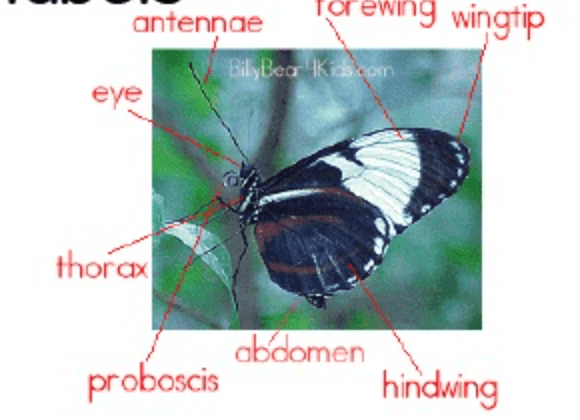
- Diagrams with labels — Students match labels to parts of a diagram or write labels based on what the paragraph describes — the life cycle of a frog, the layers of the Earth, the parts of a plant.
- Maps and charts — Students interpret simple visual data and explain what the map or chart adds that the paragraphs don't say directly.
One worksheet asks students to take a stripped-down informational passage — no headings, no bold terms, no captions — and decide where a subheading should appear and what it should say. That reversal, from identifying features to creating them, pushes students to think about why authors make these choices, not just what those choices look like on the page.
Standard Alignment
The 3rd grade using text features worksheets set addresses RI.3.5 directly. That standard requires students to use text features and search tools to locate information relevant to a topic efficiently — and the word "efficiently" matters here. RI.3.5 isn't satisfied by a student who can point to a glossary and name it. It's satisfied when a student uses the glossary to resolve a comprehension problem in the moment, mid-reading. Every worksheet in the set is built around exactly that applied use: students read, encounter a question they can't answer from the paragraph alone, and have to choose and use the right feature to find the answer. That mirrors what the standard actually asks students to do with real nonfiction.
Student Errors Worth Watching For and Correcting
The most common error at this level isn't misidentifying features — it's treating them as optional decoration. A student who reads a passage, answers questions only from the paragraphs, and ignores the diagram beside it will miss a significant portion of the available information. That pattern shows up consistently in third-grade work, especially during timed reading tasks. These worksheets address it directly by placing questions whose answers exist only in the caption or only in the labeled diagram, not in the body text at all. Students can't skip the feature and still finish the worksheet.
A second error worth anticipating: students consistently confuse the table of contents and the index. They reach for the table of contents when hunting a specific keyword, flip to the chapter with the vaguest match, and then scan the entire chapter rather than using the index to get a direct page number. Questions that ask "which tool would be faster here, and why?" surface that confusion and give teachers a concrete talking point before the lesson moves on. Bold print trips students up in a related way — many third graders understand that bold words signal importance, but they skip the glossary and guess at meaning instead of looking it up, particularly when the glossary is printed on a different page from the passage they're reading.
How to Fit These Worksheets Into Your Lesson Planning
Most teachers introduce a single feature type — subheadings, or the index — during a mini-lesson, then assign the corresponding worksheet for independent or partner work while pulling a small group. That structure holds well because each worksheet is self-contained and focused; students aren't waiting for each other to finish a different section before moving on. The caption-focused worksheet and the diagram worksheet pair especially well on back-to-back days, since both deal with visual information and the questions build naturally from one to the next.
The 3rd grade using text features worksheets format makes these easy to drop into Friday review blocks, Monday warm-ups after morning meeting, or the eight minutes before afternoon pickup when a full lesson won't fit. Because the worksheets download as PDFs, they hold their formatting — diagrams don't shift, tables stay aligned — which matters when layout is part of what students are reading and interpreting.
Adjusting the Set for a Range of Learners
For students still building reading fluency, the worksheets that involve shorter passages — caption analysis, bold-word lookup, table of contents navigation — require less continuous reading and let those students focus on the feature task itself rather than fighting through dense paragraphs. Starting those students with the index and table of contents worksheets produces quicker early wins, which keeps momentum up while the feature skills develop.
Students who are moving through the grade-level material quickly can use the 3rd grade using text features worksheets set as a starting point for original work: they create their own labeled diagram for a science topic, write captions for images in a class nonfiction book, or build a simple glossary for a report they're drafting. That writing connection deepens understanding — when students have to produce a text feature, they grasp its function at a level that passive identification alone doesn't reach.
For students who need more structure, each worksheet can be paired with a reference card listing each feature and its purpose. That isn't a substitute for understanding; it's the same kind of support a real reader uses when consulting the "how to use this book" page at the front of a reference text. It keeps the lesson focused on how to use features rather than on cold memorization of definitions.
Frequently Asked Questions
Do these worksheets work better for independent work or small-group instruction?
Both settings work well. The focused, single-feature format means a teacher can sit with four or five students, complete a worksheet together, and stop after each question to discuss why a specific feature holds the answer and exactly where in the layout students found it. That conversation often surfaces more about a student's understanding than the written answers do.
How do I sequence these worksheets across the unit?
Start with table of contents and index — these are features students have likely encountered before, even if no one has explicitly taught them how to use the tools deliberately. Establish that foundation before moving to captions, diagrams, or subtler features like sidebars. When students arrive at the diagram worksheet having already practiced with print-based features, the shift to interpreting visual information is less disorienting.
Are these worksheets more useful for formative or summative assessment?
Formative, without question. The individual worksheets surface specific, distinct gaps — a student who struggles with the index worksheet likely doesn't yet understand alphabetical search, while a student who misreads diagram labels may not understand that labels carry information the body text doesn't always repeat. A single end-of-unit test won't distinguish between those two problems. The worksheet responses point a teacher toward targeted re-teaching before any summative task.
What topics are the reading passages drawn from?
The passages draw from topics third graders encounter in science and social studies — animal life cycles, landforms, weather systems, community roles. That content familiarity lowers the barrier of unfamiliar vocabulary and lets students direct their attention toward the feature itself rather than toward figuring out what the passage is about.












 Interactive Worksheet Maker
 Quiz Maker
 Word Search Maker
 Crossword Puzzle Maker
 Word Scramble Generator
 Sentence Scramble Generator
 Handwriting Worksheet Generator
 Name Tracing Generator
 Fill In The Blank Generator