




























Views
Plays
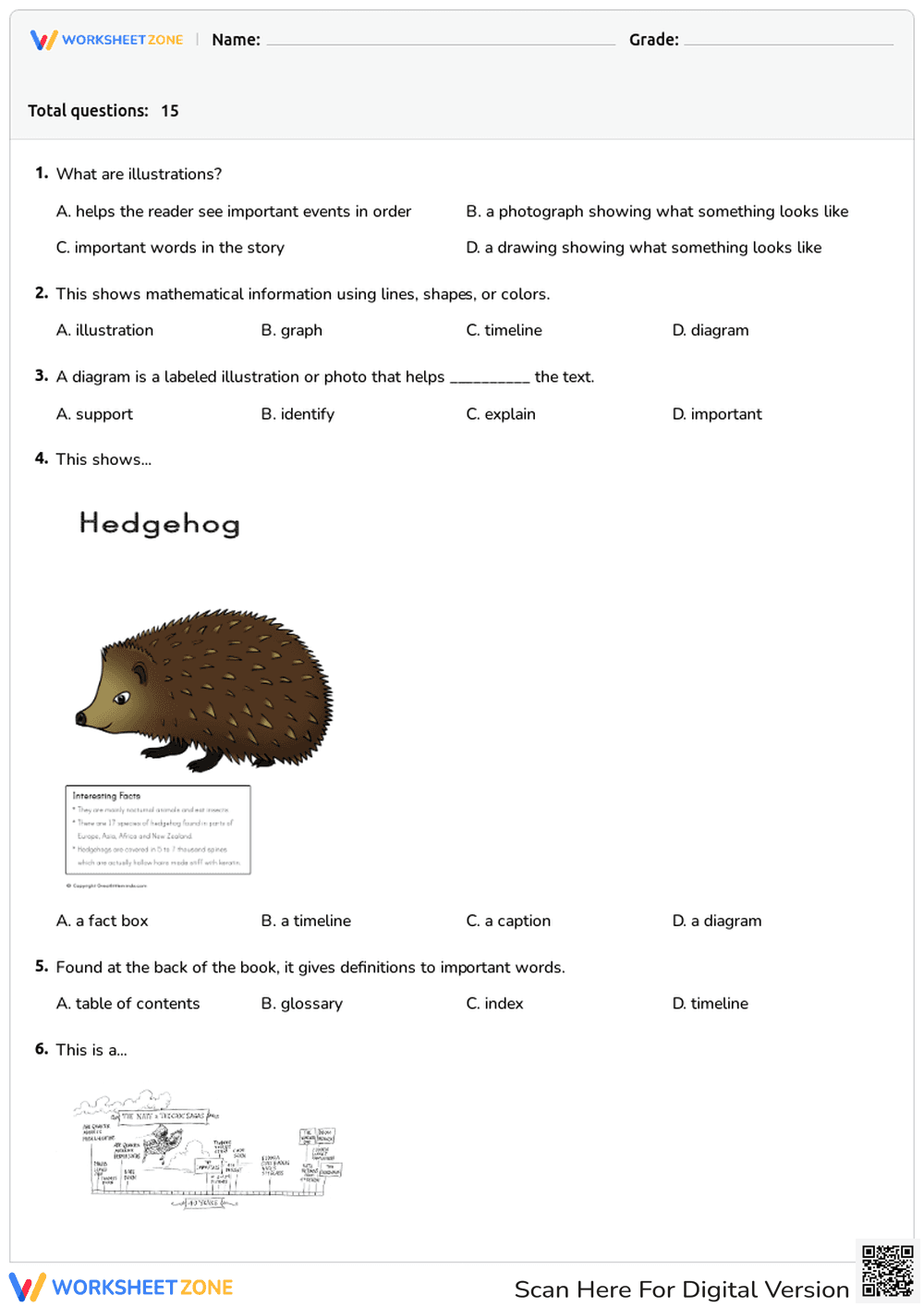
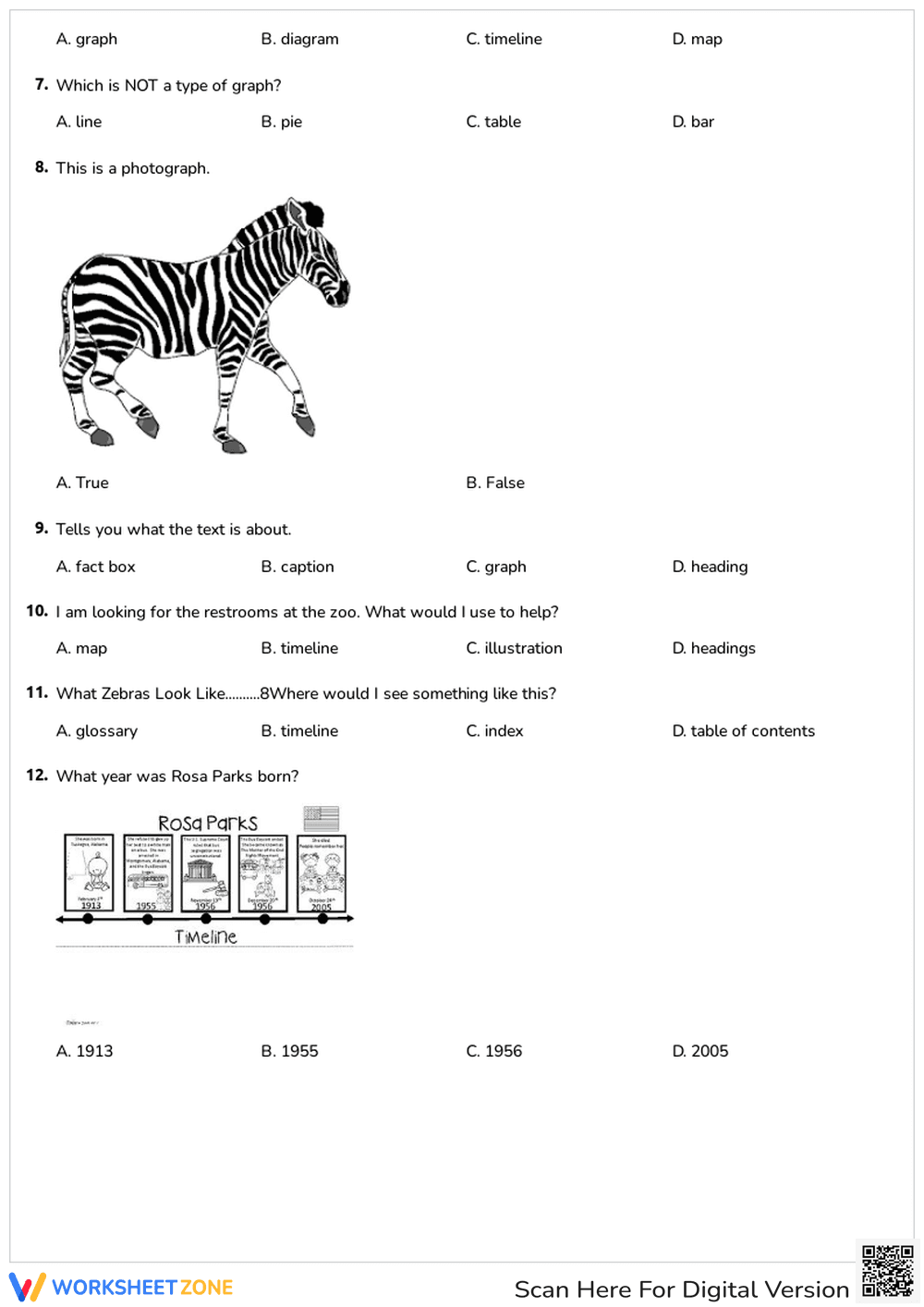
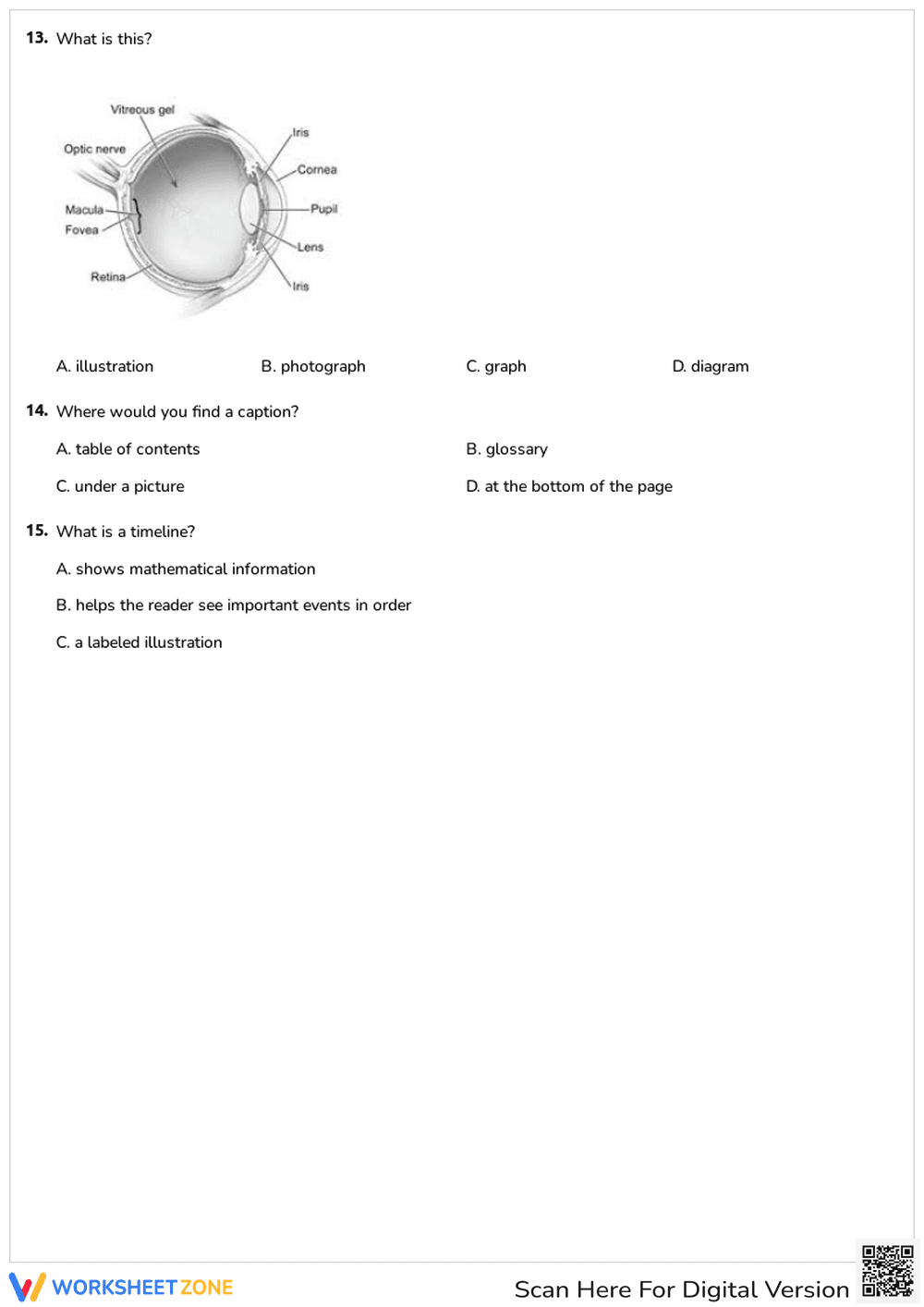

3rd Grade Text Features — Printable No-Prep Worksheet

Paste this activity's link or code into your existing LMS (Google Classroom, Canvas, Teams, Schoology, Moodle, etc.).
Students can open and work on the activity right away, with no student login required.
You'll still be able to track student progress and results from your teacher account.
This Grade 3 text features worksheet helps students identify and utilize informational text elements to improve reading comprehension. By distinguishing between diagrams, glossaries, and timelines, learners gain the tools necessary to navigate complex non-fiction texts efficiently. It provides a comprehensive assessment of functional literacy skills through 15 targeted multiple-choice questions that mirror standardized testing formats.
At a Glance
- Grade: 3 · Subject: ELA
- Standard:
CCSS.ELA-LITERACY.RI.3.5— Use text features and search tools to locate information relevant to a given topic- Skill Focus: Identifying Informational Text Features
- Format: 3 pages · 15 problems · Answer key included · PDF
- Best For: Formative assessment or end-of-unit quiz
- Time: 20–30 minutes
What's Inside: The packet contains a three-page assessment featuring 15 multiple-choice questions. Each question includes clear visual aids, such as a labeled diagram of an eye, a historical timeline of Rosa Parks, and a hedgehog fact box. The layout is clean and student-friendly, with a dedicated space for names and grades. A complete answer key is provided for rapid grading and immediate student feedback.
Zero-Prep Workflow
- Print: Select the three-page PDF and print enough copies for your roster (30 seconds).
- Distribute: Hand out the worksheets for an independent quiet-work session or a timed summative quiz (1 minute).
- Review: Use the included answer key to review results or facilitate a peer-grading session to discuss why specific features are used (5 minutes).
Total teacher preparation time is under 2 minutes, making this an ideal resource for sub plans or last-minute assessment needs.
Standards Alignment: This resource is aligned with CCSS.ELA-LITERACY.RI.3.5, which requires students to use text features (e.g., key words, sidebars, hyperlinks) to locate information efficiently. It also supports RI.2.5 by reinforcing the purpose of captions, bold print, and subheadings. Both standard codes can be copied directly into lesson plans, IEP goals, or district curriculum mapping tools.
How to Use It: Use this worksheet as a summative assessment after a unit on non-fiction text structures. Alternatively, assign it as a pre-test to gauge prior knowledge before introducing specific features like indices or glossaries. During the activity, observe if students can correctly distinguish between a photograph and an illustration, as this is a common area of confusion. Completion typically takes 25 minutes for the average third-grade learner.
Who It's For: This resource is designed for third-grade general education classrooms, but it is also highly effective for second-grade enrichment or fourth-grade remediation. It serves English Language Learners (ELLs) well due to the heavy reliance on visual examples and clear definitions. Pair this worksheet with a non-fiction mentor text or a text features anchor chart for a complete instructional cycle.
Mastery of informational text features is a critical predictor of long-term academic success in content-area reading. According to the RAND AIRS 2024 report, students who can fluently navigate non-fiction elements like timelines and diagrams demonstrate significantly higher comprehension scores on standardized assessments. This worksheet targets CCSS.ELA-LITERACY.RI.3.5 by requiring students to decode the specific functions of 15 different text features, from table of contents to captions. By moving beyond simple identification to functional application—such as using a map to find a location or a glossary to define a word—students build the cognitive scaffolding necessary for complex research tasks. Research from Fisher & Frey (2014) emphasizes that explicit instruction in these navigational tools reduces cognitive load during reading, allowing students to focus on deeper conceptual understanding rather than just locating facts.


