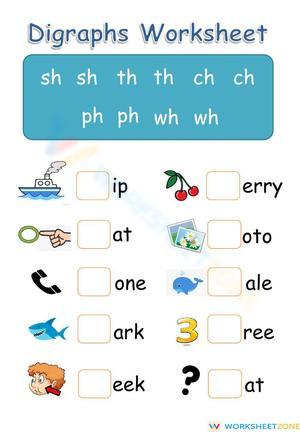
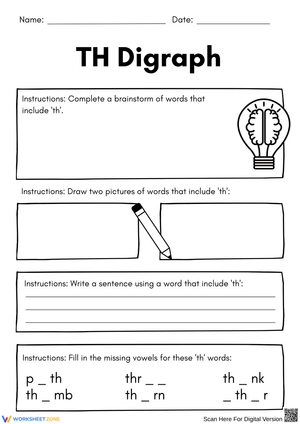
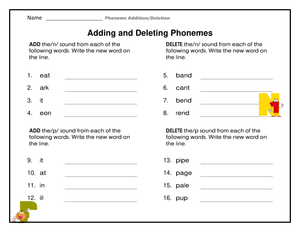
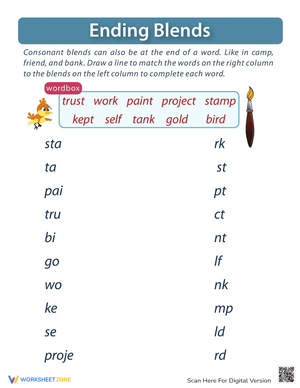
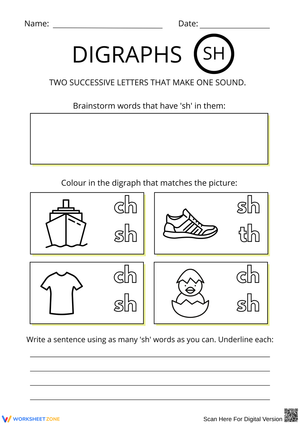
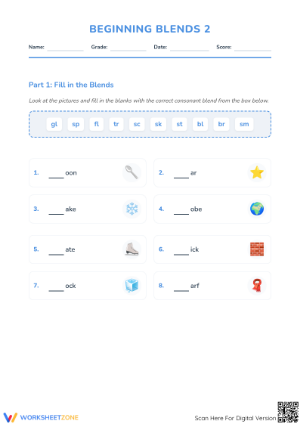
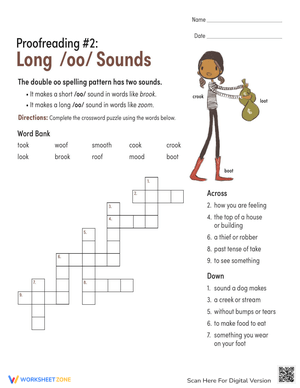
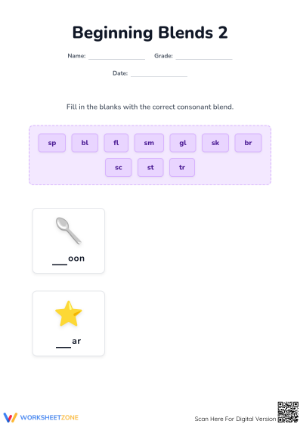
These word patterns printable worksheets for 3rd grade cover the orthographic territory that defines third-grade phonics: vowel teams, r-controlled vowels, silent letter combinations, and the prefixes and suffixes that help students crack multisyllabic words without guessing. The set moves students from sounding out individual letters toward recognizing chunks — the real shift that separates labored decoding from fluent reading.
What Each Worksheet Targets
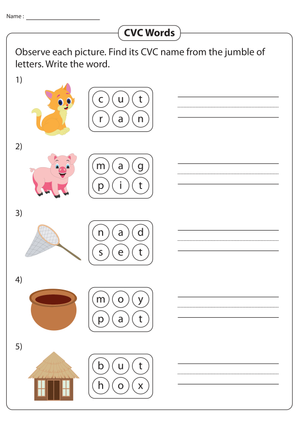
Third grade is where phonics stops being about simple CVC words and starts requiring students to hold more complex patterns in memory. Each worksheet targets a specific pattern or pattern family, giving students enough concentrated exposure to one structure before the next one arrives. The four main categories across the set are:
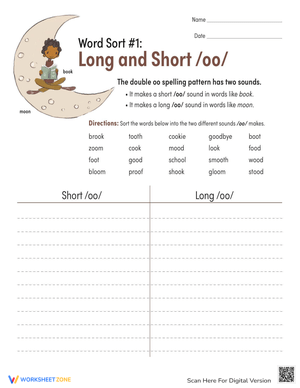
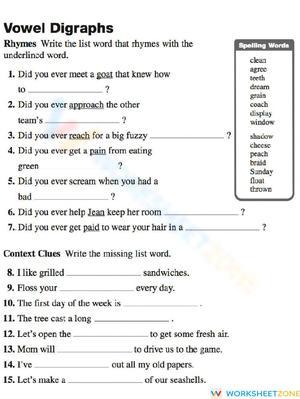
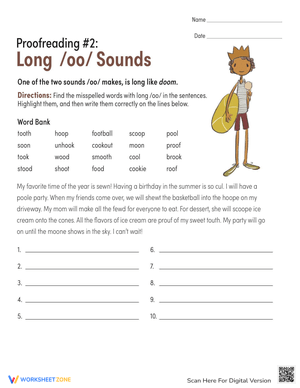
- Vowel teams and diphthongs: Pairs like ai/ay, ea/ee, and oa/ow, plus the diphthongs oi and ou. Students sort, complete, and generate words — not just identify them.
- R-controlled vowels: All five patterns — ar, or, er, ir, ur — with focused attention on the three that share a sound.
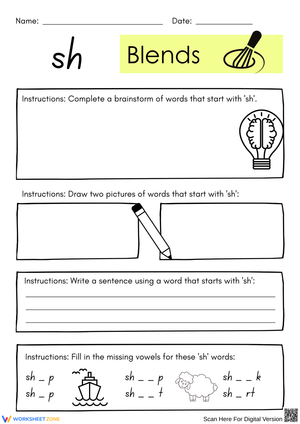
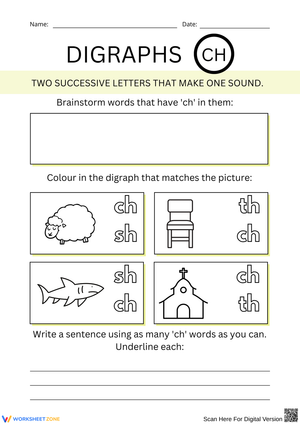
- Silent letter and complex consonant clusters: kn, wr, gn, tch, and dge, treated as single phonological units rather than letter-by-letter combinations.
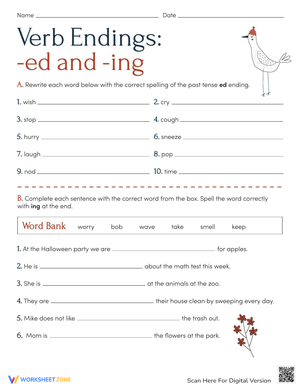
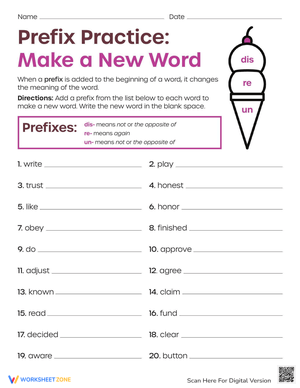
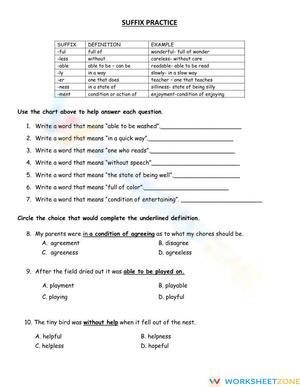
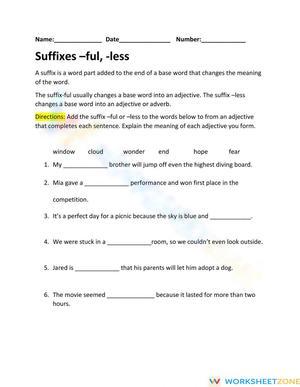
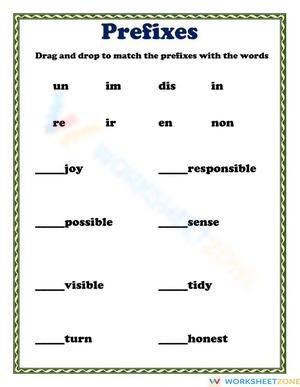
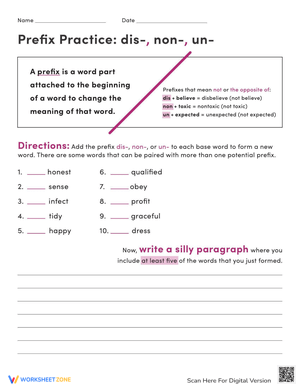
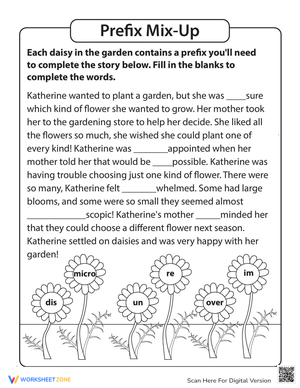
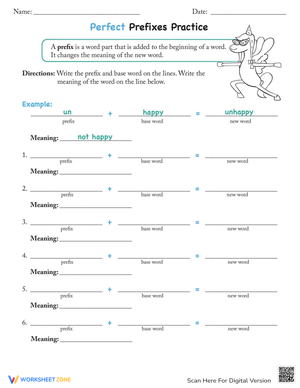
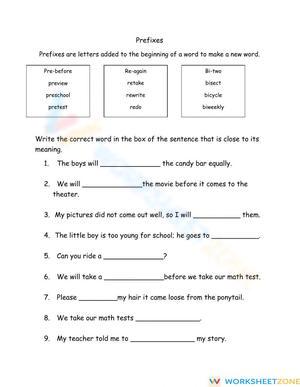
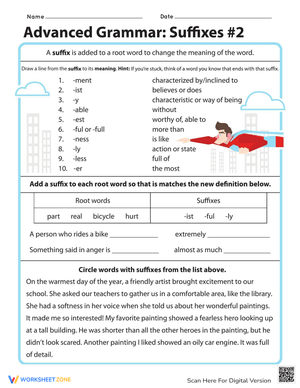
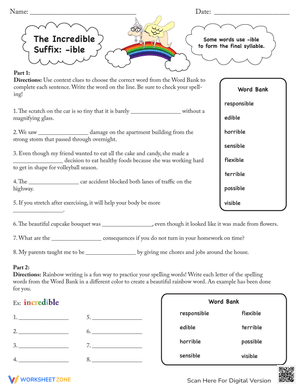
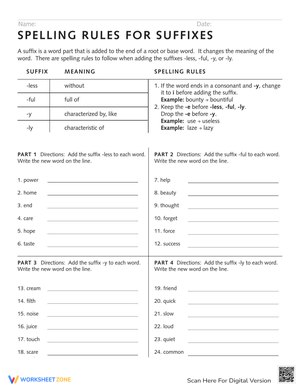
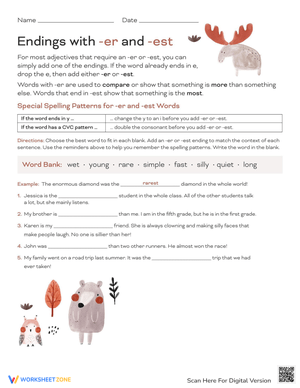
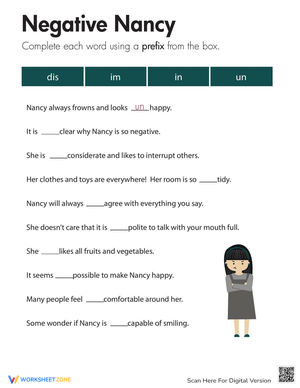
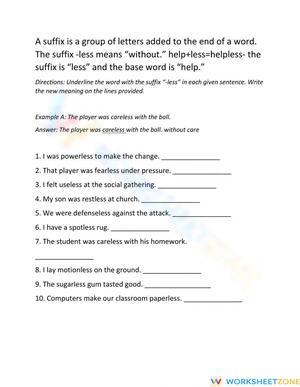
- Prefixes and suffixes: High-frequency bound morphemes — un-, re-, pre-, -ful, -less, -ly, -able — with word-building tasks that connect spelling to meaning.
Several worksheets also address the positional rules that govern where certain patterns appear — why ay ends a syllable but ai sits in the middle, or why tch follows a short vowel while ch handles everything else. Students who internalize these rules spell more accurately than students who memorize word lists, because the rule applies to words they haven't yet encountered.
The Errors That Surface Most Predictably With These Patterns
The most persistent spelling confusion at this level isn't vowel teams — it's the er/ir/ur trio. All three produce the same sound in most American English dialects, so students write "berd," "burd," and "bird" interchangeably until instruction makes the distinction stick. These worksheets address this directly by requiring students to choose among the three spellings in context rather than simply recognizing which one looks correct in isolation.
Vowel team errors tend to be positional. A student who correctly spells trail on Monday will write staye instead of stay on Friday — not because they've forgotten the pattern, but because they haven't yet internalized that ay ends the syllable and ai doesn't. Watching for this in independent writing, not on the worksheet itself, is how you know whether the lesson actually landed.
Silent letter combinations produce a different kind of error: students don't misspell the word so much as mispronounce it during oral reading, which then feeds back into spelling errors. A student who reads knight as "kuh-night" is treating kn as two separate phonemes. Several worksheets address this explicitly by asking students to mark which letters are silent before working with the word in a sentence context — a small step that forces conscious attention to the pattern before automaticity takes over.
How to Run a Pattern-Based Week With These Resources
A Pattern of the Week structure works well with this set. Introduce the pattern on Monday with one worksheet used as guided practice during the ELA block — students work through it with you, not independently. Tuesday and Wednesday, related worksheets move into literacy centers or morning work. Thursday, students write four sentences using the week's pattern words with no word bank. Friday is dictation: same patterns, visual support gone.
The worksheets also fit cleanly into small-group intervention. The r-controlled vowel resources are particularly useful for pulling five or six students who are still confusing er/ir/ur in their independent writing. A targeted 12-minute session mid-week — separate from whole-class instruction — addresses the confusion without slowing down students who've already internalized the pattern.
One underused strategy pairs naturally with word patterns printable worksheets for 3rd grade: after students finish a worksheet, send them into their independent reading books to find three examples of that week's pattern and record them in a reading journal. The search reinforces the pattern in actual prose rather than manufactured exercises, and it gives you quick formative data — students who can't locate examples may not yet recognize the pattern outside the controlled worksheet environment.
Standard Alignment
These resources align directly with CCSS ELA-Literacy RF.3.3, the phonics and word recognition standard for third grade. RF.3.3 requires students to know and apply grade-level phonics and word analysis skills in decoding — specifically, identifying common prefixes and derivational suffixes, decoding multisyllabic words, and reading grade-appropriate irregularly spelled words. In classroom terms, RF.3.3 isn't a supplemental standard; it's the foundational one that allows comprehension instruction to function. Students who decode laboriously can't free cognitive resources for meaning-making, and that bottleneck shows up clearly in content-area reading by mid-year.
The prefix and suffix worksheets support RF.3.3a specifically, which addresses knowledge of the most common prefixes and derivational suffixes, while the silent letter worksheets align with RF.3.3d, covering grade-appropriate irregularly spelled words. Teachers in CCSS-aligned districts can use these resources for targeted instruction and document standard coverage within their ELA framework.
Tailoring These Resources to Your Classroom's Full Range
The word patterns printable worksheets for 3rd grade reach across a wider ability range than most phonics materials because the pattern families themselves span multiple instructional levels. For students still consolidating basic phonics, the vowel team and r-controlled vowel worksheets offer structured, repetitive formats — fill-in-the-blank sentences and word sorts — that reduce cognitive load while building pattern recognition. These students benefit from a word bank on the first worksheet in a pattern cycle, removed on the second worksheet once the pattern is familiar.
Students who have moved past grade-level phonics can work with the prefix and suffix worksheets in a more generative mode. Instead of completing a word from a given base and affix, they produce their own examples and test them against a partner. The -able suffix worksheets lend themselves especially well to this — students who understand the morpheme can generate and verify words like teachable or breakable, and sometimes discover that not every base word accepts the suffix, which opens a useful conversation about how derivational morphology actually works.
For students receiving reading intervention, multisensory pairing helps significantly. Have them trace the pattern letter sequence on the desk while reading the word aloud, or use dry-erase markers on a laminated copy to circle the pattern before writing it in a sentence. The worksheet handles the work of presenting the pattern in context; the physical reinforcement moves it into long-term memory faster than visual exposure alone.
Frequently Asked Questions
Which patterns in this set are most critical for 3rd-grade reading progress?
Vowel teams and r-controlled vowels appear with the highest density in third-grade texts, so those worksheets carry the most immediate reading payoff. Prefix and suffix knowledge compounds over time — students who internalize un-, re-, and -ful by the end of 3rd grade carry that word knowledge forward into 4th-grade content reading. Silent letter combinations like kn and wr appear less frequently but cause disproportionate fluency disruption when students encounter them unprepared, so a few focused sessions are worth the time even if the patterns aren't high-frequency.
Are these worksheets better suited for homework or in-class use?
These word patterns printable worksheets for 3rd grade work well as homework after the pattern has been introduced in class — students reinforce something they've already encountered rather than attempting to learn a new structure independently at home. Sending a kn/wr worksheet home before in-class instruction typically produces frustrated students and incorrect practice that then needs to be re-taught. Introduce first; assign for independent practice second.
How do I know when a student has actually mastered a pattern versus just completing the worksheet correctly?
Worksheet performance doesn't equal mastery. The real test is whether students use the pattern correctly in unprompted writing — a journal entry, a short response, a content-area paragraph. A student who completes an er/ir/ur worksheet at 90% accuracy but still writes "berd" in their reading journal hasn't mastered the pattern; they've completed a task. Dictation and independent writing samples give you the actual mastery evidence that worksheet scores can't.












 Interactive Worksheet Maker
 Quiz Maker
 Word Search Maker
 Crossword Puzzle Maker
 Word Scramble Generator
 Sentence Scramble Generator
 Handwriting Worksheet Generator
 Name Tracing Generator
 Fill In The Blank Generator