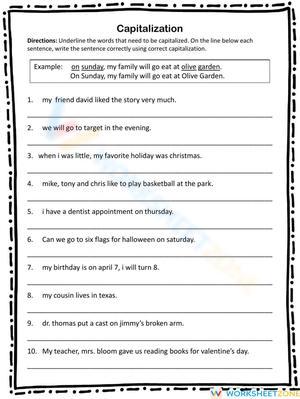
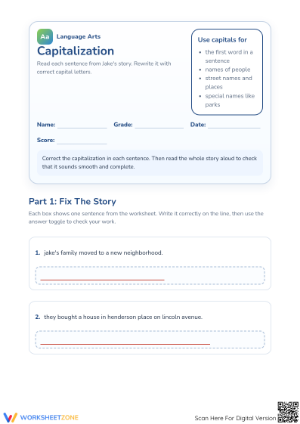
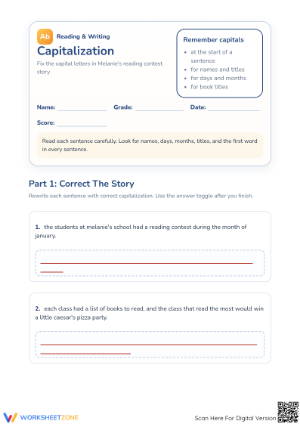
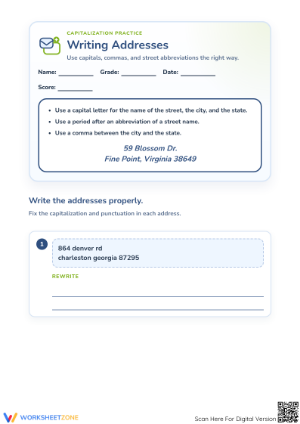
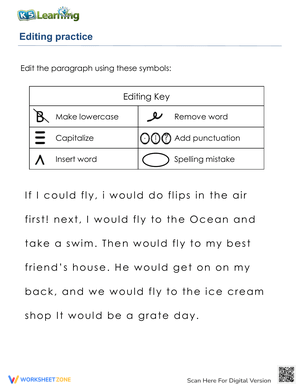
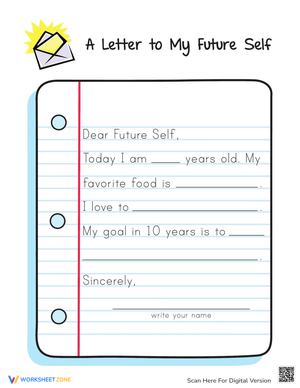
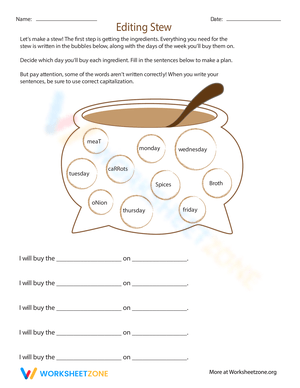
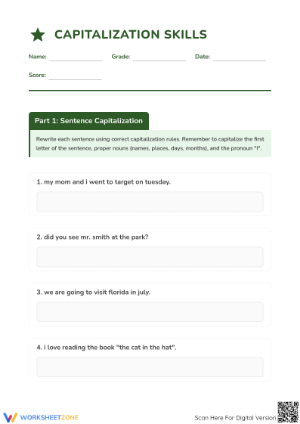
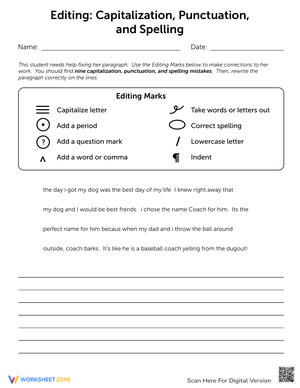
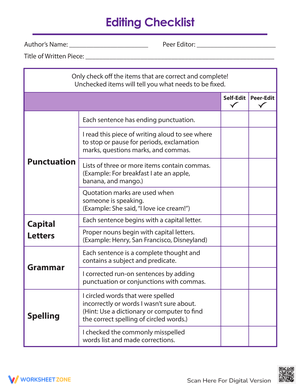
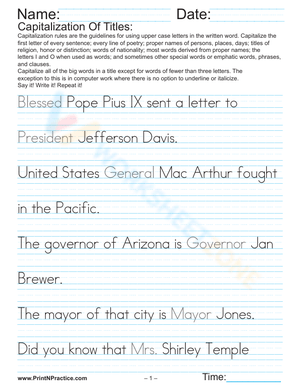
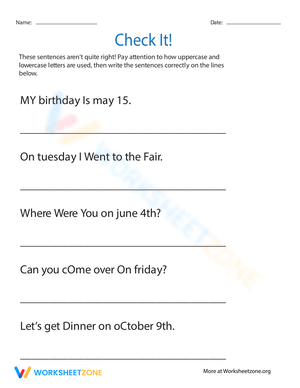
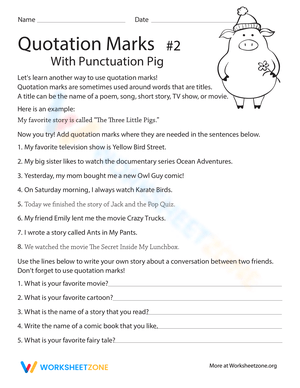
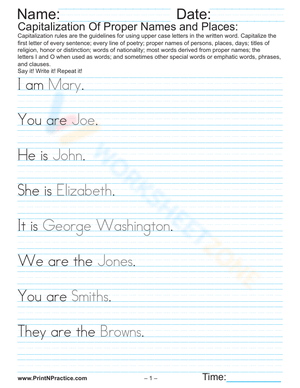
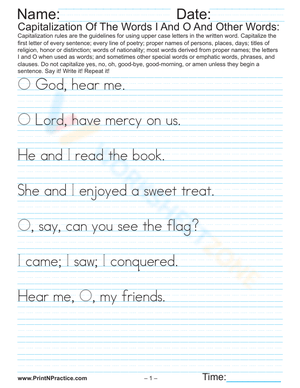
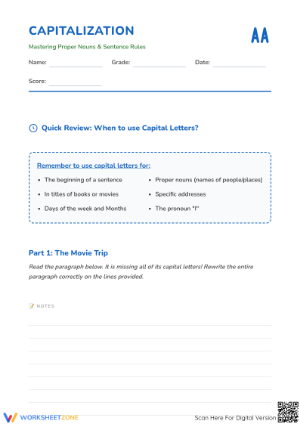
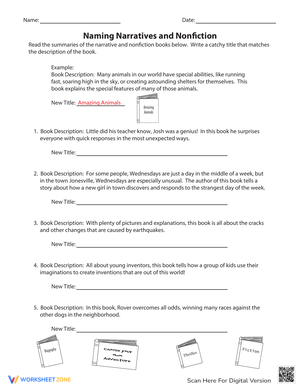
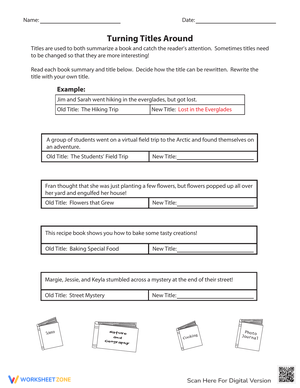
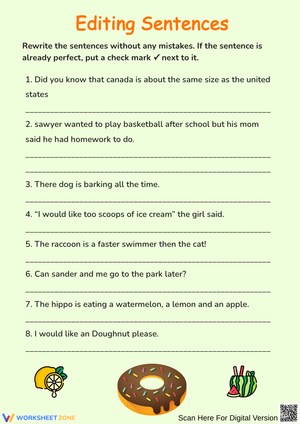
These 3rd grade capitalization pdf worksheets give teachers print-ready practice across the full range of rules students are expected to control by end of third grade — proper nouns, title capitalization, geographic names, holidays, and historical events. The set covers every format teachers actually need: sentence correction, paragraph editing, sorting tasks, and dedicated title-rewriting practice. Each worksheet stands alone, so teachers pull exactly what fits the day's instruction without committing to a fixed sequence.
What Each Worksheet Covers
Third grade is the year capitalization stops being a single rule and becomes a system. Students arrive already knowing to capitalize the first word of a sentence; the challenge now is learning which other words demand a capital letter and why. The worksheets in this set address four interlocking skills:
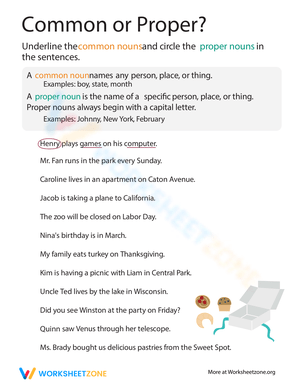
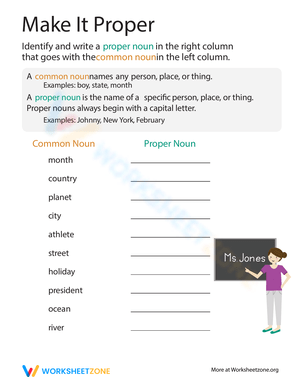
- Proper noun identification and capitalization — Students distinguish common nouns that stay lowercase from proper nouns — holidays like Thanksgiving, geographic features like the Appalachian Mountains, product names — that require a capital.
- Title capitalization — Students rewrite book, song, and movie titles presented in all lowercase, applying the rule that the first word, last word, and all major words get capitals while articles, short prepositions, and coordinating conjunctions do not.
- Names of organizations and historical events — Students recognize when an official name like the Red Cross or the Boston Tea Party requires capitalization, as distinct from a generic reference to the same concept.
- Contextual editing — Later worksheets embed errors inside full sentences and short paragraphs so students must read for meaning rather than hunt for isolated nouns.
Frequent Capitalization Mistakes Worth Watching For in Student Work
The most persistent error in title capitalization isn't missing the first word — students get that right. The problem shows up with prepositions and articles buried inside a title. A student who correctly writes Charlotte's Web will often produce The Wind In The Willows, capitalizing "In" mid-title because it feels important when reading the title aloud. Calling this out explicitly before the title-rewriting worksheet — and putting two or three examples on the board — saves a round of correcting later.
Proper noun sorting reveals a different error pattern. Students frequently capitalize the category word alongside the proper name: Atlantic Ocean becomes Atlantic ocean when they're uncertain, but in rewritten sentences it sometimes appears as Ocean Atlantic when they're rushing. The sorting worksheet that asks students to write the word in the correct column before applying capitalization slows the process down enough to surface that confusion before it hardens into habit.
Standard Alignment
These worksheets target CCSS.ELA-LITERACY.L.3.2.A, which requires students to capitalize appropriate words in titles of works. In classroom terms, this standard typically lands in the second or third quarter of third grade, once students have a working grasp of proper nouns from the broader L.3.2 cluster. Teachers doing standards-based reporting can use completed paragraph-editing worksheets as evidence of convention control — those tasks ask students to apply multiple rules without any cueing beyond the passage itself, which is a stronger performance indicator than isolated drill.
How to Build These Worksheets Into Your Weekly Lesson Plans
The sentence-correction worksheets work well in the first eight minutes of an ELA block — enough time to revisit one rule before students move into independent writing without eating into the writing period itself. A mini-lesson introducing title capitalization on Monday, followed by the corresponding worksheet as a warm-up on Tuesday, gives students one night to sleep on the rule before applying it again. That spacing matters more than it looks: a rule practiced twice in one day tends to feel secure but fades faster than practice distributed across two days.
These 3rd grade capitalization pdf worksheets also fit naturally into literacy stations. A printed set in a writing-center tray gives early finishers purposeful work while the teacher conferences with small groups. After students complete a worksheet independently, a brief partner check — each student pointing to one correction they made and explaining the reason — extends the practice without adding any teacher prep.
One honest limitation: the paragraph-editing worksheets frustrate students who haven't consolidated the sentence-level rules yet. Asking a student to track title capitalization, geographic proper nouns, and holiday names simultaneously inside a paragraph — before they're secure with any one rule — adds cognitive load without producing useful practice. Use those worksheets for students who are ready, not as a universal assignment.
Adjusting the Set for a Range of Learners
Students who are still shaky on the basic proper noun distinction do better starting with the sorting worksheets, where the task is classification rather than correction. Once they can reliably place words in the right column, move them to sentence correction. Skipping straight to paragraph editing before that foundation is solid tends to produce guessing rather than genuine application of the rule.
For students ready to go further, the paragraph-editing worksheets extend naturally into a short writing task: after correcting the passage, students write two or three sentences of their own using the same category of proper noun they just practiced — a geographic name, a holiday, an organization. That step closes the gap between these 3rd grade capitalization pdf worksheets and actual writing transfer, which is where the skill ultimately needs to live.
Advanced students often benefit from working without an answer key visible during peer-check sessions. When two students compare corrections independently and disagree on whether a word needed a capital, the resulting conversation surfaces exactly the nuanced thinking — why "the" in a title stays lowercase when it falls in the middle — that moves them past rule recitation into real command of the convention.
Frequently Asked Questions
What capitalization rules are 3rd graders expected to know by end of year?
Third graders are expected to capitalize proper nouns — including holidays, geographic names, and product names — names of organizations and historical events, and appropriate words in titles of books, songs, and other works. The standard does not require mastery of every edge case in title capitalization, but students should correctly handle the first word, last word, and major words without needing a reminder for each title they encounter.
Which worksheet format should I start with at the beginning of the unit?
Start with sentence correction. The single-rule focus of those worksheets lets students build accuracy and confidence before they face a paragraph with five or six errors of different types. Move to paragraph editing once formative checks show students are accurate at the sentence level without teacher prompting — that's the clearest signal they're ready for the added complexity.
Can these worksheets double as quick formative assessments?
Yes — and the sentence-correction format in particular suits that use. A set of six to eight sentences targeting one rule type takes most third graders about five minutes to complete. Scanning responses across a class quickly shows which rule still needs reteaching and whether the errors are random or consistent, which points to very different instructional next steps. These 3rd grade capitalization pdf worksheets function as both practice tools and informal assessment instruments depending on where in the lesson sequence you place them.
How do I help students remember title capitalization without just handing them a rule list?
The most reliable approach is teaching students to ask two questions about each word in a title: Is it the first or last word? Is it a noun, verb, adjective, or adverb? If either answer is yes, capitalize it. If the word is a short preposition, article, or coordinating conjunction sitting in the middle of the title, leave it lowercase. Modeling this two-question check on the board before students tackle the title-rewriting worksheet gives them a thinking routine rather than a list to memorize — and thinking routines transfer to their own writing in a way that memorized lists rarely do.












 Interactive Worksheet Maker
 Quiz Maker
 Word Search Maker
 Crossword Puzzle Maker
 Word Scramble Generator
 Sentence Scramble Generator
 Handwriting Worksheet Generator
 Name Tracing Generator
 Fill In The Blank Generator