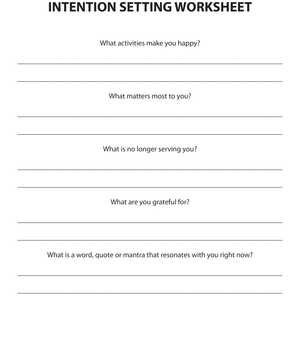
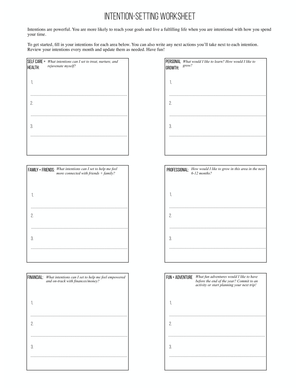
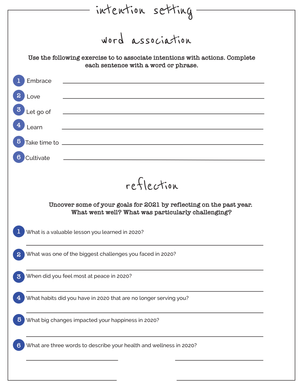
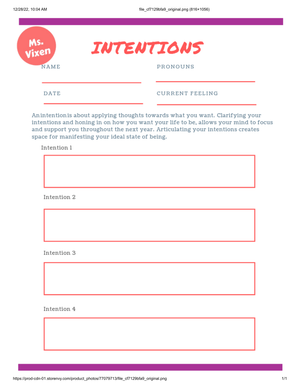
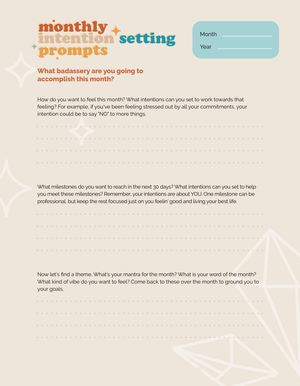
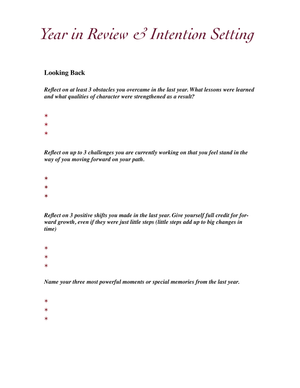
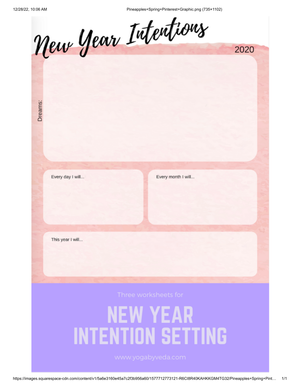
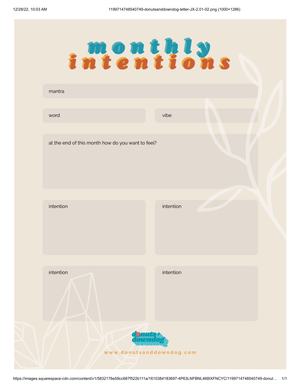
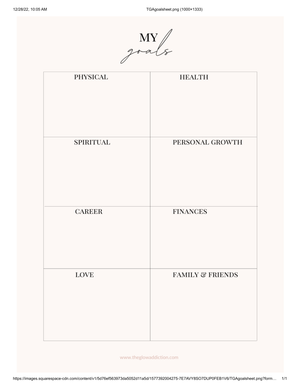
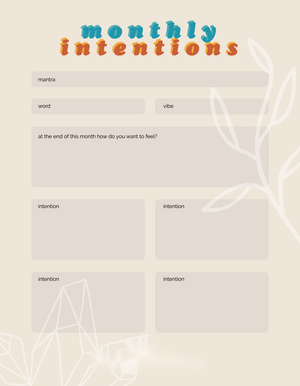
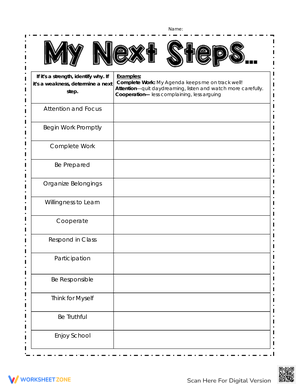
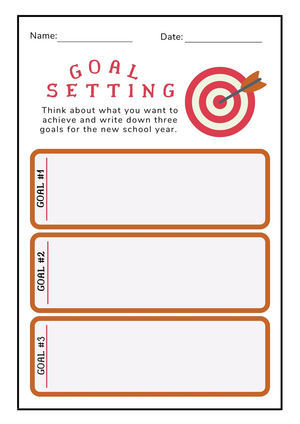
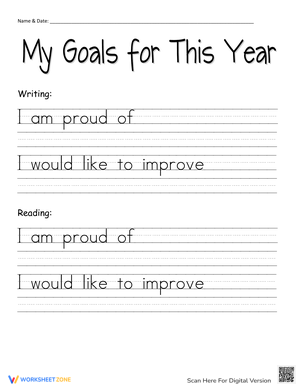
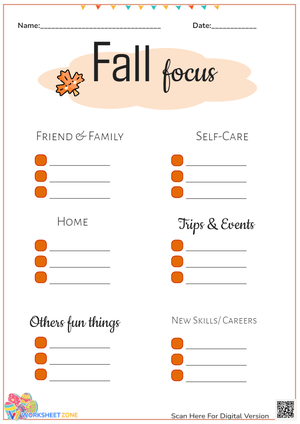
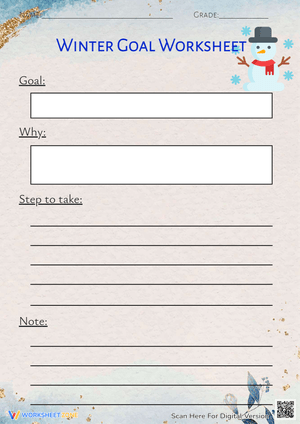
These intention setting worksheets for 3rd grade give teachers a structured morning entry point that most elementary routines skip entirely: asking students not what they plan to accomplish, but how they plan to show up. The set includes daily check-in prompts, kindness-focused writing frames, a draw-and-write visual format, and weekly reflection sheets — each targeting a different angle of the same core skill. The daily formats run three to five minutes; the weekly reflection sheet takes closer to ten.
Why Third Grade Is the Right Entry Point for This Practice
Eight and nine-year-olds sit right at the edge of abstract thinking. They can hold a concept like "patience" or "respect" in mind without needing a physical demonstration — but they still need concrete anchors to apply it. That developmental position makes third grade the natural entry point for intention work. First and second graders tend to conflate intentions with rules or promises ("I will not push anyone at recess"), which sidesteps the whole point of the exercise. Third graders can begin to grasp that an intention is about their own internal orientation, not just visible compliance. That distinction, once it lands, carries real weight through the rest of elementary school and into the self-regulation work students tackle in fourth and fifth grade.
The Distinction That Changes How Students Engage With the Practice
Before any worksheet goes out, students need a clear picture of how an intention differs from a goal. Most third graders arrive with solid goal-setting vocabulary — reading levels, math targets, test scores. Goals point toward outcomes. Intentions point toward attitude and approach. "I will finish my story draft" is a goal. "I will stay focused even when the words won't come" is an intention. Both matter, but they pull different mental levers. Teachers who skip this conversation find that students treat the intention setting worksheets for 3rd grade as goal-writing in disguise, and then the whole practice stalls because students keep "failing" intentions the way they might miss a target.
What's Inside the Set
The four worksheet formats cover different angles of the same core competency — self-directed behavior — and rotating through them keeps the practice meaningful across a full trimester.
- Daily check-in prompts — Short sentence frames students complete at their desks: "The way I want to approach challenges today is..." and "One way I will show up for my classmates is..." Students who are still building emotional vocabulary can underline from a printed word bank rather than generating language from scratch.
- Draw-and-write intention sheets — Students sketch themselves acting out their intention, then write a sentence beneath the drawing. The visual step reinforces the written commitment and gives students who are more comfortable drawing than writing a genuine entry point — not a stripped-down fallback.
- Kindness-focused writing frames — Prompts that direct attention outward toward a specific peer or group interaction. "One kind thing I can do for someone in my class today is..." This format earns its place during weeks when the classroom's social temperature is running high — after a conflict at recess, or when a new student is still finding their footing.
- Weekly reflection sheets — Students look back at their intentions from Monday through Friday, name one moment they acted on an intention, and name one moment they found it hard. Without this step, the morning check-in stays shallow. The reflection completes the learning cycle and gives students real material for growth.
Fitting These Into Your Week Without Losing Instructional Ground
The intention setting worksheets for 3rd grade work best when attached to an existing transition rather than carved out as a separate instructional block. The three to five minutes when students are unpacking backpacks and settling into their seats — time that otherwise drifts — becomes the natural window. Place the worksheet on each desk before students arrive. No introduction, no whole-group explanation that first morning. They sit down, the prompt is in front of them, and the day begins with a moment of deliberate self-direction. Once the habit is established, it runs without prompting.
One technique that extends the impact considerably: have students copy their intention onto a sticky note and post it at the top corner of their desk. During transitions — the most friction-prone moments of any elementary day — a quick "Check your corner" from the teacher costs zero instructional time and pulls students back to their stated intention before behavior escalates. The sticky note turns a completed worksheet into a live behavioral anchor rather than something filed away and forgotten by 9:15.
Student Confusion Worth Getting Ahead Of
The most consistent issue in early weeks is students writing intentions too vague to act on. "Be good today" and "Try my best" are the classroom equivalents of a non-answer — they sound right but give the student nothing to return to when the day gets difficult. The fix is specificity: help students anchor their intention to a situation they can actually picture. "I will wait for others to finish speaking before I talk during morning meeting" is an intention a student can measure against their own behavior. When you see vague intentions on the worksheets, ask the student, "What would that look like during reading groups?" or "When today might you need to remember that?" That follow-up question — not the prompt itself — builds the habit of concrete thinking.
A second pattern to watch: students who write a different positive-sounding phrase every day but never seem to think about it again after setting it down. These students are completing the worksheet correctly but treating it as a compliance task rather than a genuine commitment. The sticky-note callback system addresses this directly. So does the weekly reflection sheet — once students know they will be asked on Friday to recall a moment their intention was hard to keep, they start thinking about it more carefully on Monday morning.
Using the Set With Students at Different Readiness Levels
Students who are strong writers and natural self-reflectors can push past the sentence frames and write open-ended intentions without any prompt structure. Challenge these students to set a different intention for each subject block rather than a single intention for the whole day. That added specificity raises the cognitive demand considerably and keeps the practice from feeling routine.
For students who find the abstract language hard to access — especially English language learners or students with language-processing challenges — the draw-and-write format is the most accessible entry point in the set. Pairing the drawing with a fill-in sentence frame keeps the task manageable while still requiring the student to commit to something specific rather than leaving the sheet blank. An intention menu posted on the wall — a short anchor chart listing eight to ten age-appropriate intentions with small illustrations next to each — removes the blank-page paralysis without removing the student's choice.
Standard Alignment
These worksheets align to the CASEL SEL Framework's Self-Awareness and Self-Management competency areas. Self-Awareness at the elementary level includes identifying emotions and recognizing personal values; each daily check-in prompt asks students to name an emotional stance they want to bring to the day. Self-Management includes regulating behavior and setting personal goals; the intention-setting and callback routine practice exactly this competency in a daily, low-stakes format. The weekly reflection sheet targets the Self-Awareness sub-skill of accurately assessing one's own behavior over time — a capacity CASEL identifies as foundational to sustained self-regulation. Teachers in districts that have adopted state-level SEL standards will find these worksheets map directly to third-grade social-emotional benchmarks in most of those frameworks as well.
Frequently Asked Questions
What is the difference between a goal and an intention, and how do I explain it to third graders?
A goal is something a student wants to achieve — finishing a book, earning a score, completing a task. An intention is the attitude they bring while doing those things. An analogy that lands well at this age: a goal is the destination, and an intention is how you decide to travel. You can walk to the same place in a grumpy mood or a patient one — the destination is the same, but the experience and the learning are different. Once students have that frame, the morning prompts start making genuine sense.
How much time do these actually take in a packed morning schedule?
The intention setting worksheets for 3rd grade were built for the unpacking window — the first three to five minutes before any instruction begins. If you include a brief share-out during morning meeting, the total time investment is under ten minutes. The weekly reflection sheet takes a bit longer, closer to eight to twelve minutes, and works well as a Friday afternoon wrap-up during the last block before dismissal. Consistency matters more than duration; a short daily practice does more than a long occasional one.
My students keep writing the same intention every single day. Should I intervene?
Repetition itself is not the problem — some students genuinely need to work on the same behavior for several weeks. The real question is whether the student is thinking about the intention during the day or just writing it out of habit each morning. Ask the student to tell you about one specific moment this week when they tried to act on that intention. If they cannot recall a single moment, the practice has gone rote. That is when the intention menu and the sticky-note callback become most useful — they shift the task from a writing activity into an active behavioral strategy.
Can these worksheets support students who already have formal behavior plans in place?
They work well alongside existing behavior plans precisely because they are student-directed rather than teacher-directed. A student with a behavior plan often experiences school as a series of external corrections. Intention setting shifts that dynamic — the student states what they want for themselves, in their own words, before the day starts. Teachers consistently find that redirecting a student by referencing their own stated intention ("Remember what you wrote this morning") lands differently than a standard correction. The student feels less policed and more held to something they chose.












 Interactive Worksheet Maker
 Quiz Maker
 Word Search Maker
 Crossword Puzzle Maker
 Word Scramble Generator
 Sentence Scramble Generator
 Handwriting Worksheet Generator
 Name Tracing Generator
 Fill In The Blank Generator