


























Views
Downloads
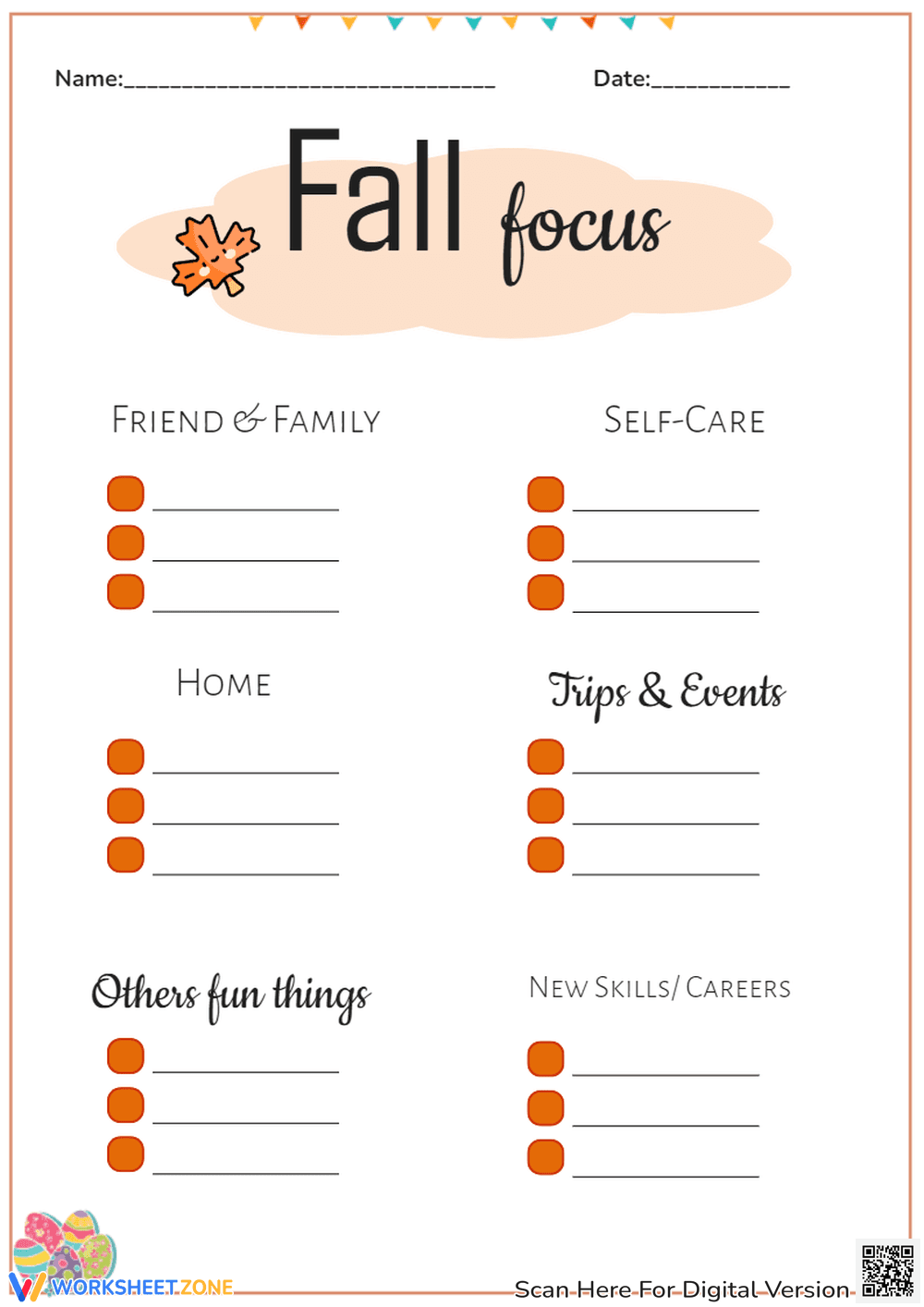

Fall Focus Worksheet | Grade 1-3 Essential Printable
Paste this activity's link or code into your existing LMS (Google Classroom, Canvas, Teams, Schoology, Moodle, etc.).
Students can open and work on the activity right away, with no student login required.
You'll still be able to track student progress and results from your teacher account.
This Fall Focus worksheet provides a structured graphic organizer for students to reflect on their seasonal goals and personal priorities. By categorizing intentions into areas like family, self-care, and new skills, learners practice organizing thoughts and recalling personal experiences. It is an ideal tool for fostering social-emotional growth and seasonal mindfulness in early elementary classrooms.
At a Glance
- Grade: 1-3 · Subject: ELA / SEL
- Standard:
CCSS.ELA-LITERACY.W.2.8— Recall information from experiences to answer questions and organize thoughts- Skill Focus: Goal setting and reflection
- Format: 1 page · 18 tasks · No answer key · PDF
- Best For: Seasonal reflection and morning work
- Time: 15–20 minutes
What's Inside
The worksheet features a clean, autumn-themed layout with six distinct categories: Friends & Family, Self-Care, Home, Trips & Events, Other Fun Things, and New Skills/Careers. Each section includes three lines with checkboxes, allowing students to list specific intentions or memories. The visual cues and simple headers make it accessible for young writers to navigate independently without constant teacher intervention.
Zero-Prep Workflow
This resource is designed for a zero-prep workflow. Teachers can print the single-page PDF in less than 30 seconds. Distribution takes approximately 1 minute during a morning meeting or transition period. Reviewing the completed sheets allows for a quick 5-minute formative check on student writing and emotional well-being. Total teacher preparation time is under 2 minutes, making it an excellent choice for sub plans.
Standards Alignment
Primary alignment is to `CCSS.ELA-LITERACY.W.2.8`, which requires students to recall information from experiences or gather information from provided sources to answer a question. This worksheet facilitates this by prompting students to look inward at their own lives and upcoming seasonal plans. Both standard codes can be copied directly into lesson plans, IEP goals, or district curriculum mapping tools.
How to Use It
Use this worksheet as a morning reflection tool during the first week of autumn to set a positive tone for the season. Alternatively, assign it as a formative assessment for descriptive writing or list-making skills. Observe how students prioritize their categories to gain insights into their personal interests and home life dynamics. Completion usually takes 15 to 20 minutes depending on the grade level.
Who It's For
This resource is perfect for general education students in grades 1 through 3, as well as English Language Learners who benefit from categorized vocabulary practice. It pairs naturally with a seasonal read-aloud or an anchor chart about autumn traditions. It provides a low-stakes writing environment for students who struggle with long-form composition or those needing social-emotional support.
Research from Fisher & Frey (2014) emphasizes the importance of the gradual release of responsibility, where structured graphic organizers like this Fall Focus sheet serve as essential scaffolds for independent writing. By providing clear categories, the worksheet reduces the cognitive load associated with brainstorming, allowing students to focus on word choice and personal reflection. According to the RAND AIRS 2024 report, integrating social-emotional learning (SEL) prompts into standard ELA activities significantly improves student engagement and classroom climate. This worksheet aligns with CCSS.ELA-LITERACY.W.2.8 by requiring students to recall personal experiences and organize them into a coherent list. Such exercises are foundational for developing the organizational skills necessary for more complex narrative and informational writing in later grades. Educators can use this tool to bridge the gap between personal experience and academic writing, ensuring that students meet literacy standards while developing self-awareness.


