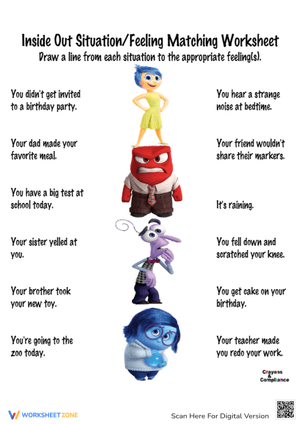
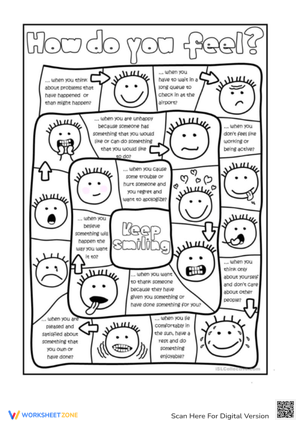
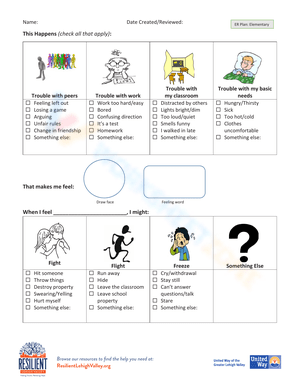
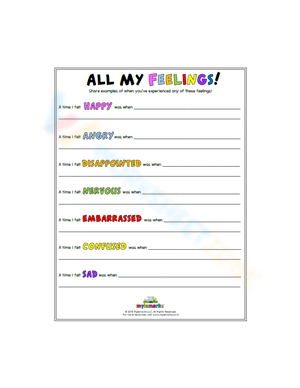
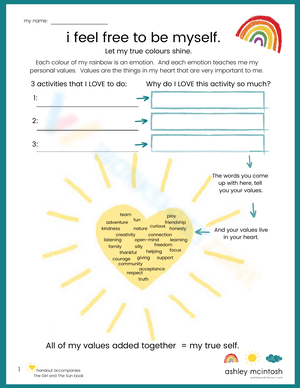
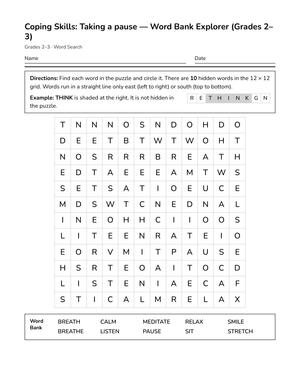
These emotional regulation worksheets for 3rd grade give teachers a targeted set of printable resources built for a specific developmental window — the point in middle elementary when peer dynamics grow more layered, academic expectations shift toward independent production, and students are just self-aware enough to begin learning how they respond to frustration. Each worksheet addresses one discrete regulation skill: calibrating emotional intensity, identifying personal triggers, selecting a coping strategy, rewriting unhelpful self-talk, or reflecting after a difficult moment resolves. That specificity is what makes the set useful — students are practicing something they can name, not just "working on their feelings" as a vague goal.
What Students Practice Across the Set
The five skill areas below map to distinct points in the regulation process — from noticing an emotion, to understanding where it came from, to deciding what to do about it. The worksheets do not follow a predetermined sequence; teachers can pull whichever worksheet fits the instructional moment or the student's current growth edge.
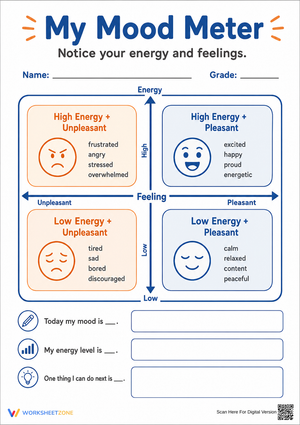
- Emotion intensity calibration: Students use a thermometer-style scale to rate how strong a feeling is, distinguishing mild irritation from significant distress. This skill is foundational — students who cannot gauge intensity tend to respond to a "3" situation with a "10" reaction.
- Trigger identification: Students record which situations, people, or times of day tend to precede a strong emotional response. Recognizing a pattern before it escalates is more useful than any coping strategy applied mid-meltdown.
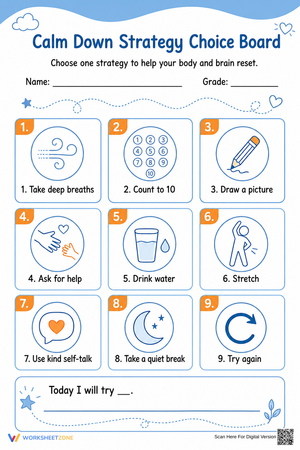
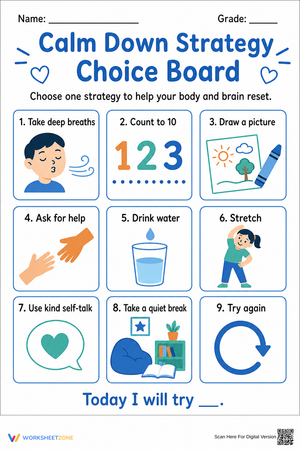
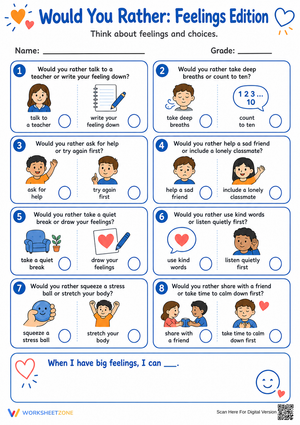
- Coping strategy practice: Rather than prescribing one approach, these worksheets help students identify which strategy actually works for them — deep breathing, counting backward, squeezing something, moving their body — and why.
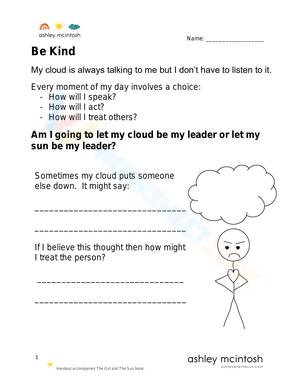
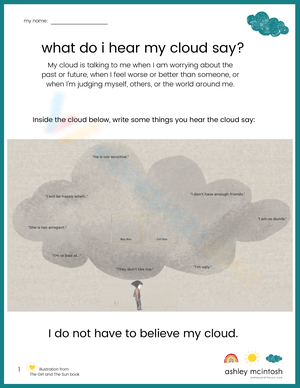
- Self-talk reframing: Students read an anxious or self-defeating thought and rewrite it using more accurate, helpful language. This draws on cognitive reframing techniques used in CBT-informed SEL programs.
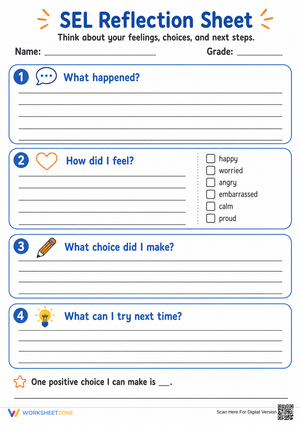
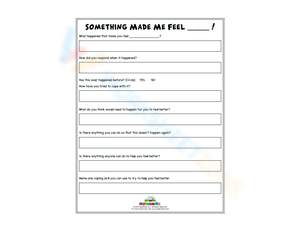
- Post-event reflection: After a hard moment resolves, students write briefly about what happened, what they did, and whether the strategy held. Revisiting the experience with some distance — spaced retrieval applied to social-emotional learning — tends to produce more lasting insight than processing only in the heat of the moment.
Common Student Mistakes Teachers Should Anticipate
The most consistent error on the intensity worksheets is what might be called the ceiling effect: students rate nearly everything at maximum intensity. A pencil breaking earns the same "10 out of 10" on the thermometer as genuine fear. This isn't dramatic exaggeration — it reflects a real proportionality gap. The student doesn't know what a "4" feels like in their body, so they default to the extremes. The fix isn't more worksheets; it's a guided conversation during a calm moment: What does a 3 look like on your face? What's happening in your stomach when it's a 9 versus when it's a 3? Getting students to populate the middle of the scale is the actual instructional work, and the worksheet makes clear exactly where that gap lives.
A second consistent pattern shows up in trigger-tracking: students write "I feel like he took my eraser" instead of "I feel angry because he took my eraser" — they conflate the event with the emotional response. This matters because a student who cannot separate the feeling from its cause has no clear entry point for applying a coping strategy. They are trying to regulate the situation, not their internal response to it. When you see that phrasing in the writing, it tells you clearly that the feeling-versus-event distinction needs more direct instruction before trigger work can take hold.
How to Work These Worksheets Into Your Lesson Plans
Emotional regulation worksheets for 3rd grade work best when they appear during parts of the day that already carry a predictable, low-pressure structure. Morning meeting is the natural entry point: a two-minute check-in worksheet before instruction gives you a real-time read on who walked in carrying something hard. That's formative information you'd otherwise miss until a student is already mid-escalation.
Before introducing any new coping strategy worksheet, model the process with a minor frustration from your own morning. Tell the class that you spilled your coffee, that your first reaction was irritation, and then walk through the breathing exercise on the worksheet out loud — narrating what you notice in your body as you go. That three-minute demonstration does more to normalize the practice than any amount of explaining why the skill matters. When students watch a teacher use the exact same tool, the worksheet stops being homework for their emotions.
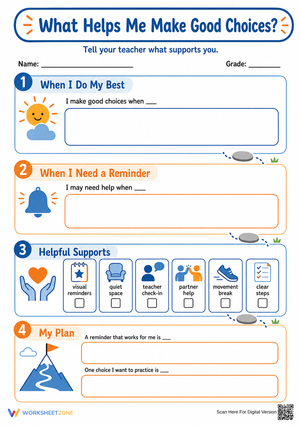
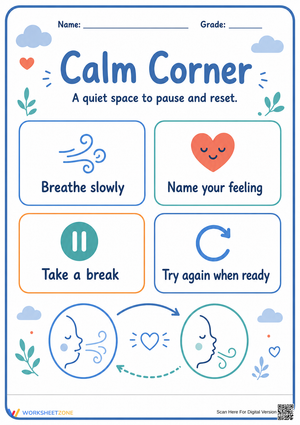
The calm-down corner format pairs particularly well with the trigger-identification and coping strategy worksheets. A student who feels a reaction building can visit the corner, pick up the relevant worksheet, and work through it independently before returning to the group. The structured pause is the whole mechanism — the worksheet gives the student something to do with the feeling rather than leaving them to suppress it or act it out.
Standard Alignment
These resources directly support the CASEL Self-Management competency, which at the third-grade level focuses on identifying and labeling emotions with increasing precision, managing stress responses, and practicing impulse control across contexts. Within the CASEL framework, Self-Management is one of five core SEL competencies and connects explicitly to academic readiness — a student who cannot regulate through frustration during a challenging task tends to disengage before reaching mastery.
Many state SEL standards mirror the CASEL structure closely. Teachers in states with adopted standalone SEL frameworks — including Illinois (where ISBE Social/Emotional Learning Standards address self-awareness and self-management at the elementary band), Ohio, and Washington — will find the set aligns with grade-appropriate expectations for emotional identification and coping skill development across the elementary years.
Adjusting the Set for Different Student Levels
Among students newer to reflective SEL work, the emotion thermometer worksheets are the right starting point. They require minimal writing, give students a visual entry into the concept of intensity, and keep the cognitive load low enough that the emotional content stays in focus. For lower-confidence writers, a brief small-group discussion before independent work removes the blank-page hesitation that can derail the exercise before it starts. Keeping the coping strategy list visible while students work also helps — not as an answer key, but as a reference that reduces the demand of generating options from memory alone.
Students who already have a working vocabulary for their emotional states get more traction from the trigger-tracking and self-talk worksheets, which require more precise written responses. For these students, the post-event reflection worksheet functions as a genuine debrief: they've worked through a hard moment, made a choice about how to respond, and are now analyzing whether that choice held. That is a sophisticated cognitive task for an eight-year-old, and some students arrive at mid-third-grade fully ready for it.
For students with IEPs or 504 plans that include behavioral or emotional goals, completed worksheets serve as documentation of skill practice. A student working on a self-management goal can keep a portfolio of finished reflection worksheets as concrete, teacher-observable evidence of progress. Emotional regulation worksheets for 3rd grade that address specific, named skills translate more directly into measurable goal language than broad wellness activities do — which makes them useful not just in the classroom but in formal goal review conversations.
Frequently Asked Questions
Do these worksheets reach students who shut down rather than act out?
Often more effectively than they reach externalizers. A student who goes quiet when overwhelmed isn't showing disruptive behavior, but they're just as dysregulated — and frequently missed. The check-in and emotion intensity worksheets give that student a non-verbal way to signal their state. Many internalizing students find it easier to circle a number on a thermometer than to say out loud that they're struggling. Watch for consistently low ratings that don't shift across the week; that pattern typically points to a student who needs a direct conversation, not more strategy practice.
How often should students complete these during a typical week?
For whole-class SEL instruction, completing two to three emotional regulation worksheets for 3rd grade per week gives students enough repetition to internalize the concepts without the practice feeling routine or mechanical. For individual students with more significant self-regulation needs, a brief daily check-in worksheet builds the habitual self-awareness that produces real behavioral change over time — but that looks less like a formal lesson and more like a two-minute morning ritual at the start of the day.
Should completed worksheets be graded?
No. Grading a student's emotional response to a trigger sends exactly the wrong message — it converts reflection into performance. Use these worksheets formatively: read them to understand where students are, track patterns across the class, and flag students who may need additional support. The most meaningful indicator of whether the practice is working isn't the worksheet itself — it's whether a student's behavior in a genuinely frustrating moment looks different after several weeks of consistent use.
What happens when a student refuses to engage?
Refusal is usually meaningful data. A student who won't touch a feelings worksheet is often the one who most needs the practice — and also the one carrying the most negative history around discussing emotions. Start with the most concrete, lowest-demand worksheet in the set (the thermometer or a multiple-choice format) and give that student a pass on open-ended writing until they've had enough exposure to the routine to trust it. Forced compliance with a reflection activity almost never produces genuine reflection.












 Interactive Worksheet Maker
 Quiz Maker
 Word Search Maker
 Crossword Puzzle Maker
 Word Scramble Generator
 Sentence Scramble Generator
 Handwriting Worksheet Generator
 Name Tracing Generator
 Fill In The Blank Generator