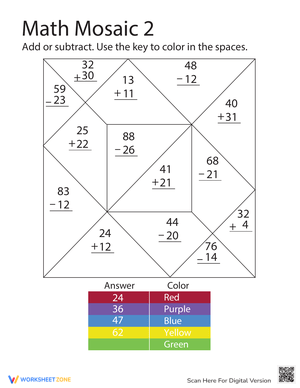
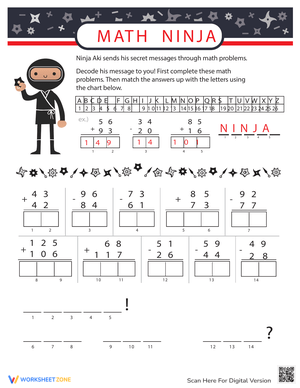
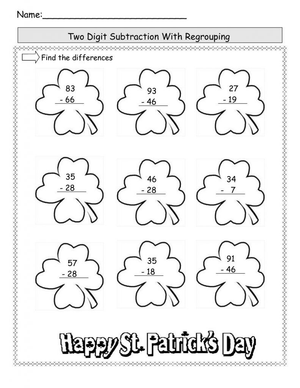
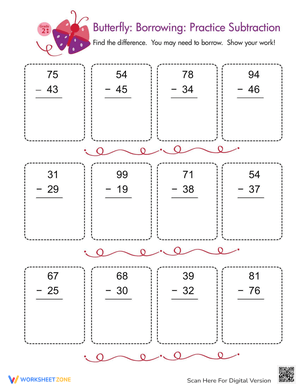
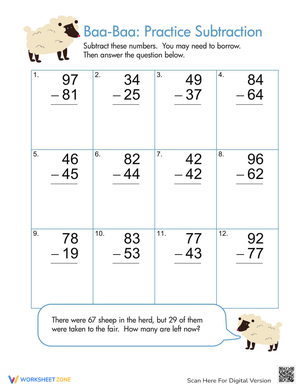
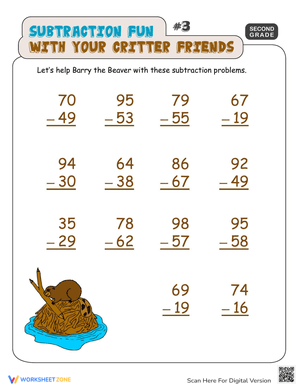
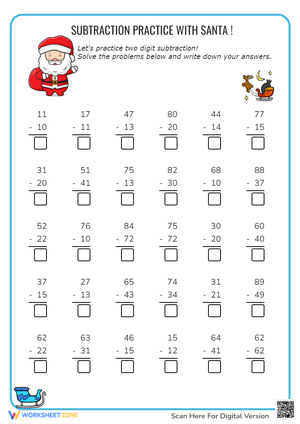
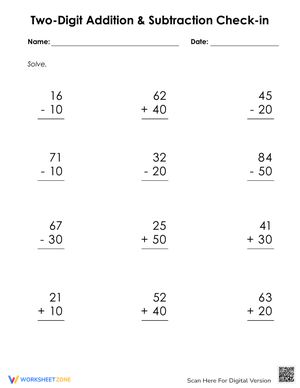
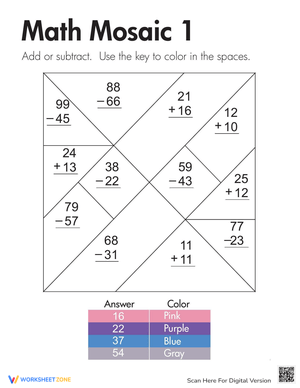
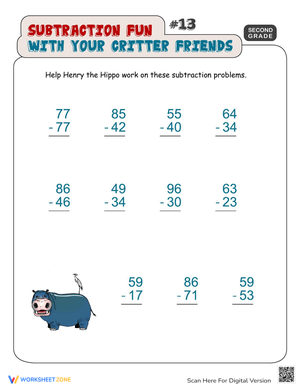
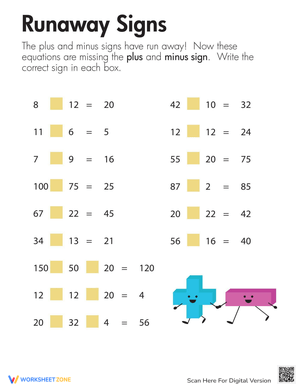
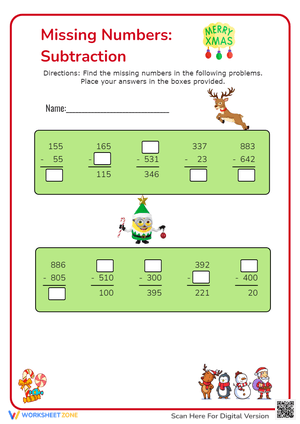
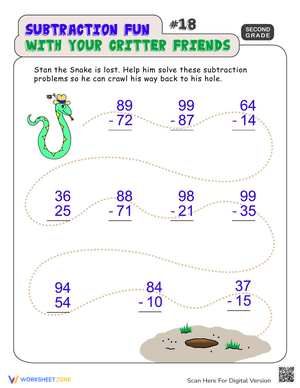
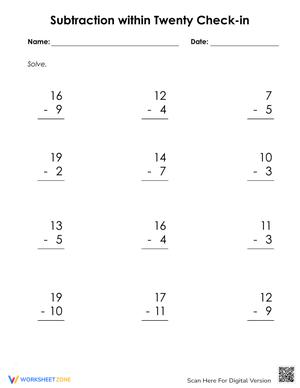
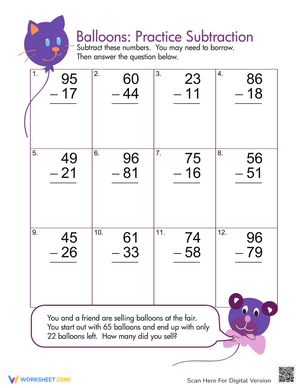
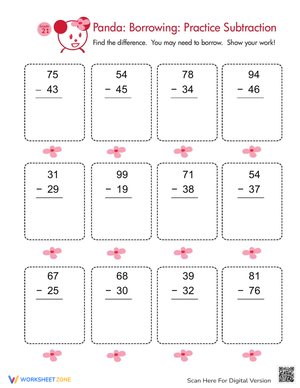
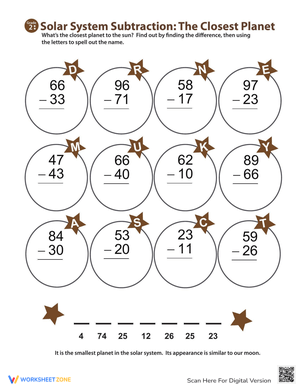
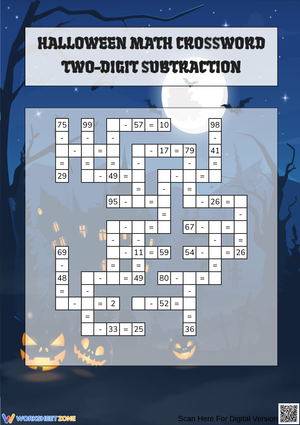
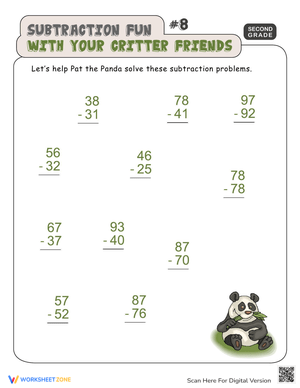
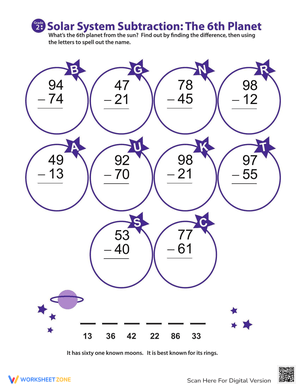
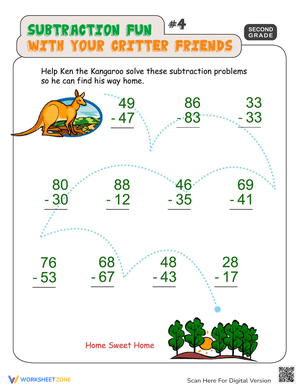
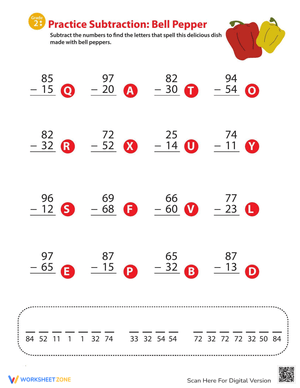
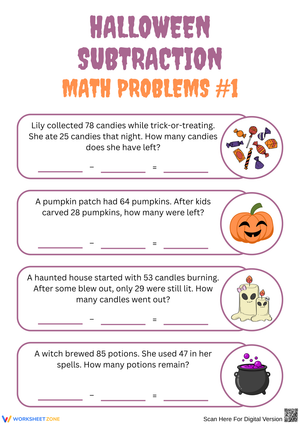
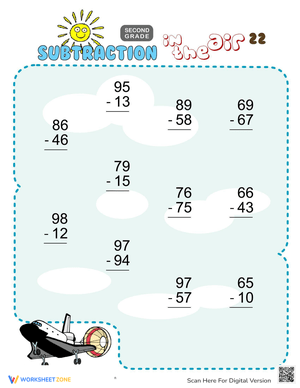
These two digit subtraction and regrouping printable worksheets for 2nd grade give teachers a set of focused practice resources built around one of the most cognitively demanding transitions in early elementary math. Each worksheet isolates the specific decision points that make this algorithm hard for seven- and eight-year-olds: recognizing when regrouping is necessary, trading a ten for ten ones, and completing two separate column subtractions in the right order without losing track of which digits have changed.
The Specific Skills Covered in the Set
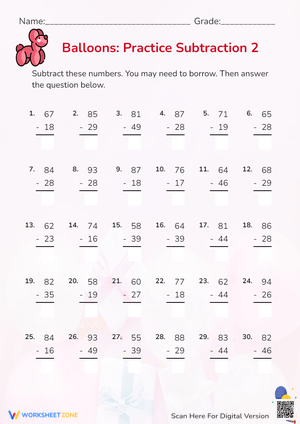
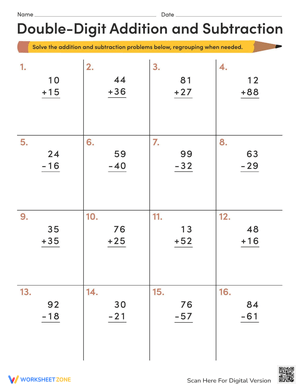
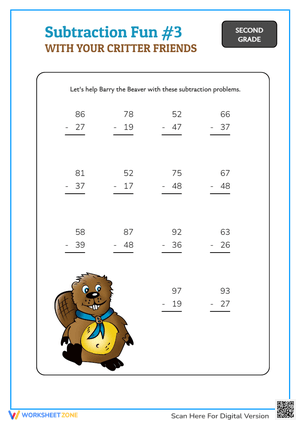
The worksheets divide problems into two meaningful categories. The first group presents problems that always require regrouping — the ones digit on top is less than the ones digit on the bottom on every problem. That consistency lets students build rhythm with the algorithm before they have to make any judgment calls. The second group mixes regrouping and non-regrouping problems, which is the harder cognitive task: students must examine the ones column first on every problem and decide whether a trade is necessary before doing any arithmetic. Students who skip this decision step are the ones who regroup every problem out of habit, even when it isn't needed.
Within the set, students work across several formats. Vertical notation with regrouping boxes above the tens column is the core format, but one worksheet presents problems horizontally and asks students to rewrite them vertically before solving — a transfer task that surfaces organizational weaknesses. Another worksheet uses error analysis: students read completed problems where a fictional student made a predictable mistake and must identify and correct the error. That format consistently outperforms straight drill at the stage when students technically know the procedure but still execute it inconsistently.
Mistakes Students Make That These Worksheets Help You Catch
The most common error at this stage is the ones-column swap. In a problem like 52 minus 17, a student sees 2 on top and 7 below it, decides to subtract 2 from 7 instead of regrouping, and writes 45. The giveaway in student work: the ones digit of their answer is larger than the ones digit of the original top number. These students are not confused about subtraction — they are treating the operation as symmetrical, subtracting the smaller digit from the larger one regardless of position.
The second pattern is the vanishing ten. A student correctly adds ten to the ones column — crossing out the 2 in 52 and writing 12 — but then leaves the tens digit untouched. They compute 5 minus 1 equals 4 in the tens column instead of 4 minus 1 equals 3, arriving at 45 rather than 35. A regrouping box positioned directly above the tens digit, where students physically cross out the original digit and write the reduced number, turns this from a frequent error into a visible, correctable step. Worksheets without that visual prompt see significantly more vanishing-ten errors in student work.
Lesson-Planning Ideas to Build These Worksheets Into Your Week
Sequencing matters here. Open with worksheets where every problem requires regrouping so students are not yet making judgment calls — they can focus entirely on executing the trade correctly. Once that rhythm is consistent, typically after two or three lessons, introduce the mixed-practice worksheets. That transition forces students to look at the ones column first on every problem, which is the habit that prevents automatic regrouping from becoming a crutch.
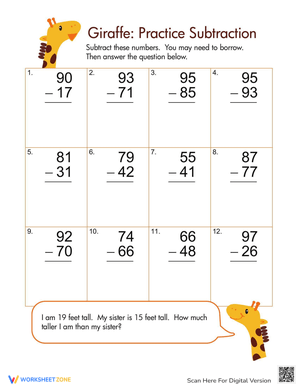
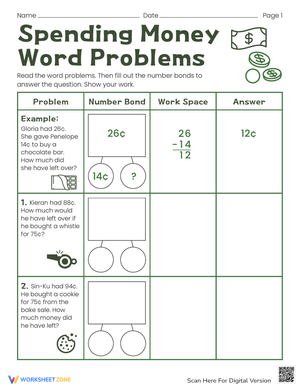
These two digit subtraction and regrouping printable worksheets for 2nd grade work especially well as exit tickets. A five-problem worksheet in the last eight minutes of a lesson gives you immediate data: which students are ready to work with mixed problems tomorrow, and which need to go back to base-ten blocks before they attempt more worksheet practice. The word-problem worksheet fits the Friday review block, when students benefit from reading a context and deciding what operation to apply rather than running through vertical problems on autopilot.
One classroom protocol worth adopting before students begin any worksheet: have them scan the ones column of every problem and place a small pencil mark above the tens digit wherever the top ones-digit is less than the bottom ones-digit. This pre-calculation step separates the decision about whether to regroup from the act of regrouping. Students who skip it tend to make both types of errors — the swap and the vanishing ten — because they're trying to decide and calculate simultaneously.
Standard Alignment
These worksheets address CCSS.MATH.CONTENT.2.NBT.B.5, which requires students to fluently add and subtract within 100 using strategies based on place value, properties of operations, and the relationship between addition and subtraction. Regrouping sits at the center of this standard — a student who avoids it by defaulting to the ones-column swap cannot reliably subtract any pair of two-digit numbers where the top ones digit is less than the bottom. In classroom planning terms, this standard typically arrives in the second semester of 2nd grade, after students have built solid place value understanding through 2.NBT.A.1 and practiced addition with regrouping through 2.NBT.B.7. Teachers introducing two digit subtraction and regrouping printable worksheets for 2nd grade in that sequence are positioning the skill correctly as the bridge to multi-digit computation in 3rd grade.
Differentiating These Worksheets Across Ability Levels
For students still working through the concept, pair each worksheet with base-ten blocks. Students build the top number with rods and unit cubes, make the physical trade — breaking one rod into ten cubes — then remove the bottom number and count what remains before recording on the worksheet. This concrete-to-representational sequence is not a detour; it builds the mental image of regrouping that procedural practice alone does not establish. Students who can show the trade physically but make errors on paper are telling you they understand the math but have not automated the written notation. That's a different intervention than a student who cannot explain what regrouping means at all.
Students who have already mastered the algorithm need extension beyond additional drill. Give them the error-analysis worksheet and ask them to write a sentence naming the type of error in each problem — not just correcting it. Or ask them to generate their own two-digit regrouping word problems and swap with a partner to solve. Both tasks keep them in the same mathematical territory without retreating to a format they have already outgrown.
Frequently Asked Questions
Should I use the word "borrowing" or "regrouping" when I teach this?
"Regrouping" is the more accurate term and the one aligned with current standards. "Borrowing" implies the ten will eventually be returned, which is mathematically wrong — the ten is redistributed, not removed temporarily. In practice, students who hear "borrowing" often ask where the ten goes back to, which creates a conceptual detour that takes time to undo. "Regrouping" or "trading" keeps the language consistent with what is actually happening to the number's structure.
How many problems should each worksheet include for 2nd graders?
Ten to fifteen well-spaced problems is the practical range. Beyond that, you start measuring handwriting stamina and fine motor endurance alongside math understanding — and errors from fatigue look the same on paper as errors from confusion. Early in instruction, fewer problems with stronger visual support (regrouping boxes, labeled columns) are more useful than longer drills.
How do I know when a student is ready to start these worksheets?
Before practicing the written algorithm, a student should be able to decompose a two-digit number both ways: 43 as four tens and three ones, and also as three tens and thirteen ones. That second representation is the mental move that makes regrouping sensible. A quick oral check — "show me 43 using as many different combinations of tens and ones as you can" — tells you which students are ready and which still need more work with manipulatives before worksheet practice will be productive.
Do these worksheets work for homework?
These two digit subtraction and regrouping printable worksheets for 2nd grade travel home well when the concept has already been introduced and practiced in class. The one practical addition: an example problem with each step labeled at the top of the worksheet. Many parents learned this algorithm using "borrowing" with a different notation, and without a reference example they sometimes teach a different crossing-out convention. Students who practice the wrong step sequence at home arrive the next morning needing to unlearn before they can move forward.













 Interactive Worksheet Maker
 Quiz Maker
 Word Search Maker
 Crossword Puzzle Maker
 Word Scramble Generator
 Sentence Scramble Generator
 Handwriting Worksheet Generator
 Name Tracing Generator
 Fill In The Blank Generator