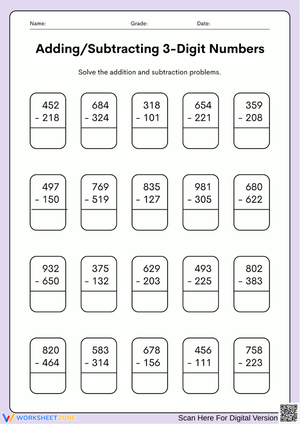
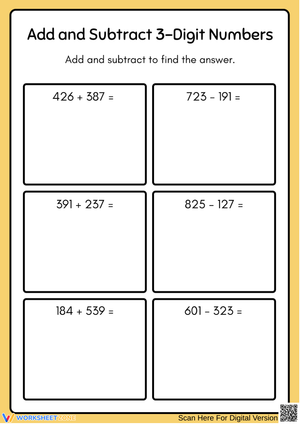
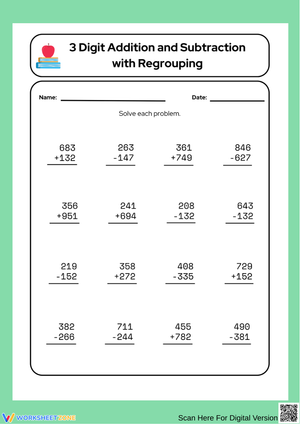
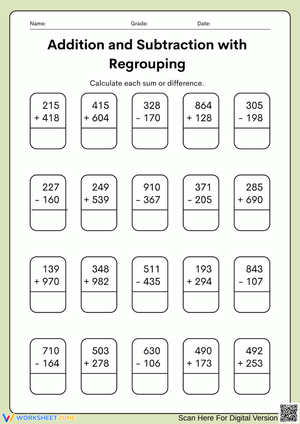
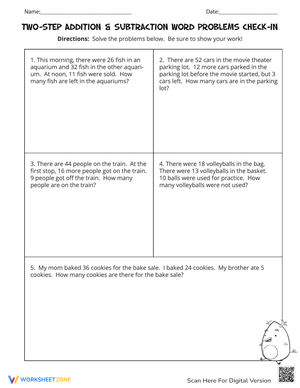
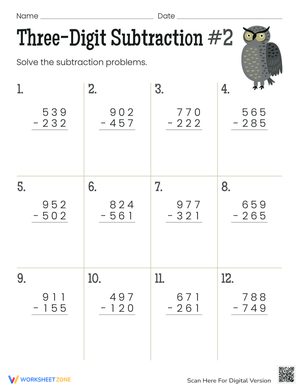
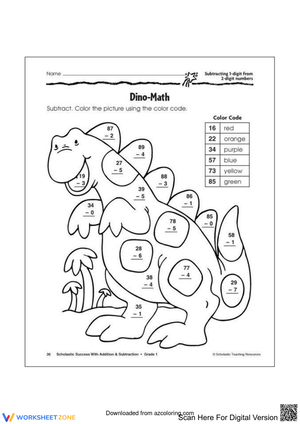
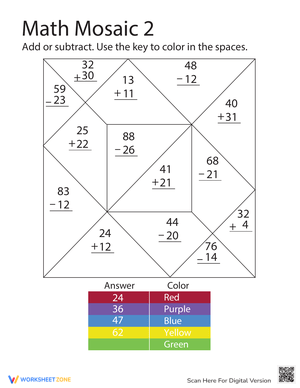
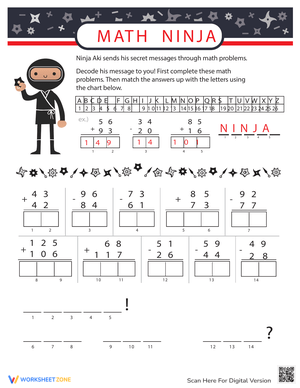
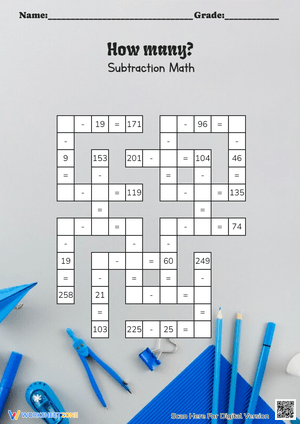
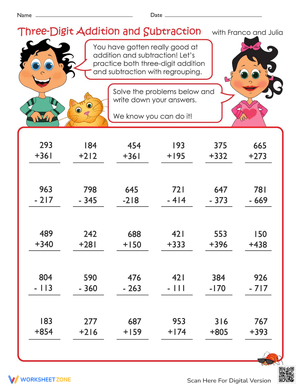
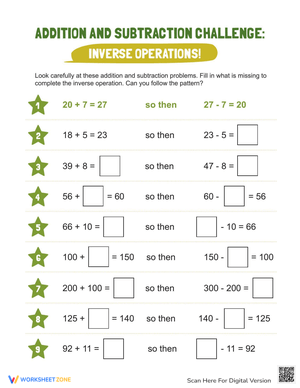
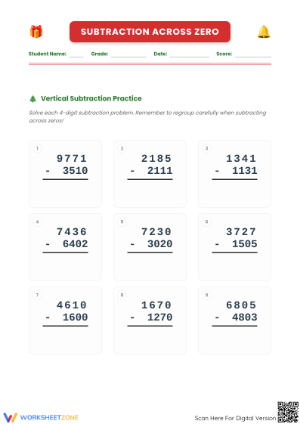
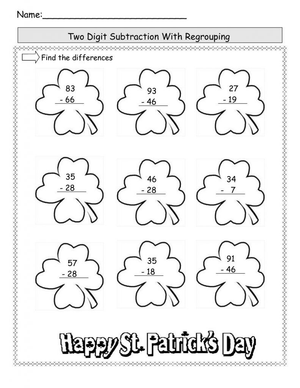
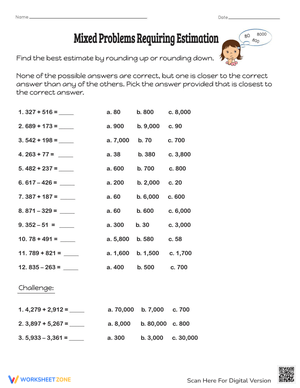
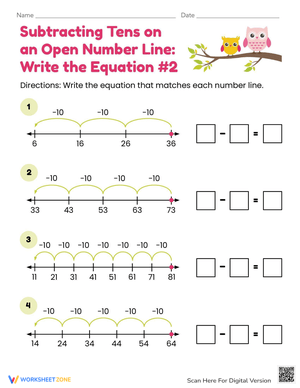
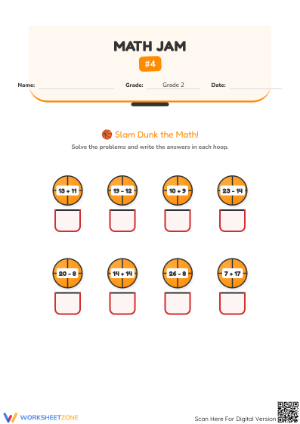
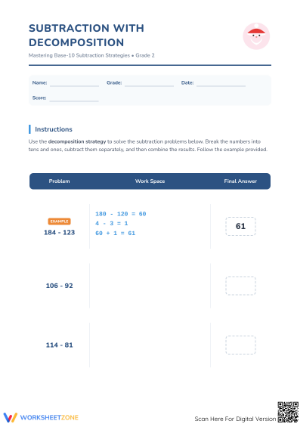
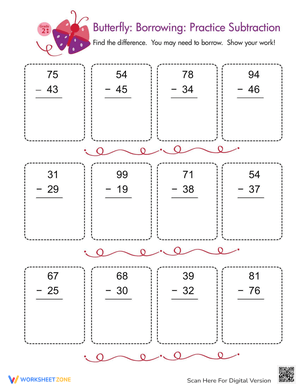
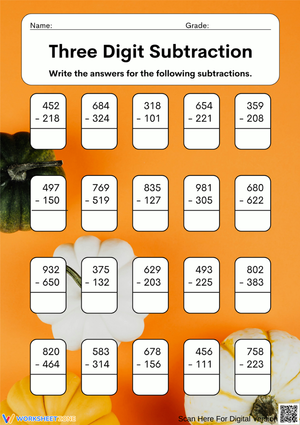
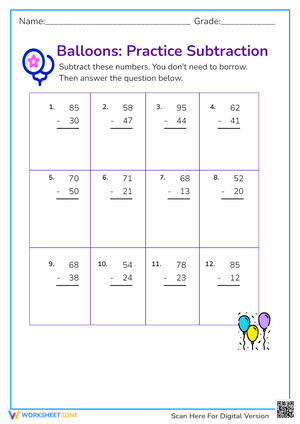
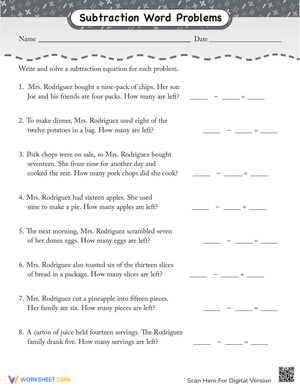
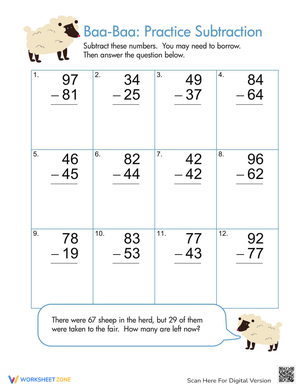
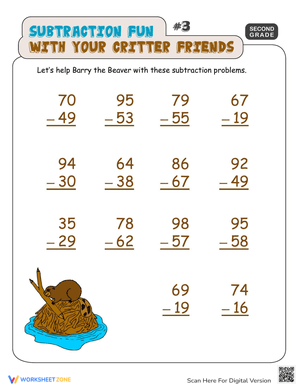
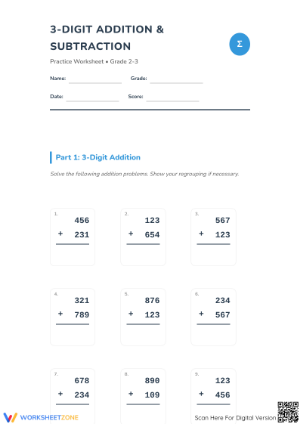
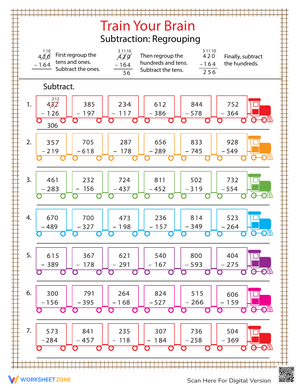
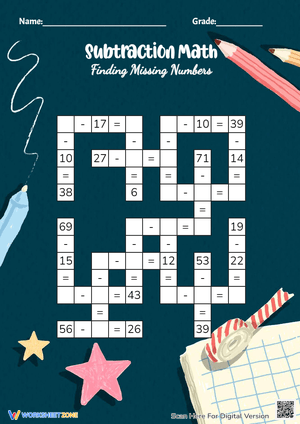
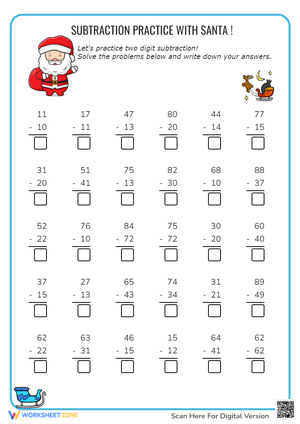
These multi digit subtraction printable worksheets for 2nd grade give teachers a set of targeted resources for the stretch of the school year when regrouping first enters the picture — the point where student confidence in math can tip quickly in either direction. The set moves through a deliberate sequence: two-digit subtraction without regrouping, two-digit with regrouping, three-digit problems with single and double regrouping, and subtracting across zeros. Each worksheet concentrates on one concept before students encounter mixed practice.
What Students Practice Across the Set
The progression is intentional. Starting with two-digit subtraction without regrouping might look like review for some students, but it builds the column-alignment habits — ones under ones, tens under tens — that prevent drift errors later. From there, each worksheet shifts to the next level of demand:
- Two-digit subtraction with regrouping, with place-value notation written beside the algorithm so students see both representations simultaneously
- Three-digit subtraction requiring one round of regrouping
- Three-digit subtraction requiring two rounds of regrouping — tens to ones, and hundreds to tens
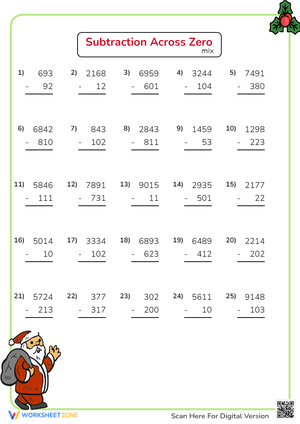
- Subtracting across zeros, practiced as a focused concept before appearing in mixed sets
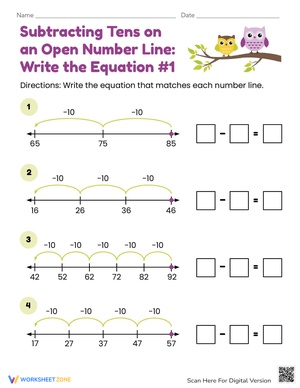
- Open number line problems for students who count up rather than subtract down
- Story problems embedded alongside computation so students keep a real-world referent for what subtraction means
What Goes Wrong When Regrouping Is New — and Why It Happens
The reversal error has a precise shape: a student working 52 minus 19 writes 47 because they subtract 2 from 9 in the ones column instead of regrouping. They know their subtraction facts — the error isn't about fact recall. It's about directionality within a column, and it clusters among students who absorbed commutativity through addition and quietly applied it to subtraction. The error reveals a specific conceptual gap: they haven't yet internalized that in a subtraction column, the top digit is the minuend and cannot be switched out for convenience.
A second error is procedural and equally common: students regroup correctly — they cross out the tens digit, write the superscript, add ten ones — and then subtract using the original tens value anyway. You'll see complete regrouping notation and a wrong answer that treats the tens digit as if the trade never happened. This is not carelessness. The procedure hasn't yet been internalized as a two-step action (trade, then update), and it responds well to having students narrate both steps aloud before touching the pencil.
Subtracting across zeros generates its own category of errors. With 400 minus 258, a common move is to borrow from the hundreds directly into the ones, leaving the tens column entirely untouched. The resulting arithmetic doesn't correspond to any coherent place-value reasoning, and students who make this error often can't explain what they did — a sign the procedure is being mimicked rather than understood. Isolating this sub-skill on its own worksheets before folding it into general practice is the most direct way to address it.
Standard Alignment
CCSS 2.NBT.B.7 asks second graders to add and subtract within 1000 using concrete models, drawings, and strategies grounded in place value and the relationship between addition and subtraction — and to connect those strategies to a written method. The worksheets in this set address that standard directly: computation is consistently paired with place-value notation so students are not simply executing a memorized procedure. 2.NBT.B.9, which requires students to explain why their strategies work, is where the open number line and expanded form worksheets do specific work — both formats make the reasoning visible rather than compressed into a column of digits.
Getting the Most From These Worksheets in Your Lesson Planning
The most reliable pattern is full gradual release before independent practice. Project a worksheet during whole-group instruction and work two or three problems aloud, narrating the internal check: "Ones column — do I have enough ones to subtract? No. Trade a ten for ten ones. Now update the tens digit." Students who hear that self-talk modeled consistently start to replicate it. Within about a week you'll hear it murmured during quiet work time — a reliable sign the procedure is moving from external prompt to internal habit.
For daily warm-up, posting one problem on the board during the first four minutes of math class gives students a low-pressure entry point. Running it as a number talk — asking two or three students to explain their approach before comparing answers — surfaces the counting-up strategy alongside the standard algorithm without extra planning. When a student explains their number-line path to an answer, the classmates who only know the algorithm often recognize it as more transparent, and that conversation does real conceptual work without adding content to the day's plan.
For multi digit subtraction printable worksheets for 2nd grade that include grid columns or place value charts, laminating a class set and supplying dry-erase markers at a math center gives students repeated practice without burning through paper. The center becomes self-resetting — students erase and go again — which works well for the five or six minutes of rotation time when a new concept is still being built.
Tailoring These Worksheets for Students at Different Stages
Students who are still building place-value fluency work better with worksheets that include a base-ten block illustration alongside the algorithm. The drawing gives them a way to physically think through the trade — one ten becomes ten ones — before committing to the standard notation. This is not a separate assignment; it's the same worksheet approached with a concrete support. The goal is that the illustration becomes unnecessary as the concept solidifies, not that it stays in place indefinitely.
For students who have regrouping well under control, multi digit subtraction printable worksheets for 2nd grade that introduce missing-minuend problems — what number, minus 47, equals 28? — extend the standard without leaving the grade-level concept. These problems press students to treat subtraction and addition as inverse operations, which is a third-grade priority. Getting there early, through a familiar worksheet format rather than a new unit, is an efficient use of readiness when it appears before the rest of the class is there.
Frequently Asked Questions
How do I know when a student is ready to move from two-digit to three-digit subtraction?
Readiness is about consistency, not speed. A student who can accurately solve five or six two-digit regrouping problems in a row and explain what they did — not just state the answer — has the place-value grounding to move to three-digit work. Pushing the transition before that explanation is solid is the most common reason students struggle when three-digit regrouping arrives. The explanation requirement is the actual gate, not the computation rate.
What's the most effective response when a student keeps making the same across-zeros error?
Have the student build the top number — 300, 400, whatever the problem uses — with base-ten blocks, then make the trades physically. The blocks make it concrete that you cannot take from the hundreds directly to the ones without passing through the tens. That physical sequence, done once or twice with a teacher present, usually breaks the error pattern more effectively than re-explaining the written algorithm. Multi digit subtraction printable worksheets for 2nd grade that isolate across-zeros problems let you assign focused follow-up after that one-on-one moment without disrupting the rest of the class.
Can these worksheets work alongside intervention support a student is already receiving?
They can, but it's worth talking to the intervention specialist before the unit begins. If the intervention is using a concrete-to-representational-to-abstract sequence and the classroom worksheets jump directly to the algorithm, students sometimes freeze or blend procedures in ways that produce consistent errors without an obvious cause. Sharing the specific worksheets in advance takes five minutes and prevents a week of confusion for the student caught between two approaches.













 Interactive Worksheet Maker
 Quiz Maker
 Word Search Maker
 Crossword Puzzle Maker
 Word Scramble Generator
 Sentence Scramble Generator
 Handwriting Worksheet Generator
 Name Tracing Generator
 Fill In The Blank Generator