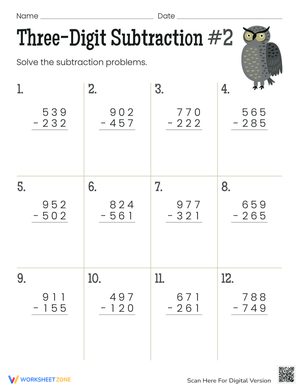
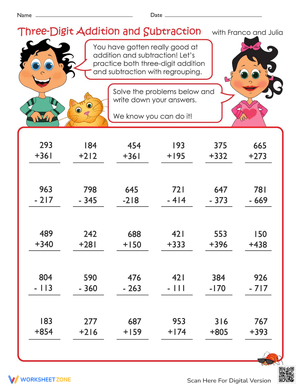
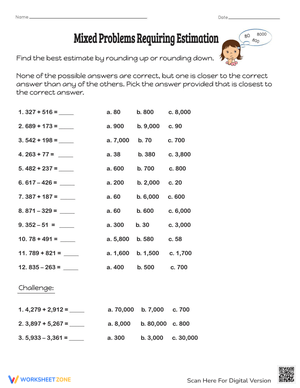
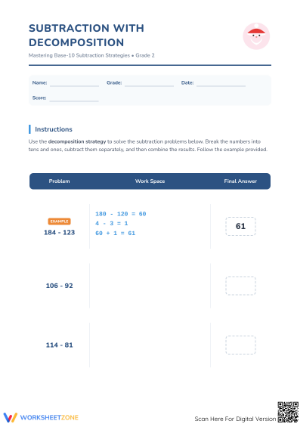
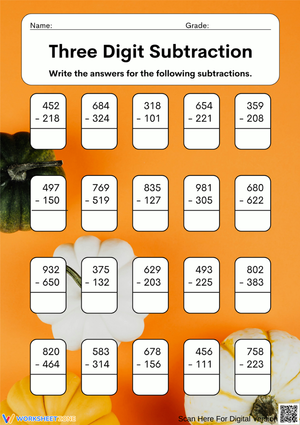
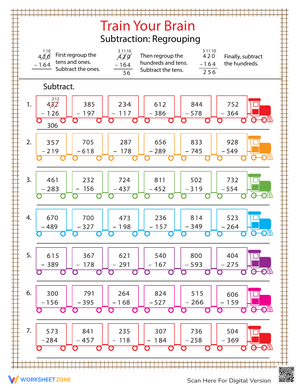
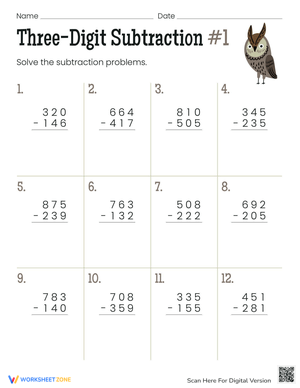
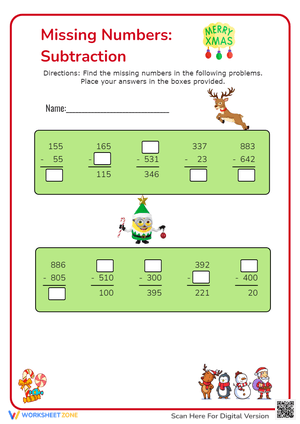
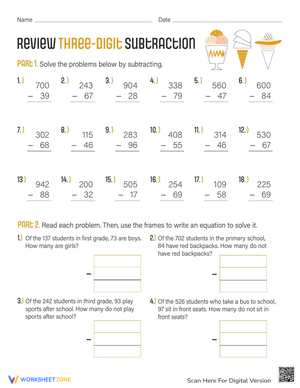
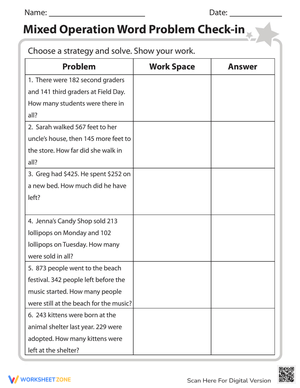
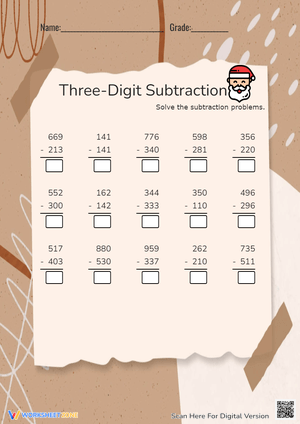
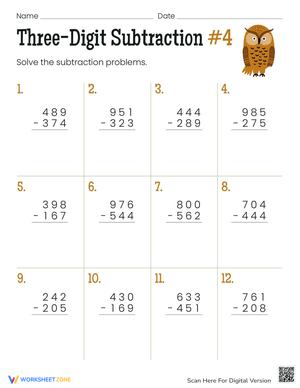
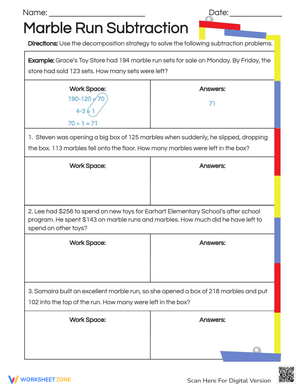
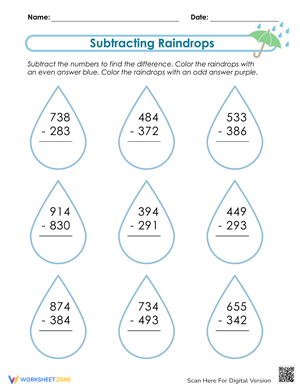
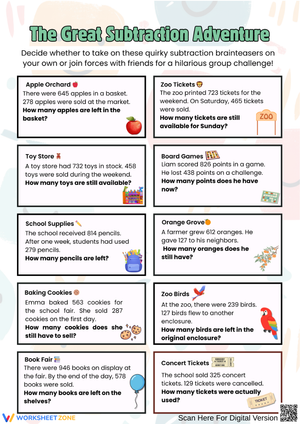
Second grade is the first year the Common Core introduces subtraction within 1000, building directly on the within-100 fluency established earlier in the year. That means your three-digit subtraction worksheets are doing double duty: they reinforce place value while pushing students toward a more complex written method.
How These Worksheets Map to CCSS 2.NBT.7
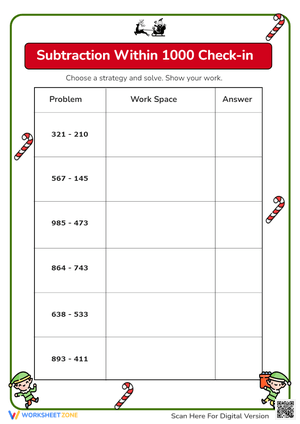
CCSS.MATH.CONTENT.2.NBT.B.7 requires students to add and subtract within 1000 using strategies based on place value, properties of operations, or the relationship between addition and subtraction, and to relate the strategy to a written method. The standard explicitly notes that students must understand composing or decomposing tens and hundreds when subtracting three-digit numbers, which is a detail that separates strong worksheet sequences from generic drill sheets. Practice sets that only test the final answer miss this requirement; the strongest worksheets ask students to show their regrouping work, whether through expanded form, base-ten drawings, or a labeled standard algorithm.
Sequencing Practice: No Regrouping to Double Regrouping
The most effective way to structure three-digit subtraction worksheets is to move students through three distinct stages:
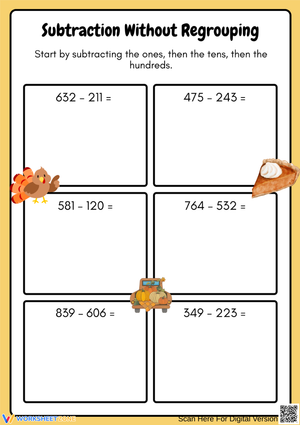
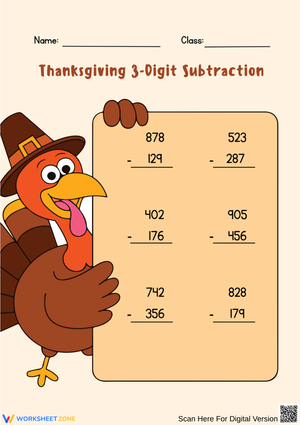
- No regrouping needed, so students focus purely on aligning place value columns correctly
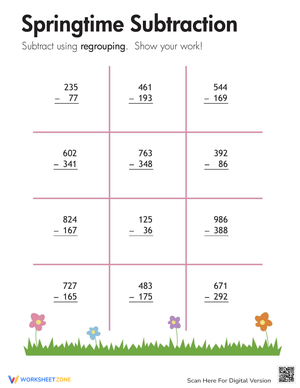
- Single regrouping, borrowing across either the tens or the hundreds place, but not both
- Double regrouping, borrowing across tens and hundreds in the same problem
Skipping straight to mixed practice tends to overwhelm students who haven't yet automated the single-borrow process. Instead, give students several worksheets at each stage before mixing problem types together. This lets you use the worksheet itself as evidence of readiness: a student who's accurate on single-regrouping problems but stalls out on double regrouping needs targeted reteaching before moving forward, not more mixed practice.
Pairing Worksheets With Base-Ten Block Models
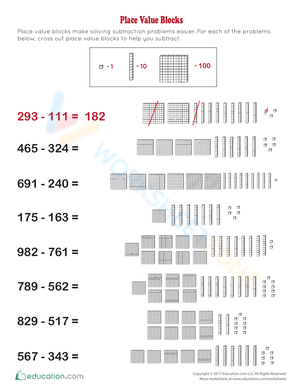
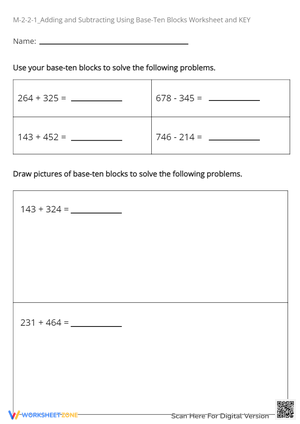
Concrete models and drawings are the standard's recommended scaffolds before students move to the standard written algorithm. Worksheets alone rarely build this bridge; they work best when paired with hands-on base-ten block practice earlier in the lesson. A typical flow looks like this: model a subtraction problem with blocks as a whole class, have students replicate the same problem with drawings, and then hand out a worksheet with equivalent problems for independent practice.
This sequencing matters most for students who are still shaky on place value itself. If a student can't explain why you'd trade a hundred for ten tens using blocks, handing them a worksheet with the standard algorithm skips a step they need. Keep a few worksheets in reserve that include place-value drawing boxes next to each problem for students who need that extra scaffold.
Teacher Tips
A few classroom-tested habits make three-digit subtraction worksheets more effective:
- Always have students underline or circle the place value column they're borrowing into before writing the new digit
- Keep a stack of base-ten blocks nearby during independent practice for students who want to check their work concretely
- Use worksheets with only three or four problems for daily warm-ups, saving longer sets for homework or center time
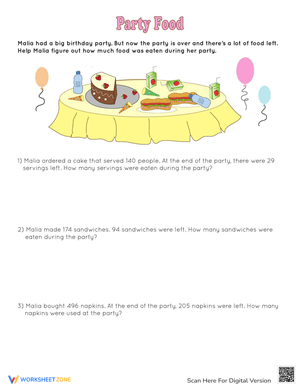
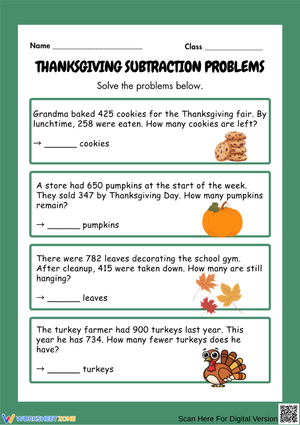
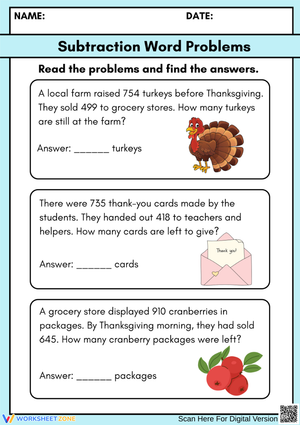
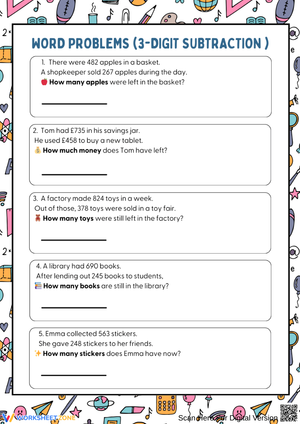
- Rotate in word-problem versions once students are consistently accurate on the numeric worksheets, so the skill transfers to context
Frequently Asked Questions
1. How should teachers use three-digit subtraction worksheets in a 2nd grade classroom?
Use them in stages, moving from no-regrouping to single-regrouping to double-regrouping problems, and pair early worksheets with base-ten block modeling so students build the written method on top of a concrete understanding.
2. What is the best order to introduce regrouping in three-digit subtraction practice?
Start with problems that require no regrouping, move to single regrouping across either the tens or hundreds place, and finish with double regrouping across both places once students show consistent accuracy at each stage.
3. How do these worksheets align with Common Core standard 2.NBT.7?
The standard asks students to subtract within 1000 using place-value strategies and to relate that strategy to a written method, so worksheets that require students to show regrouping work, not just a final answer, align most directly with the standard's intent.
4. How can teachers tell if a student is ready to move from two-digit to three-digit subtraction?
Look for consistent, independent accuracy on two-digit subtraction with regrouping first; three-digit subtraction adds a second borrow, so shakiness at the two-digit level usually predicts the same struggle at the three-digit level.
5. What scaffolds help students who struggle with borrowing across zeros?
Base-ten block models and place-value drawings, used before the standard algorithm, give students a concrete reason for each trade, which helps them track two separate borrows instead of guessing at the written steps.













 Interactive Worksheet Maker
 Quiz Maker
 Word Search Maker
 Crossword Puzzle Maker
 Word Scramble Generator
 Sentence Scramble Generator
 Handwriting Worksheet Generator
 Name Tracing Generator
 Fill In The Blank Generator